
Best Carbon Filter Shower Heads – 2026 Reviews

You know the smell. That sharp, swimming-pool note that hits the second you turn the shower on, followed by the tight, squeaky feeling once you towel off. That’s chlorine doing exactly what chlorine does, and it’s why filtered shower heads went from niche bathroom gadget to mainstream fixture in a few short years.
The carbon stage is the part that actually matters. Activated carbon – listed variously as activated charcoal or coconut carbon – adsorbs chlorine, odors, and organic compounds as water passes over the media. The heads worth buying pair it with KDF-55 for heavy metals and calcium sulfite for fast chlorine knock-down, then wrap the whole stack in a spray face that doesn’t choke your pressure.
Two things separate a good carbon filter shower head from a mediocre one: how much media is actually packed into the cartridge, and how painless that cartridge is to swap when it loads up. Everything else – finish, spray modes, fixed versus handheld – comes down to preference. We compared models across the market to separate real filtration from marketing copy, and the picks below reflect what holds up in daily use, not what photographs best.
Best Carbon Filter Shower Heads – 2026 Reviews
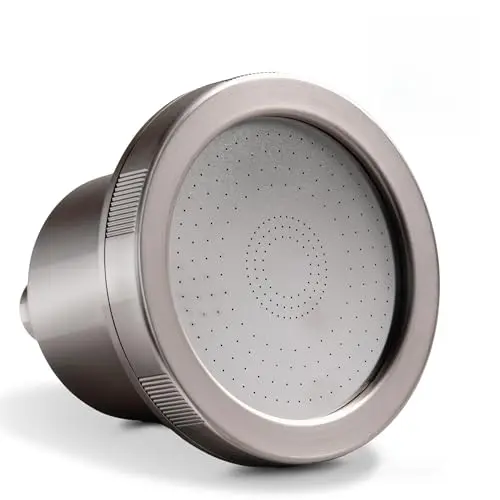
20-Stage Filtered Shower Head – Carbon-First Hard Water Filtration
A round fixed head carrying a 20-stage media bed: KDF-55, activated carbon, calcium sulfite, and vitamin-enriched filtration in one cartridge. Ships with both 2.5 GPM and 1.8 GPM flow restrictors, so restricted-state buyers aren’t stuck ordering extra parts.
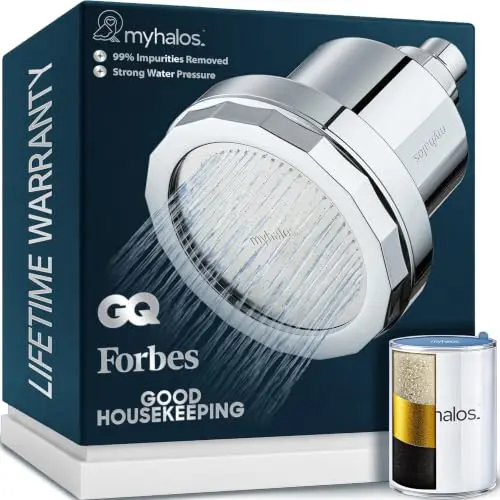
Filtered Shower Head – Three-Stage Carbon Filtration
Three named stages – calcium sulfite, KDF-55, and activated charcoal – in a round chrome head that installs with no tools. Filters are rated for up to 90 days for a family of three, and the housing carries a lifetime guarantee.
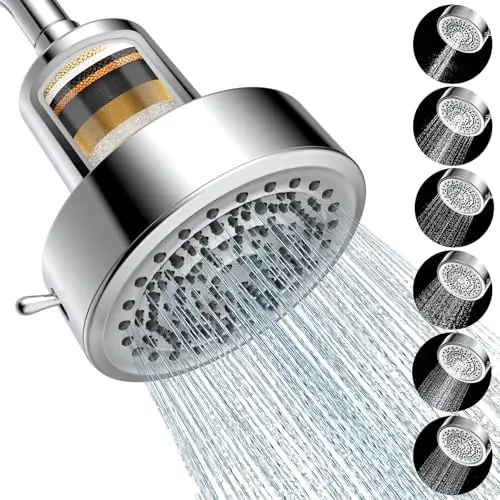
SH7 – Six-Mode Filtered Head with Trigger Control
A round fixed head with calcium sulfate, KDF-55, and activated charcoal media inside a cartridge you release with a button press. Six spray modes, a brass swivel ball, and a side trigger for switching settings mid-shampoo.
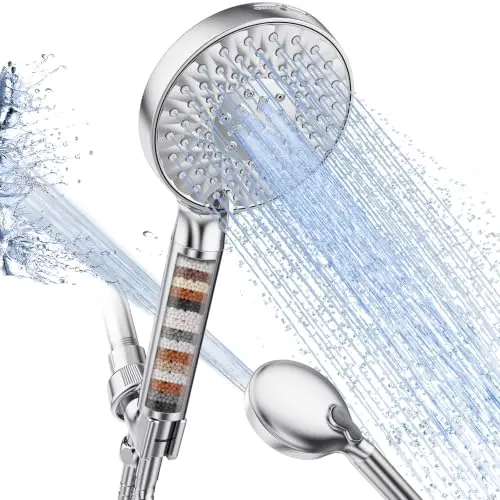
ARB011-GG – Nine-Mode Handheld with KDF Media
A handheld body with nine spray settings, a 71-inch kink-resistant hose, and a filter cartridge built into the handle. KDF, maifanstone, and vitamin C media handle filtration, and a five-year limited warranty covers the hardware.
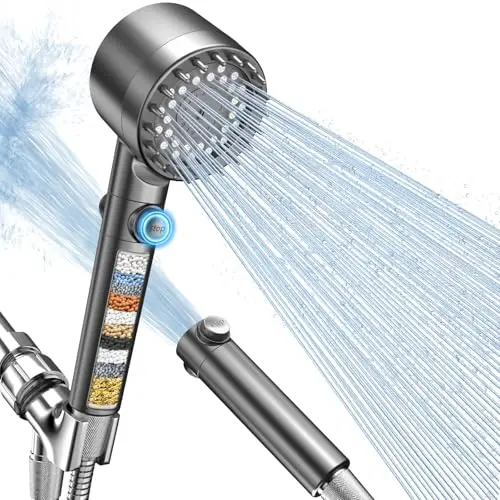
62071QH-DY5 – Handheld Filtered Head with Pause Switch
A handheld filtered head with KDF-55, calcium sulfite, activated carbon, and vitamin C in the cartridge. The one-touch pause button stops flow for shampooing or shaving, and detaching the head unlocks a high-pressure power-wash mode.
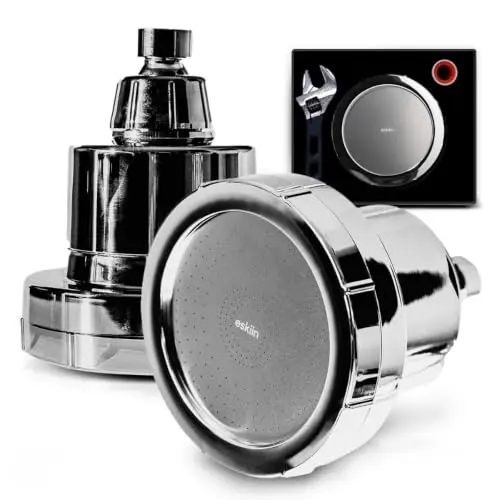
Eskiin-01 – Coconut Carbon Rainfall Head
A rainfall head built around a KDF-55, calcium sulfite, and coconut activated carbon blend. Third-party lab testing is central to the pitch, and the welcome kit ships with a spare filter, wrench, plumber’s tape, and an install guide.
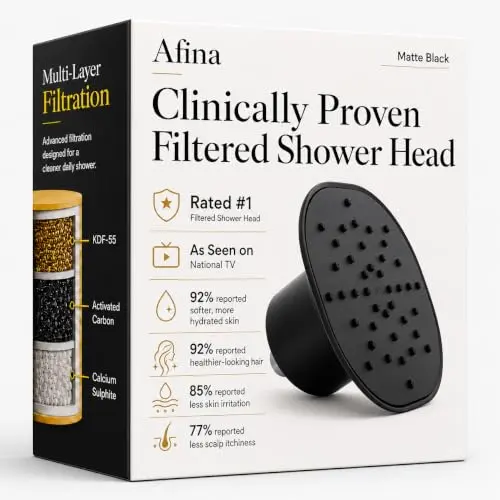
A-1981-BL – KDF-55 Rainfall Head
A square rainfall head running KDF-55 and calcium sulfite filtration at 2.5 GPM. Matte black finish, two-minute tool-free install, and cartridges that swap without disassembling the head.
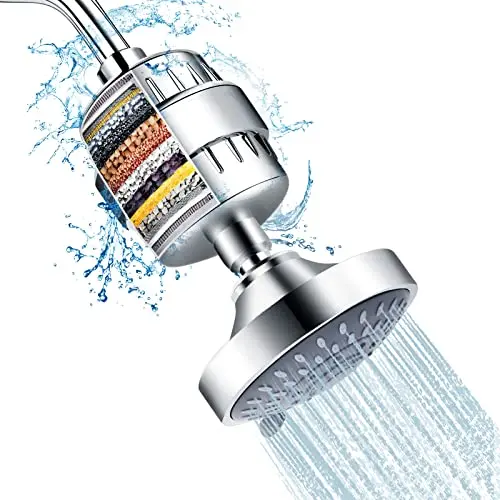
21651 – 15-Stage Fixed Filtered Head
A compact 4-inch fixed head with a 15-stage filter bed, five spray modes, and a swivel ball joint for aiming. 1.8 GPM flow, screw-on install, and anti-clog silicone nozzles that wipe clean.
How We Evaluated These Carbon Filter Shower Heads
We didn’t plumb these shower heads into a bench with chlorinated test water and measure reduction rates across months of use. What we did: cross-referenced 8 filtered shower heads from 7 distinct brands across five decision axes – filtration media and stage count, spray modes and coverage, flow rate and pressure behavior, install and cartridge-replacement routine, and owner feedback on skin, hair, and hardware durability where available. We triangulated published specifications, brand-stated certifications, and lived-in feedback to see which claims survive contact with a real bathroom.
Then we mapped each model to actual buyer profiles: renters with chlorine-heavy municipal water, well-water households fighting iron and sediment, low-pressure apartments, and anyone who wants a rainfall feel without giving up pressure. The scoring framework weighted real-world filtration and shower fit (70%) – how much carbon and KDF media a head actually carries, how it behaves at low pressure, and how livable the filter swap is – against feature differentiation (30%) – spray range, handheld versus fixed form, warranty terms, and the build details that separate one head from another.
We have no commercial relationship with any of these brands; recommendations track fit and differentiation, not brand preference. If you want the most complete filtration package, the 20-Stage Filtered Shower Head is your match. If a mid-priced head with a lifetime housing guarantee behind it makes more sense, the myhalos Filtered Shower Head fits better.
How to Choose the Right Carbon Filter Shower Head
1. What a Carbon Filter Stage Actually Removes
Activated carbon – sometimes listed as activated charcoal or coconut carbon – is the workhorse of shower filtration. It adsorbs chlorine, odors, and a range of organic compounds as water passes over the media. What it doesn’t do is remove the calcium and magnesium that make water hard. Those minerals pass straight through.
That’s why the good heads stack media. KDF-55, a copper-zinc alloy, handles chlorine and some heavy metals while protecting the carbon from fouling. Calcium sulfite targets chlorine specifically and reacts fast. Vitamin C media adds another chlorine-reduction route. A head pairing carbon with KDF and calcium sulfite is doing real work; one listing only a single stage is mostly decoration.
2. Why Filtered Shower Head Media Beats Stage-Count Marketing
Twenty stages sounds better than three. In practice, media volume and contact time matter far more than the number printed on the box. A tall cartridge packed with carbon and KDF gives water more dwell time than a slim housing with a dozen paper-thin layers.
Check three things before buying: which media are actually named, whether the cartridge is replaceable without tools, and how often the brand says to swap it. A cheap head with an expensive proprietary cartridge can cost more over two years than a mid-range head with accessible filters. Replacement availability is the spec most buyers forget to verify – and the one that decides whether you’re still filtering water six months from now.
3. Flow Rate, Pressure, and Anti-Clog Nozzles
1.8 GPM is the common ceiling for compliant heads and what restricted states require. 2.5 GPM delivers a fuller rainfall feel where it’s allowed. Either can feel strong or weak depending on spray-face design, which is why raw flow numbers alone don’t tell you how a shower will feel.
Look for silicone anti-clog nozzles if your water is hard – they wipe clean with a thumb and shrug off limescale. A swivel ball joint matters more than people expect on a fixed head, since it’s the only way to correct an angle that sprays over your shoulder. And if you’re on a top floor with weak supply, a pressure-optimized face does more for the experience than any other single feature.
4. Fixed, Handheld, or Rainfall: Matching Form to Routine
Fixed heads are the simplest swap and the least likely to develop a leak at a hose connection. Handhelds add reach for rinsing tubs, bathing kids, and cleaning the shower itself, and most still mount at standard height. Rainfall heads trade adjustability for coverage and a more spa-like feel.
If you want filtration plus a genuinely useful spray range and a hose that reaches across the tub, the SR SUN RISE ARB011-GG is the pick here, with nine settings and the longest warranty in this lineup.
5. Replacement Filters and the Real Cost of Ownership
Every head here needs a fresh cartridge eventually – plan on several swaps a year in a busy bathroom, fewer if you shower alone. Heavier chlorine levels, well water, and long showers all shorten the window. The purchase price is only half the cost story.
Two design details save real hassle. A press-open cartridge door means you’re not unscrewing a wet housing at seven in the morning, and a mesh filter layer keeps pressure from sagging as the cartridge loads up. The UltrTxenova SH7 handles both better than anything else in this roundup.
6. Choosing a Carbon Filter Shower Head Without Overpaying
Entry-level filtered heads now carry the same media types as premium ones, so the price gap buys finish quality, form factor, warranty length, and cartridge engineering rather than dramatically better filtration. If chlorine smell and dry skin are your complaints, an entry or mid-range head solves most of it.
Spend up when you want a specific look, a rainfall spray with real pressure behind it, or longer coverage. The Eskiin-01 is the premium example – coconut carbon, third-party testing, a design-forward body – but go in knowing durability feedback is mixed.
Frequently Asked Questions
1. Do carbon filter shower heads actually remove chlorine?
Yes. Activated carbon is genuinely effective against chlorine, and chlorine is the contaminant most people notice – the bleach smell, the tight skin after a long shower, the brassy tint on color-treated hair. Carbon adsorption also catches some organic compounds and odors along the way.
What it won’t do is fix hard water. Calcium and magnesium stay in the water, so limescale on glass and fixtures continues unless you install a proper whole-home softener. Heads marketed as water softeners are filtering, not softening, and holding onto that distinction will save you from a disappointing purchase. For measurable chlorine reduction, look for a head that names KDF-55, calcium sulfite, or activated carbon – ideally all three – rather than vague mineral beads.
2. What's the difference between the MDhair 20-stage shower head and the myhalos filtered shower head?
They target the same buyer from different angles. The MDhair 20-stage shower head leans on certification and flexibility: NSF-42 testing, a deep media stack, and both 2.5 GPM and 1.8 GPM restrictors in the box.
The myhalos filtered shower head is simpler and cheaper to own – three named stages, a lifetime housing guarantee, and a short filter-change interval that keeps water quality consistent. Want certification paperwork and restricted-state compliance? MDhair. Want the lowest long-term hassle with a guarantee behind the body? myhalos.
3. How often should you replace the filter in a carbon filter shower head?
It depends on your water and how many people shower. As a rule of thumb, two to four months for a busy household and longer for a single occupant. Heavier chlorine levels, well water, and long showers all shorten that window.
The telltale signs it’s overdue: pressure dropping noticeably, the chlorine smell returning, or the spray fanning out unevenly. Heads with a press-open cartridge door make the swap a one-minute job, which in practice is the difference between changing it on schedule and ignoring it for a year.
4. Eskiin vs Afina: which premium filtered shower head is worth it?
Both are design-forward heads that cost real money. The Eskiin-01 wins on filtration depth – coconut activated carbon alongside KDF-55 and calcium sulfite, plus third-party lab claims that exceed NSF-177 benchmarks. The catch is durability; housing failures show up in longer-term feedback.
The Afina A-1981-BL is the safer premium buy on hardware and delivers a stronger 2.5 GPM rainfall spray, but its media list stops at KDF-55 and calcium sulfite with no carbon stage at all. If carbon specifically is what you’re shopping for, Eskiin. If you want the finish and the pressure with less risk, Afina.
5. Will a carbon filter shower head work with low water pressure?
Yes, but the head design matters more than the filter itself. A pressure-optimized spray face and silicone anti-clog nozzles can make 1.8 GPM feel strong in an apartment with mediocre supply.
Two things quietly kill pressure: a clogged cartridge and a filter packed too densely to flow. Look for a replaceable cartridge with a mesh layer rather than dense cotton, and check the flow rating if you’re on the top floor of an older building with galvanized pipes.
6. Are handheld filtered shower heads as effective as fixed ones?
They can be. Handhelds carry the same media types in a smaller cartridge, so the tradeoff is shorter filter life rather than weaker filtration. What you gain is reach and spray flexibility – useful if you’re rinsing a tub, bathing a kid, or cleaning the shower itself.
The FEELSO 62071QH-DY5 is the value example in this group, with KDF-55, carbon, calcium sulfite, and vitamin C in the cartridge plus a one-touch pause switch. Just budget for more frequent cartridge swaps than a fixed head with a taller filter body.
Final Verdict
For most bathrooms, the MDhair 20-stage filtered shower head is the answer – carbon-first media, third-party certification, and both flow restrictors included mean it fits almost any household without a second order. If you’d rather pay less and get a lifetime guarantee on the housing, the myhalos filtered shower head is the smarter long-term buy.
Renting, on a tight budget, or rinsing a tub you actually have to bend into? The FEELSO 62071QH-DY5 delivers genuine carbon filtration and a pause switch for entry-level money. And if the renovation deserves a centerpiece, the Eskiin-01 brings coconut carbon and a rainfall face – just keep the receipt close.
Pick the media stack first, the form factor second, and the finish last. That order solves this category.
