
Best Carry-On Luggage For International Flights – 2026 Reviews

The gate agent’s metal sizing frame is the least forgiving piece of equipment in any airport. On a domestic hop, a bag that runs an inch long usually gets waved through. Book a flight on a European, Asian, or Middle Eastern carrier and that same inch can turn into a checked-bag fee at the worst possible moment, in a line that isn’t moving.
Two things separate a genuinely useful international carry-on from one that just prints the word on the label. The first is honest dimensions, meaning case size versus overall size with wheels and handles, and how much depth the bag actually gives up. The second is empty weight, because on a carrier with a hard cabin cap, every pound the bag spends is a pound you don’t get to pack.
We compared bags across the market rather than falling in with one manufacturer: softside spinners built around tight sizer limits, polycarbonate hard shells with flush locks, an underseat backpack for short hops, and a matched set for travelers who want everything in one box. The picks below skew toward the bags that stay honest about their footprint, and toward the ones whose hardware holds up after the novelty wears off.
Best Carry-On Luggage for International Flights – 2026 Reviews
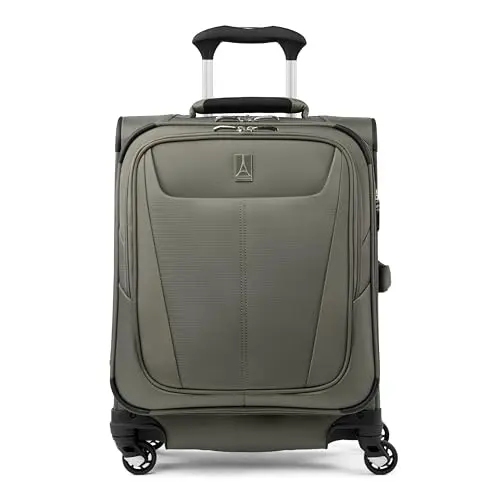
Maxlite 5 International Spinner 19-Inch – Built for Global Sizer Limits
A 19-inch softside spinner designed specifically to clear international carry-on limits, with a 7.75-inch case depth, a 5.3-pound build, 39 liters of capacity, and a two-inch expansion gusset. Four 360-degree spinner wheels, a PowerScope Lite handle with two height stops, water-repellent DuraGuard fabric, and an interior lining made from recycled plastics.
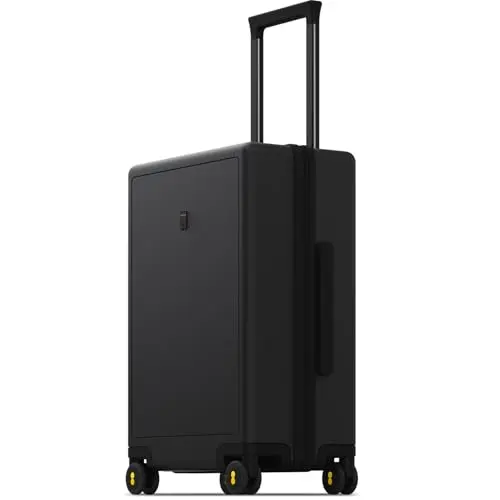
Hard Shell 20-Inch – Polycarbonate Protection With a TSA Lock
A 20-inch polycarbonate hardshell with a built-in TSA combination lock, eight quiet spinner wheels, and a four-level aluminum telescoping handle. The split-case interior gives you two fully lined compartments with zippered mesh pockets, and side bumper feet protect the shell when you set it down.
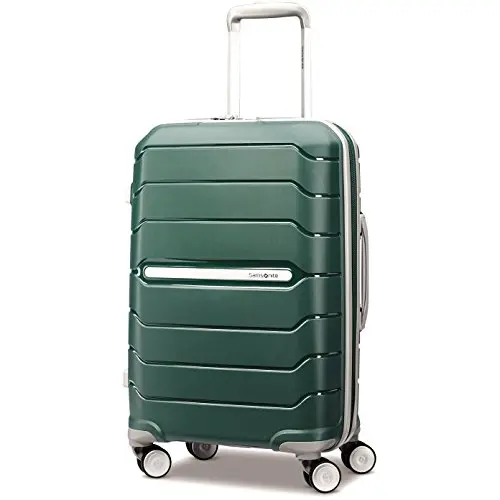
Freeform Hardside 21-Inch – Light Shell, Expandable Capacity
A 21-inch polypropylene hardshell that weighs just 6.5 pounds, with a recessed TSA combination lock, four double spinner wheels, a push-button locking handle, and a built-in ID tag. It expands for extra packing capacity, and the cross ribbon and divider keep clothes pressed and in place.

21-Inch Hardside Spinner – Budget Hard Shell That Expands
An affordable 21-inch hard shell built on an extra-thick ABS body with a scratch-resistant finish. It expands up to 25% for the trip home, includes an interior divider with three zippered pockets, and rolls on four multi-directional spinner wheels with a telescoping handle and a short lift handle.
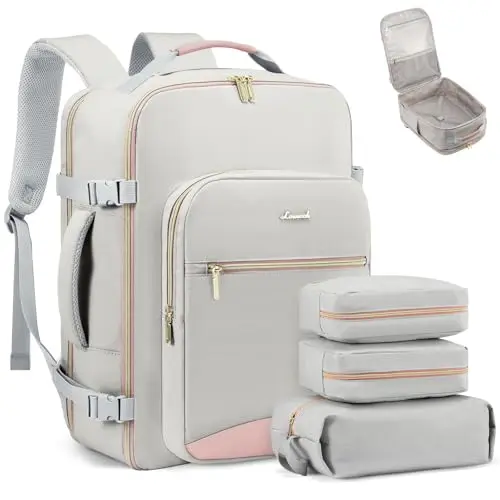
40L Flight-Approved Travel Backpack – Underseat Personal Item
An 18 x 14 x 8-inch travel backpack that fits under the seat on most carriers, with a 180-degree clamshell opening, a padded laptop compartment sized for 17-inch machines, and a built-in wet pocket. Ships with three packing cubes, two storage bags, and a shoe bag, plus a luggage strap for stacking on a roller.
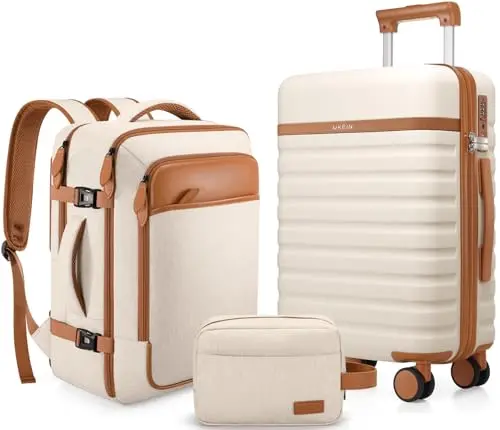
3-Piece Carry-On Set – Suitcase, Backpack, and Toiletry Bag
A matched three-piece set: a 20-inch polycarbonate carry-on spinner, an 18-inch travel backpack with a handle sleeve, and a toiletry bag. The suitcase measures 22 x 14 x 9 inches, has a built-in TSA lock, dual 360-degree spinner wheels, and an interior split between cross straps and a zippered panel with mesh bags and a dry-and-wet pouch.

Sion Softside Spinner – Front-Pocket Access on a Budget
A softside carry-on spinner in dark grey polyester with ballistic polymer reinforcement, two quick-access front pockets, and a 10-year limited warranty. Interior packing straps and multiple compartments keep things organized, an expansion gusset adds room, and 360-degree spinner wheels plus a locking telescopic handle cover the rolling.
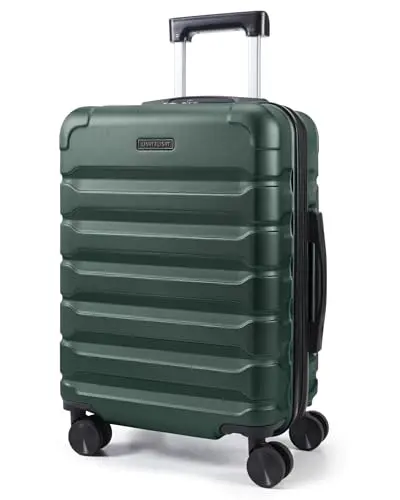
20-Inch Expandable Hardside – Light ABS Shell With Spinners
A lightweight 20-inch ABS hardshell in deep green with 360-degree spinner wheels and a three-stage telescopic handle. Dual compartments with a buckle compression system keep a trip’s clothes divided, the shell is rated impact and scratch resistant, and the bag expands when you need the room.
How We Evaluated These Carry-On Luggage for International Flights
This review didn’t involve hauling any of these bags through a real international itinerary. It’s built on published specifications, feature sets, and owner feedback where available, cross-referenced against how each option handles the specific pressures of flying abroad.
We mapped 8 carry-on models from 8 distinct brands across 5 decision axes: published case and overall dimensions against international carrier limits, empty weight, wheel and handle hardware, packing capacity and expansion, and interior organization. We triangulated manufacturer specs with the feature sets each brand actually ships, then weighed that against patterns in owner feedback where it existed. We also audited the small hardware details, because handle stops, wheel count, and expansion gussets are what fail first. Where feedback was thin, we leaned on the specs and said less.
The scoring framework put real-world fit at 70% (how well a bag survives a strict sizer, a weight cap, and a long connection) against feature differentiation at 30% (the hardware, materials, and organization that separate one option from the next). Nothing here reflects a brand preference; several of these companies make bags we’d steer you away from at a different size. If your itinerary runs through carriers that actually weigh cabin bags, the Travelpro Maxlite 5 is the safest starting point. If you want a hard shell with a built-in lock, the LEVEL8 is the better fit.
How to Choose the Right Carry-On Luggage for International Flights
1. Why International Carry-On Limits Are Stricter Than Domestic Ones
US domestic carriers have settled into a rough consensus around 22 x 14 x 9 inches, and most gate agents won’t pull out a tape measure. International flying is a different sport. Plenty of European, Asian, and Middle Eastern carriers publish cabin limits closer to 55 x 40 x 20 centimeters, and a growing number enforce them at the gate with a metal sizer.
The dimension that catches travelers is depth. A bag measuring 10 or 10.25 inches deep slides into most domestic overheads and stops dead in a European sizer, which is why the international-first bags here sit closer to 7.75 to 9.2 inches. Always compare overall dimensions including wheels and handles, because the packing dimensions printed on a listing almost always flatter the bag. Then check weight caps separately. On some carriers it’s cabin size that gets you stopped; on others it’s a weight limit closer to 7 kilograms.
2. Softside vs. Hardside Carry-On Luggage for International Flights
Softside bags give when squeezed, which is the single most useful trait in a sizer situation. A packed softside can compress half an inch where a hard shell simply cannot. They usually offer exterior pockets for things you need at the gate, and the fabric absorbs scuffs instead of showing them.
Hardside carry-on luggage brings a rigid shell, cleaner lines, and usually a built-in TSA lock. Polycarbonate flexes and recovers; ABS is stiffer and less forgiving under hard impact. What a hardside can’t do is compress to save you at the sizer, so the published depth has to be honest before you commit. If your itinerary mixes strict international legs with domestic connections, lean softside. If protecting what’s inside matters more and you’ve verified the dimensions, lean hardside.
3. How Empty Weight Eats Your Packing Budget
Every ounce the bag weighs is an ounce you can’t spend on clothes. The spread in this category is wide, from 5.3 pounds on the lightest softside to nearly 9 pounds on the heaviest, and on a carrier with a hard cabin cap that gap is most of a week’s clothing.
Weigh the bag empty before your first trip and write the number down. Then weigh your packed bag on a kitchen scale the night before you fly, because airport scales are unforgiving and repacking at the counter is miserable. If weight is your binding constraint, the Travelpro Maxlite 5 is the obvious pick here. It’s the lightest bag in this lineup with a full spinner setup.
4. Wheels, Handles, and the Hardware That Fails First
Four-wheel spinners roll upright and take the load off your wrist, which matters on a long terminal walk. Two-wheel rollaboards trade that agility for simplicity, with fewer moving parts and straighter tracking over rough pavement and cobblestones.
On handles, look for a multi-stop telescoping handle rather than a single height, and check that the extended handle doesn’t wobble under load. Owner feedback across this category keeps flagging handle and zipper failures as the first things to go, so read the specific complaints rather than the overall sentiment. Double spinner wheels and metal zipper hardware are the two upgrades that most reliably separate a bag that lasts from one that doesn’t.
5. Packing Capacity, Expansion, and What 40 Liters Actually Holds
Carry-on capacity in this lineup runs from 33 liters to about 45 liters, and the difference is roughly a long weekend versus a week. For a three-to-five day international trip, 38 to 40 liters is the sweet spot. Go smaller and you’re doing laundry in the sink.
Expansion gussets are worth having, but understand what they are: a couple of extra inches of depth for the return leg, usually at the cost of the dimensions you bought the bag for. Expand it on the way home and check it back if you have to. Interior organization matters more than raw volume. Cross straps or compression panels on one side and a zippered divider with mesh pockets on the other turns 39 liters into something you can live out of. If you’d rather skip the roller entirely on a short hop, the LOVEVOOK 40L covers the same trip as an underseat personal item.
6. Budget, Mid-Range, and Premium Carry-On Tiers
The budget tier gets you a functional ABS hard shell or a basic softside with spinner wheels. You’re typically giving up a built-in lock, refined wheel hardware, and any meaningful warranty. For a few trips a year that’s a reasonable trade, and the Amazon Basics 21-inch is the clearest example of the tier done well.
The mid-range is where polycarbonate shells, TSA combination locks, and quieter wheel systems show up alongside better interior layouts. This is where most frequent international travelers end up. The premium end buys lighter builds, longer coverage, and hardware that was specified rather than sourced to a price, and the one-year airline-damage repair window Travelpro attaches to its lifetime warranty is the clearest example in this lineup.
Frequently Asked Questions
1. What size carry-on luggage is actually allowed on international flights?
There’s no single global standard, which is the frustrating part. Many international carriers publish cabin limits in the neighborhood of 55 x 40 x 20 centimeters, roughly 21.6 x 15.7 x 7.9 inches, noticeably shallower than the 22 x 14 x 9 that US domestic travel has settled into. Some carriers are stricter still, and budget airlines often sell cabin allowance as an add-on with its own dimensions.
The practical move is to check the specific carrier’s published limit before you buy, then compare it against overall dimensions including wheels and handles. A bag with a 19-to-20 inch case and 9 inches or less of depth clears almost everything. If you fly several carriers, buy to the tightest one you use.
2. Is softside or hardside carry-on luggage better for international flights?
Softside wins on flex at the sizer and exterior pocket access. Hardside wins on crush protection and built-in locks. Neither is universally better. If your international flying involves strict gate sizing or tight connections, a softside’s ability to compress a little is genuinely useful. If you’re carrying anything fragile, or you’d rather lock the bag and stop thinking about it, polycarbonate is the safer bet.
One thing to watch either way: packing dimensions flatter the bag. Judge by the overall footprint, every time.
3. Travelpro Maxlite 5 vs. LEVEL8: which is better for international travel?
They solve different problems. The Travelpro Maxlite 5 is built to the tighter international brief: a 19-inch case, 7.75 inches of depth, 5.3 pounds, 39 liters, and a warranty that covers airline damage for the first year. It’s the bag to buy if sizer compliance and empty weight are your constraints.
The LEVEL8 is the better answer if you want a rigid polycarbonate shell, a built-in TSA combination lock, and quieter wheels. Its 21.5 x 14.5 x 9.2-inch footprint is still carry-on sized, but it gives up a little margin at the strictest gates. Softside and light versus hardside and protected, that’s the real decision.
4. Samsonite Freeform vs. Amazon Basics: is the hardside upgrade worth it?
Mostly yes, if you fly often. Both are hard shells, but the Freeform’s polypropylene build weighs 6.5 pounds against 7.7 for the Amazon Basics, and it adds a recessed TSA combination lock, a built-in ID tag, and 10-year limited coverage. The Amazon Basics counters with 25% expansion and the friendlier entry point.
The catch on both is depth. Ten inches each, over the line for tighter international sizers. If you’re flying mostly domestic with the occasional lenient international carrier, either works fine. If you’re regularly standing in front of a European gate sizer, neither is the right bag.
5. Can a travel backpack replace a carry-on suitcase on international flights?
For short trips, often yes. A flight-approved backpack in the 40-liter range measuring around 18 x 14 x 8 inches fits under the seat in front of you, which means no overhead-bin roulette and no gate-check risk on a full flight. The LOVEVOOK 40L takes that approach with a clamshell opening and packing cubes.
What you give up is your back. Forty liters on shoulder straps gets heavy on a long connection or a walk from the station to the hotel. If the trip involves a lot of transit, a four-wheel spinner is the kinder choice.
6. How heavy should a carry-on bag be before you pack it?
Lighter is nearly always better, but there’s a floor worth respecting. Softside bags here run from about 5.3 to 8.8 pounds empty, and hard shells from roughly 6.5 to 7.7 pounds. If you fly carriers with a hard weight cap, staying near 6 pounds empty buys you real packing room.
Don’t sacrifice wheel and handle quality for a lighter spec sheet, though. A bag that’s a pound heavier but rolls cleanly and has a handle that doesn’t wobble is the better travel companion over a hundred trips.
Final Verdict
For most travelers heading abroad, the Travelpro Maxlite 5 is the answer. It’s the only bag here built around the tighter dimensions and weight caps international carriers actually enforce, and it does it at 5.3 pounds with a lifetime warranty behind it.
If budget is the constraint and your itinerary stays friendly, the Amazon Basics 21-inch gets you a hard shell with real expansion for the least money. If you want protection and a built-in lock, the LEVEL8 is the hardside pick. And if you’re doing short hops on budget carriers where a roller is overkill, the LOVEVOOK 40L slides under the seat and calls it done.
Match the bag to the strictest gate you’ll walk through. Everything else is detail.
