
Best Carry-On Luggage For Suits – 2026 Reviews

Suits are the one item that punishes optimistic packing. You can compress a week of t-shirts into a 20-inch spinner and nothing bad happens. Fold a wool jacket badly and you’re hanging it in a hotel bathroom, hoping steam does in ten minutes what your packing should have handled in the first place.
So the carry-on question for suit travelers splits into two camps. One is the dedicated garment bag, which hangs your jacket flat and folds around it. The other is a conventional carry-on suitcase paired with a garment folder or a careful folding method – more versatile, but less protective of the one thing you can’t easily replace mid-trip.
Inside those camps, two things separate the bags worth buying from the ones that just look the part: whether the design actually holds a garment flat instead of trusting your folding skills, and whether it still behaves like real carry-on luggage – rolling, fitting an overhead bin, and swallowing a laptop and a pair of shoes. We looked across garment bags and suitcases from multiple brands to sort out which ones genuinely work for suits.
Best Carry-On Luggage for Suits – 2026 Reviews
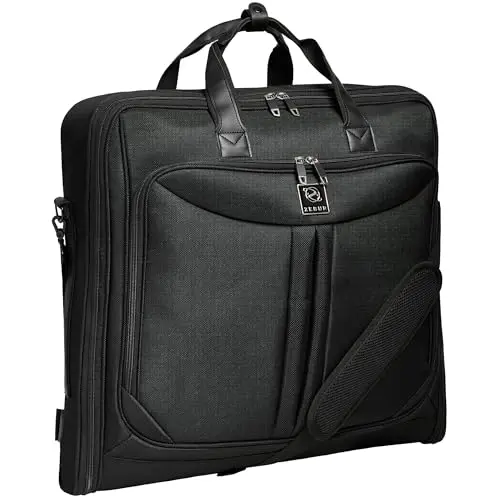
Z-5000 Travel Garment Bag – Wrinkle-Free Suit Carry-On
The Z-5000 is a fold-flat garment bag rather than a suitcase. It opens to hang a jacket or dress, then folds to roughly 22 inches square with a dual buckle holding the garment against a piped frame. Nine pockets cover shoes, a laptop, documents, and ties, and it weighs under three pounds empty.
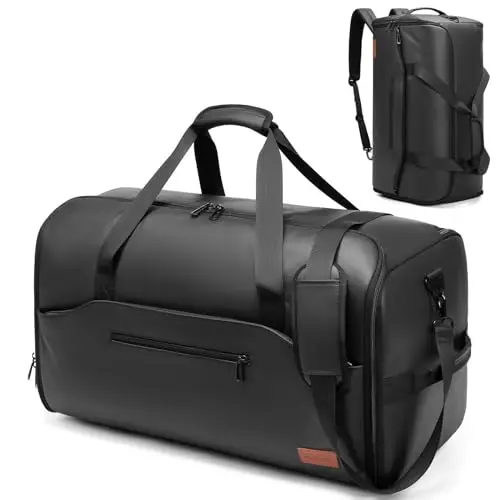
C077 Convertible – Suit Bag, Duffle, and Backpack in One
A convertible bag that opens into a full garment bag, folds into a 45-liter duffle, and carries as a backpack. The suit compartment uses two buttons to hold garments flat, and the layout includes a separate shoe compartment, a wet pocket, and a dozen pockets overall.
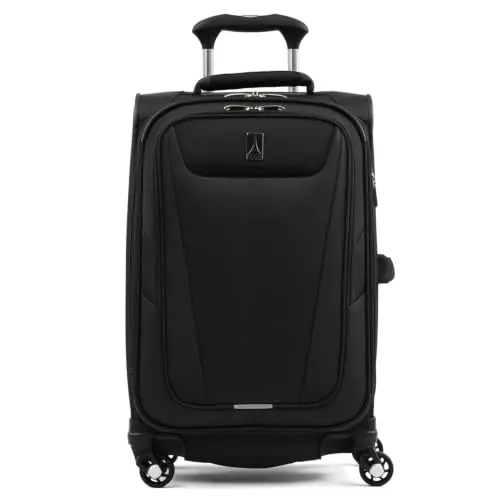
Maxlite 5 – Lightweight Softside for Suit-Friendly Packing
A softside 21-inch spinner that meets most international carry-on limits at about five and a half pounds. The polyester shell uses a water-resistant coating, the handle has two height stops, and an expansion gusset adds roughly two inches when you need it.
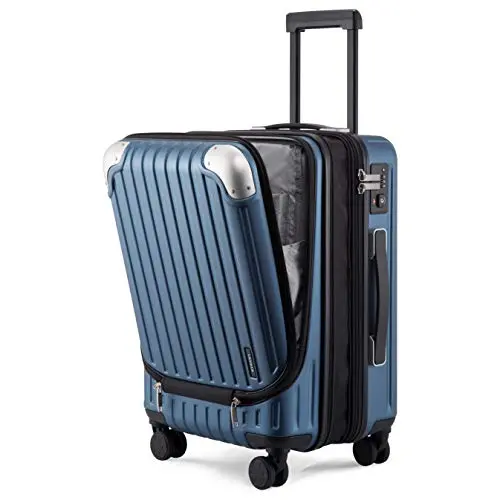
Grace 6576 – Front-Pocket Carry-On for Business Trips
A 20-inch hardside with a front-access laptop compartment, so you can pull a 15.6-inch machine at security without unpacking clothes. The PC and ABS shell has a diamond-textured surface, eight rubber-covered wheels, a TSA combination lock, and an expansion zip that adds about an inch and a half.

600D Garment Bag – Wrinkle-Free Suit Transport
A budget-friendly garment bag in 600D Oxford fabric that folds to 24 by 21 inches and opens to a full 42-inch hanging length. Elastic interior straps hold garments flat, the fabric resists water and tears, and a detachable strap converts it from hand carry to crossbody.
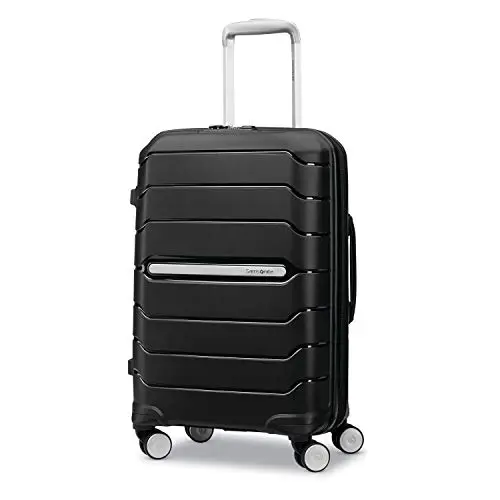
Freeform – Scratch-Resistant Hardside Carry-On
A polypropylene hardside carry-on with a scratch-resistant textured finish, an expandable main compartment, and a TSA combination lock. Inside there’s a divider, elastic straps, and a pouch, and it rolls on eight spinner wheels at about six and a half pounds.

Sion Softside – Expandable Spinner with Front Pockets
A softside expandable spinner with a polyester and ballistic polymer build, two quick-access front pockets, a removable wet bag, and packing straps inside. The carry-on measures roughly 21 by 12.75 by 10.25 inches internally and comes with a ten-year limited warranty.

21-Inch Hardside Carry-On – Expandable Budget Spinner
A 21-inch ABS hardside spinner with a scratch-resistant finish, an expansion zip that adds up to 25 percent more space, and an interior divider plus three zippered pockets. Four multi-directional wheels and a telescoping handle handle the rolling.
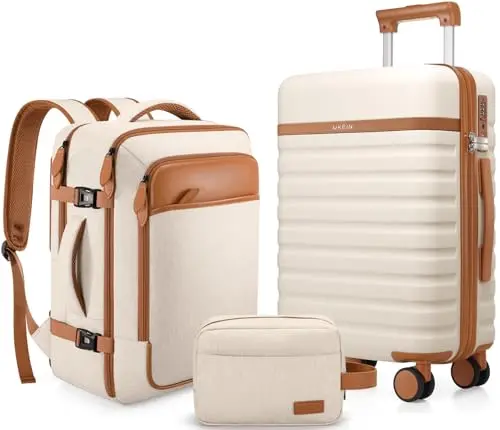
2304 Three-Piece Set – Carry-On, Backpack, and Toiletry Bag
A three-piece set built around a 20-inch polycarbonate hardside carry-on, bundled with an 18-inch backpack and a toiletry bag. The suitcase has a built-in TSA lock, alloy zippers, cross straps on one side and a zippered divider on the other.
How We Evaluated These Carry-On Luggage Options
We didn’t roll these bags through a full year of airport connections, and we didn’t run them through a baggage-handling stress test. What we did: cross-referenced nine carry-on luggage models from nine distinct brands across six decision axes – garment protection, packed capacity, carry-on sizing, mobility and wheels, interior organization, and long-term build signals like warranty terms and hardware quality. We triangulated published specifications, feature sets, and owner feedback where available, then mapped each bag against two representative buyer profiles: the traveler who flies with one suit and a laptop, and the traveler packing for a wedding weekend. A note on scope: we included both garment bags sized to fold into an overhead bin and conventional 20-to-22-inch suitcases, because both are legitimate answers to the same question.
The scoring framework weighted real-world fit for suit travel (70%) – whether a bag actually keeps a jacket presentable and still works as a carry-on – against feature differentiation (30%) – the specific design choices that make one bag better suited to suits than another. We audited warranty language and hardware specs rather than assuming price tracks quality. We have no commercial relationship with any brand here; recommendations track fit and differentiation, not brand preference. If you fly with a jacket every week, the Zegur Z-5000 is the most direct answer; if you want one bag that covers suits and everything else, the Moulyan C077 earns its place.
How to Choose the Right Carry-On Luggage
1. What Makes Carry-On Luggage Suit-Friendly
Suit travel puts two demands on a bag that ordinary packing doesn’t. The first is garment protection: a jacket needs to stay flat, or at least stay folded along its natural lines, rather than getting compressed into a cube. The second is structure. A bag that collapses under other luggage will crease a suit no matter how carefully you folded it.
That’s why the most suit-friendly carry-on luggage tends to have either a hanging frame – a garment bag with piped edges or a rigid spine – or a rigid shell that resists compression from the outside. Soft-sided spinners can work, but usually only with a separate garment folder or a packing technique that keeps the jacket on top.
Look for three concrete things: a hanging or folding garment section, interior tie-downs or elastic straps that stop clothes from shifting, and a separate shoe compartment so nothing grit-covered touches wool.
2. Garment Bags vs. Suitcases for Suits: Which Carry-On Type Fits Your Trip
A dedicated garment bag is the straightforward answer if a suit is the reason for the trip. Bags like the Zegur Z-5000 open flat, hang your jacket, and fold around it with a buckle holding everything in place. The tradeoff is shape: most fold to a square or rectangle that takes a wide slice of overhead-bin volume, and they carry less of everything else.
A conventional carry-on suitcase – the Travelpro Maxlite 5, for instance – is the better choice if the suit is one item among many. You get spinner wheels, expansion, and room for a week of clothes, but you’re responsible for the wrinkle control. A lightweight garment folder or a fold along the jacket’s seams does most of the work.
3. Sizing Carry-On Luggage for Suits and Overhead Bins
Most domestic carriers cap carry-on luggage around 22 by 14 by 9 inches, and international limits are often tighter. A 21-inch softside spinner usually clears both. Garment bags are trickier because they fold square: a 22-inch-square bag is compliant on paper but takes up a wide portion of the bin.
Check the exterior dimensions including wheels and handles, not the interior spec. And if a bag is expandable – the LEVEL8 Grace 6576 adds about an inch and a half – treat the expanded size as checked-bag territory, not carry-on.
4. Wrinkle Control: Hanging, Folding, and Packing a Suit Properly
No bag eliminates wrinkles; the good ones just reduce the variables. Two mechanisms matter. Dual buckle or strap retention holds the garment against the bag’s frame so it can’t slide and crumple. A piped or semirigid edge keeps the bag from folding in on itself.
In a conventional suitcase, the technique changes. Fold the jacket inside out along the shoulders, tuck the sleeves across the back, and place it on top of the flat layer with the trouser crease aligned with the bag’s edge. Roll everything else. It’s less reliable than a hanging bag, but it’s free.
5. Softside vs. Hardside Carry-On Luggage: The Tradeoff for Business Travel
Hardside shells protect against external crushing, which is the failure mode that ruins a suit. They also resist rain and clean up easily. What they don’t do is flex, which means every cubic inch is fixed and there’s no hanging option – a jacket has to be folded.
Softside bags flex around overpacked corners and can hold a garment sleeve or folder more naturally. They’re also lighter at the same volume in most cases. The cost is compression protection: if a heavier bag lands on yours in the bin, a softside bag transfers that force straight through.
6. Spending Tiers: What Extra Money Buys in Carry-On Luggage
At the entry level, you’re buying the basics: a shell, four wheels, a telescoping handle, and enough interior pockets to keep things from mixing. Budget garment bags in this tier use lighter fabric and simpler retention – they prevent creasing but not crushing.
Mid-range is where suit-specific design shows up. Better hardware, real warranty coverage, structured frames, and genuine garment sections live here. Premium pricing mostly buys wheel quality, handle rigidity, and shell material – meaningful for frequent flyers, less so for two trips a year.
Frequently Asked Questions
1. Can a carry-on garment bag keep a suit wrinkle-free?
Mostly, yes – with caveats. A garment bag works by hanging the jacket flat and folding around it rather than compressing it into a cube, so the fabric never takes a hard crease. Bags with dual buckle retention and a piped edge do this best because the garment stays pinned against a frame.
What a garment bag can’t do is protect against crushing if something heavy lands on it, and light fabric versions flex more than structured ones. Expect minor shoulder creasing after a long trip regardless – a steamy bathroom handles that in ten minutes.
2. What's the difference between the Zegur Z-5000 and the Moulyan C077?
Both are carry-on-sized garment bags, but they solve different problems. The Zegur is a dedicated clothing carrier: it folds square, holds multiple garments plus a laptop and shoes, and includes a proper shoe pocket and nine pockets total. It’s the pick if the suit is the trip.
The Moulyan C077 converts between a garment bag, a duffle, and a backpack, with 45 liters of capacity and a separate wet pocket. It’s more versatile for a mixed itinerary – but the hanging section reportedly runs short for larger men’s suits, so check the dimensions if you wear a long jacket.
3. How does the Travelpro Maxlite 5 compare to the LEVEL8 Grace 6576?
One is softside and one is hardside, and that shapes everything. The Travelpro is under six pounds, expands about two inches, and rolls on the brand’s spinner wheels with a two-stop handle – but it has no dedicated garment sleeve, so suits rely on folding.
The LEVEL8 Grace 6576 adds a front-access laptop compartment and a rigid shell that resists external compression, which suits better. It also weighs about nine pounds, so you’re trading carry comfort for protection and quick security access.
4. Will a 22-inch carry-on garment bag fit in an overhead bin?
Usually, but it depends on how the bag folds. A 22-inch-square garment bag meets the published size limits of most domestic airlines, and it’s designed to lay flat in a bin or hang from a hook. Regional jets and stricter international carriers are the risk – their overheads are shallower.
The practical test is exterior dimensions including handles, and whether the bag has a stacking strap so it can ride on your rolling luggage instead of competing for bin space.
5. Do I need a hardside or softside carry-on for business travel with suits?
Hardside if your priority is protection from external compression and you’re comfortable folding a jacket. The rigid shell won’t let another bag crush yours, and it handles rain and scuffs better. Softside if you want flex and lighter weight, or if you plan to use a garment folder or sleeve inside.
Neither is wrong. If a suit is the whole reason for the bag, though, a dedicated garment bag outperforms both.
Final Verdict
For most people traveling with a suit, the Zegur Z-5000 is the answer. It hangs a jacket properly, folds to a compliant carry-on footprint, and still swallows a laptop and a pair of shoes – which is more than most garment bags manage.
If you want one bag for suits and everything else, the Moulyan C077 converts between a garment bag, duffle, and backpack and holds 45 liters, so it pulls double duty on longer trips. Budget-conscious buyers who only move a suit occasionally should look at the Baleine 600D Garment Bag – lighter structure, but the folding frame and elastic retention do the core job.
And if you’d rather pack a conventional suitcase, the Travelpro Maxlite 5 is the softside spinner we’d point you to: light, expandable, and easy to roll through a terminal.
