
Best Carry-On Luggage With Removable Wheels – 2026 Reviews

A carry-on with removable wheels sounds like a niche spec until you have tried to replace a cracked spinner or shoehorn a bag into a tight trunk. The feature is rare in the carry-on aisle, and that scarcity is exactly why it deserves a closer look.
The two decision axes that separate useful removable-wheel bags from gimmicks are the wheel-detachment mechanism and real-world carry-on compliance. A detachable wheel that rattles or misaligns is worse than a fixed wheel, and a bag that fits the feature but not the overhead bin misses the point.
This guide starts with the one true detachable-wheel match in the current market set and then covers strong fixed-wheel alternatives for shoppers who cannot find a detachable option that fits their trip. The goal is to help you choose by trip length, packing style, and how much the removable-wheel feature actually matters to you.
Best Carry-On Luggage with Removable Wheels – 2026 Reviews

16-Inch Underseat Carry-On – Detachable Wheels for Tight Trips
A compact underseat carry-on with four detachable spinner wheels, a TSA combination lock, and a scratch-resistant ABS shell. The 30-liter interior uses elastic straps, a divider, and a pouch to keep short-trip packing organized, while the removable wheels make storage and replacement easier.
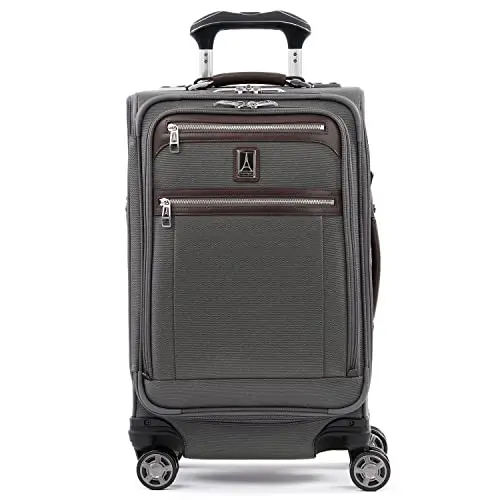
Platinum Elite – Premium Spinner with USB Power
A 21-inch softside carry-on built for business travel, with a Precision Glide dual-spinner wheel system, a four-stop PowerScope handle, USB-A and USB-C ports, and a dedicated power-bank pocket. Inside, a removable suiter and tie-down straps help keep clothes organized, and the tapered expansion adds space when needed.

LA6575 – Front Pocket Carry-On for Business Trips
A 20-inch hardside carry-on with a front laptop compartment for devices up to 15.6 inches, eight rubber-covered spinner wheels, a TSA combination lock, and a four-level telescoping handle. The PC+ABS shell has a micro-diamond texture, and the 36-liter interior is aimed at short business trips.
How We Evaluated These Carry-On Luggage with Removable Wheels
We didn’t run a multi-airport field trial or measure wheel wear over months. What we did: cross-referenced three carry-on models from three distinct brands across five decision axes – detachable-wheel design, carry-on size compliance, packed capacity, mobility and handle feel, and interior organization. We triangulated published specifications, feature sets, and owner feedback where available, then mapped each bag to representative buyer profiles for short trips, business travel, and underseat packing. We also compared wheel attachment and replacement design against fixed spinner systems, audited packing dimensions, expansion girth, and handle hardware for real-world trip lengths. We treated airline sizer compliance as a pass/fail check rather than a soft preference, since an oversized carry-on defeats the purpose of the format.
The scoring framework weighted real-world fit (70%) – how well each carry-on serves the traveler who needs removable wheels or a credible fallback – against feature differentiation (30%) – unique wheel systems, packing layouts, and charging features. Detachable wheels are uncommon in this category, so we weighted that capability heavily and treated fixed-wheel models as alternatives, not equal matches. We have no commercial relationship with any of the brands featured; recommendations track fit and differentiation, not brand preference. If removable wheels are non-negotiable, the Lekesky 16-inch is your match; if you want a premium travel-day tool and can live with fixed wheels, the Travelpro Platinum Elite serves you better.
How to Choose the Right Carry-On Luggage with Removable Wheels
1. Why Removable Wheels Matter on Carry-On Luggage
Removable wheels are a repairability feature first and a packing convenience second. If a wheel gets cracked or worn, a detachable design can be swapped without retiring the whole bag. It also helps when you need to store a carry-on in a tight closet, trunk, or overhead space. That said, detachable wheels are uncommon in the category, and some mechanisms add complexity without improving roll quality. The best version feels secure when locked in, rolls smoothly, and can be removed without tools. If you want the only true removable-wheel pick in this lineup, the Lekesky 16-inch is the one to start with.
2. Check Airline Sizing Before You Fall for a Carry-On
Carry-on dimensions are not uniform across airlines. A bag marketed as 22 x 14 x 9 may still be tight on stricter carriers once wheels and handles are included. Pay attention to overall dimensions, not just the case size, and remember that expansion gussets can push a bag out of compliance. Softside bags often squeeze into sizers more forgivingly than hard shells, but a structured shell protects contents better. If you frequently fly on budget carriers, measure first and treat expandable capacity as a bonus rather than a guarantee.
3. Detachable Wheels vs. Fixed Spinner Wheels: What to Know
Fixed spinner wheels are the default because they are simple, strong, and cheap to produce. Detachable wheels add repair flexibility but can introduce rattle, alignment issues, or a higher replacement-part dependency. Look for a mechanism that locks firmly and uses standard hardware. If you want premium roll quality and do not need detachable wheels, the Travelpro Platinum Elite is the stronger ride in this lineup. If you need front-pocket access for a laptop, the LEVEL8 is the more business-focused alternative.
4. Capacity, Expansion, and Packing Layout in Carry-On Luggage
Usable capacity matters more than the liter rating on the spec sheet. A 36-liter hard shell with a shallow front pocket can feel smaller than a 30-liter softside with flexible fabric. Check for compression straps, a zippered divider, and a wet pocket if you pack toiletries. Expansion is useful for souvenirs, but it can make a carry-on too deep for overhead bins. For short trips, a smaller underseat bag with detachable wheels may be the smarter fit; for week-long travel, prioritize packing organization over expansion gimmicks.
5. Budget, Mid-Range, and Premium Carry-On Luggage
Budget-friendly carry-ons usually use ABS shells or basic polyester, with simpler wheel assemblies and shorter warranties. Mid-range bags add better wheel hardware, smoother telescoping handles, and more thoughtful interiors. Premium carry-ons bring lifetime warranties, refined mobility systems, and details like USB ports or removable suiters. Removable wheels can appear at any tier, but the mechanism quality varies. Do not assume a higher price automatically means a better detachable-wheel design; inspect the lock, axle, and replacement-part availability.
6. Common Carry-On Luggage Pitfalls
The biggest mistake is buying for the overhead bin without measuring the total exterior dimensions. The second is overloading a small underseat bag until it stops rolling smoothly. Zippers are another weak point: dual zippers and reinforced pulls matter more on a bag you will open at security. Finally, test the wheel detachment mechanism before a trip. If it feels loose or fiddly in the store, it will not improve under a fully packed load.
Frequently Asked Questions
1. Are removable wheels on carry-on luggage actually worth it?
They are worth it if repairability or compact storage matters more to you than the absolute smoothest roll. A detachable wheel can be replaced when it cracks, and the bag can lose a couple of inches of depth for storage. The tradeoff is that removable-wheel mechanisms add parts that can rattle or misalign if poorly made. For a true detachable-wheel carry-on, the Lekesky 16-inch is the most direct match in this lineup; otherwise, a well-built fixed spinner is usually the simpler choice.
2. What's the difference between the Lekesky underseat carry-on and the Travelpro Platinum Elite?
The Lekesky is a 16-inch underseat bag built around detachable spinner wheels, a TSA lock, and a compact 30-liter packing space. The Travelpro Platinum Elite is a 21-inch softside carry-on with a premium mobility system, USB-A/C ports, and a removable suiter, but it uses fixed spinner wheels. Choose the Lekesky if removable wheels and a smaller footprint are non-negotiable; choose the Travelpro Platinum Elite if you want a more polished travel-day bag and do not need detachable wheels.
3. How does the LEVEL8 carry-on compare with the Travelpro Platinum Elite?
The LEVEL8 is a 20-inch hardside with a front laptop compartment, eight spinner wheels, and a 36-liter capacity. The Travelpro is a softside business traveler with more interior organization, a removable suiter, and charging ports. The LEVEL8 is easier for gate-side laptop access; the Travelpro is better for longer business trips and wrinkle-prone clothing. Neither has removable wheels, so both are alternatives for shoppers who cannot find a detachable-wheel bag that fits.
4. Will a carry-on with removable wheels fit in the overhead bin?
It depends on the bag’s overall dimensions, not just the wheel type. A 16-inch underseat model like the Lekesky is designed for tighter spaces, while a 20- or 21-inch carry-on must stay within your airline’s sizer limits. Removable wheels can shave a little depth when detached, but airlines measure the bag as it travels. Always check including wheels and handles, and do not rely on expansion if you are flying a strict carrier. If you need maximum overhead-bin compatibility, a compact underseat bag is the safer bet.
Final Verdict
For most shoppers who need removable wheels, the Lekesky 16-inch is the answer. It is the only true detachable-wheel carry-on in this lineup, and its compact underseat size makes the feature genuinely useful for short trips and tight storage. If you can live with fixed wheels and want a more premium travel-day bag, the Travelpro Platinum Elite is the stronger overall carry-on, with better mobility hardware, USB charging, and a removable suiter. Business travelers who want laptop access at the gate should look at the LEVEL8 LA6575; its front pocket is the differentiator, even though it does not solve the removable-wheel brief. The practical takeaway: buy the Lekesky if the wheel feature is non-negotiable, and choose the Travelpro or LEVEL8 only if you are willing to trade that feature for a different strength.
