
Best Carry-On Luggage – 2026 Reviews

The first time a spinner wheel shears off, it happens at the worst possible moment – halfway down a jet bridge with a connection boarding in ten minutes. Carry-on luggage fails at the wheels and the zippers far more often than it fails at the shell, which is exactly why this category rewards a little research before you buy.
Three things separate a bag that rolls for years from one that limps home: wheel hardware, shell material, and whether the published dimensions actually clear an airline sizer. Four single casters and eight dual-wheel sets behave completely differently on carpet and cobblestone. Polycarbonate flexes on impact, polypropylene shrugs off scuffs, ABS is the budget compromise. And a bag marketed as 20-inch can still tape out at 23 inches once the wheels and handle are counted.
We cross-shopped the carry-on options travelers actually compare across major brands – hardside and softside, entry-level to premium – and sorted them by how well they roll, pack, and hold up through a year of gates and overhead bins. Here’s how they stack up, and which one fits the way you travel.
Best Carry-On Luggage – 2026 Reviews

EX-Core 20-Inch – Polycarbonate Shell, Eight Spinner Wheels
A 20-inch hardside built to the 22 x 14 x 9 airline spec, with a 100% polycarbonate shell, eight silent spinner wheels, a built-in TSA combination lock, and reinforced corner protection. It holds 40 liters and expands to 44, and it’s backed by a three-year warranty.
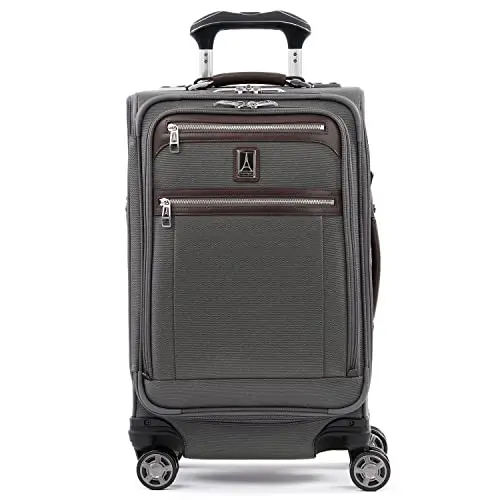
Platinum Elite 21-Inch – Magnetic Self-Aligning Spinner Wheels
A 21-inch expandable softside aimed at frequent flyers: magnetic self-aligning dual spinner wheels, a four-stop PowerScope handle, external USB-A and USB-C ports, and a removable suiter. High-density nylon with a DuraGuard coating, plus limited lifetime coverage that extends to airline damage.
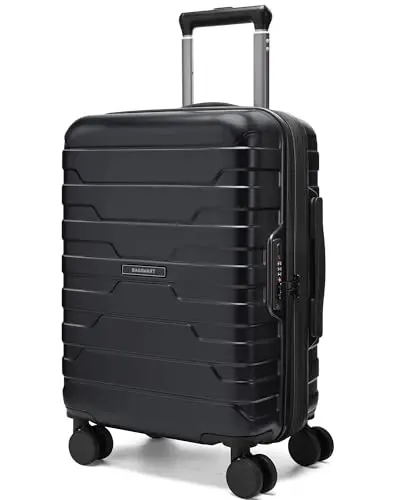
Carry-On 20-Inch – Expands From 35L to 42L
A 20-inch hardside that goes from 35 to 42 liters with a 1.6-inch expansion gusset. Scratch-resistant shell with shock-drop testing, side-mounted TSA lock, four-level aluminum handle, soft silicone grab handles, and a lifetime warranty.
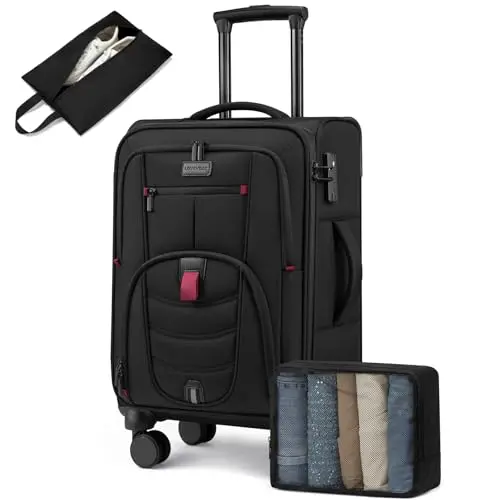
Softside 22-Inch – Front Laptop Compartment
A softside carry-on with an exterior front compartment sized for a 15.6-inch laptop and tablet. 50 liters of packing space, two included packing cubes, an internal wet compartment, eight spinner wheels, and an integrated TSA combination lock.
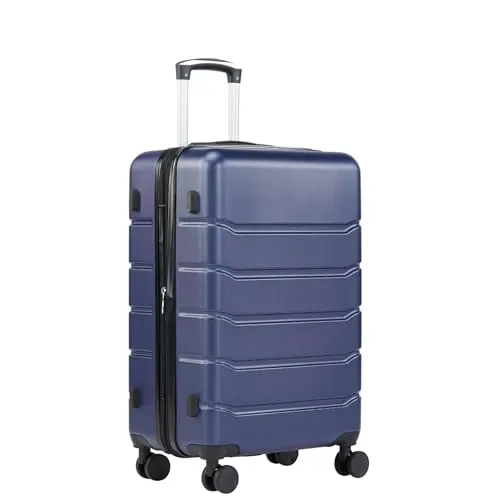
20-Inch Hardside – Lightweight TSA-Locked Spinner
A 20-inch ABS hardside that weighs six pounds and includes a built-in TSA lock. Dual-wheel spinners, wet and dry mesh compartments, X securing straps, and an expandable zipper – the entry-level pick that doesn’t feel stripped down.
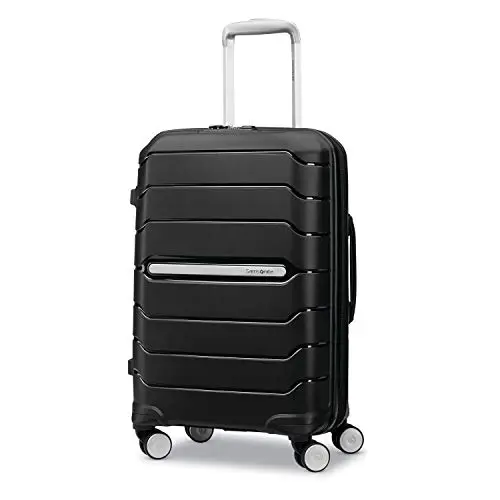
Freeform Hardside – Expandable Eight-Wheel Spinner
A 20-inch expandable hardside with a textured polypropylene shell that hides scratches. Eight spinner wheels, a built-in combination lock, elastic tie-down straps, a divider, and a small accessory pouch. At 6.5 pounds it’s the lightest hardside in this lineup.

Pagosa 22-Inch – Polypropylene Shell With TSA Lock
A 22-inch hardside with a 37-liter interior and a two-inch expansion gusset. Polypropylene shell, self-mending #10 zippers, Travel Sentry TSA combination lock, rubber grab handles on three sides, five pockets, and a two-year warranty.

21-Inch Hardside – Expandable Budget Spinner
A 21-inch ABS hardside with a 34-liter interior and a 25% expansion zipper. Four multi-directional wheels, a telescoping handle plus a short lift handle, and an interior divider with three zippered pockets. No lock included.

20-Inch Expandable – 33L to 41L Hardshell
A 20-inch ABS hardside that expands from 33 to 41 liters. Four spinner wheels, a three-stage telescopic handle, dual compartments with a buckle compression system, and a 6.94-pound build that suits short leisure trips.
How We Evaluated These Carry-On Luggage Models
We didn’t log a thousand miles of terminal walking with these bags. What we did: cross-referenced 9 carry-on luggage models from 9 distinct brands across six decision axes – wheel configuration and hardware, shell material, published dimensions against airline sizers, packed capacity and expansion, organization and included accessories, and lock and warranty coverage. We triangulated manufacturer specs, feature sets, and owner feedback where available, then mapped each bag against realistic traveler profiles: the weekly business flyer, the weekend-only packer, and the traveler who refuses to check a bag.
The scoring framework weighted real-world fit (70%) – how the bag behaves rolling through a terminal and packing for its intended trip length – against feature differentiation (30%) – the hardware and design choices that make one model a better answer than another. We audited wheel descriptions closely, because a spinner label covers everything from four single casters to eight dual-wheel sets with magnetic alignment. We have no commercial relationship with any brand here; recommendations track fit and differentiation, not brand preference. If you fly often and want the smoothest roll, the Travelpro Platinum Elite is your match; if you want the best all-around balance of shell material, wheel hardware, and warranty, go with the LUGGEX EX-Core.
How to Choose the Right Carry-On Luggage
1. Wheel Systems: What Separates Smooth Carry-On Spinner Wheels From Wobbly Ones
Almost every carry-on worth buying rolls on spinner wheels, but the label hides real differences. Four single casters are the baseline; eight dual-wheel sets spread the load across two wheels per corner, which is why heavier packed bags track straighter and pivot without dragging. Dual sets also mean one cracked wheel doesn’t end your trip.
The housing matters as much as the wheel itself. A recessed housing resists curb strikes; a bracket that sits proud of the shell snaps off. If you roll through cobblestone or gravel regularly, wheel protection will do more for you than any other spec on the box. For the most refined roll in this lineup, the Travelpro Platinum Elite is the pick.
2. Airline Sizing for Carry-On Luggage: Why 22 x 14 x 9 Beats a 20-Inch Label
Nearly every domestic carry-on standard comes back to 22 x 14 x 9 inches in overall dimensions – wheels and handles included. Marketed inch labels describe the case, not the travel footprint, and the gap can run two inches or more. A bag sold as 20-inch might tape out at 21.5, 22.5, or 23 inches tall once the wheel assemblies are counted.
Measure your actual bag, fully packed, and compare that number to the airline’s sizer rather than the product name. If you want a bag built to the 22 x 14 x 9 spec with close to no margin, the LUGGEX EX-Core is the safe choice.
3. Hardside vs Softside Carry-On Luggage: Shell Tradeoffs That Actually Matter
A hardside shell protects fragile contents, sheds rain, and hides nothing – every scuff shows unless the surface is textured. It also gives you zero slack when the overhead is a half-inch too shallow. Softside bags compress into tight bins, gain exterior pockets, and often weigh less for the same capacity.
The tradeoff is exposure: an exterior laptop sleeve is convenient at the gate and riskier in a cargo hold. If your laptop travels with you, the LOVEVOOK softside is the pick here. If you pack bottles and check the bag, go hardside.
4. Polycarbonate vs Polypropylene vs ABS: Reading Hard Shell Specs
Three materials dominate. Polycarbonate flexes and springs back, which is why it survives impact best at low weight. Polypropylene is stiffer and more scratch-resistant, usually with a textured surface that hides wear. ABS is the budget choice – cheaper to produce, stiffer still, and likelier to crack than flex under a hard hit.
None of these is a guarantee. Shell failures are far rarer than wheel and zipper failures, so don’t pay a premium for a shell upgrade while ignoring the hardware.
5. Capacity, Expansion, and Organization Inside a Carry-On
Most carry-ons land between 34 and 40 liters, roughly four days of clothing for an efficient packer. An expansion zipper adds 7 to 8 liters on the bags that have one, and it counts against your size limit once it’s unzipped – so expand for the return trip, not the outbound.
Inside, look for compression straps or a buckle system, a full divider, and at least one wet or shoe pocket. Packing cubes aren’t a gimmick; they’re often the difference between a 35-liter bag that works and one that doesn’t.
6. Zippers, Locks, and Handles: The Parts That Fail First
Double-layer zippers and self-mending coils survive overpacking better than thin single coils, and they’re the most reliable quality signal on a spec sheet. Look for a TSA combination lock that’s flush- or side-mounted rather than a dangling padlock, which snags on conveyor belts.
Handles should offer multiple stops and minimal wobble when fully extended. Warranty terms tell you what a brand expects to break: wheels and shells covered for years is a good sign, and coverage that extends to airline damage is better.
7. What Budget, Mid-Range, and Premium Carry-On Luggage Actually Buys
At the entry-level tier you get ABS shells, four wheels, and basic interiors – fine for a few trips a year, with zippers as the likely failure point. Mid-range adds polycarbonate or polypropylene, eight-wheel bases, integrated TSA locks, and warranty terms that stretch past a year or two.
The premium tier is where wheel engineering and support separate: self-aligning wheels, multi-stop handles, airline damage coverage, and interiors built around business travel. You’re paying for the parts that fail first, not for a nicer logo.
Frequently Asked Questions
1. What's the difference between the LUGGEX EX-Core and the BAGSMART 20-inch carry-on?
Both are 20-inch hardsides sized to 22 x 14 x 9 with built-in TSA locks, but they solve different problems. The polycarbonate shell on the LUGGEX flexes on impact and rides on an eight-wheel base, which tracks straighter once the bag gets heavy. BAGSMART’s advantage is the bigger expansion swing – 35 to 42 liters, against 40 to 44 on the LUGGEX.
Choose BAGSMART if you regularly pack for a week and want the lifetime warranty. Choose the LUGGEX if wheel stability and shell material matter more than maximum packing volume.
2. Is the Travelpro Platinum Elite worth it over the Samsonite Freeform?
They’re different classes of bag. The Travelpro is a premium softside built around magnetic self-aligning wheels, a multi-stop handle, USB ports, and a suiter, with airline damage coverage on top of a limited lifetime warranty. The Samsonite is a lighter hardside with eight wheels and a scratch-hiding textured shell.
If you fly weekly, the Travelpro’s wheel system and support terms justify the premium tier. If you want a simple, light hardside that shrugs off scuffs, the Samsonite Freeform is the more sensible spend.
3. Amazon Basics vs Sweetcrispy: which budget carry-on is the better buy?
The Sweetcrispy offers the six-pound build and a built-in TSA lock, neither of which the Amazon Basics bag matches. It’s also lighter and easier to lift into an overhead. The Amazon Basics counters with a 25% expansion zipper, a more predictable build, and three interior pockets.
Go with the Sweetcrispy 20-Inch if you want a lock and low weight for weekend trips. Go Amazon Basics if expansion room matters more and you don’t mind adding your own lock.
4. How long do carry-on luggage wheels typically last?
There’s no fixed clock on it – wheel life depends on surface, load, and handling. Wheel housings recessed into the shell survive curb and cobblestone abuse far better than brackets that stick out. Owner feedback in this category mentions zippers and wheels far more often than shells, so treat casters as a wear item.
Check warranty terms for wheel coverage specifically before you buy, and avoid dragging a loaded bag sideways over curbs – that’s the motion that snaps casters.
5. Do spinner wheels count toward airline carry-on size limits?
Yes. Airlines measure overall dimensions, which include wheels, handles, and any exterior pocket that bulges when full. A bag listed with a 21-inch case dimension can hit 23.5 inches once the wheel assemblies are counted.
Measure your own bag fully packed and compare it to the airline’s sizer bin rather than its inch label. On strict carriers, an inch of margin matters more than an extra liter of capacity.
Final Verdict
For most travelers, the LUGGEX EX-Core is the answer – a flexing polycarbonate shell, an eight-wheel base, a built-in TSA lock, and a three-year warranty that beats what most of the budget tier offers on paper. It rolls well, packs 40 liters, and doesn’t punish you on the return leg.
If you fly weekly and want the smoothest wheel system available plus airline damage coverage, the Travelpro Platinum Elite earns the premium tier. On a tight budget, the Sweetcrispy 20-Inch gets you a TSA lock, a six-pound frame, and dependable short-trip rolling. And if your laptop lives with you at the gate, the LOVEVOOK front compartment ends the bag-opening ritual. Match the bag to your trip length, then check the sizer before you fly.
