
Best Ceiling Mounted Rain Shower Heads – 2026 Reviews

There is a specific kind of disappointment in standing under a rain shower head you were excited about and realizing the water is landing just behind your head, because the thing is bolted to a wall arm at chin height. The head was never the problem. The mounting was.
That is why ceiling mounting is doing real work in this category. A head designed to hang flat overhead drops water straight down across your shoulders and back; the same head on a wall arm fires at an angle and covers a slice of the stall. The second thing that separates a good purchase from a regret is the coverage-versus-intensity trade. A wide face spreads the same flow thinner, so a huge head on a weak line can feel like drizzle while a smaller head at full flow feels like a proper drenching.
We mapped the market across brands and price tiers: what actually threads onto a ceiling arm, what arrives with the hardware you need, what is built to survive past year two, and what is a nice-looking gamble. The point is to get you to the right head for your bathroom rather than the loudest one on the page.
Best Ceiling Mounted Rain Shower Heads – 2026 Reviews
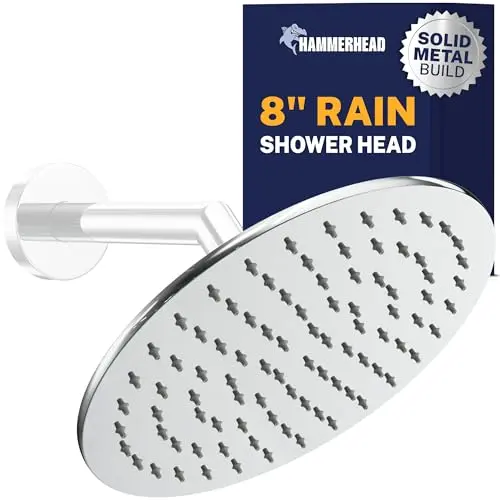
8-Inch Round Rain Shower Head – All-Metal Ceiling or Wall Mount
An 8-inch round rain head in solid metal with a commercial-grade plated chrome finish, rated at 2.5 GPM and threaded in standard 1/2-inch NPT brass. It is built to hang from a ceiling arm as a true overhead fixture, and it will happily sit on a wall arm if your plumbing is already set up that way.
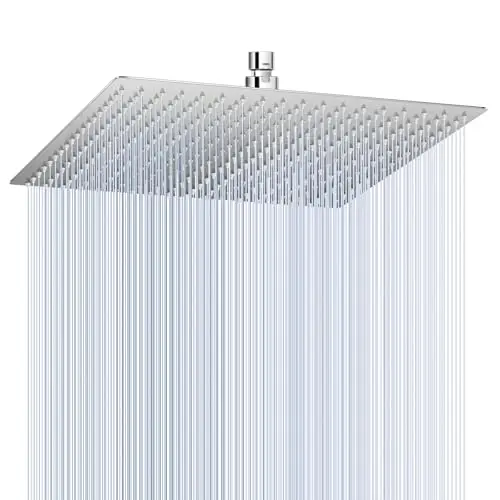
16-Inch Square Rain Shower Head – All-Metal Full-Body Coverage
A 16-inch square rain head with 324 silicone nozzles, cut from 304 stainless steel and finished in brushed nickel. It ships with a removable 1.8 GPM flow restrictor, a water filter, Teflon tape, and spare nozzles, and it is designed for a ceiling-mount install.
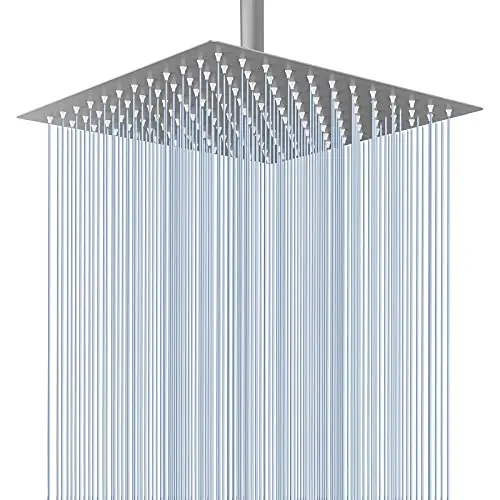
12-Inch Square Rain Shower Head – All-Metal Entry-Tier Pick
A 12-inch square rain head in brushed nickel, made from all-metal 304 stainless steel with a brass swivel ball joint. It ships with 144 touch-clean silicone jets, a mini wrench, spare filters, and a flow restrictor – a lot of hardware for the entry tier.
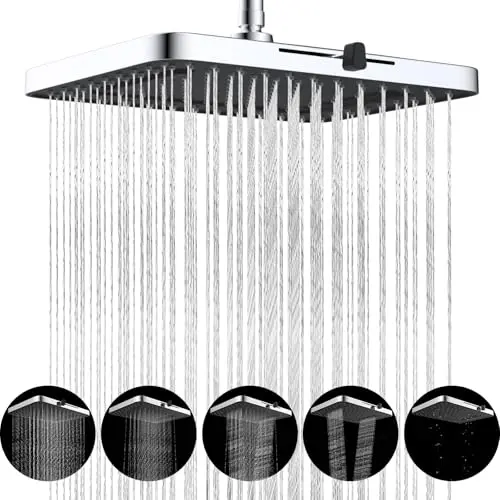
13-Inch 5-Mode Rain Shower Head – One Head, Five Sprays
A 13-inch square rain head with five spray settings, 157 silicone nozzles, and a 360-degree brass swivel ball. It is cUPC certified for U.S. and Canadian plumbing standards and ships with Teflon tape, a washer, and a water filter.
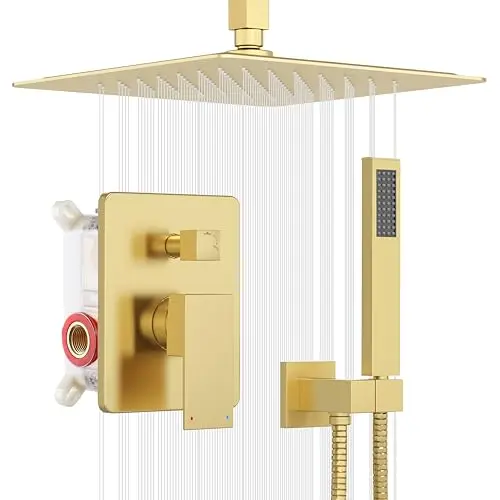
12-Inch Rain + Handheld System – Complete Ceiling-Mount Kit
A complete ceiling-mounted shower system: 12-inch rain head, handheld sprayer, 59-inch hose, 10-inch shower arm, and a brass pressure-balance valve with brushed gold trim. Everything needed for an overhead install is in the box.

10-Inch Rain + Handheld Combo – Dual-Spray with Slide Bar
A 10-inch square rain head paired with a handheld sprayer on a 13-inch slide bar, connected by a 15-inch tri-arm extension. All-metal construction, 2.5 GPM, with plumber’s tape, spare washers, and a wrench included.
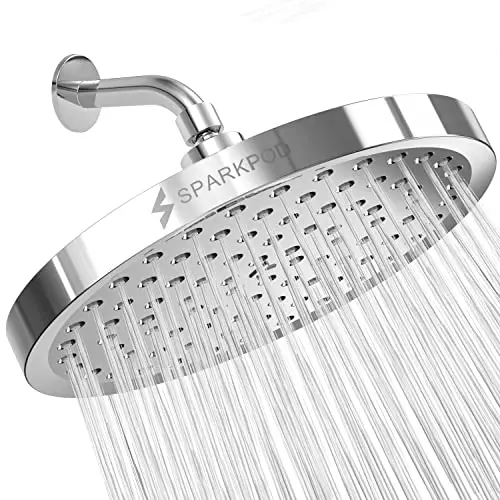
8-Inch Round Rain Shower Head – Low-Pressure Friendly
An 8-inch round rain head with 90 rubber nozzles, shipped at 1.8 GPM with an additional 2.5 GPM restrictor in the box. Rustproof ABS with a polished chrome finish, tool-free install, and a one-year warranty with a 30-day money-back guarantee.
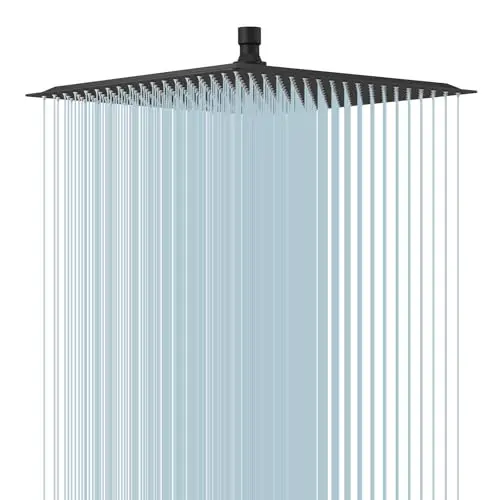
16-Inch Square Rain Shower Head – Oversized Matte Black
A 16-inch square rain head in matte black, 0.08-inch thin, with 324 silicone nozzles and a swivel adapter. It ships with a flow regulator offering 2.5 GPM or an optional 1.8 GPM insert, five replacement nozzles, Teflon tape, and a limited lifetime warranty.
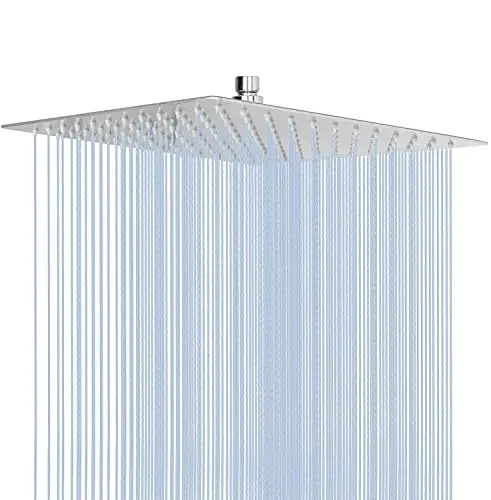
12-Inch Square Rain Shower Head – Ultra-Thin Chrome
A 12-inch square rain head just 0.08 inches thick, cut from 100% stainless steel in a mirror chrome finish. Air-intake technology boosts perceived pressure, and food-grade silicone nozzles keep it clean.
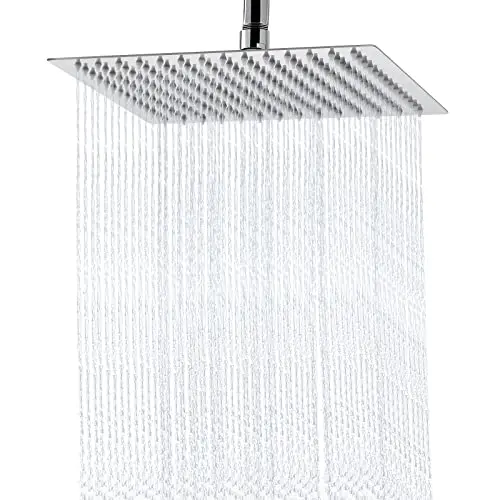
10-Inch Square Rain Shower Head – Budget Stainless
A 10-inch square rain head in polished 304 stainless steel with 196 silicone spouts and a brass swivel ball connector. It fits standard shower arms on either a wall or a ceiling mount.
How We Evaluated These Ceiling Mounted Rain Shower Heads
We didn’t plumb these into a test shower stall or run measured flow-rate trials at controlled line pressure. What we did: cross-referenced 10 ceiling-mountable rain shower heads from 10 distinct brands across five decision axes – ceiling-arm compatibility, face size and nozzle count, build material and finish, rated flow rate and pressure behavior, and durability signals over time. We triangulated published specifications, weighed owner experience where it was available, and mapped each head against a realistic straight-down ceiling install rather than the wall-arm setup most listings photograph.
The scoring framework weighted real-world fit for an overhead install (70%) – does the head cover the body, hold its pressure, and stay put on an arm – against feature differentiation (30%), meaning the multi-spray modes, swappable restrictors, certified valves, and included hardware that separate one model from the next. We have no commercial relationship with any brand featured here; the rankings track fit and differentiation, not brand preference. If you want the safest long-term buy, the HammerHead 8-Inch is where we would start; if coverage is the whole reason you are upgrading, the KINLIV 16-Inch earns its slot.
Two honesty notes. Where a listing gave us thin specifications, we wrote less rather than guessing at numbers. And the single biggest filter was whether a head can actually hang from a ceiling, because that is the entire premise of this list. A rain shower head is also a fixture you look at every day, so finish quality and how the head sits against the ceiling counted in the final order, not just flow rate.
How to Choose the Right Ceiling Mounted Rain Shower Head
1. Why Ceiling Mounting Changes the Math on a Rain Shower Head
The head is only half of what you are buying. A ceiling-installed rain shower head hangs flat above you and lets water fall straight down; the same head on a wall arm sprays at an angle across the stall instead. Almost every model here threads onto standard 1/2-inch NPT fittings, so the head itself will work either way – the difference is what it is attached to.
Here is the part that catches people out: the ceiling arm usually isn’t in the box. Most listings assume you already have one, or they expect you to buy an adjustable ceiling arm separately. The ESNBIA kit is the exception and includes a 10-inch arm; the Veken combo solves it differently with a 15-inch extension that lifts the head overhead from a wall outlet. Budget for that extra part before you order, because a rain head dangling at chest height is not the upgrade anyone wanted.
Weight matters too. A 16-inch metal head hanging off a long ceiling arm puts real leverage on the joint, so check that the arm is anchored into blocking rather than drywall alone.
2. Face Size, Nozzle Count, and the Coverage vs. Pressure Trade-Off
Coverage and intensity pull in opposite directions. The water coming out of your shower is a fixed volume per minute; spread it across a bigger face and each jet gets softer. An 8-inch head concentrates the flow into a targeted drench. A 12-inch covers head to hips. A 16-inch face puts water across your shoulders and mid-back at once, which is the feeling people are chasing when they want a hotel-style shower.
Nozzle count is the misleading spec. Going from 90 jets to 324 does not make a shower stronger; it makes it finer, because the same flow is divided more ways. A head rated at 1.8 GPM with 324 nozzles will feel gentle no matter what the listing says about pressure-boosting technology. If you want force, look for fewer, larger orifices and a higher flow rating, not a bigger number in the nozzle column.
3. Build Material: Cast Metal, Thin Stainless, and Plastic
Three constructions show up in this category, and they behave differently over five years. Solid metal with a plated finish – the HammerHead is the clearest example – is heavier, resists flexing, and the plating does not lift at the edges. Thin-gauge stainless, usually around 0.08 inches, is genuinely metal and genuinely rust-resistant, but a stamped panel that thin can deform, and the seam where the face meets the housing is where leaks tend to start. Then there is ABS plastic with a chrome-look coating, which is light, cheap, and fine for a spare bathroom.
Finishes deserve their own line. Plated chrome and brushed nickel wear better than painted finishes, which chip at the edges and show it. If you are buying a dark or colored head, expect to be more careful with it.
If you want the most metal for your money, the Voolan 12-Inch is the value answer: all-metal stainless and a brass swivel at an entry-tier price.
4. Flow Rate, Restrictors, and Low-Pressure Homes
2.5 GPM is the federal ceiling for shower heads sold in the U.S., and it is the number the higher-output heads here are built around. Plenty of listings ship at 1.8 GPM instead, either for water savings or because they are sold into restricted markets.
What matters is whether the manufacturer gives you a choice. Some heads include swappable restrictors so you can run 1.8 or 2.5 depending on your home; others ship with the restrictor pre-installed and removable. If your house already runs low pressure, a wide head at 1.8 GPM through hundreds of jets will feel like a drizzle. Either step down to a smaller face, or pick a head that lets you pull the restrictor – and check your local rules before you do.
5. What Actually Comes in a Ceiling Mount Rain Shower Head Kit
Read the included-components list before you compare anything else, because the price gap between two similar heads is often just hardware. A standalone head typically ships with the head, a rubber gasket, and maybe Teflon tape; the better ones add a water filter, spare nozzles, and a flow restrictor.
A combo kit adds a handheld sprayer, hose, slide bar, and sometimes a full pressure-balance valve. That last item is the difference between a cosmetic upgrade and a plumbing job, and it is the reason the ESNBIA 12-Inch system arrives complete with both an arm and a valve in one box. If your existing valve is healthy, though, you are paying for hardware you will not use.
6. Cleaning, Care, and How Long These Actually Last
Silicone nozzles are the maintenance feature worth having. A thumb swipe clears mineral buildup, which is the difference between a head that still sprays evenly after two years and one that develops bald patches. In hard-water areas, do that swipe weekly rather than annually.
Warranty length is the most honest durability signal a manufacturer gives you, and it varies wildly here – from a single year up to a decade, with a limited lifetime claim in between. Take the coverage seriously, because the most common failure across this category is a thin stainless panel developing a seam leak or a plastic collar cracking at the joint. Neither is repairable, which is why the metal-heavy picks sit at the top of this list.
Frequently Asked Questions
1. Do ceiling mounted rain shower heads need a special shower arm?
Usually, yes. The head itself almost always uses a 1/2-inch NPT thread, so it will physically fit any arm – but a wall arm points the water sideways and the overhead effect you bought the head for never happens. For a true straight-down drop, you need a ceiling-mounted arm or an angled extension that reaches overhead. Only one pick here includes the arm in the box; most expect you to supply it, so factor that into the total cost of the upgrade.
2. HammerHead 8-Inch vs. SparkPod 8-Inch: which small rain shower head is right for you?
Both are 8-inch round heads, and they are built for different buyers. The HammerHead is solid metal with brass threads and a firm 2.5 GPM spray; it is the head you install once and expect to keep for a decade. The SparkPod is ABS with swappable restrictors and a one-year warranty – lighter, cheaper to try, and a better fit if you are not sure a rain head suits the bathroom yet. If you own the place and are mounting to a ceiling, the HammerHead is the better long-term buy; if you rent or want to test the format cheaply, the SparkPod 8-Inch is the low-risk way in.
3. KINLIV 16-Inch vs. BESy 16-Inch: how do the two oversized heads differ?
Same footprint, different priorities. The KINLIV is brushed nickel 304 stainless with a ten-year warranty, a removable restrictor, and a water filter in the box, making it the more conservative long-term pick. The BESy is the only matte black option here, ships with a flow regulator and five spare nozzles, and backs it with a limited lifetime warranty – but its finish is painted rather than plated and the ultra-thin panel is the part we would watch. If the color is the deciding factor, the BESy 16-Inch is the only way to get it at this size.
4. Will a bigger rain shower head make my water pressure feel weaker?
Yes, if the flow rate stays the same. This is the most misunderstood thing about the category. A 16-inch face with 324 jets at 1.8 GPM divides the same water across a much larger area, so each jet is gentler than a 6-inch head at identical flow. What you gain is coverage; what you lose is force. On strong household pressure with a 2.5 GPM head, a big face feels luxurious. On a weak line, a smaller face or a head with a removable restrictor will serve you better.
5. Is a combo system like the ESNBIA or Veken a better ceiling mounted rain shower head buy?
It depends on what you are replacing. A combo makes sense if you are already opening the wall or retiring a tired valve – the ESNBIA brings a brass pressure-balance valve, a 10-inch arm, and a handheld in one certified package, which is more work but also a complete remodel in a box. The Veken takes the easier route with a 15-inch extension arm and a slide bar, with no valve work required. If your existing valve is healthy and you simply want overhead rainfall, a standalone head plus a ceiling arm is cheaper and simpler than either.
Final Verdict
For most people, the HammerHead 8-Inch is the answer. It is the one head here built from solid metal with brass threads, it hangs cleanly from a ceiling arm, and it delivers a firm 2.5 GPM drench instead of a polite mist. You give up coverage – 8 inches is targeted, not full-body – and that is the trade you are accepting.
If full-body coverage is the whole point of the upgrade, go with the KINLIV 16-Inch: 324 nozzles, a ten-year warranty, and the widest face in the lineup. And if you are remodeling and want the arm, the valve, and the handheld in one certified package, the ESNBIA 12-Inch system handles the entire ceiling install in a single box.
Everyone else lands in between. Buy for the coverage you actually want and the arm you actually have.
