
Best Cheap Dehumidifiers – 2026 Reviews

A damp closet smells like a problem you can ignore until every jacket in it does. The same goes for a bathroom mirror that never quite dries, or a basement corner that feels clammy every time you walk past. A cheap dehumidifier can make a real difference in those small spaces, but only if you pick one that actually removes water instead of just humming politely.
The budget end of this category is full of inflated square-footage claims and tiny tanks. The two things that separate a useful cheap dehumidifier from a disposable one are tank size and honest extraction. After that, it’s about noise, auto-shutoff, and whether you can live with emptying the tank every day.
We looked across brands and form factors – passive absorbers, compact Peltier units, and a step-up compressor model – to find the cheap dehumidifiers that make sense for closets, bedrooms, bathrooms, RVs, and damp basement corners. The goal is simple: help you spend less without buying something you’ll regret in a month.
Best Cheap Dehumidifiers – 2026 Reviews
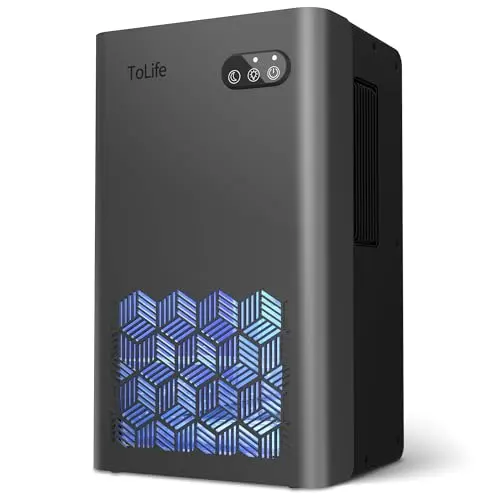
TZ-C2 – 95 oz Tank for Small-Room Humidity
The ToLife TZ-C2 is a compact dehumidifier built for bedrooms, bathrooms, closets, and small basement corners. Its 95 oz tank cuts down on emptying runs, while the sleep mode runs under 30 dB and the auto-shutoff stops the unit when the tank is full or seated incorrectly.
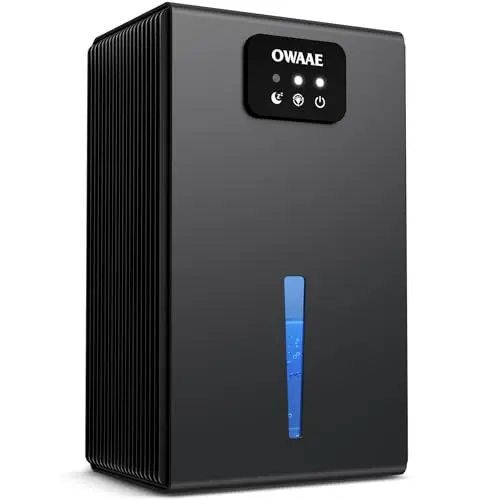
TZ-C4S – Quiet Bedroom Moisture Control
The OWAAE TZ-C4S targets bedrooms and enclosed spaces with a 95 oz tank, a sleep mode rated under 30 dB, and automatic shutoff when the tank is full or misplaced. A built-in handle and compact body make it easy to move between rooms.
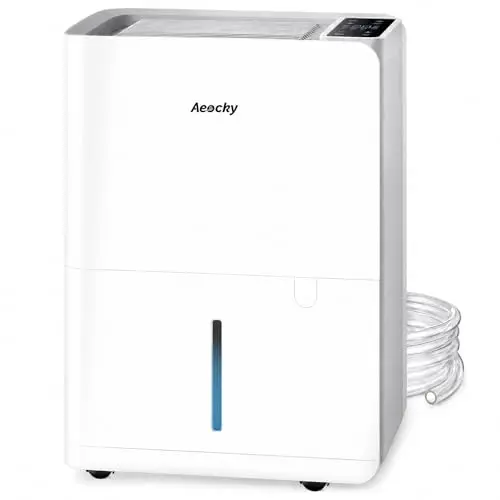
BOREAS-001 – High-Capacity Basement Dehumidifier
The AEOCKY BOREAS-001 is a step-up high-capacity dehumidifier rated for 50 pints per day in hot, humid conditions and 38 pints per day in a damp basement. It pairs a 0.8-gallon tank with a drain hose, auto-defrost, a humidistat, and casters for moving around larger spaces.
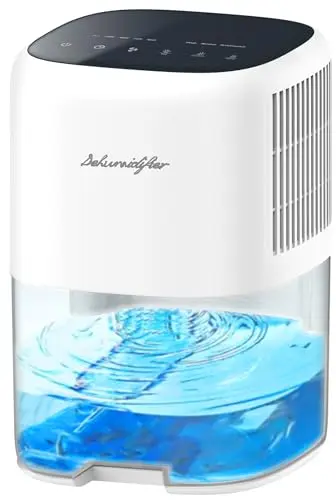
E2-DH-WHITE – Budget Small-Room Dehumidifier
The Newo E2-DH-WHITE is a compact dehumidifier for closets, bathrooms, dorm rooms, and small bedrooms. It has a 44 oz tank, three working modes, five timer settings, auto-defrost, and a 10-color night light with adjustable brightness.
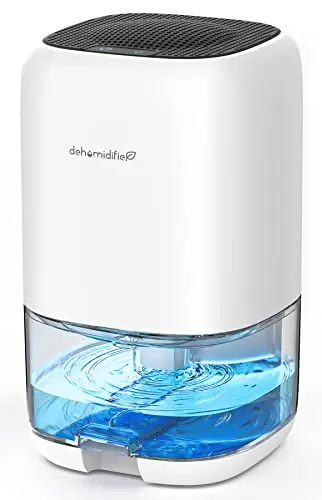
DH-CS01 – Compact 35 oz Bedroom Unit
The TABYIK DH-CS01 is a small Peltier dehumidifier with a 35 oz tank, 28 dB operation, a seven-color light, and automatic shutoff when the tank reaches capacity. It’s built for bedrooms, bathrooms, RVs, and closets.
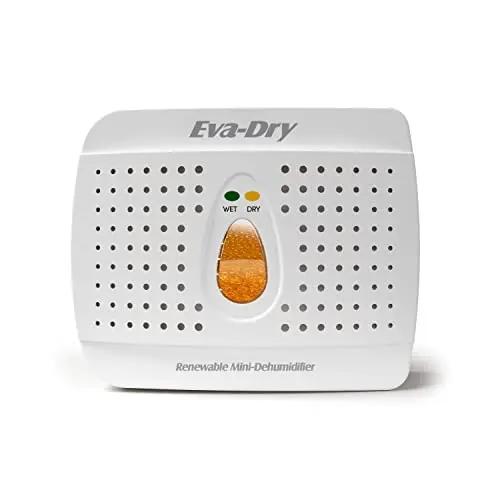
E-333 – Cordless Mini Moisture Absorber
The Eva-Dry E-333 is a cordless, renewable moisture absorber for closets, cars, gun safes, boats, and gym bags. It uses silica gel beads, needs no batteries or cables, and recharges for repeated use.
How We Evaluated These Cheap Dehumidifiers
We did not run controlled humidity-chamber tests or measure moisture removal with calibrated instruments. What we did: cross-referenced six dehumidifiers from six brands across five decision axes – tank capacity, claimed coverage, noise, drainage and shutoff features, and real-world fit for small rooms. We triangulated published specifications, feature sets, owner feedback where available, and use-case fit for closets, bedrooms, bathrooms, basements, and RVs.
We mapped each unit to the rooms budget shoppers actually use dehumidifiers in: closets, bathrooms, bedrooms, small basements, and RVs. That meant auditing coverage claims against tank size and extraction ratings rather than taking square-footage numbers at face value. A 95-ounce tank paired with a 1-liter-per-day Peltier core is a different tool from a 50-pint compressor unit, even if both get called home dehumidifiers.
The scoring framework weighted real-world performance (70%) – how well each budget dehumidifier matches its stated job – against feature differentiation (30%) – tank size, quiet operation, timers, lights, and drainage options that separate one cheap unit from another. We also weighed how often you’d have to empty or recharge each unit, because that chore defines whether a cheap dehumidifier actually gets used. We have no commercial relationship with the brands featured; recommendations track fit and differentiation, not brand preference. If you want the strongest all-around small-room pick, the ToLife TZ-C2 is the place to start; if quiet bedtime operation matters most, the OWAAE TZ-C4S is the better match.
How to Choose the Right Cheap Dehumidifier
1. What Makes a Cheap Dehumidifier Worth Buying
Cheap is only a good deal when the unit is right-sized for the job. The basics are a right-sized tank, an honest extraction rating, automatic shutoff, and simple drainage. A budget dehumidifier that fills a 35 oz tank in a day and has no shutoff is not saving you anything; it’s adding a chore.
Start by ignoring the biggest number on the box. A unit that claims 1,000 square feet but holds 44 oz of water is telling you it’s for a small enclosed room, not an open-plan living space. For a balanced small-room pick, the ToLife TZ-C2 is the model we’d point to first because it pairs a larger tank with the features that make daily use less annoying.
2. Match Tank Size and Coverage to the Room
Tank capacity and coverage claim need to be read together. A 35-44 oz tank is fine for a closet, bathroom, or small bedroom, but it will need frequent emptying in steady humidity. A 95 oz tank buys you more time between empties, which is often the difference between a dehumidifier that gets used and one that gets unplugged.
For a truly tight space, the Newo E2-DH-WHITE is a sensible budget starting point: the 44 oz tank is larger than many compact rivals, and the timers and auto-defrost add flexibility. Just don’t expect it to dry a whole basement.
3. Peltier, Compressor, and Desiccant: Which Budget Dehumidifier Fits
Peltier units are the quiet, compact, low-wattage options that dominate the cheap end. They work best in warm, enclosed rooms and lose efficiency as temperatures drop. Compressor dehumidifiers pull more water and handle larger spaces, but they’re heavier and usually louder. Renewable desiccant absorbers like the Eva-Dry are not room dehumidifiers at all; they’re for closets, cars, and safes.
Match the technology to the room, not the other way around. A Peltier unit in a hot bathroom is a reasonable budget tool. The same unit in a cool, open basement will disappoint.
4. Noise, Drainage, and Auto-Shutoff Details That Matter
A sub-30 dB sleep mode matters if the unit will run in a bedroom. So does automatic shutoff, especially if the tank can fill while you’re out. If you’re dealing with continuous dampness, a continuous drain hose is the feature that turns a budget dehumidifier into something you can ignore for days.
For a damp basement or garage, the AEOCKY BOREAS-001 is the step-up pick here because it includes a drain hose and a much larger extraction rating. It costs more, but it’s the difference between managing humidity and just moving a small box around.
5. How to Avoid Inflated Square-Footage Claims
Square-footage claims are the most misleading spec in this category. A unit rated for 1,000 square feet may only hit that number in a sealed, warm, humid room at maximum output. In a cool bedroom or a bathroom with the door open, real performance drops.
Look at extraction ratings – pints per day or liters per day – and compare them with tank size. A 1-liter-per-day unit with a small tank is a small-room tool. A 50-pint-per-day unit is a different class of machine. Neither is lying; the marketing is just optimistic.
6. When Paying More Still Counts as Cheap
A step-up unit can still be the cheap choice if it prevents mold, repeated replacements, or a dehumidifier that never gets used because it’s too loud or too small. The math isn’t just the sticker; it’s how many seasons the unit lasts and how often you have to babysit it.
That doesn’t mean everyone needs a compressor model. If your problem is one damp closet, a passive absorber or a compact Peltier unit is the right spend. If your problem is a wet basement, a stronger unit is usually the cheaper decision over time.
Frequently Asked Questions
1. Are cheap dehumidifiers actually effective?
They can be, but effectiveness depends on the room and the unit’s extraction rate. A cheap Peltier dehumidifier is a reasonable tool for a small enclosed room like a closet, bathroom, or bedroom. It is not a whole-home solution, and it will struggle in a cool, open basement. Look for a tank size that matches how often you’re willing to empty it and an auto shutoff so it doesn’t overflow.
2. ToLife TZ-C2 vs. OWAAE TZ-C4S: Which budget dehumidifier is better?
They’re close. The ToLife TZ-C2 has a 95 oz tank, two working modes, and two fan speeds, which gives it a slight edge for flexible small-room use. The OWAAE TZ-C4S also has a 95 oz tank, but its pitch is quieter bedroom operation with a sub-30 dB sleep mode and a built-in handle. If you want more control, pick the ToLife; if quiet nighttime operation is the priority, the OWAAE is the better fit.
3. TABYIK DH-CS01 vs. Newo E2-DH-WHITE: Which small dehumidifier should you choose?
The TABYIK DH-CS01 is the quieter pick at 28 dB and has a straightforward 35 oz tank, so it suits a bedroom or bathroom where noise matters. The Newo E2-DH-WHITE gives you a larger 44 oz tank, three working modes, and five timer settings, but its 260-square-foot rating is still strictly small-room territory. Choose TABYIK for near-silent operation; choose Newo for more tank capacity and scheduling flexibility.
4. Eva-Dry E-333 vs. a plug-in dehumidifier: Which is better for closets?
For a closet, car, or gun safe, the Eva-Dry E-333 is often the better fit because it’s cordless and needs no outlet. It uses renewable silica gel and recharges for reuse, but it holds only 6 oz and is not a room dehumidifier. A plug-in unit is better if the space has power and you need continuous moisture removal from the air.
5. Do cheap dehumidifiers use a lot of electricity?
Most compact Peltier dehumidifiers are low-wattage devices, often in the 30-93-watt range, so they’re cheap to run compared with a full-size compressor unit. The AEOCKY BOREAS-001 draws more power at 380 watts, but it also removes far more water per day. Check the wattage and extraction rating together; a low-wattage unit that barely collects water isn’t efficient in practice.
Final Verdict
For most shoppers, the ToLife TZ-C2 is the cheap dehumidifier to beat: it pairs a 95 oz tank with a sleep mode under 30 dB, auto shutoff, and enough coverage for bedrooms, bathrooms, and small basement corners without stepping into premium territory. It’s the one we’d recommend first to a friend who wants real moisture removal without overpaying.
If your budget is tighter, the Newo E2-DH-WHITE gives you a 44 oz tank, timers, and auto-defrost for small rooms. For a genuinely damp basement, the AEOCKY BOREAS-001 is the step-up pick with a 50-pint daily rating and continuous drain hose. And for a closet, car, or gun safe, the Eva-Dry E-333 is the cordless cheap fix that needs no outlet at all.
