
Best Cheap Espresso Machines – 2026 Reviews

Espresso at home usually starts with a fantasy: a small chrome machine, a perfect shot, and a latte that looks like a leaf. Then reality hits-entry-level machines can be fussy, and the gap between a bargain and a reliable daily driver is wider than the price tags suggest. The good news is that the budget end of the market has gotten genuinely useful, especially if you know which compromises are harmless and which ones ruin the routine.
For a cheap espresso machine, the two axes that matter most are shot consistency and milk-steaming control. A machine can have a big pressure number and still pull sour, thin shots if temperature and preheat are inconsistent. Likewise, a powerful steam wand is only useful if the machine recovers fast enough to steam after brewing-or if you’re willing to wait through a cool-down cycle.
This guide looks across the budget espresso market rather than pushing one brand’s lineup. We’ll separate pump machines, pod brewers, and electric moka pots, then match each style to the buyer who’ll actually be happy with it.
Best Cheap Espresso Machines – 2026 Reviews

Stilosa – Compact Manual Espresso Starter
The Stilosa is De’Longhi’s no-frills entry into manual espresso: a 15-bar pump, stainless steel boiler, manual steam wand, and simple dial controls in a compact frame. It comes with single and double baskets plus a scoop/tamper, so you can start brewing without a separate accessory kit.
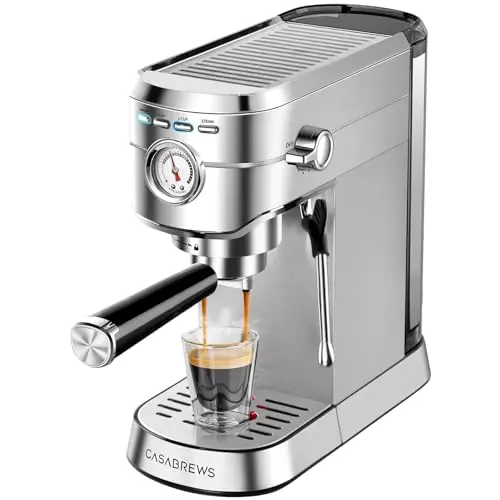
CM5418 – Pressure Gauge Control for Beginners
A compact semi-automatic with a 20-bar Italian pump, built-in pressure gauge, 1350W boiler, and a 34-ounce removable tank. The steam wand is designed for microfoam, and the small footprint suits tight counters.

ECMG0 – Pre-Infusion and Pressure Gauge Value
A 20-bar semi-automatic espresso machine with NTC temperature control, pre-infusion, a pressure gauge, stainless housing, steam wand, and hot-water function. It includes single and double baskets plus a tamper/spoon.
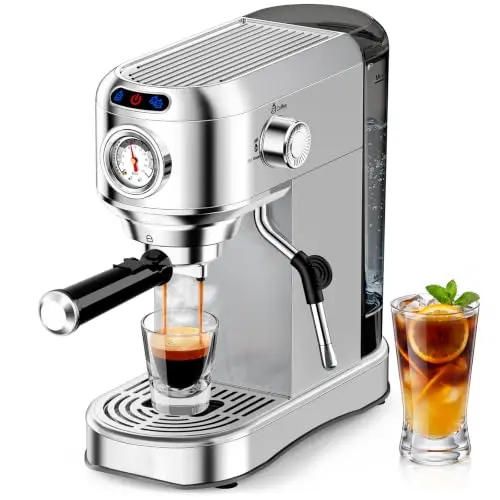
ST-699B – Fast-Heat Compact Espresso
A compact 20-bar semi-automatic with a 1450W heating system, pressure gauge, steam wand, and 34-ounce removable tank. Its narrow footprint is sized for small kitchens and office counters.

3700 Essential – Bigger Tank, Simple Brewing
A simplified 20-bar semi-automatic with a 1350W heating system, 43.9-ounce removable tank, steam wand, and compact stainless body. It includes single and double baskets plus a tamper/spoon, but skips the pressure gauge.

PE3670U – Temperature Display and Pre-Infusion
A 20-bar semi-automatic with a 1350W boiler, temperature display, pre-infusion, steam wand, 1.3L removable tank, cup warmer, and stainless finish. It includes a portafilter, pressurized baskets, dosing funnel, and tamper/spoon.
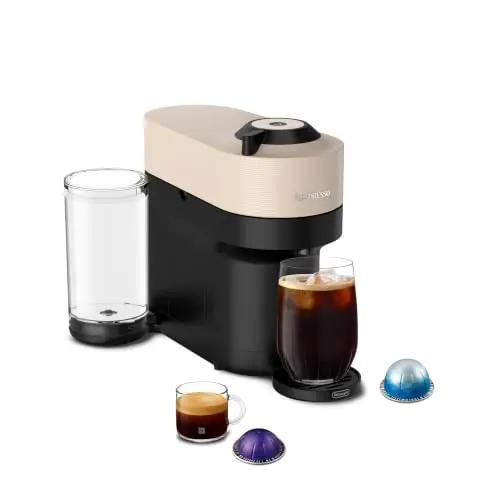
Vertuo Pop+ – Pod Simplicity for Espresso
A capsule espresso and coffee maker with one-touch brewing, 30-second heat-up, a 25-ounce side-mounted removable tank, and five brew sizes. It uses Vertuo capsules and includes a starter assortment.
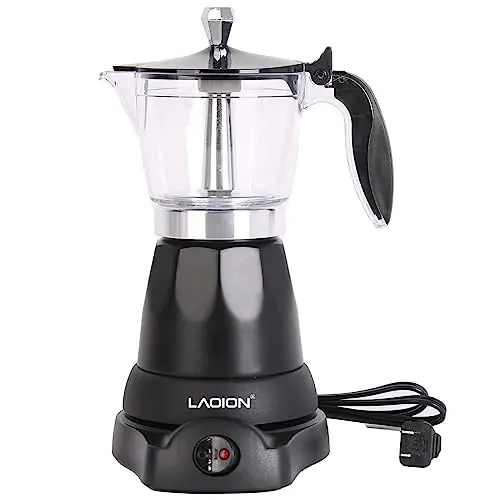
6-Cup Electric Moka Pot – Budget Cuban Coffee
An electric moka-style coffee maker with a 6-cup/300ml capacity, transparent upper chamber, detachable base, and dual auto-shutoff. The lower pot is food-grade aluminum, and the upper is BPA-free heat-resistant plastic.
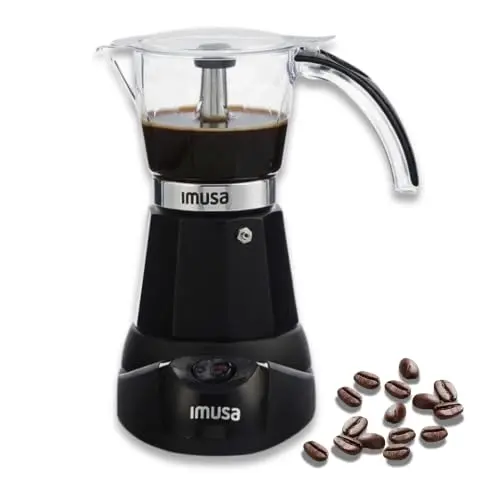
6-Cup Electric Espresso Maker – Classic Cuban Coffee Convenience
An electric moka-style espresso maker with 6- or 3-cup capacity, cast aluminum body, detachable base, on/off switch, visual brewing indicator, and cool-touch handle. It’s designed for Cuban, Italian, and moka-style coffee.
How We Evaluated These Cheap Espresso Machines
We didn’t run controlled extraction lab tests or months-long durability trials. We audited the setup and cleaning routines each machine demands, since small friction points compound in daily use. What we did: cross-referenced 9 cheap espresso machine models from 8 distinct brands across five decision axes – brew pressure and pre-infusion, steam-wand control, footprint and tank capacity, ease of cleanup, and long-term ownership signals. We triangulated published specifications, feature sets, owner feedback where available, and use-case fit against representative budget-espresso buyer profiles: first-time manual users, pod-first drinkers, and small-kitchen cooks who mostly make milk drinks.
The scoring framework weighted real-world fit (70%) – how well each machine delivers on its stated job without adding friction – against feature differentiation (30%) – pressure gauges, pre-infusion, temperature displays, removable tanks, and other advantages that separate one budget pick from another. That matters more in this category than raw spec bragging, because a cheap machine’s weakest link often shows up in routine, not on the first shot. We have no commercial relationship with any of the brands featured; recommendations track fit and differentiation, not brand preference. We also weighed whether each model’s extra features actually reduce routine friction or just add setup steps. Where feedback was uneven, we treated durability and temperature consistency as open questions rather than assuming the best. If you want the most balanced starter pump machine, the De’Longhi Stilosa is the match; if a pressure gauge and compact footprint matter more, the CASABREWS CM5418 serves that buyer better.
How to Choose the Right Cheap Espresso Machines
1. What Makes a Cheap Espresso Machine Worth Buying
Cheap doesn’t have to mean disposable. A worthwhile budget espresso machine usually gets a few fundamentals right: stable brew temperature, enough pump pressure to extract evenly, and a steam wand that can texture milk without sputtering. You’re not paying for prosumer precision here-you’re paying for repeatability.
Look for a removable water tank, a drip tray you can clean, and included single and double baskets. Those small details decide whether the machine becomes a daily habit or a countertop ornament. A pressure gauge is nice, but it’s not mandatory; consistent puck prep matters more.
2. Manual, Pod, or Electric Moka: Which Cheap Espresso Machine Fits Your Routine
Manual pump machines give you the closest thing to café-style control: you grind, dose, tamp, and steam. They’re the best fit if you want to learn and don’t mind a few messy first attempts. Pod machines trade control for speed and consistency; you’ll pay per capsule and accept the brand’s coffee range. Electric moka pots are the lowest-friction route to strong, concentrated coffee, but they don’t create true espresso pressure or microfoam.
Match the style to your mornings. If you want latte art practice, go manual. If you want one-touch coffee before a meeting, go pod. If you mainly drink small, strong cups and don’t need milk foam, moka is the budget-friendly shortcut.
3. Pressure, Preheat, and Steam Control on Budget Espresso Machines
15-bar and 20-bar pumps are common at this end of the market; both can make good espresso when paired with reasonable puck prep. The bigger differentiators are preheat consistency, pre-infusion, and steam recovery. A machine that drops temperature mid-shot will taste thin no matter what number is printed on the box.
A pressure gauge helps you see whether you’re over- or under-extracting, especially while learning. If you want that feedback without stretching the budget, the CASABREWS CM5418 is the pick. Just don’t confuse gauge presence with guaranteed quality-the steam wand and tank design still matter for daily use.
4. Where Cheap Espresso Machines Cut Corners – and Where They Don't
Budget machines often use pressurized baskets to fake body and crema, which can make stale coffee taste more forgiving but limit real dialing-in. You’ll also see plastic housings, small water tanks, and basic thermostats instead of PID control. Those compromises aren’t automatically dealbreakers; they’re tradeoffs.
Where you shouldn’t compromise: safe wiring and auto-shutoff, a cleanable steam wand, and a portafilter that fits securely. A machine that leaks or overheats is not a bargain. Read the setup instructions carefully-many budget models need a cool-down between steaming and brewing, and ignoring that triggers overheat protection.
5. Budget Espresso Machine Care and Longevity
Budget espresso machines live longer with filtered water, regular descaling, and a quick wipe of the steam wand after every use. Don’t leave water sitting in the tank for days, and empty the drip tray before it overflows. If your machine uses a pressurized basket, keep the tiny outlet clean; clogged holes wreck extraction.
If you want the simplest first pump machine to maintain, the De’Longhi Stilosa is the pick. Its manual workflow and compact tank are easy to live with, provided you stay on top of wand cleaning and descaling.
6. De'Longhi Stilosa vs CASABREWS CM5418: Which Cheap Espresso Machine for Beginners?
The Stilosa is the calmer teacher: simpler controls, a well-known manual workflow, and a compact body. The CM5418 adds a pressure gauge and a slightly more modern spec sheet, which helps if you like feedback while dialing in. Choose the Stilosa for low-friction routine; choose the CM5418 for visible pressure cues. Neither is a prosumer machine, and both reward good beans and a decent grinder.
Frequently Asked Questions
1. What's the difference between the De'Longhi Stilosa and CASABREWS CM5418?
The Stilosa keeps things simpler: a 15-bar pump, manual steam wand, and no pressure gauge. The CM5418 adds a 20-bar pump and a built-in pressure gauge, which helps beginners see extraction behavior. If you want the easier first machine, choose the Stilosa. If you want more feedback while learning, the CM5418 is the better fit.
2. Is the CASABREWS 3700 Essential a better value than the Gevi ECMG0?
They solve different budget problems. The 3700 Essential has a larger 43.9-ounce tank and a simpler control set, so it’s better for fewer refills and less tinkering. The Gevi ECMG0 adds pre-infusion and a pressure gauge, which suit buyers who want more feedback. If you mostly brew back-to-back and don’t care about a gauge, the 3700 Essential is the value pick; if you want to learn extraction variables, the Gevi is more engaging.
3. Are cheap espresso machines actually any good?
Yes, with realistic expectations. A budget espresso machine can pull enjoyable shots and steam milk, but it won’t match a prosumer setup for temperature stability or recovery. The biggest variables are fresh beans, a decent grinder, and consistent puck prep. Spend there before chasing a bigger pressure number.
4. Can a cheap espresso machine make latte art?
It can, but the steam wand matters more than the price tag. A wand that produces dry, consistent steam gives you a better chance at microfoam, while a weak or sputtering wand makes it harder. Practice with cold whole milk and keep the wand clean; technique will matter more than the machine’s badge.
Final Verdict
For most budget-focused buyers, the De’Longhi Stilosa is the answer. It keeps the ritual simple-dose, tamp, brew, steam-without asking you to learn a mini control panel first, and its compact footprint suits small kitchens. If you want a pressure gauge and a little more barista feedback, the CASABREWS CM5418 is the better fit. If counter space is tight and speed matters, the AERCANA ST-699B is the compact pick. And if you mostly want one-touch espresso without grinding or tamping, the Nespresso Vertuo Pop+ is the pod-first route. None of these will match a prosumer setup, but each gets the budget job done without making coffee feel like a chore.
