
Best Closet Dehumidifiers – 2026 Reviews

A closet should smell like cedar, clean laundry, or nothing at all. Instead, the back corner turns clammy, the shoulders of your jackets feel cool and damp, and that faint musty note shows up every time you slide the door open. Closet humidity is sneaky because the space is small, closed, and often ignored until the damage is already underway.
The fix is not always a bigger dehumidifier. In a closet, the useful split is between passive absorbers that hang or sit quietly and compact electric units that actively pull moisture from still air. The variables that separate a good pick from a frustrating one are capacity, leakage risk, refill or recharge cadence, and whether the format fits around clothes without creating a new mess.
We looked across the market at hanging bags, buckets, reusable silica gel units, and small electric dehumidifiers to sort out which closet dehumidifier suits which space. This guide is built to help you choose from the category as a whole, not to push one brand’s version of the same idea.
Best Closet Dehumidifiers – 2026 Reviews
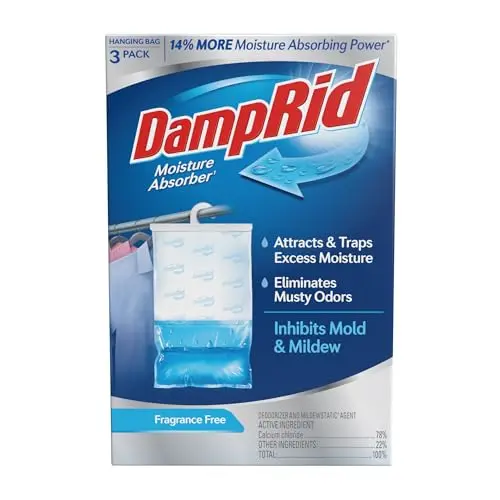
FG86FFESBAM Hanging Moisture Absorber – Fragrance-Free Closet Protection
The DampRid Fragrance Free Hanging Moisture Absorber is a passive closet dehumidifier that traps excess moisture in a hanging bag. It is designed to eliminate musty odors without adding scent, and each bag lasts up to 60 days depending on conditions.
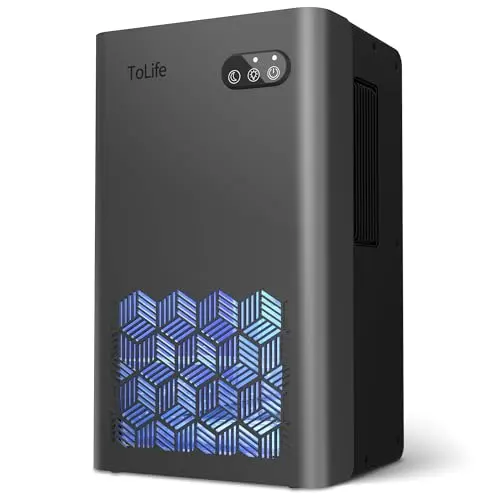
TZ-C2 Dehumidifier – 95 oz Tank for Larger Closets
The ToLife TZ-C2 is a small electric dehumidifier with a 95 oz tank, two operating modes, and a sleep mode for quiet overnight use. It is designed for larger closets, bedrooms, bathrooms, and basements, and includes a 7-color LED night light.

Hanging Moisture Absorber Bags – 10-Pack for Closets
The Vacplus Hanging Moisture Absorber bags use spherical calcium chloride and a one-way moisture-permeable paper to pull dampness from closet air. The 10-pack is unscented and each bag has a 500 ml collection capacity with a visible water layer.
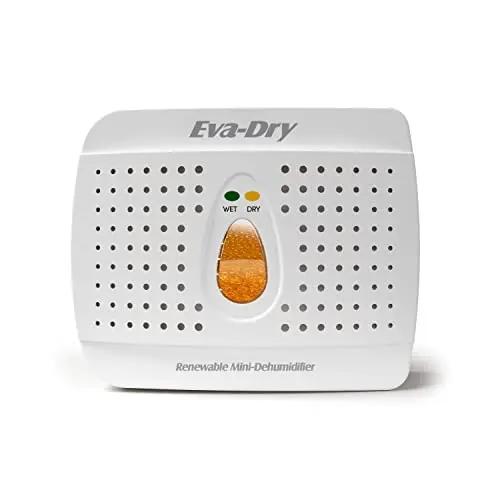
E-333 Wireless Mini Dehumidifier – Rechargeable Closet Protection
The Eva-Dry E-333 is a cordless, reusable mini dehumidifier that uses rechargeable silica gel beads to absorb moisture. It is designed to hang or sit in small enclosed spaces and can be recharged for repeated use.

CL-MA01 Moisture Absorber Packets – 10-Pack Hanging Bags
The CLEVAST Moisture Absorber Packets are hanging bags filled with spherical calcium chloride and a one-way moisture-permeable paper. The 10-pack is unscented and each packet holds up to 500 ml of collected water.

Moisture Absorber Bucket – 6-Pack for Damp Corners
The Vacplus Moisture Absorber bucket is a fragrance-free, 10.5 oz calcium chloride container designed for closets, bathrooms, basements, and laundry rooms. It has a visible water-collecting layer and a lock-wet paper design to reduce leakage.

13004 Moisture Absorber Box – 12-Pack Compact Buckets
The Ksend Moisture Absorber is a compact 300 ml bucket with spherical calcium chloride and a leakproof locking paper design. The 12-pack is fragrance-free and sized for closets, cabinets, kitchens, and bathrooms.
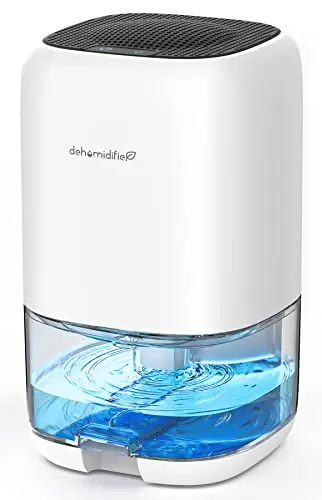
DH-CS01 Small Dehumidifier – 35 oz Tank with Auto Shutoff
The TABYIK DH-CS01 is a small electric dehumidifier with a 35 oz tank, 7-color light, and auto shutoff. It is designed for bedrooms, bathrooms, RVs, and closets, with a compact footprint and quiet operation.
How We Evaluated These Closet Dehumidifiers
We didn’t run controlled humidity-chamber tests or long-term leak trials. What we did: cross-referenced eight closet dehumidifier models from seven brands across six decision axes – moisture capacity, closet footprint, refill or recharge cadence, leakage risk, scent and fragrance, and passive versus electric operation. We audited published specifications and feature sets, triangulated owner feedback where available, and mapped each option against common closet scenarios: reach-in wardrobes, linen closets, walk-ins, and damp rentals with limited airflow. That meant weighing a hanging bag’s quiet simplicity against an electric unit’s active pull, and treating leakage, refill frequency, and scent as first-order concerns rather than afterthoughts. We also compared how each format behaves when a closet door stays shut for days at a time, since stagnant air is the norm in this category.
The scoring framework weighted real-world closet performance (70%) – how well each option handles still, enclosed air without creating new problems – against feature differentiation (30%) – capacity, format, reuse, and closet-specific conveniences. We pressure-tested the lineup on the things that actually change ownership: how often you empty or replace it, whether it can tip or leak near fabric, and whether it needs an outlet. We have no commercial relationship with any of the brands featured; recommendations track fit and differentiation, not brand preference. If you want the simplest passive pick, the DampRid Fragrance Free Hanging Moisture Absorber is the one we’d start with; if your closet is large enough to justify active drying, the ToLife TZ-C2 is the better route.
How to Choose the Right Closet Dehumidifiers
1. Passive vs. Electric Closet Dehumidifiers: Which Fits Your Space?
Closet dehumidifiers split into two families: passive closet dehumidifiers that hang or sit and absorb moisture, and electric closet dehumidifiers that pull air through a small condenser. Passive options are quiet, cordless, and easy to tuck into a reach-in closet. Electric units move more moisture but need an outlet and a tank routine. If your closet has power and feels damp even after a bag swap, active drying is the more direct fix; the ToLife TZ-C2 is the electric pick here. For tight, door-closed closets with no outlet, start passive.
2. How Much Moisture Capacity a Closet Dehumidifier Really Needs
Capacity is the spec that decides how often you touch the unit. A 500 ml capacity hanging bag is a common middle ground for a standard closet, while a 10.5 oz bucket suits a shelf or floor corner. Electric models jump to a 95 oz tank, which means fewer empties but a larger footprint. Match capacity to the closet’s replacement rhythm: a small closet may never fill a large bag, while a damp walk-in can overwhelm a tiny box.
3. Closet Airflow and Placement Matter More Than You Think
A dehumidifier cannot fix a closet where air never moves. Hang bags with space around them so air circulation can reach the absorbing surface, and keep them off the back wall. The hanging hook should sit high enough that the bag doesn’t brush coats, but not so high that it’s crushed against the shelf. In a closed closet, stagnant air is the default, so placement matters as much as capacity. A little breathing room helps every format work closer to its rating.
4. Scent, Leakage, and Refill Cadence: The Closet-Specific Tradeoffs
Closets hold clothes, so scent and leakage matter more than raw absorption. A fragrance-free formula is the safer default for wool, leather, and sensitive noses. Leakage risk rises when a bag is overfilled or a bucket is knocked over, so keep an eye on the water line and use the one-way moisture-permeable paper as intended. Refill cadence is personal: some closets need a monthly check, others can go a full season. If you’re outfitting several closets, the Vacplus Hanging Moisture Absorber 10-pack is the value route.
5. When a Small Closet Dehumidifier Beats a Full-Size Unit
A small closet dehumidifier wins when the space is tight, the door stays shut, and you don’t want a cord across the floor. The compact footprint of a hanging bag or mini bucket lets you use shelf corners and rod space that a full-size unit would block. Electric mini units add auto shutoff and a tank, but they still need breathing room. If the closet is a true walk-in with stagnant air, a larger electric unit may be the better tool; for everything smaller, compact passive formats are usually enough.
6. Qualitative Price Tiers for Closet Dehumidifiers
Think in tiers rather than exact prices. Entry-level passive bags and boxes are the lowest-cost way to try the format, though you’ll replace them. Mid-range multi-packs and reusable silica gel units cost more upfront but reduce repeat buying. Premium electric dehumidifiers carry the highest upfront cost and add active drying, tanks, and features like sleep modes. The right tier depends on how damp the closet runs and whether you value reusable convenience over disposable simplicity.
Frequently Asked Questions
1. What's the difference between the DampRid hanging absorber and the Vacplus hanging bags?
Both are passive hanging moisture absorbers, but they optimize for different things. DampRid’s fragrance-free 16 oz bag is a single-closet solution with a 60-day lifespan estimate and a simple replacement line. Vacplus sells a 10-pack of 500 ml bags, so it’s better if you want to cover several closets or stock up for a damp season. DampRid is the easier first buy for one closet; the DampRid Fragrance Free Hanging Moisture Absorber is the one I’d hang in a coat closet. Vacplus wins on multi-pack value and spare capacity.
2. Are the Eva-Dry E-333 and ToLife TZ-C2 both closet dehumidifiers?
Yes, but they work differently. The Eva-Dry E-333 is a rechargeable silica gel unit with no cord during use, so it suits small closets, cabinets, and gym bags. The ToLife TZ-C2 is a corded electric dehumidifier with a 95 oz tank and auto shutoff, so it needs an outlet and is better for a larger walk-in. Choose Eva-Dry for reusable low-maintenance coverage; choose ToLife for active moisture removal.
3. Are closet dehumidifiers safe around clothes and stored fabrics?
Passive absorbers are generally designed to sit near fabrics, but leakage risk is the thing to manage. Keep hanging bags upright, leave air circulation around them, and avoid placing a bucket where it can tip onto wool or leather. Fragrance-free options are the safer default in a closed closet, since you’re not adding scent to stored clothes. Electric units should sit on a stable shelf or floor with auto shutoff working, and the tank should be emptied before it reaches the full line.
4. How often should I replace or recharge a closet dehumidifier?
Replace passive bags when the water reaches the replacement line, not on a fixed calendar. In a humid closet, a 500 ml hanging bag can fill faster than the label suggests; in a dry one, it may last much longer. Rechargeable silica gel units need drying when the beads change color or performance drops, which can be weekly in a damp space. Electric units need the tank emptied based on use, and the auto shutoff is a backup rather than a schedule.
5. Do I need an electric dehumidifier for a closet, or are passive bags enough?
For a typical reach-in closet with a door that stays shut, passive hanging absorbers are often enough, especially if you rotate them before they hit the replacement line. An electric closet dehumidifier makes more sense for a walk-in, a closet with poor airflow, or a space that stays damp despite bags. The tradeoff is simple: electric units pull more moisture but need an outlet and a tank routine. If you have power and the closet is large, the ToLife TZ-C2 is the stronger choice; otherwise, start passive.
Final Verdict
For most closets, the DampRid Fragrance Free Hanging Moisture Absorber is the answer. It is passive, unscented, and simple enough that you’ll actually leave it alone until the water line says otherwise. If your closet is large enough to justify active drying, the ToLife TZ-C2 is the electric pick, with a bigger tank and a sleep mode that suits a bedroom closet. If you’re outfitting several closets at once, the Vacplus Hanging Moisture Absorber 10-pack gets you broad coverage without much fuss. And if you prefer a reusable unit over disposable bags, the Eva-Dry E-333 is the one to hang and recharge. Start with the format that matches your closet’s size, airflow, and outlet access, then size up only if the dampness keeps winning.
