
Best Clothes Drying Racks For Small Spaces – 2026 Reviews

Small-space laundry is a game of inches. A rack that’s perfectly sensible in a suburban laundry room becomes a trip hazard in a studio apartment, and the one that folds into a closet corner often can’t hold a wet bath towel without bowing in the middle. The listing photos never tell you which is which.
The two axes that separate a genuinely small-space-friendly rack from a merely foldable one are floor footprint while open and stored volume while closed – and they don’t always move together. You’ll also want to decide up front whether you’re air-drying a full load of shirts or mostly sweaters, delicates, and hand-wash items. Flat-drying surface and hanging capacity are different jobs, and most racks only do one of them well.
We looked across the market at freestanding accordion racks, vertical hanger towers, wall-mounted swing arms, and over-the-door hooks to sort out which designs actually earn their square footage in a tight apartment, dorm room, or shared laundry corner.
Best Clothes Drying Racks for Small Spaces – 2026 Reviews
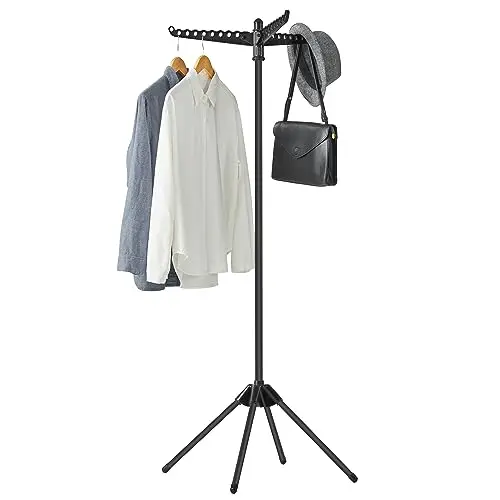
ULLR510B01 – Rotating-Arm Rack for Tight Corners
A vertical drying tower built around three arms that rotate a full 360 degrees, so you can spin the far side toward you instead of reaching around. Four steel legs splay for stability, and the whole rack breaks into seven parts that collapse into a slim bundle you can tuck behind a door.
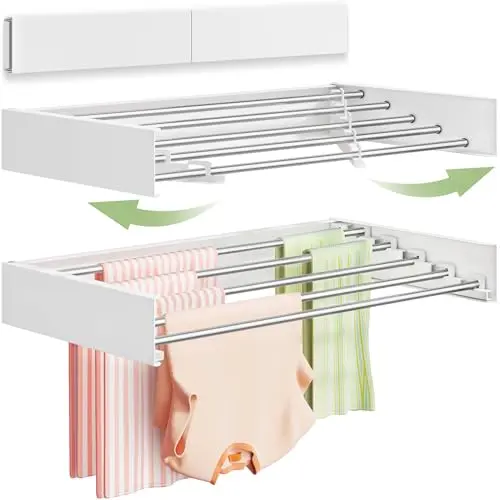
Wall-Mounted 32-Inch Rack – Zero Floor Footprint
A pre-assembled wall unit with five thick stainless steel rods that swing out over a bathtub, laundry sink, or hallway and fold back to sit four inches off the wall. A cardboard template takes the guesswork out of the drilling.

DRY-09065 6-Tier Rack – 24 Feet in a 14-Inch Strip
Six accordion tiers stacked into a 14-inch-deep frame, giving 24 linear feet of coated rod space in roughly the floor area of a single laundry basket. Collapses flat to three inches between uses.

SL-DRYM-005 Foldable Rack – Narrow Accordion Workhorse
A chrome-finished accordion rack with a 14.5-inch depth, a 32-pound rating, and a fold-flat profile. The plainest design in this lineup, and the one most people picture when they hear clothes drying rack.
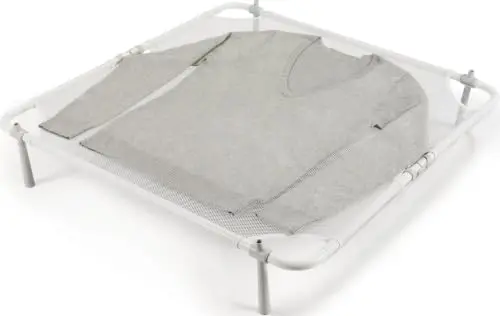
Good Grips Mesh Sweater Rack – Flat Drying Anywhere
A 26-inch mesh surface that folds in half and sits on a countertop, washer lid, or on top of a second unit. Built for sweaters, knits, and anything that can’t hang without stretching out of shape.
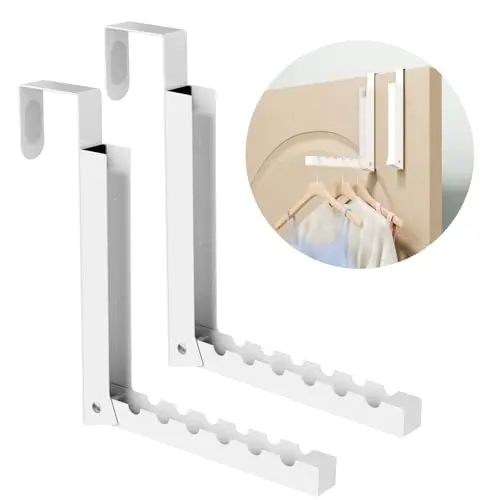
Over-the-Door Folding Rack 2-Pack – Zero-Floor Overflow Space
Two folding steel hooks that hang over a standard interior door, each with six ridges for towels, delicates, or a coat. They add hanging space without borrowing a single square inch of floor.
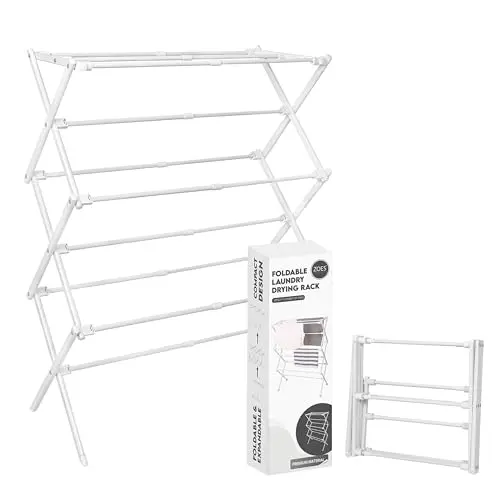
Enhanced Collapsible Rack – Folds to Four Inches
A freestanding rack that folds down to roughly 17 x 19 x 4 inches and weighs five pounds, built on a reinforced ABS frame rated to hold a substantial load.

DRY-09066 Oversized Rack – Bedding in a Narrow Footprint
The bigger sibling of Honey-Can-Do’s accordion rack: 35 inches wide and 45 inches tall, rated to 50 pounds, with the same fold-flat design. Built for comforters and full bedding loads.

HL0063-ZJ Folding Rack – Telescoping for Odd Corners
A tool-free carbon steel rack with a telescoping frame that adjusts from 17.7 to 29 inches wide and folds to four inches flat. Eleven rods and a 35-pound capacity.
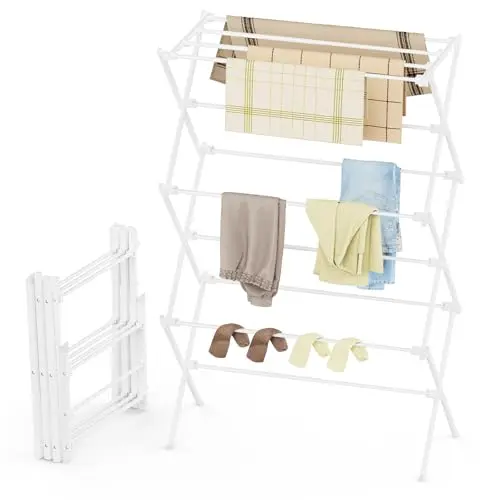
3-Tier Foldable Rack – Lightweight Everyday Air Dryer
A lightweight X-frame rack with three tiers, rust-resistant tubing, and a five-minute assembly. Rated to 20 pounds, so it suits smalls far better than full loads.
How We Evaluated These Clothes Drying Racks for Small Spaces
We didn’t run these racks through a full season of laundry in a test apartment. What we did: cross-referenced 10 drying rack models from 9 distinct brands across five decision axes – open floor footprint, folded storage profile, rated load capacity, drying surface type, and mounting approach. We audited the published dimensions line by line, because footprint is where this category gets slippery: a rack marketed as space-saving can still eat a doorway when it’s open, and a rack that folds to three inches is useless if you have nowhere to lean it. Drying surface got equal weight, since flat mesh and rods solve completely different problems.
We then triangulated feature sets and owner feedback where available, and mapped each rack against two small-space buyer profiles: someone air-drying a full load of shirts and towels in a laundry corner, and someone mostly handling sweaters, delicates, and hand-wash items that can’t go near a dryer. Racks that served only one profile got weighed against racks that handled both, and mounting approach settled several placements, since a wall unit and a floor rack aren’t really competing for the same room.
The scoring framework weighted real-world fit (70%) – how well a rack works when the room is tight and the load is wet – against feature differentiation (30%) – useful design choices like rotating arms, telescoping frames, and wall-mount stowage. We have no commercial relationship with any of the brands here; recommendations track fit and differentiation, not brand preference. If you’re drying whole loads in a tight corner, the ULLR510B01 is the place to start; if you can’t spare a single square foot of floor, the Wall-Mounted 32-Inch Rack earns the nod.
How to Choose the Right Clothes Drying Racks for Small Spaces
1. Measure the Footprint Before You Fall for the Fold
Every listing brags about folded size, and almost none lead with the number that decides whether a rack works in your room: open floor footprint. A rack that collapses to three inches still occupies its full footprint for the hours your laundry takes to dry, which is the part of the day you actually live in the room.
Measure the gap where the rack will stand – beside the washer, along a hallway wall, inside a bathtub – and compare depth first, then width. Depth is what makes a rack feel like it’s in the way. Anything under 15 inches can line up against a wall without blocking a walkway, which is why accordion designs tend to be the safer pick for narrow rooms. Then check the folded profile honestly: a flat three-inch collapse is easy to stash, while a rack that folds into a tall bundle needs a closet with height to spare.
2. Which Drying Rack Design Fits a Small Space Best?
Four designs dominate the category, and they solve different problems. Accordion racks give the most linear drying space per inch of floor and fold flat, which makes them the workhorse. Vertical hanger towers trade width for height and drop into a corner, but they only hang – you can’t lay a sweater flat on one. Wall-mounted swing arms reclaim the floor entirely at the cost of drilling and a fixed drying location. Over-the-door hooks cost almost nothing and take zero floor, but they hold a handful of items, not a load.
The honest answer for most tight rooms is one primary rack plus a small supplement. If your laundry is mostly shirts and towels, an accordion or tower carries the load; if it’s mostly sweaters and hand-wash, a flat mesh surface matters more than rod count, and the Good Grips Mesh Sweater Rack is the piece that covers it.
3. Load Capacity and Drying Surface: The Two Numbers That Matter
Rated capacity tells you what the frame survives, not what it dries well. A rack rated to 50 pounds and loaded to 50 pounds of soaking wet denim will sag in the middle and dry slowly, because wet fabric needs air on both sides. Aim for roughly two-thirds of the rated load and your rack will last longer and dry faster.
Surface type matters just as much. Coated steel rods are gentle on knits and resist the rust that plain chrome develops in a steamy bathroom. Mesh surfaces are the only way to dry a sweater without shoulder stretch or crease lines. Hanger holes on vertical arms are the small detail that keeps a load from sliding into a heap when one side is heavier.
4. Wall-Mounted vs Freestanding Racks for Small Spaces
Wall-mounted racks win on floor space and lose on flexibility. Once it’s on the wall, that’s where laundry happens – no moving it to the balcony on a sunny day, no stashing it in a closet. They also require a drill and a landlord’s blessing, which disqualifies them for a lot of renters. The upside is real: a four-inch folded depth and a bathtub-side mounting spot mean the rack effectively stops existing between loads.
Freestanding racks are the pragmatic default. They move, they need no permission, and they work on a balcony. The tradeoff is storage – you need somewhere to lean the folded frame, and somewhere is exactly what a small space is short on. If you can’t drill but also can’t spare floor, an over-the-door rack is the compromise that actually works.
5. What's Worth Paying For in a Compact Drying Rack
The budget tier gets you a basic folding frame with a modest load rating, and for a lot of apartment laundry that’s genuinely enough. Step up and you’re paying for thicker steel, tighter joints, and design ideas that save real space: rotating arms, telescoping widths that fit odd corners, stackable mesh surfaces, and mounting hardware with templates.
The premium tier is mostly about capacity and build. If you air-dry bedding or a whole load every week, the extra spend on a heavier frame with a flat fold pays off. If you’re drying a few delicates twice a week, the entry tier does the same job for less.
6. Setup, Storage, and Care for a Rack That Lives in a Tight Room
Most racks in this category assemble in under ten minutes and a few need no assembly at all, but check before you buy – the ones that fail early are often the ones that were forced together. Keep the folded rack indoors and dry; even rust-resistant coatings degrade when a rack spends months on a damp balcony. Wipe the rods after a wet load and the joints stay smooth.
One last practical note: test the fold before you commit. Some racks collapse with one hand and some need two, and that difference matters when you’re doing it weekly in a hallway.
Frequently Asked Questions
1. Do I need a wall-mounted rack or a freestanding one for a small apartment?
Start with whether you can drill. A wall-mounted rack frees every square inch of floor and folds to a few inches deep, which is the single biggest win available in a tiny apartment. But it locks drying to one spot and rules out most renters. A freestanding rack moves to the balcony, needs no permission, and stores in a closet – the tradeoff is that it occupies floor while in use. If you can’t drill and can’t spare floor, an over-the-door hook covers a handful of items at almost no cost.
2. What's the difference between the SONGMICS ULLR510B01 and the Honey-Can-Do DRY-09065?
They solve opposite halves of the problem. The ULLR510B01 is a vertical hanger tower: it takes up a compact square of floor but dries upward, and it only hangs – there’s no flat surface for a sweater. The DRY-09065 is a six-tier accordion that puts 24 linear feet of rod into a 14-inch-deep strip and folds to three inches, so it dries more per load but needs a wall to sit against. Pick the tower for corners, the accordion for volume.
3. How does the Vikaqi wall rack compare to the BAKON over-the-door hooks?
Scale is the difference. The Wall-Mounted 32-Inch Rack is a real drying rack – five stainless rods, a 40-pound rating, and enough spread for towels and jeans – and it costs accordingly. The BAKON hooks are a supplement: two folding steel pieces with six ridges each that hold delicates, swimsuits, and hand-wash items on a door top. Buy the wall rack if you’re replacing a floor rack; buy the hooks if you’re adding overflow space for very little money.
4. How much drying space do you actually need in a small space?
Count a typical load. A week of laundry for one person – a few shirts, socks, underwear, a towel – fits comfortably on a single accordion rack or a three-arm tower. Two people air-drying everything need something rated around 50 pounds with at least 20 linear feet of rod. If bedding is in the mix, width matters as much as capacity, because a comforter has to drape without pooling on the floor.
5. Can a drying rack hold a wet sweater without stretching it?
Not a rod-based one. Hanging a wet knit pulls the shoulders out of shape and leaves crease lines where the fabric crosses the bar. Sweaters, cashmere, and anything labeled hand-wash only need a flat mesh surface with air moving underneath it – that’s exactly what the mesh sweater racks in this lineup are for. A tower or accordion handles everything else in the basket.
Final Verdict
For most small-space setups, the ULLR510B01 is the answer – it stacks drying capacity upward instead of across the room, folds into a bundle you can hide in a closet, and stays planted when you load one arm first. If your laundry is whole loads rather than a few delicates, the DRY-09065 packs 24 linear feet into a 14-inch strip of floor and will out-dry anything else here. Can’t drill and can’t spare floor? The Vikaqi wall rack gives the floor back entirely, and the Good Grips Mesh Sweater Rack handles the knits no rod-based rack should ever touch. Buy for the load you actually wash, not the biggest rack the room will technically fit.
