
Best Coffee Grinder Brushes – 2026 Reviews

You finish dialing in a new bag of beans, pull a shot, and then comes the part nobody photographs: the chute is packed with fines, the burr chamber looks like a dust bowl, and the dosing cup has a ring of grounds cemented to the bottom. A paper towel smears it around. A fingertip doesn’t fit. That’s the exact moment a coffee grinder brush earns its spot on the counter.
Two things separate a brush you’ll actually use from one that ends up in the utensil drawer. Bristle stiffness is the first: firm enough to knock compacted grounds out of a burr carrier, gentle enough not to mark a shower screen or deform against ceramic burrs. Reach and head shape is the second – a stubby brush can’t clear a chute, and a long one is clumsy inside a grind chamber. Handle material is a distant third, though it’s the thing you notice every single morning.
This category is refreshingly uncomplicated on price and frustratingly inconsistent on execution. Two brushes that look nearly identical can differ completely in bristle density, shedding, and how the head is attached to the handle. We went through the options across brands to sort the ones worth keeping from the ones that quietly shed into your grind chamber.
Best Coffee Grinder Brushes – 2026 Reviews
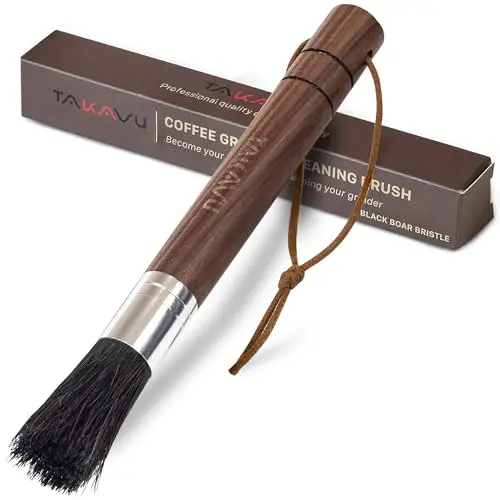
TAKCGCB Boar Bristle Brush – Stiff-Dense Grinder Cleaner
A natural boar bristle brush on a solid walnut handle, sized just under seven inches. The dense, stiff bristle pack is aimed at burr chambers, chutes, group heads, and portafilters, with a hanging loop to keep it within reach on a coffee station.

5-Piece Coffee Cleaning Brush Set – Full Espresso Station Coverage
A five-piece kit covering the whole espresso station: a wooden grinder brush, an angled machine brush, a long-handle brew group brush, a narrow steam wand brush, and a spout brush for pitchers and portafilters.
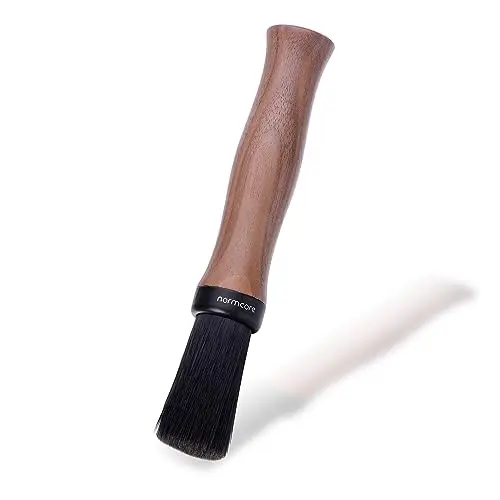
Barista Brush – Walnut-Handled Espresso Cleaner
A walnut-handled barista brush with recyclable PET bristles at a deliberate medium firmness, shaped with two gentle curves and offered in walnut or oak. Backed by a one-year manufacturer warranty.
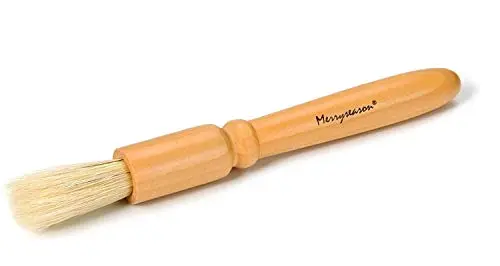
Wood Handle Grinder Brush – Firm Natural Bristles for Daily Sweeps
A simple round-handled wooden brush with natural fiber bristles at medium-firm flex, aimed at grinder chambers, burrs, and pasta makers. Lightweight enough to leave sitting next to the machine.
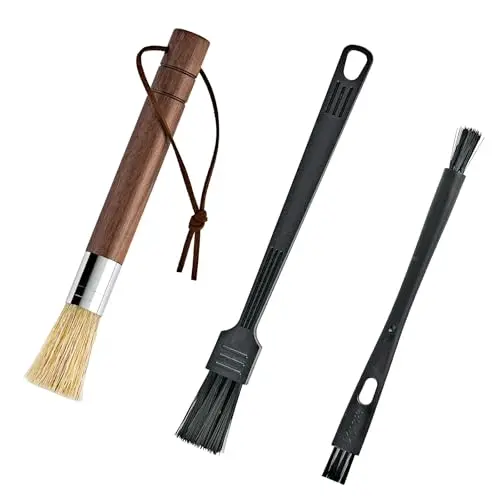
3-Piece Walnut Brush Set – Grinder, Machine, and Detail Work
A three-piece set with solid walnut handles and natural bristles, joined by metal crimp rings, ranging from 6.89 to 7.68 inches, and finished with a hanging strap for storage.
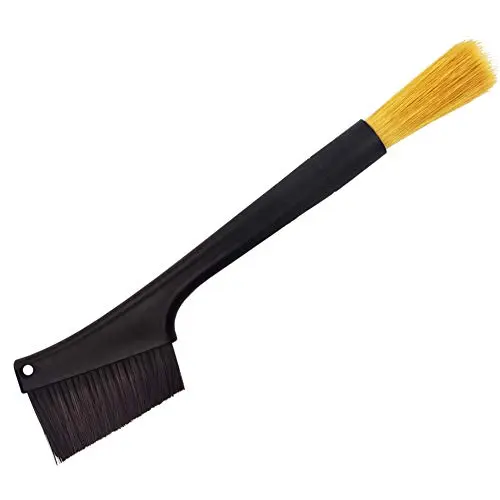
Dual-End Grinder Brush – 10.43-Inch Long-Reach Cleaner
A 10.43-inch double-ended tool: soft nylon bristles on one end for burrs and grinders, a counter brush on the other. Nylon and plastic construction, built for reach rather than fine detail.
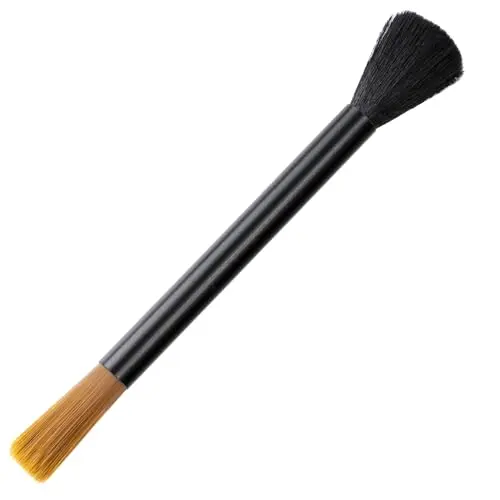
Aluminum-Handle Grinder Brush – Soft Bristles, Easy to Wash
A compact aluminum-handle brush with soft fiber bristles, about five inches long, hand-washable in warm water. Marketed for grinders but equally at home on spice grinders, food processors, and baking cleanup.
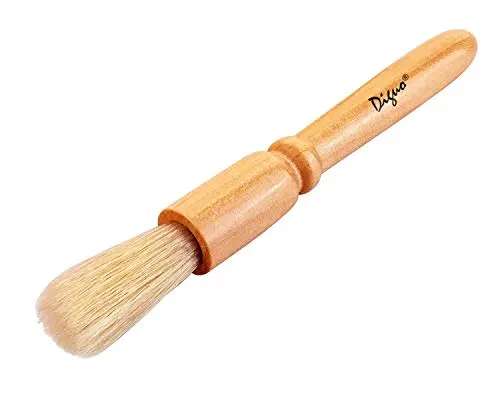
DG-3030 Natural Fiber Brush – Classic Wooden Grinder Sweep
The classic wooden grinder brush: natural fiber bristles, a round handle, and medium flex. Simple, lightweight, and easy to live with on a coffee counter.
How We Evaluated These Coffee Grinder Brushes
We didn’t put these brushes through months of daily cleaning cycles or abrasive-wear testing. What we did: cross-referenced 8 coffee grinder brushes from 8 distinct brands across five decision axes – bristle type and stiffness, handle material and grip, reach and head shape, durability signals in owner feedback, and how many cleaning jobs a single tool actually covers.
We triangulated published specifications, the feature sets each maker advertises, and owner feedback where available, then mapped every brush against the two buyer profiles this category really has: the home espresso person clearing a burr chamber every morning, and the occasional grinder user who mostly needs to sweep out a hopper. Where feedback was thin, we leaned harder on verifiable specs – bristle material, dimensions, and how the head attaches to the handle. The scoring framework weighted real-world cleaning fit (70%) against feature differentiation (30%): whether a brush clears compacted grounds without damaging equipment, and whether its handle, reach, or kit coverage gives it an edge nothing else here matches.
We have no commercial relationship with any brand featured, and recommendations track fit rather than brand preference. If you want one brush that simply works, the TAKAVU Coffee Grinder Brush is our pick. If a group head and steam wand are part of your morning, the CAFEMASY 5-Piece Set covers ground a single brush can’t reach.
How to Choose the Right Coffee Grinder Brush
1. Why Bristle Stiffness Decides Whether a Coffee Grinder Brush Works
Bristle stiffness is the most consequential spec on a coffee grinder brush, and it’s the one most listings describe vaguely. Stiff boar or densely packed natural fiber has enough backbone to knock compacted fines out of a burr carrier and a chute. Soft fiber sweeps dust off a dosing cup without scratching it, but it does almost nothing against two-day-old grounds.
Match the brush to your grinder’s failure mode. Dark, oily roasts cling and pack, so go firm. If your burrs are ceramic and you’re nervous about marking them, medium firmness with flexible tips is the safer call. If you’re mostly dusting a hopper and wiping a counter, soft is enough. If you want the firm end of the spectrum, the TAKAVU Coffee Grinder Brush is the pick.
2. Handle Material and Grip: Wood, Aluminum, and Plastic Compared
Wood handles dominate this category for good reason: light, warm in the hand, and cheap to finish nicely. Walnut and oak versions feel better than lacquered softwoods, but the practical difference is grip when your hands are damp from rinsing a portafilter. Aluminum handles are washable and wipe clean fast, which suits anyone who rinses equipment daily. Plastic is the weakest option – it’s the part that snaps on long, thin brushes.
Check how the bristles are attached. A metal crimp ring holds far better than glue alone, and glue failure rather than bristle wear is what usually ends a brush’s life.
3. Reach, Head Shape, and Getting Into a Grinder Chute
Length matters in two directions. A six-to-seven-inch brush reaches into a hopper and still fits under a group head. A brush over ten inches gets deep into a tall grinder’s chute but becomes clumsy everywhere else. Head shape counts too: round heads cover flat surfaces, while flat or angled heads get into the corners where fines accumulate.
For espresso specifically, a narrow-diameter brush around six millimeters is the only thing that fits a steam wand or a portafilter spout, and a long handle keeps your knuckles away from hot water during a backflush.
4. A Single Coffee Grinder Brush or a Full Cleaning Set?
Most people need one good brush. If your routine is grinder, portafilter, knock box, done, then a single firm-bristle wooden brush is the whole story. Sets make sense when you have more surfaces: group head, shower screen, steam wand, milk pitcher spout, and the brew path all want different shapes, and a multi-piece kit spreads the cost across tools that each do one job well.
The tradeoff is that kit quality is averaged – the best brush in a set is rarely as good as the best standalone brush. If a group head and steam wand are part of your morning, the CAFEMASY 5-Piece Set is the sensible way in.
5. What Different Price Tiers Actually Buy You in Coffee Grinder Brushes
This is a budget-friendly category overall, so the spread between entry-level and premium is small in absolute terms and meaningful in materials. Entry-level wooden brushes get you natural fiber and a round handle; the variables are bristle retention and firmness consistency. Mid-range picks add better wood, crimp rings, hanging loops, and more deliberate bristle density. Premium brushes buy aesthetics and ergonomics – sculpted handles, a choice of walnut or oak, a manufacturer warranty – rather than dramatically better cleaning.
Don’t overpay expecting a brush to last forever. Bristles splay, glue gives out, and a budget-friendly brush like the Merryseason replaced twice is often smarter than one expensive brush nursed along.
6. Care, Storage, and When to Replace a Coffee Grinder Brush
Shake grounds out after every use rather than rinsing immediately – wet grounds turn into paste at the bristle base. When it does need a wash, use warm water with a drop of mild dish soap, then dry bristles-down and hang it. Stored bristles-up in a drawer, a brush flattens and stops working.
Replace it when you see splayed tips, bristles pulling loose in clumps, or a cracking glue line at the ferrule. A brush that sheds into your grind chamber is worse than no brush at all.
Frequently Asked Questions
1. TAKAVU Coffee Grinder Brush vs Normcore Barista Brush: which should you buy?
Both are wood-handled brushes with firm-ish bristles, but they’re built for different buyers. The TAKAVU uses boar bristles that are stiffer and denser, and the length is short enough to work a chute and a group head without feeling unwieldy; feedback on bristle retention is consistently strong. The Normcore uses recyclable PET bristles at a deliberate medium firmness, with a sculpted handle, a walnut-or-oak choice, and a one-year warranty.
Go TAKAVU if cleaning performance is the whole point. Go Normcore if the brush lives on display and you want the ergonomic shape and warranty behind it.
2. Is the CAFEMASY 5-piece set worth it over a single brush like the Diguo?
They answer different questions. The Diguo is a single wooden grinder brush – good for sweeping a burr chamber, and that’s the end of its range. The CAFEMASY set adds a long-handle brush for backflushing and brew group cleaning, a narrow steam wand brush, an angled machine brush, and a spout brush. If your setup includes an espresso machine, the set covers jobs a single brush physically cannot reach.
If you only grind and brew, skip the set and put the budget into one better brush.
3. Are stiff boar bristles safe on ceramic burrs and group heads?
Yes, with a light hand. Natural boar bristle is stiff enough to move packed grounds, but the tips flex, and brushes in this category are designed for non-scratching contact with stainless and ceramic. The risk isn’t the bristle type so much as pressing hard with a stiff nylon brush on a polished shower screen.
Brush along surfaces rather than digging in, and keep the stiffest brush for burr chambers rather than polished group heads.
4. How often should you replace a coffee grinder brush?
Sooner than you’d think, and it depends on bristle quality more than age. Splayed tips, clumps of bristles pulling loose, or a glue line cracking at the ferrule are all signals to replace. In this category the failure point is almost always where the bristles meet the handle, not the bristles wearing down.
Because replacement is inexpensive, keep a Merryseason brush as a spare rather than nursing one brush past its useful point.
5. Can one brush handle both the grinder and the espresso machine?
Mostly, yes – with a caveat. A medium-to-firm brush in the six-to-seven-inch range covers burr chambers, dosing cups, group heads, and drip trays. What it can’t do is a steam wand or a portafilter spout, both of which need a narrow brush to reach inside.
So: one brush for the bulk of the work, plus a thin detail brush if you steam milk. A dual-ended brush or a small set is the usual solution.
Final Verdict
For most people, the TAKAVU Coffee Grinder Brush is the answer: dense boar bristles, a walnut handle that doesn’t fight your grip, and a size that works in a hopper and under a group head. It’s the one we’d buy first without hesitating.
If your counter holds an espresso machine as well as a grinder, the CAFEMASY 5-Piece Set covers the wand, spouts, and backflush jobs a single brush can’t touch. On a tight budget, the Merryseason brush delivers firm natural bristles for very little and is easy to replace without regret. And if the coffee station is a showpiece, the Normcore Barista Brush is the one people notice – just know the premium goes to materials, not scrubbing power.
Buy for stiffness, reach, and how well the head is attached. Everything else is decoration.
