
Best Coffee Grinder Combos – 2026 Reviews

Fresh-ground coffee sounds simple until you’re staring at a counter crowded with a grinder, a brewer, and a scoop you keep losing. A coffee grinder combo collapses that setup into one machine: beans go in, ground coffee drops into the brew basket, and you press start.
The appeal is obvious, but the category splits in two directions-drip-style grind-and-brew machines and espresso-focused combos with built-in grinders. The best choice depends on whether you want a carafe for the household or a shot for yourself. Grind consistency matters most, because a combo is only as good as the burr or blade doing the work. Capacity, cleaning, and programming are the next filters.
This guide compares the strongest coffee grinder combos across brands so you can pick by routine, not by spec-sheet noise.
Best Coffee Grinder Combos – 2026 Reviews
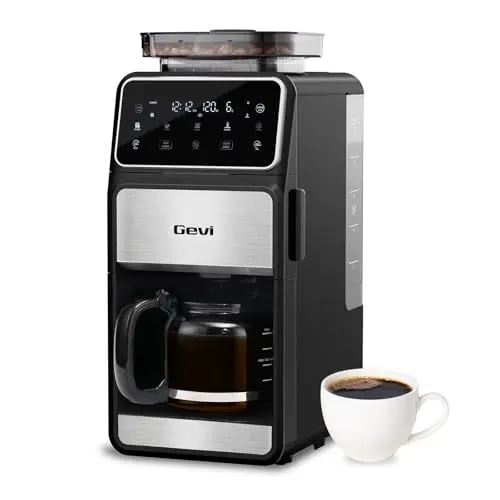
10-Cup Grind & Brew – Touchscreen Burr Combo
A 10-cup grind-and-brew drip machine with a built-in burr grinder, 24-hour programmable timer, touchscreen controls, and an adjustable keep-warm plate. It can brew 4 to 10 cups and switch between whole bean and pre-ground coffee, making it a strong fit for households that want fresh-ground drip without a separate grinder.
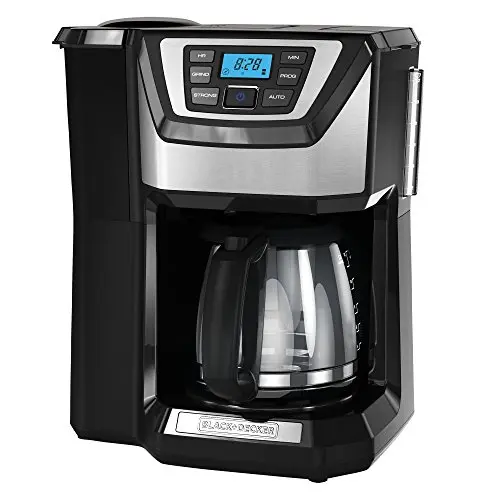
12-Cup Grind and Brew – Programmable Value Combo
A 12-cup grind-and-brew drip coffee maker with a built-in grinder, programmable timer, and Sneak-A-Cup pause. It’s designed for larger households that want whole-bean convenience and a full carafe without adding a separate grinder to the counter.
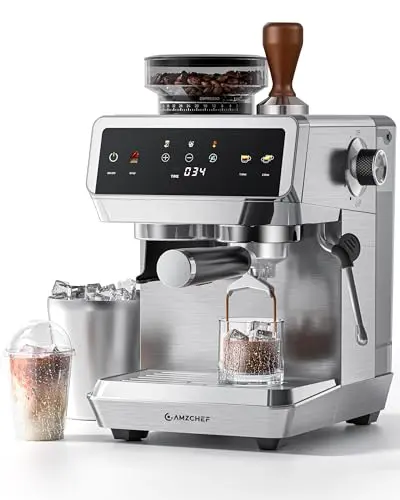
CM1626 – Espresso Combo with Built-In Grinder
An espresso machine with a built-in grinder, 44 grind settings, adjustable brew temperature, a steam wand, and a one-touch cold brew mode. It’s built for espresso and milk drinks rather than drip coffee, so it suits buyers who want a compact all-in-one espresso setup.
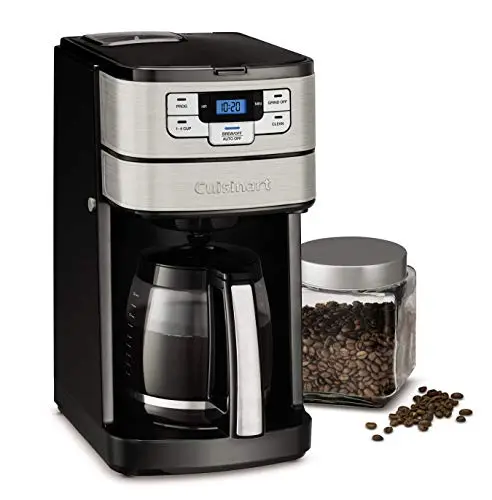
DGB-400NAS – 12-Cup Grind & Brew with Brew Pause
A 12-cup grind-and-brew coffee maker with a blade grinder, programmable brewing, Brew Pause, a grind-off option, and a charcoal water filter. It’s a traditional drip combo for buyers who want whole-bean freshness with the flexibility to use pre-ground coffee.
How We Evaluated These Coffee Grinder Combos
We didn’t run controlled lab extraction tests or measure grind particle distribution. What we did: cross-referenced 4 coffee grinder combo machines from 4 distinct brands across 5 decision axes – grind consistency, brew style, capacity, programming, and cleaning. We triangulated published specifications, feature sets, owner feedback where available, and use-case fit against typical routines for drip drinkers and espresso fans. We mapped each machine to the job it’s actually built for, then weighed how well it delivers without asking you to baby it. That meant treating a 12-cup drip combo differently from a single-serve espresso combo rather than forcing one ranking logic across both.
The scoring framework weighted real-world fit (70%) – how reliably each combo turns beans into the cup you want – against feature differentiation (30%) – burr vs. blade grinding, brew controls, and maintenance design. We audited the details that tend to surface after the honeymoon: whether the grinder is burr or blade, how many cups the hopper and carafe support, how programmable the timer really is, and how much disassembly cleaning takes. Owner feedback where available helped flag recurring tradeoffs such as noise, cleaning friction, and long-term reliability, but we did not treat isolated complaints as verdicts. We have no commercial relationship with the brands featured; recommendations track fit and differentiation, not brand preference. If you want the most balanced drip-combo package, the Gevi 10-Cup Grind & Brew is the pick; if you’re shopping the value tier, the BLACK+DECKER 12-Cup Grind and Brew is the one to compare first.
How to Choose the Right Coffee Grinder Combo
1. Burr vs. Blade: The Grinder Inside a Coffee Grinder Combo
The grinder is the part of a coffee grinder combo that determines how even your extraction will be. A burr grinder crushes beans between two surfaces and produces a more consistent particle size, which supports even extraction and gives you a better shot at a balanced cup. A blade grinder chops beans in a spinning bowl; it’s faster and usually more budget-friendly, but it can leave a mix of fine dust and coarse chunks. That inconsistency is why blade-based combos tend to favor drip coffee over espresso, where small grind differences matter more.
2. Match Brew Style: Drip, Espresso, and Cold Brew Combos
Start with the cup you actually drink. A drip grind-and-brew combo is built for carafes and timed morning pots; it typically includes a brew basket, a glass or thermal carafe, and a keep-warm plate. An espresso combo is a different machine: it uses a portafilter, higher pressure, and usually a steam wand, so it makes shots and milk drinks rather than a family-size pot. If cold brew is part of your routine, look for a dedicated mode or a grind range coarse enough to support it. If espresso is the goal, the AMZCHEF CM1626 is the combo to shortlist; for drip-first households, stay with a carafe machine.
3. Capacity and Footprint: Sizing a Coffee Grinder Combo
Cup capacity is the first practical filter: a 10- or 12-cup machine suits shared kitchens, while a smaller combo can feel oversized if you mostly brew one mug. Check the bean hopper too, since a large carafe with a tiny hopper means frequent refills. Counter footprint matters more with combos than with separate brewers because the grinder adds height and depth. Measure your cabinet clearance before you commit. For a larger household, the BLACK+DECKER 12-Cup Grind and Brew is the capacity-first pick.
4. Cleaning and Maintenance: The Hidden Cost of a Grind & Brew Combo
Combos add a brew chamber and grinder path to the usual carafe and filter cleaning, so maintenance is the quiet dealbreaker. A removable burr or removable grind chamber makes weekly cleaning far less tedious, and a cleaning brush helps clear retention without disassembling the whole machine. If your water is hard, plan on regular descaling to protect the heating system. The simpler the disassembly, the more likely you are to keep the combo clean enough for good-tasting coffee.
5. Gevi vs. Cuisinart Grind & Brew: Which Combo Fits Your Counter?
The Gevi 10-Cup Grind & Brew is the more feature-forward drip combo: it uses a burr grinder, adds a touchscreen and a 24-hour timer, and gives you a wider keep-warm window. The Cuisinart DGB-400NAS is the more traditional pick, with a blade grinder, Brew Pause, a grind-off option for pre-ground coffee, and a charcoal water filter. If you want the more balanced feature set and better grind consistency, the Gevi 10-Cup Grind & Brew is the better fit. If you value a longer warranty and the flexibility to skip grinding, the Cuisinart makes more sense.
Frequently Asked Questions
1. What's the difference between the Gevi 10-Cup Grind & Brew and the Cuisinart DGB-400NAS?
The Gevi is the more modern drip combo: it has a burr grinder, a touchscreen, a 24-hour programmable timer, and an adjustable keep-warm plate. The Cuisinart uses a blade grinder but adds Brew Pause, a grind-off option for pre-ground coffee, and a charcoal water filter. If grind consistency is your priority, the Gevi 10-Cup Grind & Brew is the stronger pick. If you want the flexibility to skip grinding and a longer warranty, the Cuisinart is the more practical choice.
2. What's the difference between the BLACK+DECKER 12-Cup Grind and Brew and the Cuisinart DGB-400NAS?
Both are 12-cup grind-and-brew machines with blade grinders, but they emphasize different conveniences. The BLACK+DECKER keeps things simple with a programmable timer and Sneak-A-Cup pause, while the Cuisinart adds a grind-off option, a charcoal water filter, and a three-year warranty. The BLACK+DECKER is the easier value-first pick; the Cuisinart is the more flexible machine for pre-ground coffee and filtered water.
3. Can a coffee grinder combo make espresso?
Most drip-style coffee grinder combos cannot make true espresso; they are built for filter coffee and carafes. For espresso, you need an espresso combo with a portafilter and enough pressure, plus a grinder fine enough for shots. The AMZCHEF CM1626 is the espresso-focused pick here, with 44 grind settings, temperature control, and a steam wand for milk drinks. It also adds a cold brew mode, but it is not a replacement for a 12-cup drip machine.
4. How often should you clean a coffee grinder combo?
Clean the brew chamber and carafe regularly, and brush out the grinder path more often if you use oily beans. A removable burr makes deep cleaning easier, while a cleaning brush helps clear retention between full cleanings. Plan to descale on the schedule your manual recommends, especially with hard water. The goal is to keep old grounds and mineral buildup from turning fresh beans into a stale cup.
5. Is a burr grinder combo worth it over a blade grinder combo?
A burr grinder combo is worth it if you care about particle consistency and want better control for drip or espresso. A blade grinder combo can still make good drip coffee and is usually more budget-friendly, but it is less predictable for fine grinds. If you mostly brew full carafes and want simple value, a blade combo is fine. If you want the grinder to be the strong part of the machine, prioritize a burr model.
Final Verdict
For most households, the Gevi 10-Cup Grind & Brew is the coffee grinder combo to beat. It pairs a burr grinder with a programmable drip brewer, a touchscreen, and a keep-warm plate that covers a normal morning without turning brewing into a project. If the budget is tighter, the BLACK+DECKER 12-Cup Grind and Brew gives you the core grind-and-brew convenience and a larger carafe for a lower outlay. Espresso drinkers should go straight to the AMZCHEF CM1626, which trades drip capacity for a built-in grinder, temperature control, and a steam wand. And if you want a 12-cup combo with brew pause, a grind-off option, and a longer warranty, the Cuisinart DGB-400NAS remains the practical alternative. Pick by the cup you actually drink: carafe for the household, espresso for the solo ritual, value for the simple setup.
