
Best Coffee Grinder Maker Combinations – 2026 Reviews

A built-in grinder sounds like the end of morning friction: beans go in, coffee comes out, and one appliance replaces two. In practice, the category splits fast. Some machines are espresso-first tools with burr grinders and steam wands; others are drip brewers that happen to grind beans before the water hits. The best choice depends less on the label and more on the drink you actually make.
The two axes that separate a satisfying combination from a frustrating one are grind quality and workflow. A burr grinder with real adjustability gives you room to dial in espresso or fine-tune a drip batch, while a blade grinder can still work for everyday drip if you accept less precision. The second axis is how the machine handles the handoff: grind-on-demand dosing, a portafilter cradle, a steam wand, or a carafe all change how much fiddling your morning requires.
We looked across brands and brewing styles to find combinations that earn their counter space, from compact espresso machines to programmable drip brewers. The goal is a shortlist you can cross-shop by workflow, capacity, cleanup, and drink style rather than by marketing claims.
Best Coffee Grinder Maker Combinations – 2026 Reviews
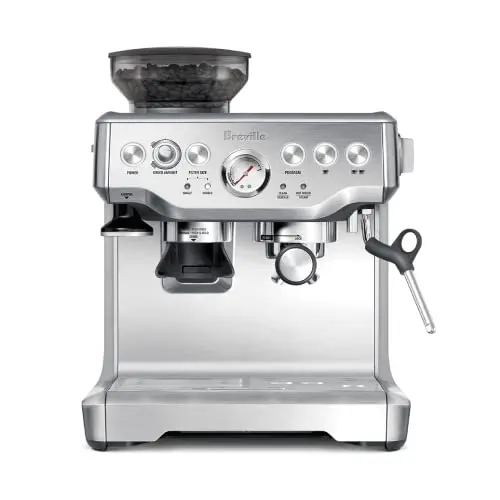
Barista Express BES870XL – Espresso With Built-In Burr Grinder
The Barista Express is an espresso-first combination machine with a conical burr grinder mounted above the portafilter. It grinds on demand, offers a grind-size dial, and pairs a PID-controlled brew system with a manual steam wand for microfoam. The included 54mm portafilter, baskets, tamper, and milk jug make it a complete starter setup for lattes and cappuccinos.
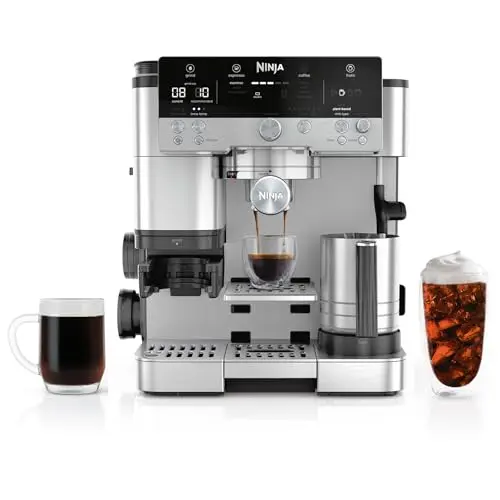
Luxe Cafe Premier ES601 – Guided Espresso and Drip Combo
The Ninja Luxe Cafe Premier ES601 is a 3-in-1 machine that covers espresso, drip coffee, and cold brew with a built-in conical burr grinder. Barista Assist Technology guides grinding, dosing, tamping, and temperature or pressure adjustments, while the dual froth system handles hot or cold microfoam automatically.
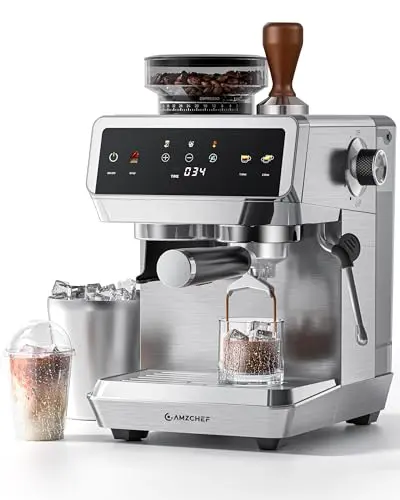
CM1626 Espresso Machine – Compact Grinder and Frother Combo
The AMZCHEF CM1626 is a compact espresso machine with a built-in grinder, 44 grind settings, and adjustable brew temperature from 190F to 201F. It adds one-touch cold brew, a touch screen, and a steam wand for microfoam, making it a flexible option for espresso and iced drinks.
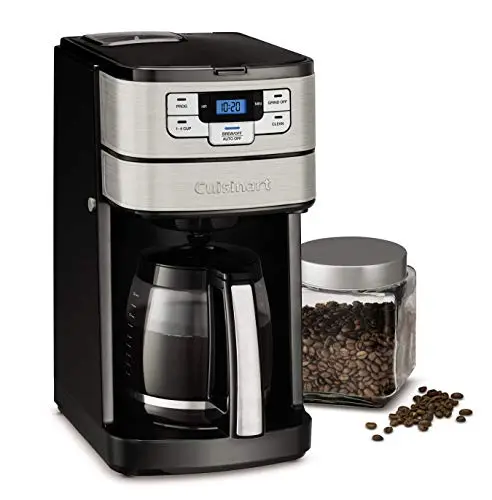
DGB-400NAS Automatic Grind & Brew – Hands-Off Drip With Blade Grinder
The Cuisinart DGB-400NAS is a 12-cup drip brewer with an automatic blade grinder that mills whole beans just before brewing. It includes a glass carafe, Brew Pause, a permanent gold-tone filter, a charcoal water filter, and a grind-off option for pre-ground coffee. Programmability and a three-year limited warranty round out the package.
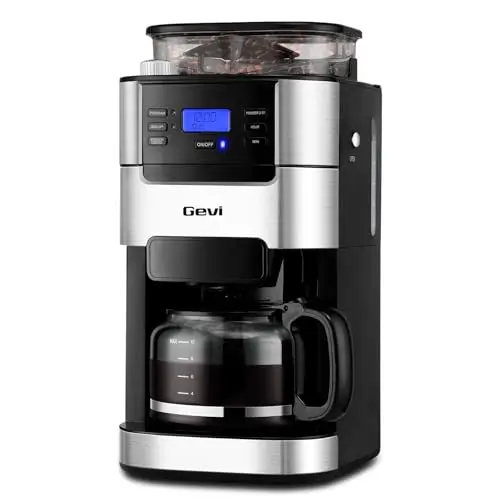
DCMB0-BK0A1 All In One Grind & Brew – Programmable Drip With Burr Grinder
The Gevi All In One Grind & Brew is a 10-cup drip coffee maker with a built-in burr grinder, eight grind settings, and three brew-strength levels. It offers 2- to 10-cup flexibility, a 24-hour programmable timer, a 1.5-liter water tank, a reusable filter, and a keep-warm plate for daily brewing.
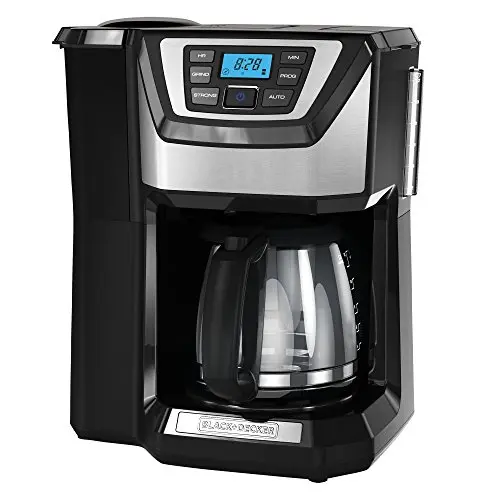
CM5000B 12-Cup Grind and Brew – Budget Grind-and-Brew Drip
The BLACK+DECKER CM5000B is a 12-cup drip coffee maker with a built-in grinder, programmable timer, and Sneak-A-Cup pause. It uses a reusable filter and can brew from whole beans or pre-ground coffee, making it a straightforward entry-level combination for batch brewing.
How We Evaluated These Coffee Grinder Maker Combinations
We didn’t run these through a test kitchen, pull timed shots, or measure extraction yield with a refractometer. What we did: cross-referenced 6 coffee grinder maker combinations from 6 brands across six decision axes – grind mechanism, brew style, capacity, cleanup, milk frothing, and controls. We mapped published specifications against real-world use cases, triangulated feature sets, and weighed owner feedback where available to separate genuine convenience from spec-sheet clutter.
The scoring split put real-world fit and performance at 70% and feature differentiation at 30%. That means a machine earned credit for making the daily ritual easier, not just for having a longer feature list. We audited the differences that matter when beans, water, and milk meet: burr versus blade grinding, grind-on-demand dosing, steam wand control, carafe capacity, and how much cleanup the design creates. Recommendations are independent and track fit and differentiation, not brand preference. If you want a single do-it-all espresso setup, the Breville Barista Express is the most complete answer; if you want guided help and drip coffee too, the Ninja Luxe Cafe Premier is the more beginner-friendly route.
We also weighed who each machine serves: espresso-first buyers, drip-coffee households, small kitchens, and anyone replacing a separate grinder and brewer. The aim isn’t to crown the loudest spec sheet. It’s to point you to the machine whose workflow you’ll actually repeat tomorrow morning, with the features that support that routine and the tradeoffs you can live with.
How to Choose the Right Coffee Grinder Maker Combination
1. Start With the Grinder: Burr vs. Blade in a Combination Machine
The grinder is the part of a combination machine that decides whether the convenience is worth it. A burr grinder crushes beans between two abrasive surfaces and generally gives you more consistency and adjustability; a blade grinder chops with spinning blades and can produce uneven particles. For espresso, where a small grind shift changes the shot, a burr grinder is the stronger foundation. For everyday drip coffee, a blade grinder can be workable if you accept less precision.
Look at the grind settings and the grind-on-demand workflow, not just the word grinder on the box. A machine that grinds directly into a portafilter or brew basket reduces stale grounds and extra dishes. A hopper that is hard to remove or a chute that traps beans can turn a simple morning into a cleanup project.
2. Match Espresso, Drip, and Cold Brew to Your Routine
Combination machines are not interchangeable across drink styles. Espresso-first machines usually include a portafilter, pressurized or non-pressurized baskets, and a steam wand, because espresso needs fine grinding and pressure. Drip-focused brewers prioritize carafe capacity, a programmable timer, and a keep-warm plate; their grinders are tuned for batch brewing rather than shot-by-shot control. Some newer models add cold brew or pod options, which can be useful if your household drinks different things.
If espresso is the priority, the Breville Barista Express pairs a burr grinder with a steam wand in one footprint. If you want drip coffee and espresso from the same machine, the Ninja Luxe Cafe Premier is the more flexible pick.
3. Why Grind-On-Demand and Dose Control Matter
Grind-on-demand means the machine grinds only the dose it needs, right before brewing. That is a real advantage over grinding a bag at the store, because coffee aromatics fade quickly after grinding. Dose control matters just as much: a machine that can grind into a portafilter cradle or a brew basket with a consistent amount reduces the guesswork and the mess.
For a compact espresso setup with a wide grind range, the AMZCHEF CM1626 is the pick. Its 44 grind settings and adjustable brew temperature give you room to experiment without adding a separate grinder.
4. Cleanup, Capacity, and Counter Space
Cleanup is where combination machines quietly separate themselves. Espresso models ask you to knock out pucks, wipe the steam wand, and empty a drip tray; drip models ask you to rinse the carafe, filter basket, and grinder chute. A reusable filter cuts paper waste, but it still needs rinsing. A glass carafe is easy to inspect, while a thermal carafe may hold heat longer without a hot plate.
Capacity should match your household. A 12-cup brewer is useful for batch drinkers, but it takes more counter space than a compact espresso machine. Measure your counter footprint and check cabinet clearance before you commit. For drip-focused households that want a programmable burr grinder, the Gevi All In One Grind & Brew is a sensible route.
5. How to Budget for a Coffee Grinder Maker Combination
Think in tiers rather than chasing a single best price. Entry-level combination brewers usually focus on batch drip coffee and basic grinding; they can be a good fit if you mostly want fresh grounds without another appliance. Mid-range models often add burr grinders, more grind settings, programmable timing, or better filters. Premium machines tend to invest in espresso pressure control, temperature stability, steam wand quality, and guided workflows.
The right tier depends on how often you brew and how much control you want. If you drink drip coffee on a schedule, spend for a reliable grinder and easy cleanup. If you make espresso or milk drinks daily, put more of the budget toward grind consistency and steam performance.
6. Coffee Grinder Maker Combination vs. Separate Grinder and Brewer
A combination machine saves space and steps, but it also ties the grinder to the brewer. If the grinder fails, the whole machine may need service. Separate gear gives you upgrade flexibility and easier replacement, but it costs more counter space and adds a second workflow. For most households, a combination makes sense when the grinder is decent, the brew style matches your routine, and cleanup is simple enough that you will actually keep doing it.
Frequently Asked Questions
1. What is the difference between the Breville Barista Express and Ninja Luxe Cafe Premier?
The Breville Barista Express is espresso-first: it pairs a conical burr grinder with PID temperature control and a manual steam wand for hands-on latte work. The Ninja Luxe Cafe Premier is a 3-in-1 machine that adds drip coffee and cold brew, with Barista Assist guidance and a hands-free froth system. Choose Breville for a traditional espresso workflow; choose Ninja for broader drink variety with more automation. For espresso-focused buyers, the Breville Barista Express is the more direct route.
2. Is a built-in grinder combination better than a separate grinder and coffee maker?
A combination machine saves counter space and reduces steps, especially when the grinder doses directly into the brew path. Separate gear usually wins on upgrade flexibility, serviceability, and the ability to choose a specialized grinder. The tradeoff is more cleanup and a larger footprint. If you want one appliance and a simple routine, a combination is compelling; if you plan to upgrade piece by piece, separates make more sense.
3. How do I choose between the Cuisinart DGB-400NAS and Gevi All In One Grind & Brew?
Both are drip-focused combination brewers, but they differ in grinder type and capacity. The Cuisinart DGB-400NAS uses a blade grinder and a 12-cup glass carafe, with Brew Pause and a grind-off option. The Gevi All In One Grind & Brew uses a burr grinder, offers 2- to 10-cup flexibility, and adds a programmable timer. Choose Cuisinart for a familiar batch-brew workflow; choose Gevi if you want burr grinding and smaller batches.
4. Do combination machines grind fresh enough for good espresso?
Yes, if the machine has a burr grinder with fine adjustment and a workflow that doses into a portafilter. Espresso is less forgiving than drip, so grind consistency and dose control matter more than the number of settings alone. Blade grinders are better suited to drip coffee. A machine with a pressurized basket can be more forgiving for beginners, while a non-pressurized setup rewards practice.
5. Which coffee grinder maker combination is easiest to clean?
There is no universal winner because cleanup depends on drink style. Espresso machines ask for puck disposal, steam wand wiping, and drip-tray rinsing. Drip brewers ask for filter basket rinsing, carafe washing, and grinder-chute attention. A reusable filter and removable parts help, but the simplest machine is the one whose daily cleaning steps you will actually repeat.
Final Verdict
For most buyers, the Breville Barista Express is the answer. It is the rare combination machine that treats grinding, dosing, temperature, and steaming as one connected workflow, so espresso drinkers can grow into it without adding a separate grinder. If you want more automation and drip coffee in the same machine, the Ninja Luxe Cafe Premier is the beginner-friendly alternative. Budget-focused batch brewers should look at the BLACK+DECKER CM5000B; it keeps the built-in grinder and programmable timer without the espresso-machine learning curve. And if counter space is tight, the compact AMZCHEF CM1626 offers a wide grind range and a steam wand in a smaller footprint. The through line is simple: buy the workflow you will repeat, not the longest spec sheet.
