
Best Coffee Grinders For Cold Brew – 2026 Reviews

Cold brew looks like the forgiving method. No temperature surfing, no pour-over choreography – just coffee, water, and time. Then you taste the batch and realize the grind did all the deciding. Grind too fine and the concentrate turns silty and faintly bitter, clogging the filter and leaving sludge at the bottom of the jar. Grind too coarse and you’ve made brown water and wasted a night.
The sweet spot is coarse and, more importantly, consistent. That’s a burr grinder’s whole job, and it’s the biggest single jump in cold brew quality you can buy – bigger than the beans, bigger than the steep time. Blade grinders can limp you there, but they chop rather than crush, so you get powder and gravel in the same batch.
The other axis is batch size. Cold brew eats grounds: a single concentrate batch can use more coffee than a week of drip, which turns hopper capacity, dose control, and cleanup into real buying criteria rather than footnotes. We compared the field on burr type, coarse-range adjustability, capacity, and the mess factor, and there’s a defensible answer at nearly every budget tier.
Best Coffee Grinders for Cold Brew – 2026 Reviews
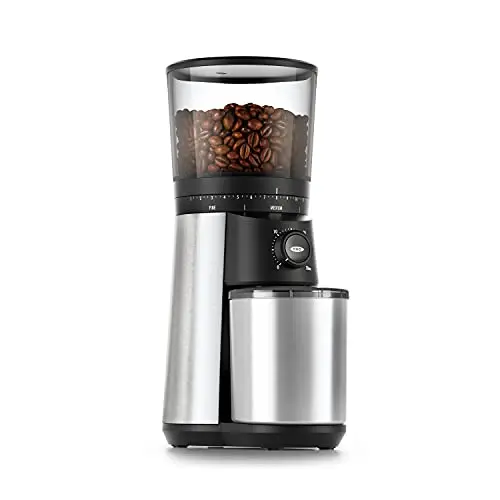
Brew Conical Burr Grinder – Coarse-Grind Consistency at Batch Scale
The full-size OXO Brew pairs 40mm stainless steel conical burrs with a coarse range that reaches French press and cold brew territory, plus a 12 oz hopper that holds enough beans for a multi-batch concentrate. One-touch start remembers your last setting, so the weekly routine becomes a single press.
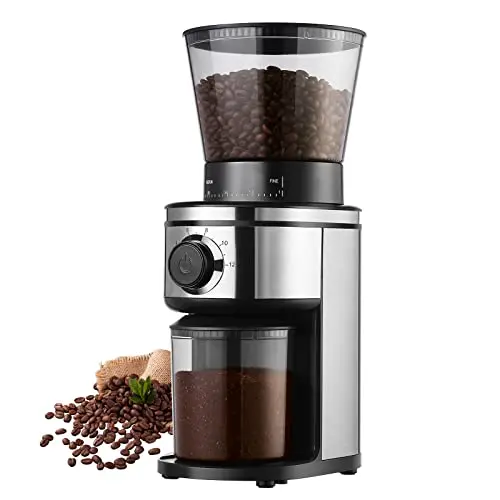
BG702S-PG Conical Burr Grinder – Slow-Motor Evenness for Less
Conical burrs, 30 settings, and a gear-reduction motor that turns slowly enough to keep friction away from the beans. A 10 oz auto-locking hopper and a 2-12 cup selector make it a natural fit for weekly cold brew concentrate without a premium-tier price.
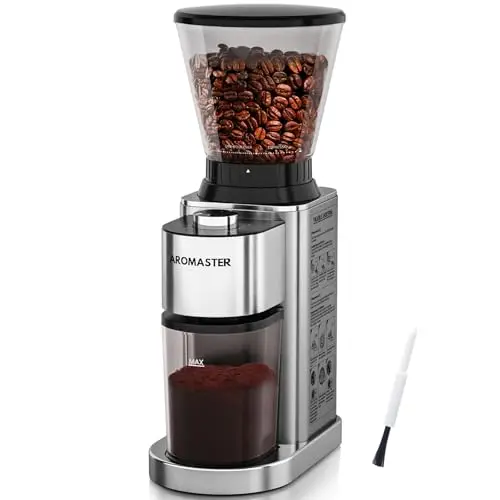
CG204 Conical Burr Grinder – Anti-Static Grinding, 48 Settings
48 settings, a 40-second adjustable timer, and an anti-static grounds bin that keeps coarse grinds where they belong. The removable ring burr and included brush make cleanup the least annoying part of the process.
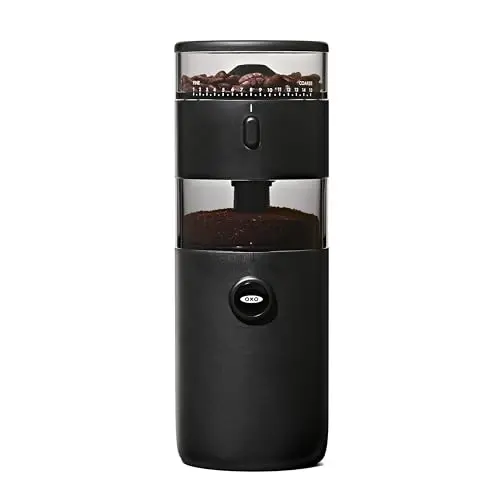
Brew Compact Conical Burr Grinder – Small Footprint, Real Burrs
Real conical burrs in a body barely wider than a mug. The 50g hopper suits a single batch up to roughly six cups, and 15 settings with 29 micro-adjustments get you to coarse without fuss.
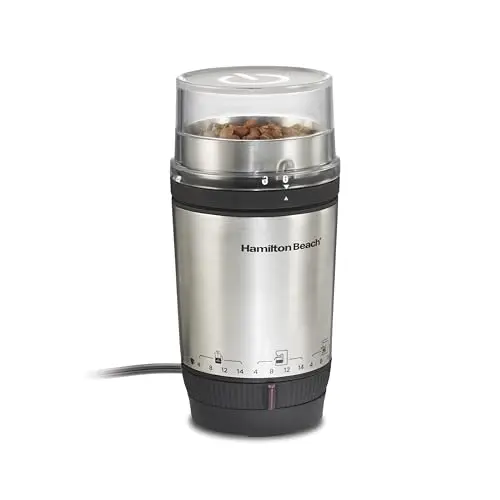
Custom Grind 80406 – Hands-Free Blade Grinding for Big Batches
A blade grinder that behaves more like a mill: an adjustable ring for grind size, a 4-14 cup selector, and hands-free push-down operation with auto shutoff. The stainless bowl lifts out and goes straight in the dishwasher.
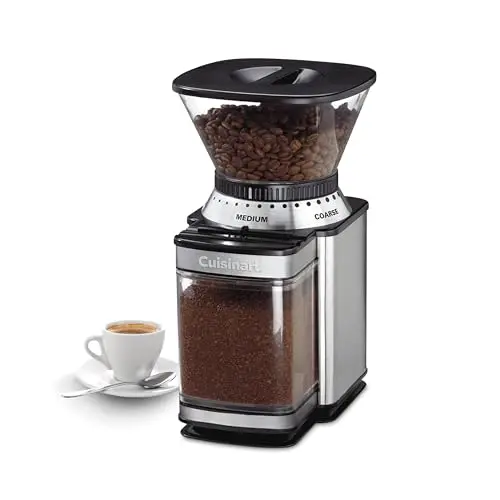
Supreme Grind DBM-8P1 – Entry-Level Flat Burr Mill
An 18-position flat burr mill with a slide dial for 4-18 cups and automatic shutoff. It’s the classic first step up from blades, with a coarse setting that reaches cold brew territory.
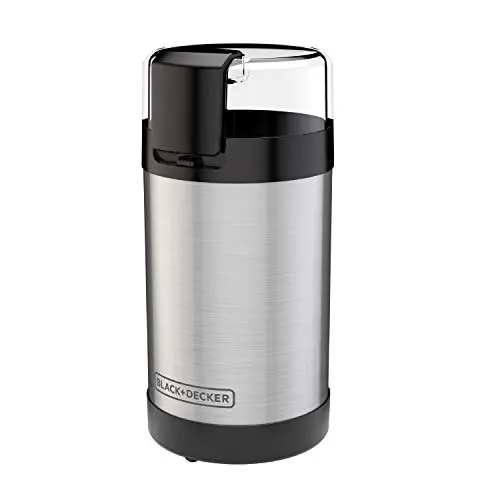
One Touch CBG110S – Simple Push-Button Grinding
A compact one-touch blade grinder with a stainless bowl, a lid-locking safety interlock, and a two-year limited warranty. Simple, small, and easy to live with on a crowded counter.
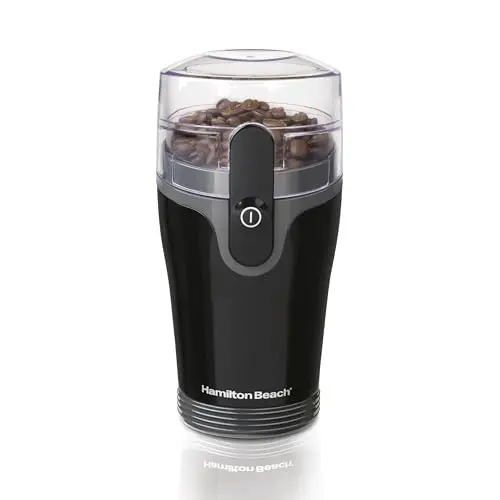
Fresh Grind 80335R – Quiet Removable-Bowl Budget Pick
Light, quiet, and dishwasher-friendly. The removable stainless bowl lifts out for filling and cleaning, and hidden cord storage keeps the counter tidy between batches.
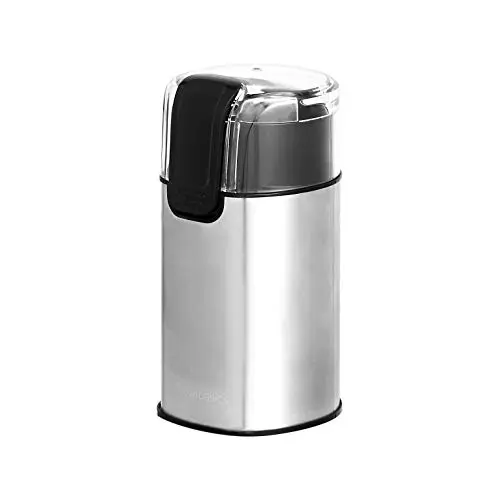
Fast Electric Grinder – No-Fuss Entry-Level Blade Mill
The simplest route to fresh grounds: load up to 30 grams, press, and stop when the texture looks right through the clear lid. Small, quiet, and easy to stash in a drawer.
How We Evaluated These Coffee Grinders for Cold Brew
We didn’t run controlled kitchen lab tests or long-term reliability trials. What we did: cross-referenced 9 coffee grinders from 7 distinct brands against what cold brew actually asks of a grinder, mapped across 5 decision axes – burr type and grind uniformity, coarse-range adjustability, batch capacity, static and cleanup behavior, and build and support details. We triangulated published specifications, grind-setting ranges, and aggregated feedback where available, then pressure-tested each model against the way people really brew cold brew at home: a large immersion batch, a coarse target grind, and a filter that punishes even a small share of fines.
The scoring framework weighted real-world fit for cold brew (70%) – how reliably a grinder lands a consistent coarse grind at batch scale, and whether it stays pleasant to use on a Sunday morning – against feature differentiation (30%) – the settings, timers, anti-static design, and hopper capacity that separate one model from another. We have no commercial relationship with any of the brands featured; recommendations track fit and differentiation, not brand preference. If you want a burr grinder that remembers your setting, the OXO Brew Conical Burr Grinder is the place to start; if you’d rather spend less for conical burrs, the Ollygrin BG702S gets you most of the way there.
How to Choose the Right Coffee Grinders for Cold Brew
1. Why Grind Consistency Decides Your Cold Brew
Cold brew is immersion brewing over many hours, which makes it more forgiving than espresso about grind size – but far less forgiving about particle distribution. A batch with a wide spread of sizes extracts unevenly: the powder-fine particles over-extract into bitterness and silt while the boulder-sized chunks under-extract and taste hollow. No amount of steep time fixes that.
The target is a uniform coarse grind, roughly the texture of raw sugar or coarse sea salt. Burr grinders crush beans between two abrasive surfaces set at a fixed gap, so most particles come out the same size. That’s the quality jump most cold brew drinkers are chasing, and it shows up in the glass as a cleaner, sweeter concentrate that filters without a fight.
2. Burr vs. Blade Coffee Grinders for Cold Brew
Blade coffee grinders spin a propeller and chop whatever sits in the bowl. You control the result by how long you hold the button, which means the coarsest chunks and the finest dust all come out of the same load. For cold brew that’s survivable: immersion extraction is slow and relatively even, and a fine-mesh bag or a second pass through a paper filter removes most of the silt.
Burrs are the better long-term answer. A conical burr set handles coarse grinding with less heat and less dust, and good ones give you micro-adjustments at the coarse end so you can dial texture between batches. If you want blade convenience without blade guesswork, look for an adjustable grind selector and a cup-count dial instead of a bare pulse button.
3. How Much Capacity You Need for Cold Brew Batches
Concentrate recipes usually run somewhere between one part coffee to four parts water and one part to eight, by weight. A modest concentrate batch can call for well over a hundred grams of grounds, which is more than a single morning dose and often more than a small hopper holds in one fill.
So check two numbers before you buy: hopper capacity (how many beans you can store) and grounds chamber capacity (how much you can grind before emptying). A compact burr grinder with a small hopper is fine for single batches but means refilling mid-grind for a bigger one. If counter space is the constraint rather than batch size, the OXO Brew Compact is the one we’d route small-kitchen brewers toward.
4. Static, Fines, and Cleanup: Details That Wear You Down
Grinding coarse generates static, and static means grounds clinging to the chute, the lid, and the counter. It’s the most common complaint about burr grinders and the reason some people quietly drift back to buying pre-ground. Anti-static bin designs and removable burr assemblies are the features that make the biggest day-to-day difference.
Cleanup also affects grind quality over time. Coarse grounds and oils build up in the chute and around the burr, and a grinder you can’t open easily will drift out of calibration. If static is the thing keeping you from grinding fresh, the Aromaster CG204 is the pick that addresses it head-on.
5. What Grind Settings Actually Matter
Spec sheets like to boast dozens of settings. For cold brew, what matters is that the coarse end of the range is genuinely coarse and repeatable, and that getting back to it is easy. A grinder with one-touch memory or a marked dial beats one with more steps but no way to lock in your setting.
Two extras earn their place: an adjustable timer or cup-count selector for consistent dosing on large batches, and overheat protection if you’re grinding long enough to fill a big chamber. Beyond that, extra steps are a nice-to-have rather than a cold brew requirement.
6. Entry-Level, Mid-Range, and Premium Coffee Grinders
Entry-level means blade grinders and the simplest burr mills. You’ll get fresh grounds and a coarse option, with more inconsistency and more noise. Mid-range is where conical burrs, quieter motors, and better coarse-range control show up – the sweet spot for most weekly cold brew brewers.
Premium buys you larger hoppers, finer micro-adjustment, UV-blocking or anti-static touches, and longer warranties. The jump in cup quality from entry to mid-range is significant; from mid-range to premium, it’s mostly convenience. If the budget only stretches to the entry tier, the Hamilton Beach Custom Grind is the one worth starting with.
Frequently Asked Questions
1. Do you need a burr grinder for cold brew?
No, but it’s the upgrade that shows up most clearly in the glass. A blade grinder will produce a coarse-enough average, just with a wide spread of particle sizes that leaves silt in the concentrate. A burr grinder narrows that spread, which means less mud and a cleaner filter pass.
If you brew weekly and strain through a fine mesh bag or paper filter, blade results are workable. If you want the concentrate to taste bright rather than muddy, prioritize conical burrs and a reliable coarse setting over any other feature on the box.
2. What's the difference between the OXO Brew Conical Burr Grinder and the Ollygrin BG702S?
Both are 40mm conical burr grinders, so the core grinding job is similar. The OXO Brew Conical Burr Grinder gives you a 12 oz hopper, 15 settings with 43 micro-adjustments, one-touch memory that resumes your last setting, and a two-year warranty – at a premium-tier price.
The Ollygrin BG702S counters with 30 settings, a gear-reduction motor that grinds slowly to limit friction heat, and a 10 oz auto-locking hopper for less money. For a big-batch routine where hopper size matters most, OXO wins; for value and gentler grinding, go with the Ollygrin BG702S.
3. Hamilton Beach Custom Grind vs. Cuisinart Supreme Grind: which budget pick for cold brew?
It’s a blade-versus-burr choice at the entry tier. The Hamilton Beach Custom Grind is a blade grinder with an adjustable grind ring, a 4-14 cup selector, hands-free push-down operation with auto shutoff, and a dishwasher-safe bowl – easier to live with every day.
The Cuisinart Supreme Grind gives you an actual flat burr mill with 18 positions, so the coarse grind is more uniform, at the cost of noise and mess. Choose the Hamilton Beach Custom Grind for convenience and cleanup; pick Cuisinart if grind uniformity matters more than the fuss.
4. How much coffee should you grind for a cold brew batch?
Start with a ratio rather than an absolute weight. A common concentrate baseline is one part coffee to four parts water by weight – stronger than you’d drink straight, meant to be diluted. If you prefer a ready-to-drink batch, move toward one to eight.
In practice, a batch that fills a one-liter jar uses roughly 100 to 150 grams of coarse grounds, so check your grinder’s grounds chamber before committing to a large recipe. Grind in two passes if the chamber is small; the grind quality itself doesn’t suffer.
Final Verdict
For most cold brew routines, the OXO Brew Conical Burr Grinder is the answer. It lands a consistent coarse grind, holds enough beans for a multi-batch concentrate, and remembers your setting so the weekly grind is one press. If the premium price is the sticking point, the Ollygrin BG702S gets you conical burrs and slow-motor grinding for noticeably less. And if you simply want fresh coarse grounds without spending much at all, the Hamilton Beach Custom Grind is the budget pick I’d hand a friend – accept the blade inconsistency and strain a little more carefully.
