
Best Coffee Maker And Grinder Combos – 2026 Reviews

A bag of whole beans on the counter can promise fresh coffee, but the grinder is often the missing link. Coffee maker and grinder combos close that gap by grinding right before brewing, so you’re not juggling a separate appliance or settling for stale pre-ground coffee.
The category splits in two useful directions: espresso machines with built-in burr grinders and drip machines that grind a pot’s worth of beans before the cycle. Within each lane, the real differences show up in grind consistency, temperature control, batch size, and how much cleanup the grinder adds to your morning.
We looked across brands to find the combos that make the most sense for different routines. Whether you want latte-ready espresso or a programmable pot for a full house, the right pick depends on the coffee you actually drink and the counter space you can spare.
Best Coffee Maker and Grinder Combos – 2026 Reviews
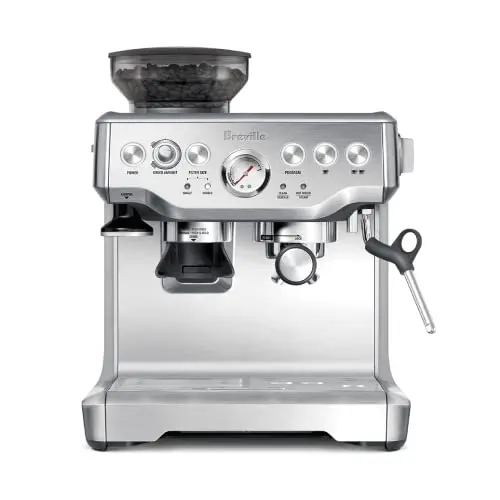
Barista Express BES870XL – Espresso and Grinder in One
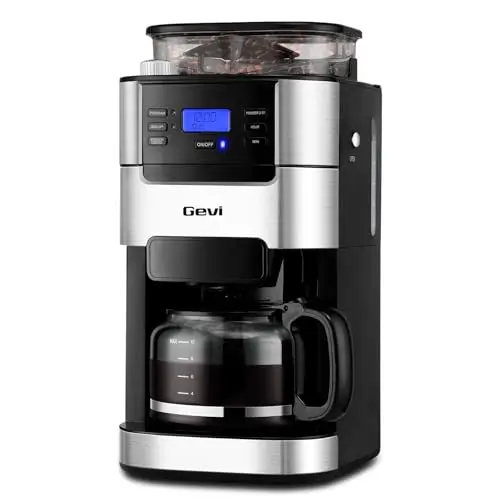
All-in-One 10-Cup Grind and Brew DCMB0-BK0A1 – Burr Grinder Drip
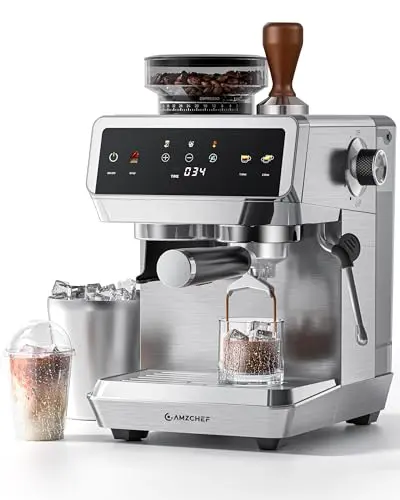
CM1626 Espresso with Grinder – Compact 44-Setting Espresso
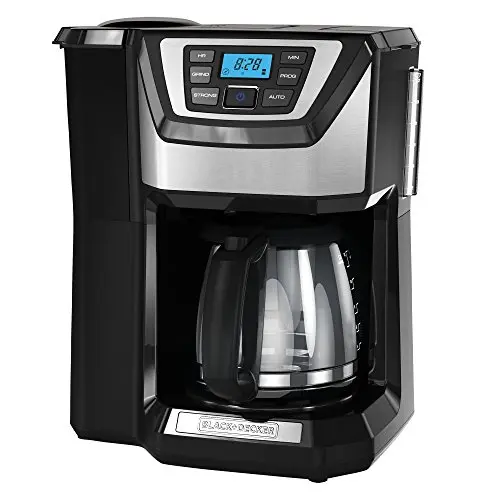
12-Cup Grind and Brew CM5000B – Programmable Fresh-Ground Drip
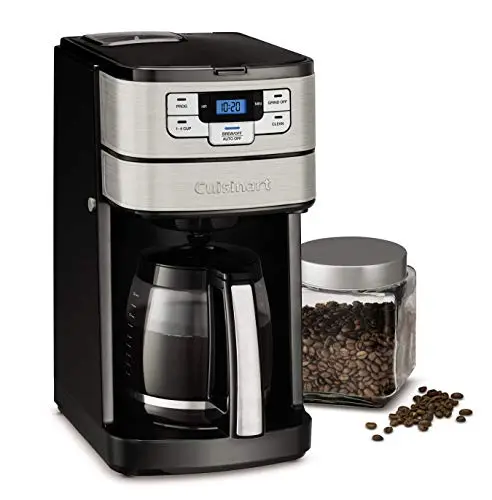
Grind and Brew DGB-400NAS – 12-Cup Blade-Grinder Drip
How We Evaluated These Coffee Maker and Grinder Combos
We didn’t pull shots, brew full carafes side by side, or measure grind particle distribution. What we did: cross-referenced five coffee maker and grinder combos from five distinct brands across six decision axes – grind quality and settings, brew capacity and carafe style, temperature control, ease of cleaning, durability signals, and counter footprint. We triangulated published specifications, feature sets, and owner feedback where available, then mapped each machine to representative buyer routines: espresso-focused, drip-first, small-household, and full-carafe brewing. That use-case lens matters because a combo built for latte art and a combo built for a programmable morning pot are solving different problems.
The scoring framework weighted real-world fit (70%) – how well each combo delivers on its stated coffee style – against feature differentiation (30%) – unique grind control, brewing flexibility, and cleanup design. We also weighed practical friction: how often the grinder needs cleaning, whether the water tank is easy to refill, and whether the machine fits under a normal cabinet. Where owner feedback was uneven, we treated it as a signal rather than a verdict. We have no commercial relationship with any brand here, and recommendations track fit and differentiation rather than brand preference. If you want espresso with a built-in grinder, the Barista Express is the strongest all-around pick; if drip coffee is the priority, the Gevi All-in-One makes more sense. The goal is a useful shortlist, not a spec-sheet ranking.
How to Choose the Right Coffee Maker and Grinder Combo
1. Grind Quality: Burr vs Blade in Coffee Maker and Grinder Combos
A burr grinder crushes beans between two abrasive surfaces and tends to produce a more consistent particle size, which matters most for espresso. A blade grinder chops beans and can leave a mix of fine powder and coarse chunks; it’s common on budget drip combos and can still make decent coffee, but it gives you less control.
Look at the number of grind settings and whether the machine lets you adjust grind amount separately from brew strength. Espresso-focused combos need fine, repeatable adjustments; drip combos can get away with fewer settings as long as the grind is fresh.
2. Brew Capacity and Carafe Style for Your Household
Match the carafe size to how much coffee disappears in a morning. A 12-cup drip machine makes sense for families or offices, while a 10-cup model with 2-to-10-cup flexibility is easier to live with if some days call for a single mug. Espresso machines use a portafilter and shot glasses rather than a carafe, so capacity means something different: water tank size and how many back-to-back drinks you can pull.
Also check whether the machine has a pause-and-pour feature, a keep-warm plate, and a water tank you can refill without moving the whole unit. Those small conveniences matter more than a long feature list once the machine is on your counter.
3. Temperature Control and Extraction Basics
Brew temperature is one of the clearest separators between a combo that tastes flat and one that tastes balanced. Drip machines with a temperature-controlled brew cycle or a hotter brewing claim tend to extract more evenly; espresso machines with PID control hold water temperature steady from shot to shot.
For espresso, pre-infusion and a steam wand matter if you drink lattes or cappuccinos. For drip, bloom or pre-brew cycles can help saturate the grounds before the main pour. None of these features guarantee great coffee, but they give you more ways to adjust when a bag of beans isn’t behaving.
4. Cleaning a Built-In Grinder Without Losing Your Morning
The tradeoff of a combo is that the grinder lives inside the coffee maker, so cleaning takes more steps than wiping down a separate burr grinder. Look for a removable brew basket, a washable filter, and a grinder chute you can reach without dismantling the machine.
Blade-grinder combos often need the grinding chamber cleaned after every use to prevent stale oils from building up. Burr combos can be more forgiving, but they still benefit from regular brushing. If you know you won’t clean a grinder consistently, a simpler drip machine with a separate grinder may actually be the more realistic choice.
5. Espresso or Drip: Match the Combo to Your Routine
Start with the drink you actually order. If it’s shots, flat whites, and cappuccinos, an espresso combo with a burr grinder and steam wand is the right tool. If it’s a mug of drip coffee you carry to the desk, a grind-and-brew drip machine is simpler and cheaper to live with.
Espresso has a longer learning curve, but it also gives you more control over strength and milk texture. Drip is more forgiving and better for brewing for a crowd. If espresso is your daily drink, the Breville Barista Express is the pick; if you want drip, the Gevi All-in-One is the better fit.
6. What to Expect at Each Price Tier
Entry-level combos usually use blade grinders and simpler controls. They can make fresh-tasting drip coffee, but expect more cleanup and less grind precision. Mid-range models add burr grinders, programmable timers, and better water tanks. Premium espresso combos bring PID temperature control, stronger steam wands, and more substantial build quality.
Spend for the features you’ll use every day: grind consistency, easy cleaning, and a brew style that matches your routine. For a budget drip combo, the BLACK+DECKER CM5000B is the value route; for a compact espresso combo, the AMZCHEF CM1626 is the budget-espresso pick.
Frequently Asked Questions
1. What's the difference between the Breville Barista Express and the Gevi All-in-One?
They’re built for different coffee routines. The Breville Barista Express is an espresso machine with a built-in conical burr grinder, PID temperature control, and a manual steam wand for microfoam. The Gevi All-in-One is a drip machine with a built-in burr grinder, programmable timer, and 10-cup carafe, so it’s better for full pots of regular coffee.
Choose the Barista Express if you drink espresso and milk drinks; choose the Gevi if you want fresh-ground drip coffee with minimal fuss.
2. Cuisinart DGB-400NAS vs BLACK+DECKER CM5000B: Which grind-and-brew is better?
Both are budget-minded drip combos, but they trade off differently. The Cuisinart DGB-400NAS uses a blade grinder and adds a grind-off option for pre-ground coffee, plus a charcoal water filter. The BLACK+DECKER CM5000B has a programmable timer and a 12-cup carafe, and owner feedback tends to praise the fresh-ground flavor.
The Cuisinart is the more flexible machine on paper, but its grinder is loud and needs frequent cleaning. The BLACK+DECKER is simpler and often the better value, though durability reports are a real caveat. If you want the lowest-friction budget drip combo, go with the BLACK+DECKER; if the grind-off option matters, the Cuisinart makes more sense.
3. Do coffee maker and grinder combos actually save counter space?
They can, but only if the machine fits your counter. A combo replaces a separate grinder and coffee maker with one footprint, which is a real win in a small kitchen. The catch is that combo machines are often taller than a basic drip maker because the bean hopper sits on top.
Measure your cabinet clearance, counter depth, and the bean hopper height before buying. If you have low cabinets, a compact espresso combo or a low-profile drip combo may work better than a full-size grind-and-brew machine.
4. How often should you clean a built-in grinder?
For a blade-grinder combo, clean the grinding chamber after most uses to keep stale oils from affecting flavor. For a burr-grinder combo, brush out the chute and chamber weekly, or more often if you switch between oily dark roasts and lighter beans.
Also follow the machine’s decalcifying schedule and rinse the water reservoir regularly. Cleaning isn’t glamorous, but it’s the difference between a combo that tastes fresh for years and one that starts tasting muddy by month three.
5. Is a burr grinder always better than a blade grinder in a combo machine?
Not always in every context, but a burr grinder is generally more consistent, especially for espresso. A blade grinder can be fine for drip coffee if you don’t mind some particle variation and you clean it often. The bigger issue is grind consistency: inconsistent grounds can make espresso taste sour and bitter at the same time.
If your priority is espresso, look for a conical burr grinder and enough grind settings to dial in the shot. If you mostly brew drip and want a lower-cost combo, a blade grinder is a reasonable compromise as long as you accept the cleanup.
Final Verdict
For most buyers, the Breville Barista Express is the answer – it pairs a built-in conical burr grinder with PID temperature control and a manual steam wand, so espresso and milk drinks feel genuinely cafe-adjacent at home. If drip coffee is your daily default, the Gevi All-in-One delivers fresh grinding, programmable brewing, and flexible batch sizes without a separate appliance. Budget-focused drip drinkers should look at the BLACK+DECKER CM5000B; it gets the core fresh-ground experience right, though durability is the tradeoff. And if you want a compact espresso setup with broad grind control, the AMZCHEF CM1626 is the niche pick. Match the machine to your actual morning routine, not the other way around.
