
Best Coffee Makers For Small Offices – 2026 Reviews

Every small office has a coffee maker that someone volunteered to buy, and everyone else quietly resents. Usually it’s a machine that brews fine but can’t keep up between 8 and 9 a.m., or one that makes a single perfect cup at a time while six people queue behind it. The gap between a machine that works in a kitchen and one that works in a shared kitchen is wider than most shoppers expect.
Two things separate the good options from the frustrating ones. The first is peak-hour throughput – how much coffee lands in the carafe during the twenty minutes when everyone arrives at once, not how much it makes across a whole day. The second is how much babysitting it demands: refilling, descaling, remembering to switch it off, washing a filter basket nobody wants to touch.
We looked across the major brands in this category and sorted them by what they’re actually good at – batch brewing for a real team, single-serve convenience for a mixed crowd, or just doing the job cheaply in a corner. Whether your office is two people sharing a rented room or eight people in a converted kitchenette, there’s a machine here built for that shape of problem.
Best Coffee Makers for Small Offices – 2026 Reviews
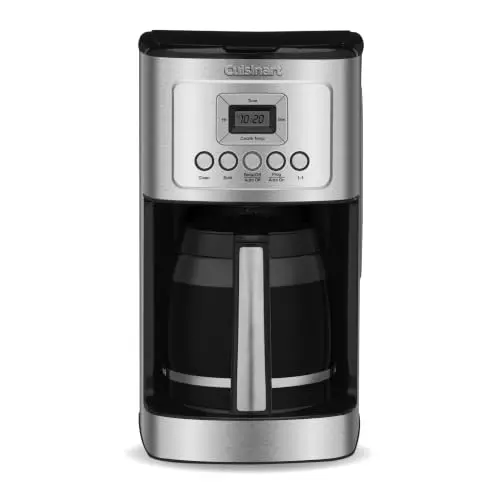
DCC-3200 PerfecTemp – 14-Cup Batch Brewing for the Whole Team
A 14-cup programmable drip brewer built around hotter water. PerfecTemp brewing, an adjustable warming plate, a 1-4 cup small-batch setting, and a self-clean cycle with decalcify indicator make it the most complete batch option here for a team.
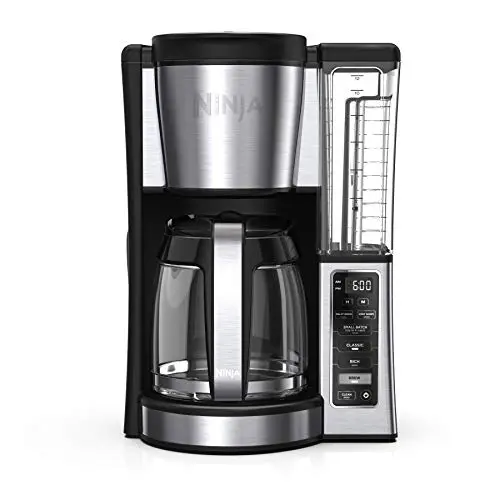
CE251 Fresh Brew – Easy-Refill Batch Brewer
A 12-cup programmable brewer with the features that make a shared machine less annoying: a reservoir you can carry to the sink, two brew strengths, an adjustable warming plate, and a press-to-descale cleaning cycle.
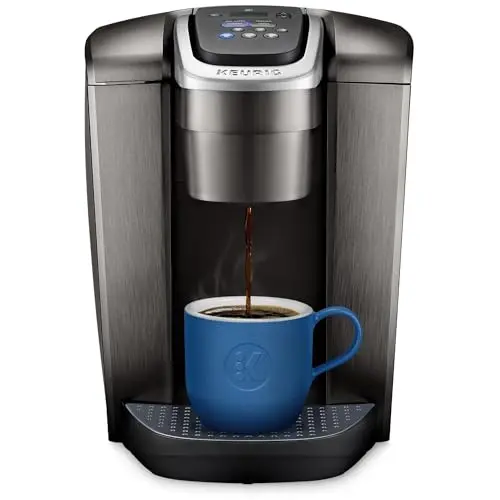
K-Elite – Single-Serve Choice for Mixed Crowds
A single-serve pod brewer for offices where nobody agrees on coffee. Five cup sizes, strength and temperature control, an iced setting, and a large removable reservoir, with quiet brewing so it doesn’t carry across an open room.
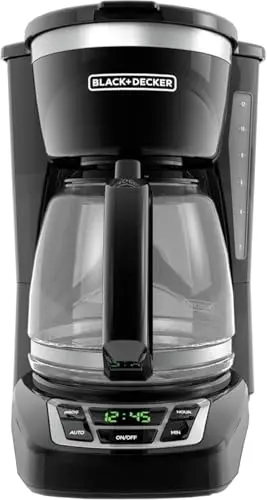
CM1160B-1 Vortex – Programmable Budget Workhorse
A 12-cup programmable drip brewer that brings a 24-hour timer and a 2-hour auto shutoff to the entry level. Digital controls, an easy-view water window, and a Sneak-A-Cup pause cover the essentials for a team on a tight budget.
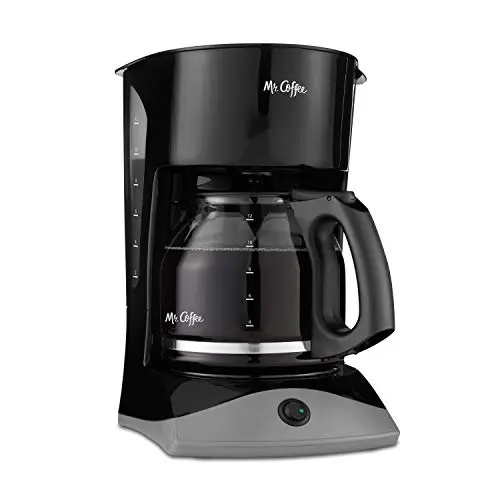
SK13 12-Cup – Simple One-Switch Brewing
A 12-cup drip brewer with one switch and almost nothing else. Grab-A-Cup auto pause, a removable basket filter, and cord storage keep it dead simple for an office that just wants coffee without a learning curve.
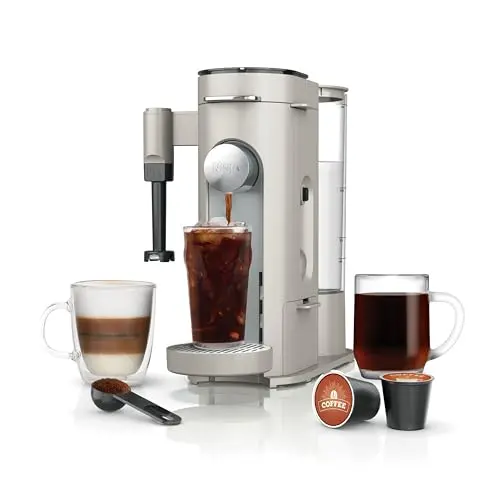
PB051ST Pods & Grounds – Single Serve with a Frother
A single-serve brewer that takes K-Cup pods and loose grounds in the same machine. Four brew styles including Over Ice, cup sizes up to 24 ounces, a fold-away milk frother, and a 56-ounce removable reservoir.
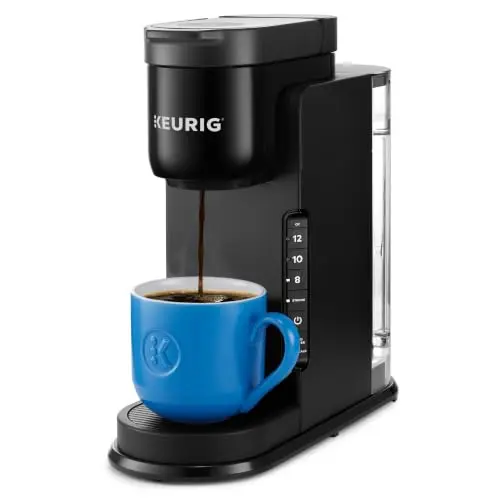
K-Express – Compact Pod Brewer for Tight Counters
A narrow single-serve pod brewer for offices short on counter space. Three brew sizes, a strong brew option, a 42-ounce removable reservoir, and a five-minute auto off after the last cup.
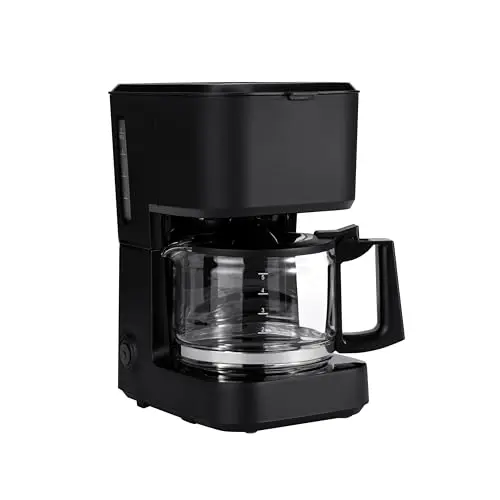
CM9452A-UL 5-Cup – Small Footprint with Auto Shutoff
A compact 5-cup drip brewer for one- and two-person offices. It pairs a small footprint with a 2-hour auto shutoff, pause and pour, and a removable filter basket – features that are unusually rare at this size.

2129512 Mini Brew – Smallest Footprint, Simplest Use
The smallest machine here. A 5-cup switch-operated brewer with Grab-A-Cup auto pause, a lift-and-clean filter basket, and an easy-view water window for a one-person office or a guest-area backup.
How We Evaluated These Coffee Makers for Small Offices
We didn’t run controlled brew-temperature lab tests or multi-month durability trials. What we did: cross-referenced 9 coffee maker models from 6 distinct brands across six decision axes – brew capacity, programmability, warming control, footprint, daily upkeep, and consumable compatibility. We triangulated published specifications, feature sets, aggregated owner feedback where available, and mapped every machine against the reality of a small-office kitchenette: a handful of people, staggered arrival times, one sink, and nobody who wants to be the office barista.
Scoring weighted real-world fit for a shared office (70%) – how much coffee a machine actually delivers per cycle, how well it holds temperature, and how much attention it demands – against feature differentiation (30%) – programmable timers, small-batch settings, pod flexibility, and cleaning routines that don’t eat into the workday. Recommendations track fit and differentiation, not brand preference; we have no commercial relationship with any brand in this lineup. If your team wants a pot waiting before the first person walks in, the Cuisinart DCC-3200 is the obvious starting point. If counter space is short and refills are the daily friction, the Ninja CE251 solves more problems at once.
Two things separated the strong picks from the weak ones. Machines with no auto shutoff finished lower, because an unattended warming plate in a shared space is a real problem rather than a nitpick. And anywhere the water reservoir lifts off and carries to the sink, the machine gets used more – a small detail with outsized effect on a team that’s already busy.
How to Choose the Right Coffee Makers for Small Offices
1. How Much Coffee a Small Office Really Goes Through
A small office doesn’t need a coffee maker sized to the headcount – it needs one sized to the peak hour. If eight people all arrive between 8 and 9, plan for roughly sixteen cups landing inside a sixty-minute window, which is why a 12- or 14-cup brewer is the sensible default for anything past three or four people. Total daily consumption matters far less than that concentrated rush.
The other half of the math is turnover. A machine that holds a large carafe but forces someone to stand and babysit the brew cycle is worse than a smaller one that finishes quickly. Count how many of your people will realistically wait rather than walk to a café, and size for that number.
2. Capacity and Carafe Size for a Small Office Kitchenette
Carafe numbers are measured in 5-ounce cups, so a 12-cup pot is really about 60 ounces of liquid – enough for six decent mugs. A 14-cup carafe buys you roughly 70 ounces and a little slack for the person who always takes a travel mug. For one or two people, a 5-cup brewer is genuinely the right size and wastes far less coffee.
Glass carafes pour cleanly and let you see what’s left, but they break. If your kitchenette has tile floors and a rotating cast of dishwashers, budget for a spare or check how easy replacements are to source. Capacity you don’t use is still capacity you have to wash.
3. Programmable Brewing, Auto Shutoff, and Warm-Holding
A 24-hour programmable timer is the single most useful office feature, because it converts coffee from a task into a fact: the pot is simply there when the first person arrives. It also means nobody has to be the one who starts the brew every morning.
Auto shutoff matters far more in a shared space than at home. Unknown last-person-out, a warming plate running all evening, and a hot carafe sitting unattended is a bad combination. Look for a 2-hour cutoff at minimum, and check whether the warm-hold is adjustable – a lower warming setting keeps coffee drinkable longer than a single high setting that slowly cooks it. If you want programmable brewing at the lowest cost, the BLACK+DECKER CM1160B-1 is the pick.
4. Pods, Grounds, or Both: Which Coffee Maker Suits a Shared Office
Pod machines solve the nobody-agrees problem and the nobody-wants-to-clean problem at once. They cost more per cup and generate waste, but a single-serve brewer with a large reservoir and a few cup sizes lets a team with mixed tastes coexist without a committee meeting.
Ground coffee is cheaper per cup and better if your team actually cares about flavor. The awkward middle ground – some people bring pods, some bring beans – is exactly where a dual-compatible machine earns its place on the counter. If pods are clearly the direction, the Keurig K-Elite covers the widest range of drinkers with the least fuss.
5. Footprint, Refilling, and Daily Cleaning
Measure your counter before anything else, and check under-cabinet clearance as well as depth – plenty of machines fit until you try to open the lid. A removable water reservoir is worth more than it sounds: carrying a reservoir to the sink beats pouring a carafe into a slot at an awkward angle, and the machine sees more use as a result.
Cleaning is the long-term cost nobody budgets for. A removable filter basket and a self-clean or descale cycle turn a chore into a button press. Hard water shortens the interval between descaling, so if your building’s water is mineral-heavy, favor machines that tell you when it’s due.
6. Budget, Mid-Range, and Premium Coffee Makers
Entry-level machines are switch-operated, unprogrammable, and honest about it – you get a hot pot and nothing else. If the office only needs coffee and the budget is genuinely tight, the Mr. Coffee SK13 covers it, though you’ll want someone designated to switch it off.
The mid-range is where most small offices should land: programmable timers, auto shutoff, and either a bigger carafe or pod flexibility. Premium machines add pod ecosystems, milk frothing, and finer temperature control – worth the extra only if your team’s habits genuinely need that range.
Frequently Asked Questions
1. How big a coffee maker does a small office need?
Match capacity to your peak hour, not your total headcount. Up to about eight people arriving in the same window, a 12- or 14-cup brewer is the sweet spot. Past that, you’re either brewing a second pot mid-morning or looking at a single-serve machine that sidesteps the pot entirely.
If the office is one or two people, a 5-cup brewer wastes less coffee and takes up less counter. Buying a big pot nobody finishes just means pouring it out and washing the carafe anyway.
2. What's the difference between the Cuisinart DCC-3200 and the Ninja CE251?
Capacity and maintenance, mostly. The DCC-3200 runs a 14-cup carafe with hotter PerfecTemp brewing, a self-clean cycle, a decalcify indicator, and a limited three-year warranty. The CE251 is a 12-cup machine with two brew strengths, a warming plate that holds up to four hours, and a removable water reservoir you can carry to the sink.
For a slightly larger team that wants coffee held hot for longer, the Cuisinart is the safer bet. For a counter where refilling is the daily annoyance, the Ninja’s reservoir tips the decision. Both are ground-coffee machines – neither takes pods.
3. Keurig K-Elite or Ninja PB051ST for a pod-friendly office?
The K-Elite is pod-only, with five cup sizes, a strong brew option, iced coffee, and a 75-ounce reservoir that carries a team through the morning. It brews quietly, which matters in an open room, and the hot-water button quietly covers tea drinkers too.
The Ninja PB051ST takes both pods and loose grounds, adds a folding milk frother, and brews up to 24 ounces into a travel mug. If your team splits between pod people and people with a favorite bag of beans, the Ninja covers both. If everyone just wants a fast cup, the Keurig is simpler to run.
4. Do we need a programmable coffee maker in a small office?
Only if your office has a predictable start time – but in most cases that’s a yes. A 24-hour timer means the pot is ready when the first person arrives, which quietly removes the daily question of whose turn it is.
The feature that matters more is auto shutoff. In a shared space, nobody wants to be the person who left the warming plate on overnight. A 2-hour cutoff is the baseline; if your budget is tight, the BLACK+DECKER CM1160B-1 delivers both at the entry level.
5. How often should a shared coffee maker be cleaned or descaled?
Rinse the carafe and basket daily, wash the basket properly once a week, and descale every one to three months depending on water hardness. Hard water pushes you toward the monthly end of that range; soft water lets you stretch it.
A decalcify indicator removes the guesswork, and a self-clean cycle turns it into a button press rather than a project. If your machine has neither, put descaling on a recurring calendar reminder – it’s the maintenance most shared kitchens skip and the one that most affects how the coffee tastes.
Final Verdict
For most small offices, the Cuisinart DCC-3200 is the answer. It brews hot, holds a large pot at a temperature you can actually choose, and the self-clean cycle means the machine doesn’t quietly become a science project. Nothing else here covers a team that size with as few compromises.
If the budget conversation is real, the Ninja CE251 gets you most of the way there – the reservoir you can carry to the sink is the feature people end up appreciating most, and the four-hour warming plate suits a morning where everyone drifts in at different times. And if your team would rather pick a pod than share a pot, the Keurig K-Elite is purpose-built for that: five sizes, strong brew, iced coffee, and a reservoir that gets a team through the morning.
Buy for the way your office actually drinks coffee. Match capacity to your peak hour and the rest tends to sort itself out.
