
Best Coffee Makers With Insulated Carafes – 2026 Reviews

Coffee that sits on a hot plate starts to taste stewed within minutes. That burnt, flat edge is the reason so many kitchens have moved toward a coffee maker with an insulated carafe-the pot holds heat without continuing to cook the coffee. The result is a second cup that tastes closer to the first, provided the carafe and lid are actually doing their job.
The useful split in this category comes down to heat retention and brewing rhythm. Some machines are built for speed, keeping a tank of hot water ready so a full carafe lands in minutes. Others lean toward temperature precision, programmable convenience, or a carafe design that pours cleanly without drips. A model that wins on one axis can still disappoint on another.
This guide surveys the market across brands and brewing styles, from fast reservoir brewers to programmable thermal models and budget-friendly 12-cup machines. We focused on how each option handles the basics: hot coffee that stays hot, a carafe that pours without a mess, and daily operation that doesn’t add friction to your morning.
Best Coffee Makers with Insulated Carafes – 2026 Reviews
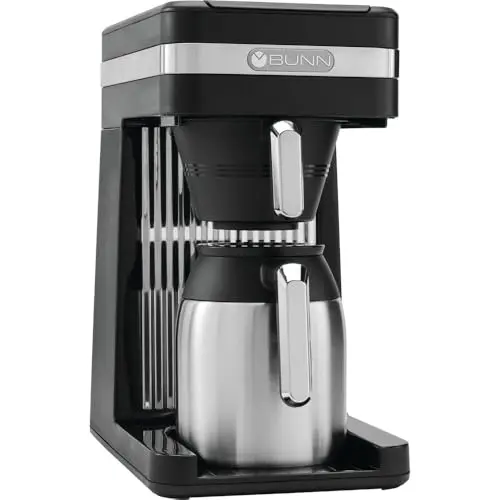
Speed Brew Platinum CSB3T – Fast Thermal Brewing
A Speed Brew model built around BUNN’s always-hot internal tank and a vacuum-insulated carafe. It’s the pick for fast refills without a warming plate.

EC-YTC100XB Fresh Brew Plus – Thermal Precision
A precision-focused thermal brewer with a removable water tank, high brewing temperature, and a vacuum-insulated stainless carafe.
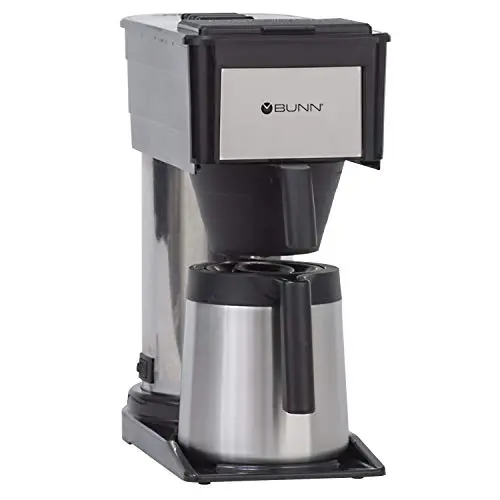
BT Speed Brew – Classic Thermal Brewer
The classic Speed Brew with a stainless tank, tall funnel, and vacuum-insulated carafe. Fast, simple, and backed by a longer warranty.

10-Cup Thermal Programmable – Strong Brew Flexibility
A programmable 10-cup thermal brewer with a strong-brew option, freshness timer, and removable water reservoir.

CM2035B Thermal Coffeemaker – Easy-Clean 12-Cup
A 12-cup thermal brewer with programmable controls, brew-strength selection, and a wide-mouth carafe built for easy cleaning.
How We Evaluated These Coffee Makers with Insulated Carafes
We didn’t run controlled lab temperature tests or measure carafe heat loss hour by hour. What we did: cross-referenced 5 coffee makers with insulated carafes from 4 distinct brands across six decision axes-heat retention, brew speed, capacity, carafe design, daily convenience, and feedback consistency where available. We triangulated published specifications, feature sets, and use-case fit against realistic routines: early commuters, households that graze on coffee, and small kitchens where counter space is tight. We also audited how each carafe pours, seals, and cleans, because a thermal pot that drips or traps old coffee undercuts the whole point.
The scoring framework weighted real-world performance (70%)-how well each brewer delivers hot coffee without a warming plate-against feature differentiation (30%)-unique carafe designs, brewing controls, and convenience touches. We mapped feedback to specific design choices rather than treating it as a generic score, and we weighed capacity against footprint for households that brew different volumes. Where feedback was thin or split, we leaned on published specs and design evidence instead of filling gaps with guesswork. We have no sponsored relationship with any brand here; recommendations track fit and differentiation, not brand preference. If you want the fastest path to a full thermal carafe, the Speed Brew Platinum CSB3T is the obvious place to start. If temperature precision and a more controlled brew matter more, the Zojirushi EC-YTC100XB is the better match.
How to Choose the Right Coffee Makers with Insulated Carafes
1. Why an Insulated Carafe Beats a Hot Plate
A thermal carafe changes the math of a coffee maker. Instead of holding a glass pot on a warming plate and cooking the coffee after it’s brewed, the carafe traps heat in a double-wall or vacuum-insulated vessel. That usually means better flavor for the second and third cup, because the coffee isn’t slowly stewing. The tradeoff is that heat retention varies widely: some carafes hold useful temperature for a couple of hours, while others fade faster than the marketing suggests.
Look for a stainless-steel interior, a lid that seals properly, and a pour spout that doesn’t dribble. Those details matter more than a long feature list for most buyers.
2. Brew Speed, Capacity, and Temperature: The Specs That Matter
Brew speed is the clearest separator in this category. A reservoir-style brewer with an internal hot tank can deliver a full pot in a few minutes, while a standard drip machine may take considerably longer. Faster isn’t automatically better, but it matters if you’re filling a travel mug on the way out the door. Capacity is the other practical number: 10 cups suits most households, while 12 cups gives more room for guests or a long morning.
Brew temperature should be hot enough to extract properly without scorching. Published targets around 200°F are a useful benchmark when a manufacturer lists them. Also check whether the machine has a brew-strength selector or pre-infusion feature; these can help darker roasts without turning the pot bitter.
3. Carafe Design and Pouring: Where Good Brewers Stumble
Carafe design is where good brewers separate from frustrating ones. A carafe lid that seals well keeps heat in, but it also needs to open and close without a two-handed wrestling match. The pour spout should cut off cleanly rather than dribble down the side. A wide-mouth opening makes cleaning much easier, especially if you rinse the carafe daily and don’t want old coffee oils lingering in the corners.
4. Programmability, Filters, and Daily Convenience
A programmable timer is useful if your mornings are on a schedule, but it’s not essential. More important is whether the machine is easy to fill and rinse. A removable water reservoir saves countertop gymnastics, and a reusable filter cuts down on paper waste if you’re brewing every day. Check how the brew basket comes out, too; a basket that’s awkward to remove will make you skip cleaning.
5. Budget, Mid-Range, and Premium Thermal Brewers: What You Get
Thermal-carafe brewers span the pricing landscape. Entry-level models usually focus on capacity and basic programmability, with fewer refinements in carafe design or temperature control. Mid-range machines add better lids, stronger brew options, and more thoughtful reservoirs. Premium models justify the jump with precise brewing temperatures, higher-end insulation, or specialized features like removable tanks and iced-coffee settings.
If you want programmable convenience without moving into premium pricing, the Mr. Coffee 10-Cup Thermal Programmable is the value-minded pick. It covers the essentials without asking you to pay for the extras you may not use.
6. BUNN Speed Brew Platinum vs Zojirushi EC-YTC100XB: Which Thermal Carafe Brewer Fits Your Routine?
The Speed Brew Platinum CSB3T is the speed-first choice. Its internal hot-water tank means you can brew a full carafe in about four minutes, and the pour-in bowl keeps refills simple. That rhythm suits commuters, busy households, and anyone who wants coffee ready before the kettle boils. The tradeoff is a larger footprint and less granular control over brewing temperature.
The Zojirushi EC-YTC100XB is the precision-first choice. It brews at a higher target temperature, includes a removable water tank, and can make a concentrated brew for iced coffee. If you care more about extraction and heat retention than raw speed, it’s the more deliberate machine. For a small household that brews one careful pot, that trade can make more sense than a faster tank-style brewer.
Frequently Asked Questions
1. Do insulated carafe coffee makers really keep coffee hot?
They can, but the result depends on the carafe’s vacuum insulation, the carafe lid seal, and how full the pot is. A good thermal carafe will keep coffee drinkably hot for a couple of hours, while a thin or poorly sealed one fades sooner. Preheating the carafe with hot water helps, and so does closing the lid between pours. Don’t expect the same heat as a warming plate; the point is avoiding stewed coffee, not keeping it scalding all morning.
2. BUNN Speed Brew Platinum vs Zojirushi EC-YTC100XB: Which should you pick?
Pick the Speed Brew Platinum CSB3T if brew speed is your priority. It’s built around an always-hot tank and can fill a thermal carafe in minutes, which is a real advantage on rushed mornings. Pick the Zojirushi EC-YTC100XB if you want temperature precision, a removable water tank, and the ability to make iced-coffee concentrate. The BUNN feels more like a compact cafe setup; the Zojirushi feels more like a careful home brewer.
3. Mr. Coffee Thermal vs BLACK+DECKER CM2035B: Which budget thermal brewer is better?
The Mr. Coffee leans on programmable controls, a strong-brew selector, and a freshness timer. It’s the more feature-forward pick if you like dialing in a darker cup and brewing on a schedule. The BLACK+DECKER answers with 12-cup capacity and a wide-mouth carafe that’s easier to clean. If you regularly brew for a crowd or hate scrubbing a narrow carafe, the B&D makes more sense; if you want more control over strength and timing, the Mr. Coffee is the better fit.
4. How do you clean an insulated carafe coffee maker without leaving old coffee taste?
Start by rinsing the carafe with hot water after every pot, and leave the lid open so it can dry. Once a week, deep-clean with a mild descaling solution or a vinegar-and-water mix, then rinse thoroughly. Remove the carafe lid and any gasket you can access, because old coffee oils hide there and turn rancid. Let every part fully dry before reassembling-trapped moisture is what makes the next pot taste stale.
5. Is a programmable thermal carafe coffee maker worth it for a small household?
It can be, especially if a programmable timer or Brew Later setting helps you start the day without waiting. But a small household may not need a full 10-cup pot every morning; a smaller batch or a simpler manual brewer can be enough. Look for a freshness timer and a carafe that holds heat well, so the coffee you make stays good for the second cup. If you routinely pour out half a pot, programmability isn’t the feature you should pay for.
Final Verdict
For most buyers, the Speed Brew Platinum CSB3T is the answer. It turns a thermal carafe into a genuinely fast brewing system, and the always-hot tank is the difference you feel on a rushed morning. If you want the best heat retention and a more controlled brew, the Zojirushi EC-YTC100XB is the premium pick-its 200°F brewing temperature and removable tank justify the step up. Budget-minded shoppers who mostly need capacity and easy cleaning should look at the BLACK+DECKER CM2035B; it gives up some heat consistency but wins on wide-mouth cleanup and 12-cup volume. Choose the brewer that matches your morning rhythm, and you’ll stop nursing a stewed pot on a warming plate.
