
Best Coffee Makers With Water Line – 2026 Reviews

A coffee maker with a water line sounds like a simple request until you start comparing models. In most home kitchens, water line means a reservoir you fill at the sink; in a commercial setting, it can mean a direct plumbing connection that refills the machine automatically. Those are very different buying decisions, and mixing them up is the fastest way to end up with the wrong machine.
The practical middle ground is a brewer with a generous reservoir, a clear fill line or water-level indicator, and a workflow that does not have you refilling after every cup. We looked at machines that handle that job in different ways: always-hot tank brewers, large-reservoir pod machines, full-pot programmable drip models, and dual-brew units that switch between pods and grounds. The goal is to match the water workflow to your actual daily volume, then choose the brew style that fits your kitchen or office.
Before you buy, confirm whether you need a true plumbed water line or simply a large, easy-to-fill reservoir. That single question narrows the market more than any feature list.
Best Coffee Makers with Water Line – 2026 Reviews
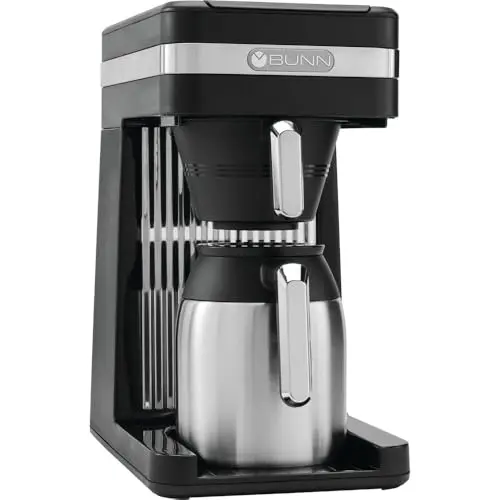
CSB3T Speed Brew Platinum – Always-Hot Tank Brewing
The CSB3T Speed Brew Platinum uses an internal stainless steel hot water tank to keep water at the ready, so a carafe or travel mug comes together quickly. The pour-in bowl has a water-level indicator, and the vacuum-insulated thermal carafe is designed to hold serving temperature after the brew cycle.

K155 Office Pro – Large-Reservoir Commercial Brewer
A commercial-style single-serve brewer built around a 90-oz removable reservoir and a full-color touchscreen. It offers four cup sizes, adjustable brew temperature, and programmable auto on/off, with a drain-and-store feature for the internal hot water tank.
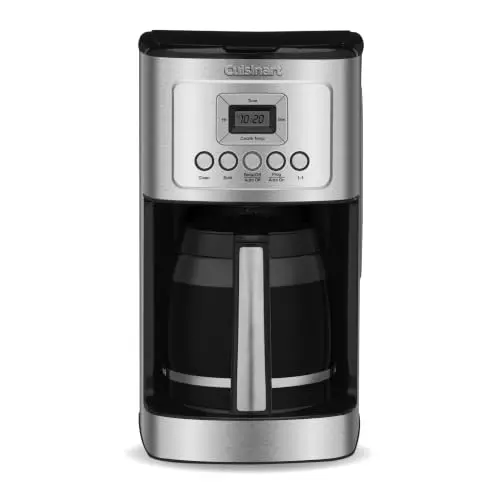
DCC-3200 PerfecTemp – 14-Cup Programmable Drip
A full-pot drip brewer with PerfecTemp brewing, a 14-cup glass carafe, and an adjustable warming plate. It adds regular or bold strength settings, a 1-4 cup small-batch mode, and 24-hour programmability.
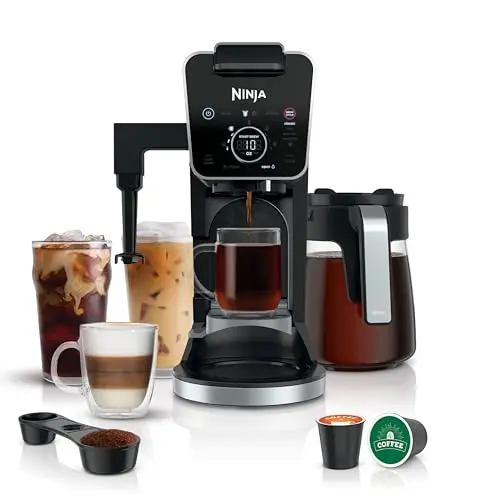
DualBrew Pro CFP301 – Pods, Grounds, and Frother
A dual-brew machine that handles K-Cup pods and ground coffee in one footprint. It adds a fold-away frother, specialty concentrate brewing, an independent hot water dispenser, and a multi-position 60-oz reservoir.

KBT 79112 – Thermal Carafe Brewing for Coffee Purists
A simple, one-button drip brewer with a manual-adjust brew basket and a stainless steel thermal carafe. It brews 40 oz in roughly 4-6 minutes and is backed by a 5-year warranty.
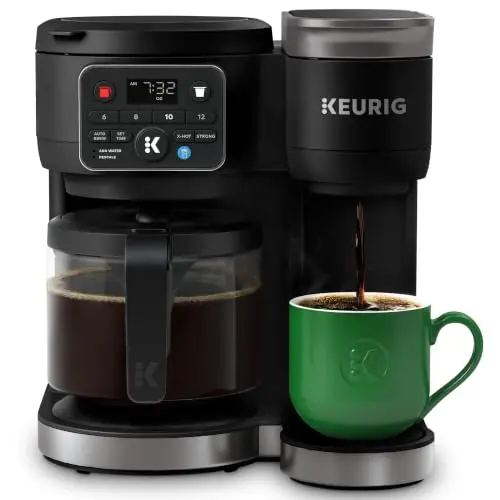
K-Duo Gen 2 – Single-Serve and Carafe in One
A combo brewer for single-serve pods and full carafes, sharing one 72-oz removable reservoir. It includes MultiStream saturation, a strong brew setting, an extra-hot option, and programmable carafe auto-brew.
How We Evaluated These Coffee Makers with Water Line
We didn’t plumb these machines into a direct water line or run controlled temperature probes. What we did: cross-referenced 6 coffee makers from 5 brands across 5 decision axes – reservoir capacity and refill workflow, brew temperature and consistency, brew speed, carafe heat retention, and programming and cleaning. We triangulated published specifications, feature sets, owner feedback where available, and use-case fit for kitchens, offices, and high-volume households. We mapped each model to representative buyer profiles: pod-first offices, full-pot households, and mixed-use kitchens that switch between a single cup and a carafe.
The scoring weighted real-world fit (70%) – how well each machine handles repeated brewing and water management – against feature differentiation (30%) – unique strengths like pod-and-grounds flexibility or always-hot tank design. We have no commercial relationship with any brand here; recommendations track fit and differentiation, not brand preference. If you need a high-volume office brewer, the Bunn CSB3T Speed Brew Platinum is the pick; if pod convenience matters more, the Keurig K155 Office Pro makes more sense.
A true plumbed supply is a separate installation question, so we treated reservoir capacity, fill-line visibility, and refill workflow as the practical stand-ins. None of these models should be assumed to accept a direct water line without manufacturer confirmation. We also weighed feature breadth against day-to-day upkeep so the final ranking reflects machines you can live with, not just spec-sheet winners. That meant auditing included components, carafe type, and cleaning routines rather than treating every feature as equally useful.
How to Choose the Right Coffee Maker with Water Line
1. Water Line vs. Water Reservoir: What to Confirm First
Start with the installation question. A direct water line means the brewer is plumbed into your building’s supply and refills itself; that is mostly a commercial or high-end built-in feature. A water reservoir is the removable or fixed tank you fill by hand. The models in this guide are reservoir machines, so if a hard-plumbed line is non-negotiable, verify the spec with the manufacturer before buying. Do not assume a removable tank can be converted to a water line without a documented kit.
For reservoir machines, look at reservoir capacity, how easy it is to remove and refill, and whether the machine gives you a clear water-level indicator. Those details matter more than a long feature list when you are brewing multiple pots a day.
2. Reservoir Capacity and Refill Workflow
Capacity is a proxy for how often you will interrupt your morning. A 90-oz reservoir can cover a long office run of single-serve cups, while a 60- to 72-oz tank is a practical middle ground for mixed households. Full-pot drip brewers with 14-cup carafes trade reservoir size for batch capacity, so the right answer depends on whether you brew one big pot or several small cups.
If refill interruptions are the main frustration, the Bunn CSB3T Speed Brew Platinum is the pick here: its always-hot tank and water-level indicator are built around a fast refill-and-brew rhythm. For pod-heavy offices, the larger reservoir on the Keurig K155 reduces trips to the sink.
3. Brew Temperature, Speed, and Carafe Retention
Brew temperature and brew speed are the two performance axes that separate a pleasant machine from a frustrating one. A brewer that heats quickly but delivers a lukewarm cup is a false economy; so is a slow machine when you are filling a travel mug on the way out. Look for explicit temperature features like PerfecTemp or an extra-hot setting, and pay attention to the carafe type.
Thermal carafes hold heat without a warming plate, while glass carafes rely on an adjustable warming plate and can develop a cooked flavor if left too long. For households that sip over a couple of hours, thermal is usually the more forgiving choice; for entertaining, a large glass carafe with a warming plate is easier to monitor.
4. Pod vs. Grounds: Matching the Machine to Your Office or Kitchen
Pod machines win on convenience and cleanup, but they narrow your coffee choice and can be costly per cup over time. Ground-coffee brewers give you more control over grind, dose, and strength, and they usually make a better full carafe. The newest dual-brew machines try to cover both: a pod side for quick single cups and a grounds side for carafes.
If flexibility matters most, the Ninja DualBrew Pro CFP301 is the obvious routing point in this lineup, with K-Cup compatibility, a grounds basket, and a frother. If you mainly brew pots, a dedicated drip machine is simpler and usually easier to clean.
5. Programmability, Cleaning, and Long-Term Upkeep
Programmability is not a luxury if your schedule is tight. A 24-hour timer, adjustable auto shutoff, and a pause-and-pour feature make a brewer fit a real routine. Cleaning matters just as much: self-clean cycles, decalcify indicators, and removable reservoirs cut down on the maintenance you will actually do.
Pod machines need regular descaling, especially in hard-water areas, while thermal carafes need a rinse after every use to avoid stale oils. Full-pot brewers with glass carafes are easy to inspect, but the warming plate can bake residue if coffee sits. Choose the upkeep style you will tolerate, not the one that looks best on a spec sheet.
6. How Much Should You Spend on a Coffee Maker with Water Line?
There are three rough tiers. Budget-friendly full-pot brewers give you programmable brewing and a glass carafe without much automation. Mid-range machines add larger reservoirs, thermal carafes, or dual-brew flexibility. Premium brewers lean on build quality, commercial-style heating, and longer warranties.
Spend for the workflow you will use daily, not for the longest feature list. If you want programmable full-pot brewing at a more approachable tier, the DCC-3200 PerfecTemp is the value pick here. If your priority is pod convenience for an office, the Keurig K155 justifies its premium positioning with capacity and controls.
Frequently Asked Questions
1. Can a coffee maker with a water line connect directly to plumbing?
Most consumer models use a removable reservoir, not a direct water line. If you need a true plumbed connection, confirm that the model is explicitly rated for it and that you have the right installation kit and water pressure. None of the reservoir machines in this guide should be treated as plumb-ready without manufacturer confirmation.
2. Bunn CSB3T Speed Brew Platinum vs. Keurig K155 Office Pro: Which is better for an office?
Choose the Bunn CSB3T Speed Brew Platinum if your office runs on ground coffee and needs fast carafe brewing, an always-hot water tank, and a thermal carafe that does not rely on a warming plate. Choose the Keurig K155 if pod convenience, a 90-oz reservoir, and a touchscreen matter more. The Bunn has the edge for coffee quality and speed; the Keurig is easier for mixed-skill break rooms.
3. Cuisinart DCC-3200 vs. Ninja DualBrew Pro CFP301: Which should home users choose?
The DCC-3200 PerfecTemp is the simpler choice for full-pot drip brewing, with a 14-cup carafe and 24-hour programmability. The Ninja DualBrew Pro CFP301 is better if you want pods and grounds in one machine, plus a frother and iced-coffee mode. For a household that mostly drinks pots of drip coffee, Cuisinart is the cleaner fit; for mixed preferences, Ninja wins.
4. How much reservoir capacity do I need for a coffee maker with a water line?
Match capacity to daily volume. A 60-oz reservoir is a sensible baseline for a few cups a day, while 72- to 90-oz tanks reduce refills in offices and busy households. If you brew full pots, a 14-cup carafe may matter more than reservoir size. And if you truly need a direct water line, capacity is secondary to confirming the plumbing spec.
5. Do thermal carafes keep coffee hot longer than glass carafes?
Vacuum-insulated thermal carafes are designed to hold serving temperature for a couple of hours without a warming plate, which is why the Bunn CSB3T uses one. Glass carafes depend on an adjustable warming plate; they can stay hot, but coffee left too long may taste cooked. For slow sipping, thermal is more forgiving; for entertaining, glass is easier to monitor.
Final Verdict
For most high-volume setups, the Bunn CSB3T Speed Brew Platinum is the pick – the always-hot tank and fast brew cycle make reservoir refills less disruptive. If pod convenience is non-negotiable, the Keurig K155 Office Pro is the better office fit. Budget-minded full-pot brewers should look at the DCC-3200 PerfecTemp, which brings programmable brewing and a 14-cup carafe at a more approachable tier. And if you want one machine for pods, grounds, and iced coffee, the Ninja DualBrew Pro CFP301 covers the most ground. Just confirm the water-line question first: none of these are a substitute for a true plumbed commercial setup.
