
Best Cold Brew Drip Coffee Makers – 2026 Reviews

Cold brew is easy to romanticize until you’re staring at a jar of grounds at 11 p.m. wondering whether tomorrow’s coffee will be ready. The real decision is simpler: do you want a machine that drips and chills cold brew on demand, or a manual maker that steeps overnight and gives you concentrate to stretch through the week?
That’s the split we kept coming back to. A true drip cold brew maker like an automatic brewer trades patience for speed and convenience, while immersion makers-rainmaker tops, mesh baskets, mason pitchers-reward a little planning with smoother, stronger concentrate. The best pick depends on your counter space, how much you drink, and whether cleanup is a dealbreaker.
We compared the market with those tradeoffs in mind, from compact one-person brewers to gallon-size dispensers. Below you’ll find the cold brew drip coffee makers and manual cold brew makers worth considering, plus guidance on filtration, capacity, and the quirks that show up after the honeymoon.
Best Cold Brew Drip Coffee Makers – 2026 Reviews
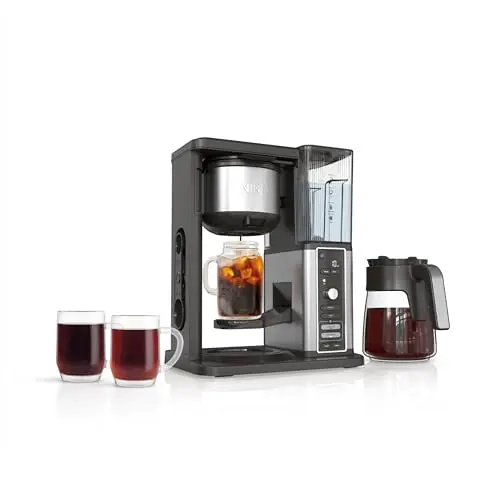
CM371 – Rapid Cold Brew Drip
A full-size automatic drip brewer that adds rapid cold brew to a hot-coffee lineup. It brews cold brew in as little as 10 minutes and covers single cups through a 12-cup carafe.
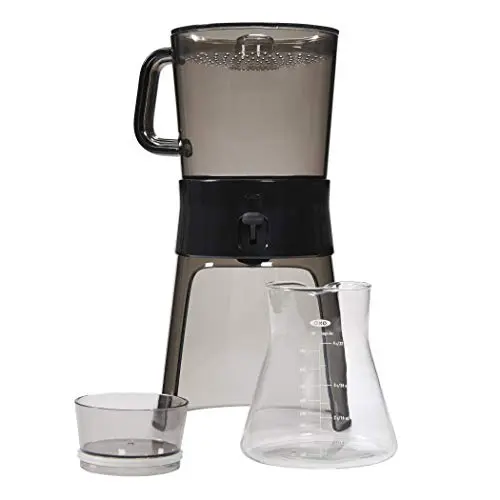
Brew Cold Brew Coffee Maker – 32 oz Concentrate
A dedicated cold brew maker built around a rainmaker top, a brew-release switch, and a borosilicate carafe. It produces 32 oz of concentrate for hot or iced drinks.
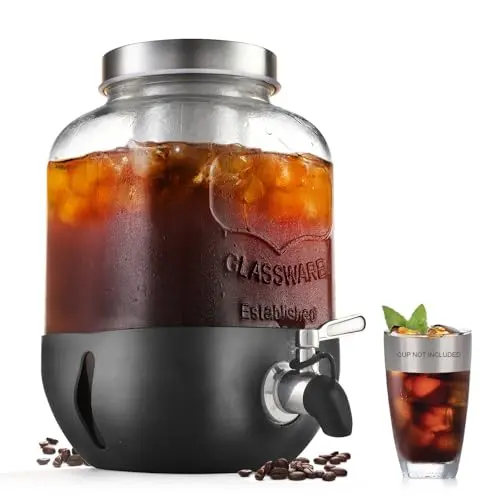
CB01 – One-Gallon Batch Brewer
A large-capacity cold brew maker with a stainless steel filter, spigot, and heavy-duty glass body. It’s built for brewing a week of concentrate or tea in one go.
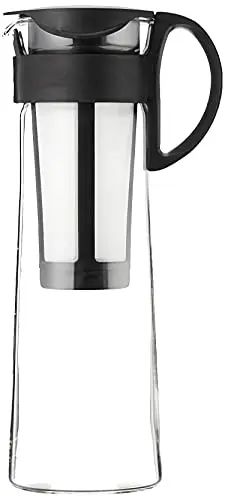
Mizudashi – Simple 1L Cold Brew
A slim glass cold brew maker with a fine mesh basket and a slender pouring spout. Add coarse grounds and water, steep in the fridge, and serve straight from the carafe.
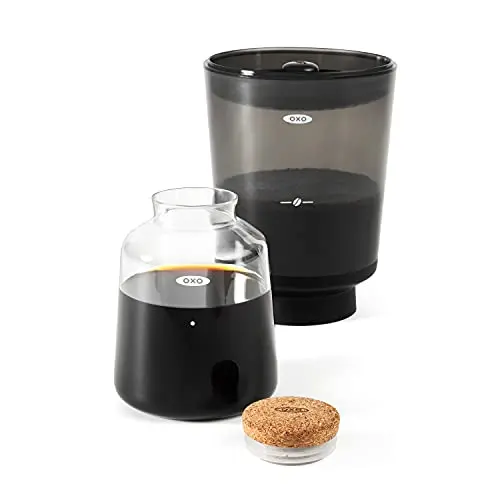
Compact Cold Brew Maker – Small-Space Brewing
A smaller version of OXO’s cold brew system with a rainmaker, automatic draining, and a 24-oz borosilicate carafe. It fits on tight counters or in the fridge.
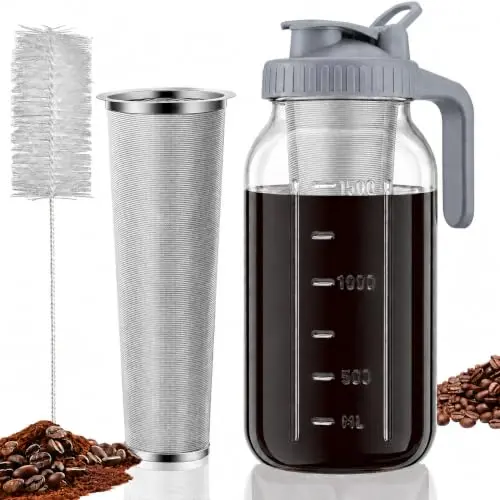
64 oz Mason Pitcher – Leak-Proof Cold Brew
A wide-mouth glass mason pitcher with a 100-micron stainless steel filter, leak-proof lid, handle, and pour spout. It doubles as a fridge pitcher for tea and infused drinks.
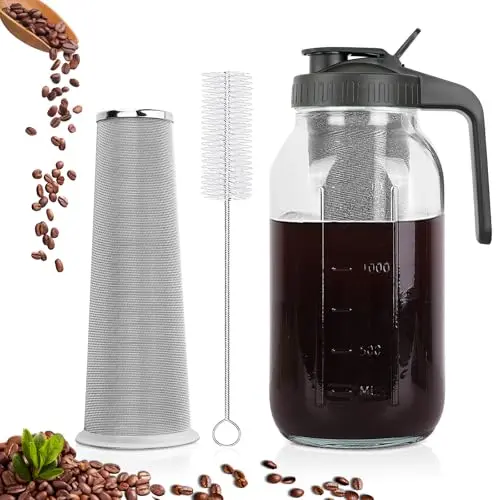
64 oz Mason Jar Pitcher – Budget Cold Brew
A 64-oz mason jar pitcher with a 160-micron stainless filter, pour-spout lid, handle, and cleaning brush. It’s a low-cost way to steep cold brew or tea in the fridge.
How We Evaluated These Cold Brew Drip Coffee Makers
We didn’t run lab extraction tests, measure caffeine levels, or put every carafe through a drop test. What we did: cross-referenced 7 cold brew coffee makers from 6 brands across five decision axes – brew style, capacity and concentrate yield, filtration, cleanup, and counter footprint. We triangulated published specifications, audited feature sets, and mapped owner feedback where available against representative routines for cold brew drinkers. That range matters because a machine that shines for a 10-minute iced coffee habit may frustrate someone who wants a week of concentrate.
Our scoring weighted real-world performance (70%) – how well each option delivers on its stated cold brew use case – against feature differentiation (30%) – unique controls, filtration, capacity, and cleanup advantages. We have no commercial relationship with the brands featured; recommendations track fit and differentiation, not brand preference. If you want fast drip-style cold brew, the Ninja CM371 is the most complete automatic option; for a traditional overnight concentrate, the OXO Brew is the better fit.
We also weighed the practical annoyances that don’t show up in a spec sheet: whether a filter clogs, whether a carafe feels stable, and whether the brewer is pleasant enough to use before you’ve had coffee. We favored makers that make the process clear: how much coffee, how much water, how long, and how to clean. Thin data led to shorter notes, not invented testing.
How to Choose the Right Cold Brew Drip Coffee Maker
1. Drip vs. Immersion: What Makes a Cold Brew Drip Coffee Maker Different?
A cold brew drip coffee maker is best understood by how it moves water. Automatic drip-style machines, like the Ninja CM371, run water through grounds on a timed cycle and can produce a fast cold brew; traditional cold brew makers are immersion brewers, where grounds steep in water for 12-24 hours before filtering. Both can make good coffee, but they solve different problems: speed versus concentrate depth.
If you want a true drip cycle, prioritize a machine with a dedicated cold brew setting and a clear brew path. If you mostly want a smooth concentrate for the week, an immersion maker with a fine filter is simpler and more predictable. Brew style, cycle time, and filter design are the first things to compare.
2. Capacity and Concentrate Yield: Sizing a Cold Brew Coffee Maker to Your Week
Capacity is not just about volume; it’s about how many drinks you can pour before repeating the process. A 24-oz concentrate brewer suits one person or an occasional iced coffee, while a 64-oz pitcher or 1-gallon dispenser makes sense for households, meal prep, or entertaining. Remember that concentrate is usually diluted with water or milk, so a small batch can still go further than the carafe size suggests.
Look for clear measurement markings, a spout or spigot that pours cleanly, and a vessel that fits where you’ll store it. Fridge-door clearance matters more than a spec-sheet capacity if the brewer won’t fit on the shelf.
3. Filtration and Sediment: Why Mesh Size Matters
The filter decides whether your cold brew tastes smooth or gritty. Stainless steel mesh is reusable and avoids paper filters, but the weave matters: finer mesh catches more sediment, while coarser mesh may let a little through. A fine mesh basket or stainless steel filter is the norm in this category; some brewers add a rainmaker or release switch to control saturation and draining.
If you grind coarse, most mesh filters will stay clear. If you like a finer grind for more body, expect slower draining and rinse the filter promptly. Filter access and dishwasher-safe parts are the practical details that determine whether you’ll keep using it.
4. Cleanup, Glass, and Counter Footprint
Cold brew makers are only convenient if they’re easy to clean. Wide-mouth pitchers and removable baskets are easier to rinse than narrow carafes, while brewers with multiple parts need a place to dry. Borosilicate glass is common and feels premium, but glass can break; check whether the carafe has a sturdy base and a lid that seals.
Footprint is the quiet dealbreaker. A compact cold brew maker can live on a small counter or in the fridge, while a full-size drip machine needs more room and power. Measure your shelf before you commit.
5. Ninja CM371 vs OXO Brew: Which Cold Brew Drip Coffee Maker Fits Your Routine?
The Ninja CM371 is the choice for speed and flexibility: it handles hot coffee, iced coffee, and rapid cold brew in one automatic machine, with single-serve through carafe sizing. The OXO Brew is the more traditional cold brew tool, using a rainmaker and brew-release switch to make a 32-oz concentrate that you dilute later. One is a multi-purpose drip brewer; the other is a dedicated steep-and-release maker.
If your mornings are rushed and you want cold brew without planning ahead, go with the Ninja CM371. If you want a classic concentrate for iced coffee and don’t mind an overnight steep, the OXO Brew is the better fit. Both are strong at what they’re designed to do.
6. Budget vs. Premium Cold Brew Coffee Makers
Budget-friendly cold brew makers are usually manual immersion pitchers with a mesh filter. They can make very good coffee; the tradeoffs show up in glass thickness, lid seals, and filter fit. Premium options add controlled draining, better carafes, or automatic brewing. You don’t need to spend a lot to make good cold brew, but paying more can buy convenience and consistency.
If you’re testing whether cold brew fits your routine, start simple. The QHH 64 oz Mason Jar Pitcher is a low-cost entry point with a fine filter; if you later want more control, step up to a rainmaker-style brewer. Value here is about how often you’ll brew, not just the sticker.
Frequently Asked Questions
1. Are cold brew drip coffee makers actually different from immersion cold brew makers?
Yes, and the difference is mostly about how water meets coffee. A drip-style cold brew maker runs water through grounds on a timed cycle, which can make cold brew faster and more automatic. An immersion cold brew maker steeps grounds in water for hours, then filters; that’s the classic concentrate method. Neither is inherently better: speed favors drip, while concentrate depth and simplicity often favor immersion.
2. What's the difference between the Ninja CM371 and the OXO Brew Cold Brew Coffee Maker?
The Ninja CM371 is an automatic drip coffee maker with a rapid cold brew setting, so it fits hot coffee, iced coffee, and cold brew into one machine. The OXO Brew is a dedicated immersion brewer with a rainmaker top and brew-release switch, built for 32 oz of concentrate. Choose the Ninja for speed and versatility; choose the OXO for a traditional overnight steep with more control over draining.
3. How does the Hario Mizudashi compare with the OXO Compact Cold Brew Maker?
The Hario Mizudashi is a slim glass immersion brewer with a fine mesh basket and a simple brew-and-serve design. The OXO Compact adds a rainmaker and automatic draining in a smaller 24-oz package, with a borosilicate carafe and stopper. The Hario is more minimal and affordable; the OXO Compact is more controlled and easier to store in tight spaces. Both suit one or two drinkers, but the OXO’s draining mechanism is the differentiator.
4. Do I need a dedicated cold brew coffee maker if I already own a drip coffee maker?
Not necessarily, but a dedicated maker is simpler. A standard drip coffee maker brews hot coffee; cooling it later isn’t the same as cold extraction. A dedicated cold brew maker gives you the right filter, steeping vessel, and concentrate storage, and it avoids tying up your hot-coffee machine. If you only want occasional iced coffee, a QHH 64 oz Mason Jar Pitcher is a low-cost way to try it.
5. How long does cold brew last, and how should I store it?
Cold brew concentrate usually keeps for about a week in the fridge, though follow your brewer’s guidance and your own taste. Store it in a sealed carafe or pitcher to limit oxidation and fridge odors. Keep the filter clean and remove grounds promptly after brewing; a wide-mouth vessel makes that easier. Dilute concentrate with water or milk to taste, and stir before pouring.
Final Verdict
For most people shopping a cold brew drip coffee maker, the Ninja CM371 is the practical answer: it brews fast cold brew, handles hot coffee and iced coffee, and covers single cups through a full carafe. It won’t replace a traditional steep if concentrate is your ritual, but it’s the most versatile machine here.
If you do want classic concentrate, the OXO Brew gives you a rainmaker, a release switch, and a carafe built for 32 oz batches. For large households or weekly meal prep, the dailybrew CB01 turns out a gallon at a time with a spigot for easy pouring. And if you’re keeping costs low, the QHH 64 oz Mason Jar Pitcher is a straightforward entry point. Pick the Ninja for speed, the OXO for ritual, the dailybrew for volume, and the QHH for budget.
