
Best Cold Drip Coffee Makers – 2026 Reviews

Cold coffee is easy to love and surprisingly easy to get wrong. A brew that looks dark and promising can turn out bitter, silty, or watery, and the difference usually comes down to two things: how evenly the water meets the grounds and how cleanly the concentrate is filtered.
That is the heart of shopping for a cold drip coffee maker. The category covers passive steepers, mason-jar pitchers, and electric rapid-brew machines, so the right pick depends on whether you want a small controlled batch, a large dispenser, or a countertop appliance that can also brew hot coffee.
We compared the field across capacity, filtration, brew control, cleaning, and durability so you can choose the format that fits your routine rather than the loudest label on the box.
Best Cold Drip Coffee Makers – 2026 Reviews
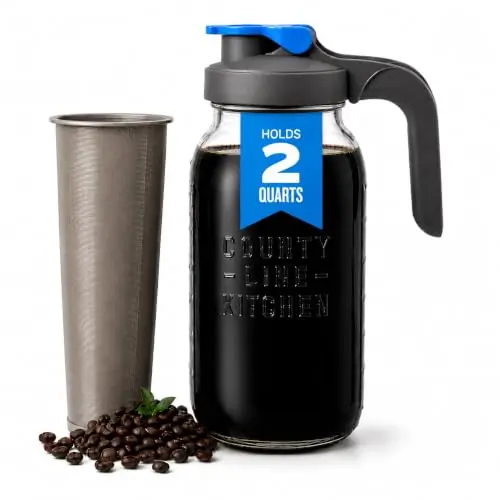
64 oz Mason Jar Cold Brew Maker – Leak-Proof Everyday Pitcher
A straightforward 64 oz mason-jar brewer with a stainless mesh filter and a leak-proof flip-cap lid. It suits daily fridge batches and doubles as an iced tea pitcher.
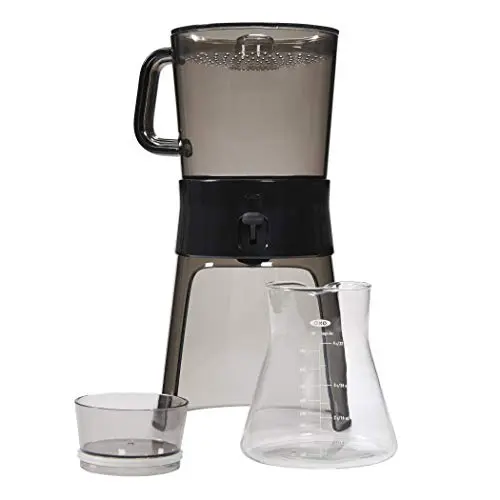
Brew Cold Brew Coffee Maker – Compact Controlled Steep
A compact 32 oz cold brew maker with a Rainmaker top for even water distribution and a brew-release switch that stops filtration when the carafe is removed. Good for controlled small batches.
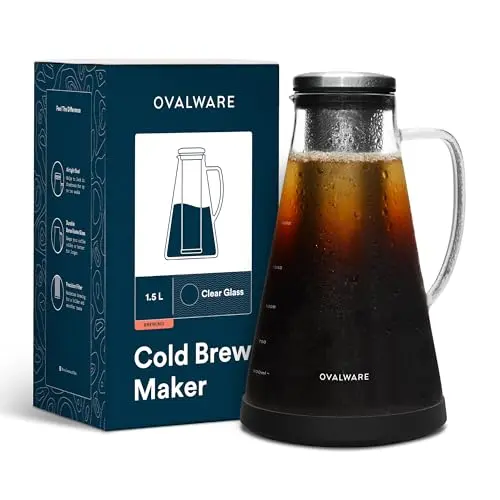
RJ3 Airtight Cold Brew Maker – Tea-Friendly 1.5L Pitcher
A 1.5L borosilicate pitcher with an airtight lid, stainless filter, and tea-infuser compatibility. It stores cold brew in the fridge and works for loose-leaf tea too.
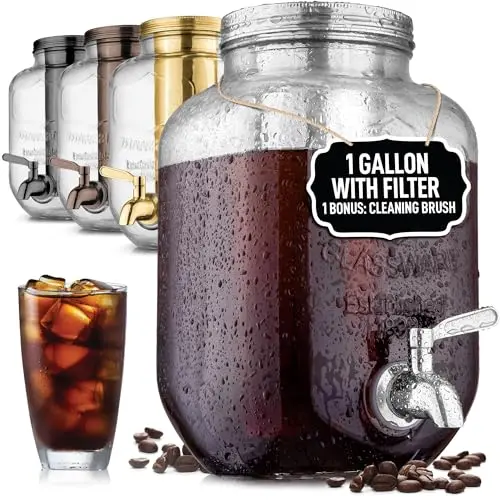
1 Gallon Cold Brew Maker – Spigot Dispenser for Parties
A 1-gallon glass dispenser with a stainless mesh filter, airtight steel lid, and leak-resistant spigot. It is built for large batches, parties, and fridge or countertop service.
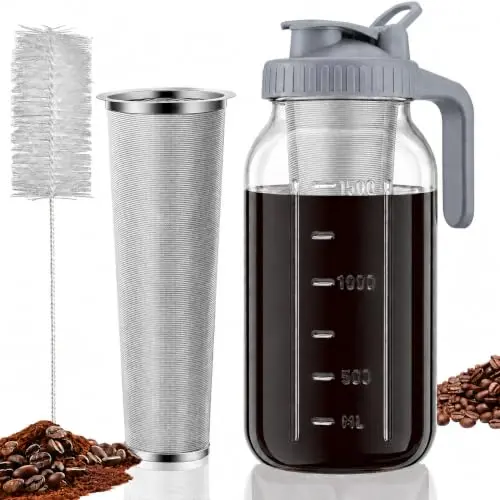
64 oz Glass Mason Pitcher – Compact Fridge-Door Brewer
A 64 oz glass mason pitcher with a 100-micron stainless filter, leak-proof lid, and pour spout. It is compact enough for fridge doors and simple to clean.
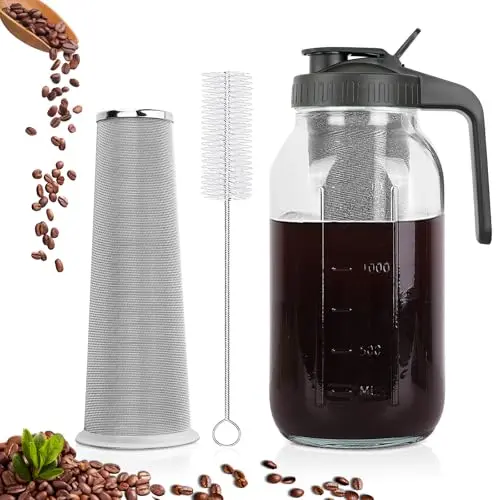
64 oz Mason Jar Pitcher – Airtight Pour-Spout Brewer
A 64 oz mason jar pitcher with a 160-micron stainless filter, pour-spout handle lid, and cleaning brush. It is an affordable entry point for fridge cold brew.
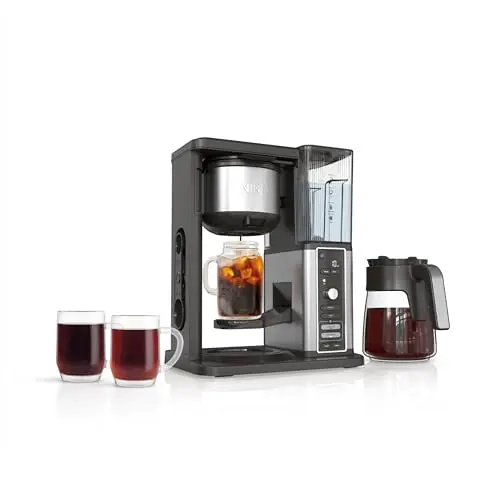
CM371 Hot & Iced XL Coffee Maker – Rapid Cold Brew Electric
An electric hot and iced coffee maker with a rapid cold brew setting, four brew styles, and eight sizes from small cup to full carafe. It is the countertop alternative to passive steepers.
How We Evaluated These Cold Drip Coffee Makers
We didn’t see these through months of daily brewing or run lab extraction tests. What we did: cross-referenced seven cold drip coffee makers from seven distinct brands across six decision axes – capacity and footprint, filtration and grounds retention, brew control and release mechanisms, material and durability, cleaning and storage, and use-case fit. We triangulated published specifications, feature sets, owner feedback where available, and mapped each option against representative buyer routines for this category. That meant weighing a 64 oz mason pitcher differently from a 1-gallon dispenser and treating an electric rapid-brew machine as a separate format rather than a direct substitute. We also audited the small details that shape daily use: whether the lid seals, whether the filter is easy to rinse, whether the spout drips, and how much fridge space the brewer claims when full.
The scoring framework weighted real-world fit and performance (70%) – how well each brewer delivers on its stated job – against feature differentiation (30%) – unique technical advantages and format-specific strengths. We have no commercial relationship with any of the brands featured; recommendations track fit and differentiation, not brand preference. If you want a compact controlled steep, the OXO Brew is your match; for a leak-proof daily pitcher, the County Line Kitchen 64 oz is the stronger fit. We didn’t physically test extraction yield, carafe drop resistance, or long-term durability, so those judgments rely on published specs, owner feedback where available, and the design choices visible in each product.
How to Choose the Right Cold Drip Coffee Maker
1. Capacity and Footprint: Matching a Cold Drip Coffee Maker to Your Fridge
Start with the size of the batch you actually drink. A 32 oz brewer suits one person or occasional iced coffee, while a 64 oz pitcher is the practical daily size for two. A 1-gallon dispenser makes sense for entertaining, offices, or households that finish concentrate quickly, but it demands shelf space and is heavy when full.
Measure your fridge before buying. Tall pitchers can crowd shelves, and dispensers with spigots need clearance in front. If you are tight on space, the County Line Kitchen 64 oz is the pick for a compact daily pitcher; if you regularly serve a crowd, the Zulay 1 Gallon is the better format.
2. Filtration and Sediment: Why Mesh Size Matters in a Cold Drip Coffee Maker
Mesh filters are rated in microns, and the number matters. A 100-micron filter catches finer grounds than a 160-micron weave, which translates to a cleaner cup with less grit. Stainless mesh also avoids paper filters, but very fine grinds can still slip through or clog the weave.
Grind coarse and rinse the filter promptly. If you hate any sediment, a finer mesh is worth prioritizing; if you want faster flow and easy cleaning, a slightly more open weave is a reasonable trade. Reusable mesh is the norm in this category, and dishwasher-safe parts are a genuine convenience.
3. Brew Control, Steeping Time, and Release Mechanisms
Passive brewers are simple: add grounds, add water, wait, then strain. The differences show up in water distribution, release switches, and whether the brewer stops filtering when you remove the carafe. OXO’s Rainmaker top is designed to spread water evenly, while mason-jar pitchers rely on a mesh basket and a flip-cap spout.
Most cold brew needs 12 to 24 hours in the fridge. Electric machines shorten that dramatically, but they are a different workflow. If convenience is the priority, the Ninja CM371 is the pick for rapid cold brew; if you prefer a quiet overnight steep, a passive pitcher is the better fit.
4. Material, Durability, and Cleaning Tradeoffs
Borosilicate glass is common because it is clear, inert, and doesn’t hold odors. Soda-lime glass is heavier and more affordable, but it can be more vulnerable to thermal shock. Avoid pouring hot water into any cold brew vessel unless the maker explicitly allows it.
Cleaning is where daily habits form. Wide-mouth jars are easy to scrub, while narrow carafes can be fussy. Check whether the filter cap unscrews, whether the spigot can be reached, and which parts are dishwasher safe. A brewer that takes two minutes to clean will get used; one that doesn’t will sit in the cabinet.
5. Cold Drip vs Cold Brew: What the Labels Actually Mean
True cold drip uses a slow drip tower that releases cold water over a bed of grounds one drop at a time. Most home brewers sold as cold brew makers use immersion cold brew: the grounds steep fully in water, then the concentrate is filtered out. Both produce a smooth, low-acid cup, but the workflow and equipment are different.
If you specifically want the slow-drip ritual, look for a tower-style brewer with a controllable drip valve. If you want everyday cold coffee without the countertop footprint, an immersion pitcher is the practical choice, and the lineup here reflects that reality.
6. Budget, Mid-Range, and Premium Cold Brew Makers
Entry-level pitchers typically use soda-lime glass and a basic mesh filter. Mid-range options add thicker glass, better seals, and more thoughtful lids. Premium picks bring larger capacities, spigots, or electric brewing. None of the tiers guarantees better coffee on its own; grind size, water quality, and steep time matter more than the badge.
Spend up if you need a large batch or a rapid electric workflow. Stay entry-level if you are testing whether cold brew fits your routine. The best value is usually the brewer whose capacity and cleaning routine match how you actually drink coffee.
Frequently Asked Questions
1. Is a cold drip coffee maker the same as a cold brew maker?
Not exactly. A true cold drip coffee maker uses a slow drip tower to release water over grounds drop by drop. Most home models sold as cold brew makers use immersion brewing, where grounds steep fully in water before filtering. Both make smooth, low-acid concentrate, but drip towers are more ceremonial and take up more counter space.
If you want the everyday version, an immersion pitcher is the practical pick. If you want the ritual, look for a tower with a controllable drip valve and a separate filter chamber.
2. County Line Kitchen vs Ovalware: Which 64 oz Cold Brew Maker Should You Pick?
County Line Kitchen is the simpler daily pitcher: a 64 oz mason jar, a leak-proof flip-cap lid, and a straightforward mesh filter. Ovalware adds an airtight seal, a tea infuser, and a slightly more polished storage design. If you brew coffee only and want easy handling, the County Line Kitchen 64 oz is the pick. If you also brew loose-leaf tea or want a more sealed fridge container, Ovalware is the better fit.
3. OXO Brew vs Zulay 1 Gallon: Which Cold Drip Coffee Maker Suits Small vs Large Batches?
The OXO Brew is built for controlled small batches: its Rainmaker top and brew-release switch give you more command over the steep, and the 32 oz carafe is compact. The Zulay 1 Gallon is a large-format dispenser with a stainless spigot for serving a crowd. Choose OXO if you drink one or two cups at a time; choose Zulay if you want a batch that lasts through a party or a busy week.
4. How long does cold brew concentrate last in the fridge?
Most cold brew concentrate keeps for about one to two weeks in a sealed pitcher. Flavor fades over time, so smaller batches made more often usually taste better. Keep the filter basket out once brewing is finished, seal the lid, and store the pitcher toward the back of the fridge where temperature is steadier.
If you brew a gallon at once, plan to finish it within that window or freeze extra concentrate in ice cube trays.
5. Do I need paper filters with a stainless mesh cold brew maker?
No. A stainless mesh filter is reusable and handles most coarse grounds well. If you want an even cleaner cup, you can line the basket with a paper filter, but it is optional and slows filtration. A finer mesh plus a coarse grind usually solves sediment without paper.
Final Verdict
For most kitchens, the County Line Kitchen 64 oz is the cold brew coffee maker to beat – it nails the daily-brewer brief with a leak-proof lid, a reusable mesh filter, and a size that fits real fridge shelves. If you want tighter control over a smaller batch, the OXO Brew is the compact pick. For entertaining or offices, the Zulay 1 Gallon turns cold brew into a serve-yourself dispenser. And if speed matters more than the overnight ritual, the Ninja CM371 is the electric route. Start with capacity and cleaning routine, then choose the format you will actually use every week.
