
Best Comforters For Bed – 2026 Reviews

There’s a specific kind of disappointment that comes from buying a comforter that looks plush in the photos and then sleeps like a plastic tarp. Or the opposite: something so heavy you wake up overheated at 3 a.m. and spend the rest of the night shoving it toward the foot of the bed.
The comforter market is crowded and weirdly hard to read from a listing page. Nearly everything claims all-season warmth, and almost nothing upfront tells you the two things that actually predict how it sleeps: the fill weight inside, and how that fill is anchored so it stays where it was put.
What follows is a survey of what’s genuinely available right now for a standard bed – not one brand’s catalogue, but the strongest options across brands at different price tiers and different warmth profiles. We looked at how each one drapes, how it holds its fill, and what it demands of you on laundry day. Some are built for hot sleepers, some for a cold bedroom, and one is built mostly for looks. Match the tradeoff to your bed and you’ll sleep better for years.
Best Comforters for Bed – 2026 Reviews
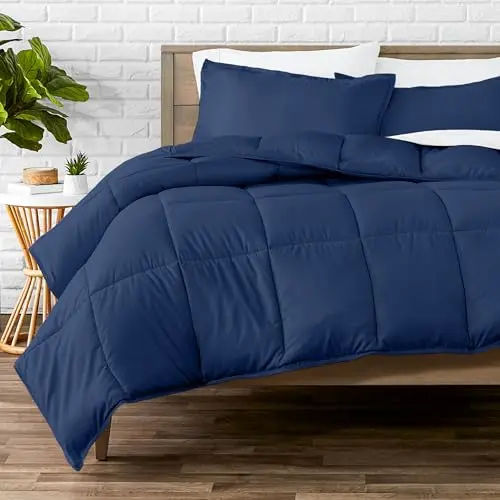
Ultra-Soft 1800 Comforter Set – Plush All-Season Comfort
A brushed microfiber comforter set with 300 GSM down-alternative fill and box stitching, sold with two matching shams. It’s the all-season middle ground done properly, and it goes in the washing machine instead of to the dry cleaner.

Comforter Duvet Insert – Versatile All-Season Layer
A down-alternative comforter built to work two ways: as a duvet insert with eight corner tabs, or as a lightweight standalone comforter. Available in eleven sizes from Twin all the way to Alaskan King.
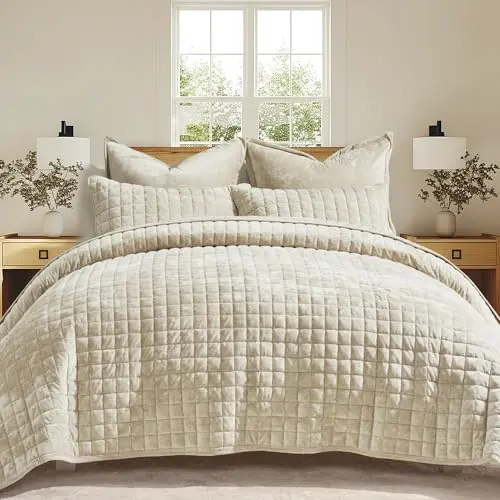
Velvet Channel Quilt Set – Luxury Lightweight Layer
A velvet quilt with channel stitching and down-alternative fill, cut generously for a king. Lightweight enough for summer, elegant enough to carry a room, and machine washable.
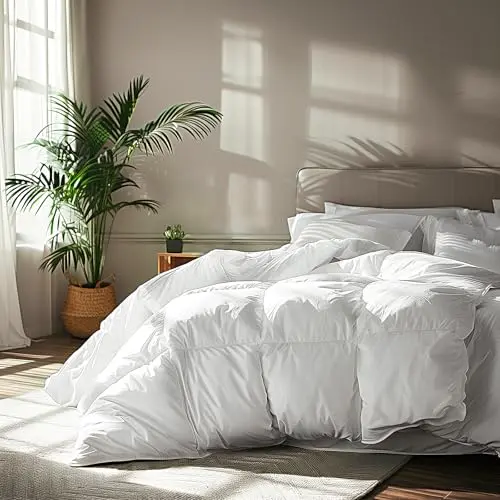
Goose Feather & Down Fiber Comforter – Hotel-Style Loft
A 100% cotton-covered comforter filled with goose feather fiber and down fiber, built for hotel-style loft. OEKO-TEX certified, offered in three warmth levels, and dry clean only.
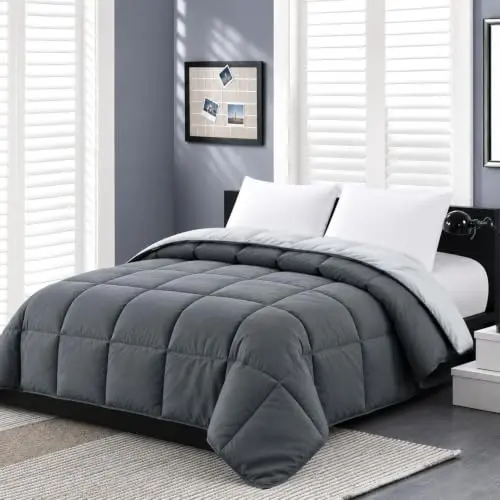
Reversible Down Alternative Comforter – Lightweight Two-Tone
A lightweight down-alternative comforter with two reversible color faces and corner tabs for use inside a duvet cover. Warm enough for winter, light enough that it doesn’t press down on you.
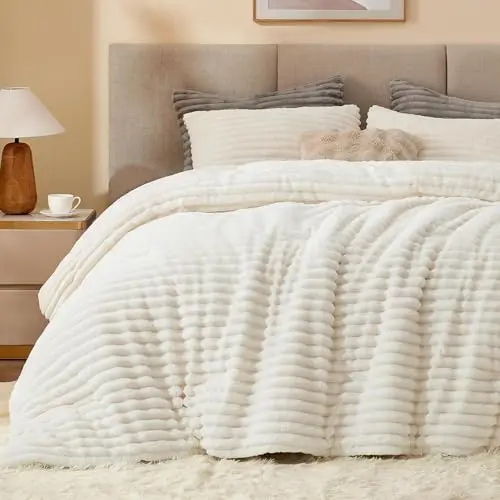
Fleece Faux Fur Comforter Set – Winter Warmth
A fleece and faux-fur comforter set with a striped 3D texture and a silky reverse. Built for cold bedrooms and sold as a three-piece set with two pillowcases.
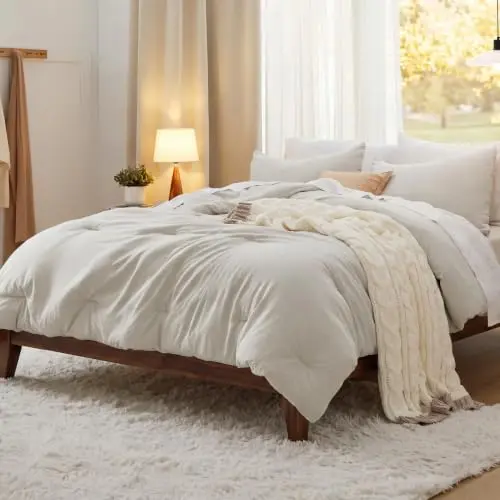
Prewashed Comforter Set – Soft Cotton-Like Feel
A prewashed microfiber comforter with a cotton-like handfeel, sold as a three-piece set with two pillowcases. Soft from the first night and washable on a standard cold cycle.
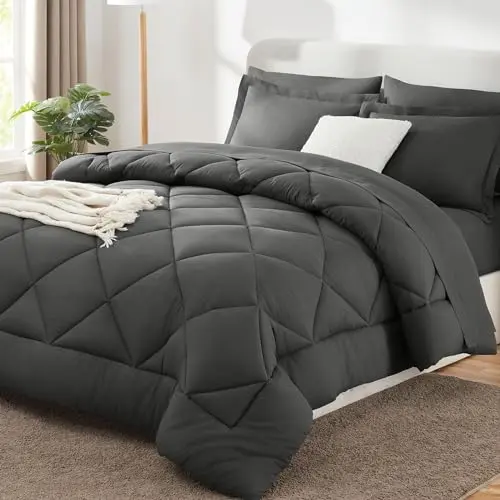
7-Piece Bed in a Bag – Complete Bedroom Reset
A seven-piece bed-in-a-bag that furnishes a whole queen bed: comforter, flat and fitted sheets, two pillowcases, and two shams. Light 240 GSM fill built with warm sleepers in mind.
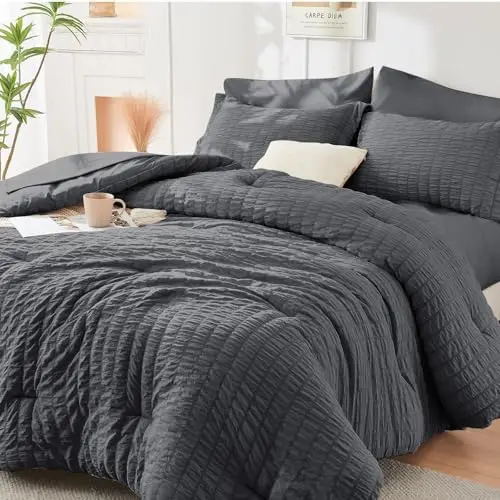
Seersucker 7-Piece Bed in a Bag – Textured All-in-One
A seven-piece bed-in-a-bag with a puckered seersucker texture that resists wrinkles. Includes comforter, sheets, pillowcases, and shams, plus a deep-pocket fitted sheet for thicker mattresses.
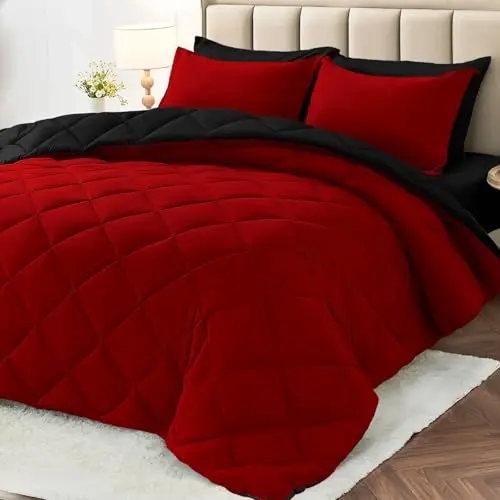
Reversible 7-Piece Bed in a Bag – Two-Tone Refresh
A reversible seven-piece bed-in-a-bag with a bold two-tone face and box stitching to hold the fill. Complete with sheets, pillowcases, shams, and a deep-pocket fitted sheet.
How We Evaluated These Comforters
We didn’t sleep under each of these comforters for weeks at a time or run wash-cycle durability trials in a lab. What we did: cross-referenced 10 comforter models from 9 distinct brands across six decision axes – fill type and weight, cover fabric, warmth range, bed-size fit and drape, care requirements, and what actually ships in the box. We triangulated published specifications, mapped each option against representative sleeper profiles, and weighed owner feedback where available to surface the recurring complaints that spec sheets never mention.
The scoring framework weighted real-world performance (70%) – how well each comforter delivers on warmth, breathability, and the practical realities of washing and making a bed – against feature differentiation (30%), meaning fill construction, corner tabs and loops, certification, and size range. We have no commercial relationship with any of the brands featured; recommendations track fit and differentiation, not brand preference. If you want one comforter that covers the widest range of sleepers, the Bare Home Ultra-Soft 1800 Comforter Set is our pick; if you’d rather build your own duvet setup, the Bedsure Comforter Duvet Insert gives you more flexibility.
Where a brand publishes a certification or a fill weight, we audited that claim against the rest of its spec sheet and its care instructions. Thin marketing language got discounted. A comforter that can’t survive a home washer, or whose cover fabric fights its fill weight, loses ground quickly.
How to Choose the Right Comforters for Bed
1. What Separates a Great Comforter From a Forgettable One
Most comforters fail on two things: fill that migrates, and a shell that feels like a plastic bag. Everything else – color, pattern, whether the shams match – is secondary. If the fill is anchored properly and the cover fabric breathes, you’ll sleep well for years.
Start with fill construction. Box stitching or channel stitching creates separate chambers that hold fill in place; a loose quilted grid on cheap fabric lets everything slide to the foot of the bed within a season. Then look at fill weight – the grams-per-square-meter figure that predicts whether a comforter runs warm, cool, or in between.
Finally, check what’s actually in the box. A comforter alone, a comforter with shams, and a full bed-in-a-bag are three different purchases that people routinely confuse.
2. Fill Weight, Warmth, and the All-Season Claim
All-season is the most abused phrase in bedding. It means the comforter sits in the middle of the warmth range, not that it suits every sleeper in every climate. A hot sleeper in a warm bedroom will find a 300 GSM comforter oppressive in July; a cold sleeper in a drafty house will find a 240 GSM comforter thin in January.
Read the number instead of the label. Under 250 GSM skews light and breathable. 250 to 300 GSM is the true middle. Heavier fills, fleece, and faux-fur faces push into winter territory. If you run warm, the Homelike Moment reversible comforter is built around that lighter profile.
Also decide whether you want one comforter for the full year or two that swap seasonally. Two lighter options often beat one compromise.
3. How to Size a Comforter for Your Bed and Mattress
Comforter dimensions are quoted flat, so an 88 x 88 inches queen on a 60 x 80-inch mattress gives you roughly 14 inches of drop per side. That’s fine for a standard frame. On a deep mattress or a tall bed, it starts looking skimpy – which is why oversized queen and queen-plus sizes exist.
Measure your mattress depth before you buy, and add frame height if the bed sits high. If you want the comforter to reach toward the floor, size up a notch rather than expecting a standard cut to cascade. Bed-in-a-bag sets also come with fitted-sheet pocket depths worth checking – 14 inches is common, and a mattress plus topper can push past that.
If drape matters most and you’re on a king, the RECYCO velvet quilt runs oversized enough to actually hang.
4. Cover Fabric, Breathability, and the Care Tradeoff
Microfiber is the dominant shell material here, and the good versions are brushed twice for softness. They’re affordable, machine washable, and hold color well. The tradeoff is breathability – a tightly woven microfiber can sleep warmer than its fill weight suggests.
Cotton covers breathe better and feel cooler, which is why hotel-style comforters lean on them. But cotton shells often come attached to dry-clean-only fills, and that changes the ownership math considerably. Feather and down-fiber fills loft beautifully and last, but you’re paying a cleaner on a schedule.
If machine washing is non-negotiable – kids, pets, allergies – the Bedsure comforter duvet insert keeps things simple with a cold wash and low tumble.
One more thing: comforters ship vacuum-sealed. Give them a day or two, or a low tumble with dryer balls, to loft back up. It isn’t a defect.
5. Bed in a Bag or a Standalone Comforter?
Bed-in-a-bag sets win on logistics. One order, one delivery, a coordinated bed with sheets and shams that already match. For a guest room, a dorm, or a first apartment, that’s usually the right call – and the per-piece value is hard to argue with.
Standalone comforters win on quality at a given tier. Money that would have gone into sheets goes into fill and fabric instead. If you already own sheets you like, buying the comforter alone gets you a better comforter.
The middle path is a comforter set with shams but no sheets, which is where most of the strongest options in this lineup sit.
6. Budget, Mid-Range, and Premium Comforters Explained
The entry tier gets you microfiber shells, synthetic fill, and machine washability. It’s genuinely fine for guest rooms and short-term setups, and the gap between entry-level and mid-range is smaller than the spread suggests.
Mid-range is where construction quality improves – better stitching, more careful fill distribution, OEKO-TEX certification, and wider size ranges. This is the sweet spot for a primary bed.
Premium buys you cotton covers, feather and down-fiber fills, velvet and other specialty fabrics, and often dry-clean care. You’re paying for material quality and handfeel rather than longevity. Worth it if the bed is a centerpiece; unnecessary if it isn’t.
Frequently Asked Questions
1. What's the difference between the Bare Home comforter set and the Bedsure duvet insert?
They solve different problems. The Bare Home set is a finished purchase – a plush 300 GSM comforter plus two matching shams, ready to put straight on the bed. The Bedsure duvet insert is a layer: 8 corner tabs let you drop it inside a duvet cover, or you can use it bare as a lighter comforter.
Practically, choose Bare Home if you want one decision and done. Choose Bedsure if you already own a duvet cover you love, or if you want to change the look of your bed without buying new bedding each time. Bedsure also wins on size range, with eleven options from Twin through Alaskan King.
2. How does the Serta feather-and-down comforter compare with the Homelike Moment reversible comforter?
It’s a material comparison more than a feature one. The Serta uses a 100% cotton cover over 90% goose feather fiber and 10% down fiber, so it lofts higher, feels cooler, and reads like hotel bedding. The catch is dry clean only.
The Homelike Moment is all synthetic – single-piece microfiber fill in a brushed shell – and it’s machine washable and reversible, so it’s lighter and far easier to own. If you want the feather feel and don’t mind the cleaning bill, Serta. If low maintenance wins, the Homelike Moment reversible comforter is the easier ownership story.
3. What size comforter works best for a queen bed?
A standard queen mattress is 60 x 80 inches, so an 88 x 88 inches comforter is the baseline – roughly 14 inches of drop per side on a normal frame. That covers the top and sides without puddling.
If your mattress is deep, your frame is high, or you want the comforter to hang lower toward the floor, look at an oversized queen around 98 x 98 inches instead. Buying a king comforter for a queen bed is a common workaround, but the extra length usually ends up bunched at the foot.
Also check the fitted sheet pocket depth if you’re buying a set – 14 inches is standard, and a mattress plus topper can exceed it.
4. Is a fleece comforter too warm for year-round use?
Usually, yes. A fleece or faux-fur face traps heat efficiently, which is great in a cold bedroom and oppressive in a warm one. The BEDELITE fleece set is genuinely a winter piece – warm within a minute of getting in, and that’s the point.
If you want one comforter for all twelve months, stick with a smooth microfiber or cotton shell in the 240 to 300 GSM fill range. Keep the fleece for the cold half of the year, or for a guest room that runs cool.
5. Do I need to wash a new comforter before first use?
It’s worth doing, mostly to clear manufacturing residue and to help the fill loft. Most comforters ship vacuum-sealed, so they arrive flat – a cold gentle cycle and a low tumble with dryer balls restores shape faster than airing it out.
Check the care tag first, though. Dry-clean-only fills like the Serta feather-and-down comforter shouldn’t go in a home machine at all, and washing them can collapse the loft permanently. For everything machine washable here, cold water and low heat are the safe defaults.
Final Verdict
For most people, the Bare Home Ultra-Soft 1800 Comforter Set is the answer. It nails the two things that actually matter – a plush, breathable 300 GSM fill and a double-brushed shell that feels good on night one – without the dry-clean bill that comes with feather-filled bedding.
If you’d rather build your own bed, the Bedsure comforter duvet insert covers the same all-season range with more size options and duvet-cover flexibility. On a tight budget, the Homelike Moment reversible comforter gives you the basics for very little and flips between two looks. And if the bedroom itself is the project, the RECYCO velvet quilt is the one people notice.
Start with two answers: your mattress depth and how warm you sleep. Those narrow this lineup down fast.
