
Best Commercial Automatic Espresso Machines – 2026 Reviews

There’s a specific moment when a home espresso setup stops being a hobby and starts being infrastructure. Two people want milk drinks before work, a third wants something decaf after dinner, and the ritual of weighing, tamping, and wiping down a wand starts to feel like a second job. That’s usually when the search shifts toward something more automatic – and where the word commercial starts showing up in product titles.
But commercial means different things on different machines. Sometimes it signals a 58mm portafilter and a steam wand that can genuinely texture milk. Sometimes it’s shorthand for a fully automatic unit that grinds, doses, brews, and rinses on its own. Very few machines in this category are built for real cafe duty cycles, and that gap between marketing language and actual hardware is where shoppers get burned.
Two axes separate the good options from the rest. The first is thermal architecture: dual boilers and PID-controlled group heads let you brew and steam at once, while single-boiler and thermoblock designs force you to wait your turn. The second is the grinder and milk path, because a grinder with real adjustment range and a milk system you’ll actually clean every morning matter far more to daily satisfaction than a longer drink menu. The picks below span both philosophies, so you can match the machine to how you’ll really use it.
Best Commercial Automatic Espresso Machines – 2026 Reviews
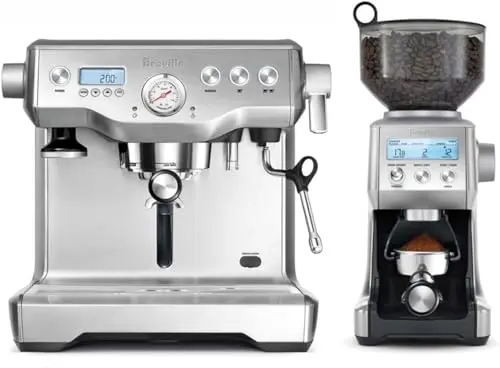
Dynamic Duo – Dual Boiler Plus Grinder in One
The closest thing here to a cafe workhorse without crossing into full commercial territory. Dual stainless boilers with PID control let you extract and steam simultaneously, and the bundled Smart Grinder Pro adds 60 grind settings. A professional 58mm portafilter holds a 22g dose – the same basket size you’d see behind a counter. Low-pressure pre-infusion ramps into a 9-bar extraction via a 15-bar Italian pump, and volumetric or timed shot control keeps output repeatable.
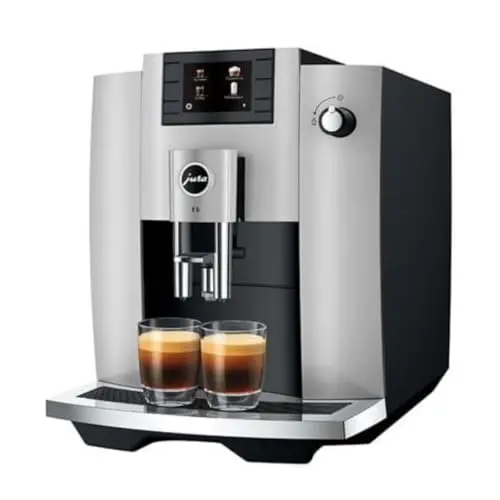
E6 Platinum – One-Touch Automatic With Hot Water
Fully automatic from bean to cup. The E6 Platinum grinds, tamps, brews, froths, and runs its own rinse cycle in under a minute, with programmable strength, volume, temperature, and milk foam. The Professional Aroma Grinder and Pulse Extraction Process do the heavy lifting on flavor. A color display, integrated maintenance programs, and on-demand hot water round out the daily routine.
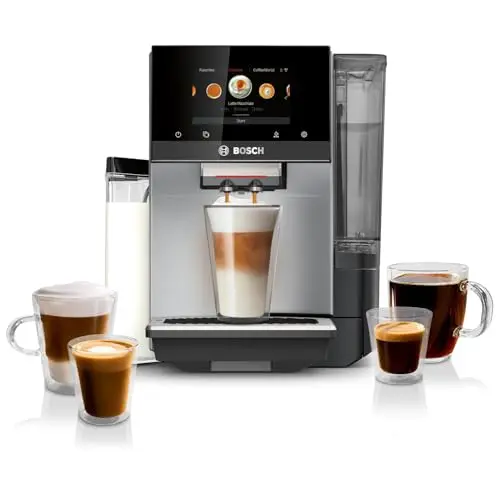
800 Series TQU60307 – 36-Drink Touchscreen Super-Automatic
The most configurable machine in this lineup on paper: 36 drink options via touchscreen with more available through the Home Connect app, a ceramic bean grinder, an integrated milk container, double-cup brewing, and adjustable strength, size, milk ratio, and aroma. Calc’nClean combines cleaning and descaling into a single guided program. Ships with a Mavea water filter, filter insertion aid, microfiber cloth, and welcome kit.
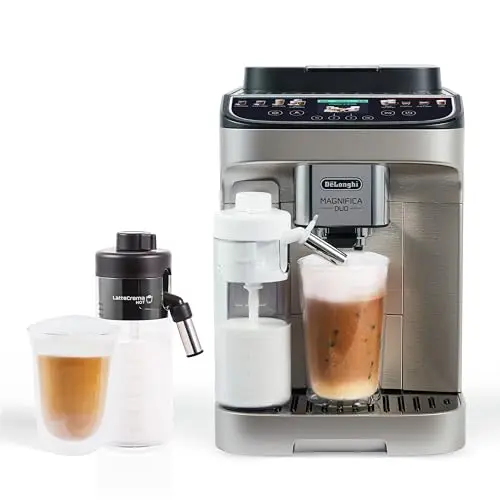
Magnifica Duo – 20 Recipes With Hot and Cold Froth
A fully automatic that brews three ways – espresso, drip-style coffee, and cold brew – across 20 preset hot and iced recipes. LatteCrema Hot and Cool froths dairy or plant-based milk into hot or cold foam, and the carafe is removable and dishwasher-safe. Cold brew finishes in under three minutes via cold extraction. Built-in conical burr grinder, touchscreen control, and a warranty that extends with registration.
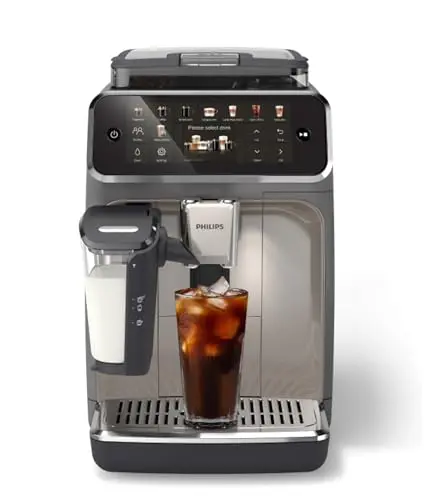
5500 Series EP5544/94 – 20 Presets With SilentBrew
A fully automatic with 20 hot and iced presets, four saved profiles, a ceramic grinder, and the LatteGo milk system – three parts, no internal tubes, dishwasher-safe. QuickStart brings it to brewing in about three seconds, and SilentBrew sound shielding with Quiet Mark certification keeps grinding subdued. AquaClean filtration dramatically extends descaling intervals compared with unfiltered machines.
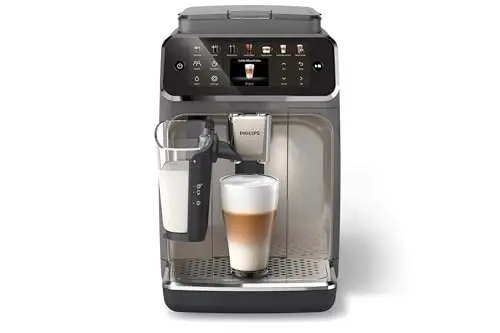
4400 Series EP4444/90 – SilentBrew With 12 Presets
12 hot and iced presets, a ceramic grinder, two saved profiles, and the same LatteGo milk system used across the Philips range. QuickStart reaches brewing temperature fast and SilentBrew keeps the grind quiet, with a narrow body that fits tighter counters than most super-automatics.
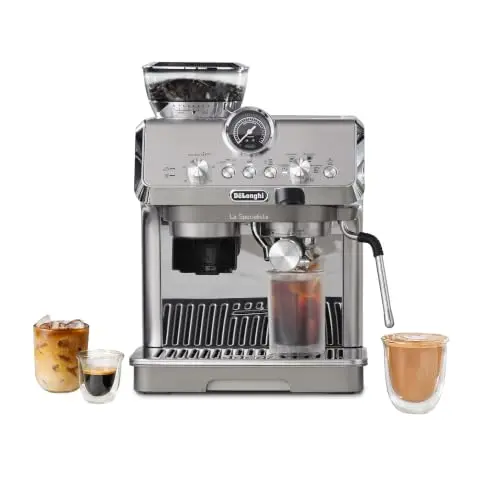
La Specialista Arte Evo – Grinder and Cold Extraction
A semi-automatic with a built-in conical burr grinder offering 8 grind settings, active temperature control across three infusion temperatures, a commercial-style steam wand, and four presets – espresso, americano, cold brew, and hot water. Cold Extraction Technology brews cold coffee in under five minutes. A barista kit with dosing and tamping guide plus tamping mat is included, and detachable parts are dishwasher-safe.
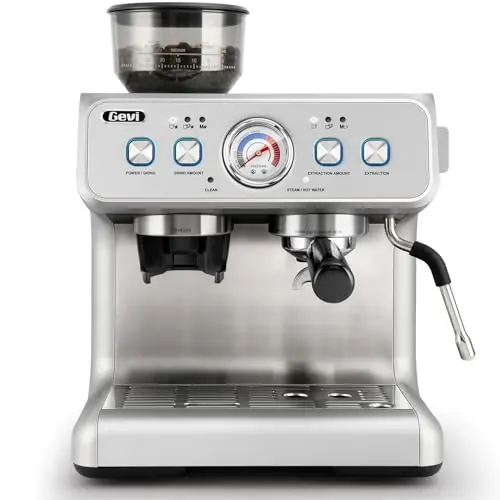
Dual Boiler Espresso Machine – Entry-Tier Dual Boiler With 58mm Basket
A dual-boiler semi-automatic with a built-in burr grinder and 31 grind levels, a 58mm commercial-style portafilter, an NTC and PID temperature control system, and a stainless steel steam wand. Four interchangeable filter baskets, a milk pitcher, tamper, measuring spoon, and cleaning tool all ship in the box. The detachable water tank and drip tray make cleanup quick, and the chassis stays compact for its feature set.
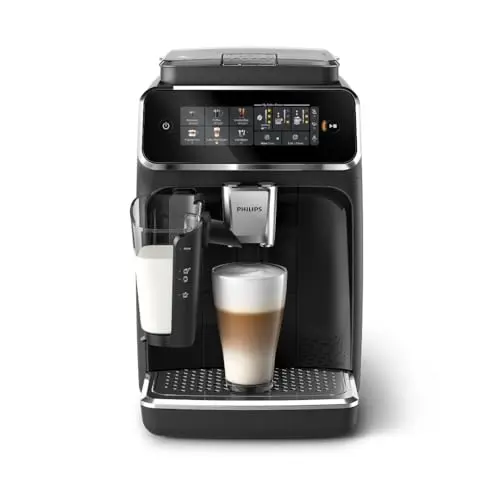
3300 Series EP3341/50 – Compact LatteGo Starter
The entry point to Philips’ fully automatic range: six presets covering espresso, coffee, iced coffee, cappuccino, latte macchiato, and hot water, plus the LatteGo milk system, a ceramic grinder, adjustable strength and milk level, and an AquaClean filter that pushes descaling far out. Full color display and a removable brew group that can be rinsed by hand.
How We Evaluated These Commercial Automatic Espresso Machines
We didn’t pull shots on a refractometer in a test kitchen or run these machines through months of daily cafe-style service. What we did: cross-referenced 9 commercial-style automatic espresso machines from 6 distinct brands across six decision axes – boiler and heating architecture, grinder quality and adjustment range, milk system design and cleaning burden, drink menu and customization depth, maintenance and descaling demands, and reported reliability. We triangulated published specifications, feature sets, and owner feedback where available, then mapped each machine against realistic use cases: a household making a few milk drinks before work, a small office running a dozen drinks before ten, and a tinkerer who wants a 58mm basket and a real steam wand. Where feedback was thin, we leaned on the spec sheet and said so in the write-up rather than filling gaps with guesswork.
The scoring weighted real-world fit (70%) – how well a machine actually delivers the drinks its buyer will make most often – against feature differentiation (30%) – the hardware and systems that separate one model from the next. We have no commercial relationship with any brand featured here, and recommendations track fit and differentiation rather than brand preference. If simultaneous brew and steam is what you’re after, the Dynamic Duo is your match; if you’d rather press one button and walk away, the E6 Platinum serves you better.
How to Choose the Right Commercial Automatic Espresso Machine
1. What Makes an Automatic Espresso Machine Genuinely Commercial-Grade
Most machines sold as commercial are commercial in components, not in construction. The giveaway is duty cycle – a true cafe machine is rated for continuous back-to-back shots and built to be opened up and rebuilt in place. A home or small-office unit is engineered for a few dozen drinks a day and sealed accordingly.
What you should actually look for: dual stainless boilers (or a very good thermoblock) with PID control, a 58mm portafilter that accepts a 20-22g dose, a burr grinder with meaningful adjustment, and serviceability – a removable brew group or a documented descaling path, plus warranty terms you can live with. Those four things separate a machine that holds up under daily use from one that just looks the part.
2. Boilers and Thermal Stability: The Real Divide
A dual boiler design gives you independent brew and steam circuits, which means no waiting between pulling a shot and texturing milk. A PID control loop holds brew temperature steady instead of swinging across a dead band. Single-boiler machines are cheaper and simpler but force a recovery wait; a thermoblock heats on demand and recovers fast, which is why most fully automatic machines use one.
If simultaneous brew and steam is non-negotiable and you don’t want to sit at the very top of the market, the Gevi Dual Boiler is the most affordable route in.
3. The Grinder Inside Your Automatic Espresso Machine Matters More Than the Brand
The burr grinder inside an automatic machine decides more about cup quality than the brew head does. Freshly ground, consistently sized particles extract evenly; a grinder producing a wide spread of particle sizes will channel no matter how good the pump is.
Look at adjustment range rather than raw setting count – a grinder with real resolution near the espresso end lets you chase a bean as it ages. Ceramic burrs resist wear and heat but chip on stray objects; steel is tougher and cheaper to replace. Either works, and neither is a substitute for regular cleaning.
4. Milk Systems: Tube-Free Carafes vs Steam Wands
There are two milk philosophies in this category. Carafe systems like LatteGo froth automatically and clean up in seconds because there are no internal tubes – three parts, dishwasher-safe, done. A steam wand gives you control over texture and temperature and produces better microfoam once you’ve practiced, but it’s a skill and it’s another thing to wipe down every single time.
Whichever you pick, confirm the milk path is dishwasher-safe – that one detail determines whether you still use the feature in week three. If you’d rather steam your own milk with a real wand, the La Specialista Arte Evo is the pick here.
5. How Much Automation Do You Actually Want?
This is the real fork in the road. A one-touch fully automatic machine grinds, doses, brews, and rinses without your involvement – you trade peak shot quality for consistency and speed. A semi-automatic hands you a portafilter, a tamper, and a learning curve, but the ceiling is higher and the repair path is usually simpler.
If the answer is ‘as much automation as possible’, the 800 Series is the pick, with the deepest drink menu and remote control in this group.
6. What Each Price Tier Buys You in a Commercial Automatic Espresso Machine
At the entry tier you get one-touch brewing, a small grinder, and basic milk frothing, usually with fewer presets and less thermal stability. The mid-range adds drink variety, quieter grinding, faster heat-up, and better milk systems. The flagship tier buys deeper customization, larger hoppers, app connectivity, and sturdier internals – not automatically better espresso.
Spend the jump from entry to mid-range first; that’s where daily annoyance genuinely disappears. Going higher is about menu depth and build quality rather than cup quality.
Frequently Asked Questions
1. Are commercial automatic espresso machines actually commercial-grade?
Mostly no, at least not in the sense a cafe means. Duty cycle is the giveaway: a machine built for counter service is rated for continuous back-to-back drinks and designed to be serviced in place. What you get in this category is commercial-style components – a 58mm portafilter, a real steam wand, dual boilers, PID control – wrapped in a chassis meant for a few dozen drinks a day.
That’s genuinely useful, and it’s a big step up from a pod machine. It just isn’t the same as equipment that gets opened up and rebuilt. The clearest tell is the warranty and parts path, which on consumer machines stays firmly consumer.
2. What's the difference between the Breville Dynamic Duo and the Jura E6 Platinum?
They solve opposite problems. The Dynamic Duo is semi-automatic: you grind, dose, tamp, and steam yourself, and in exchange you get a 58mm basket, 22g doses, and simultaneous brew and steam. The E6 Platinum is fully automatic – one button, built-in rinse cycles, and a milk system that froths on its own.
Choose the Breville if you want to learn the craft and control variables. Choose the Jura if you want the machine to disappear into your morning. Neither is better; they’re aimed at different people.
3. Is the Gevi Dual Boiler a real alternative to the De'Longhi La Specialista Arte Evo?
For a hands-on buyer, yes. The Gevi gives you dual boilers, a 58mm portafilter, and 31 grind levels at the entry tier, which is more raw hardware than almost anything at that level. The La Specialista counters with a more polished barista toolkit, three infusion temperatures, and cold extraction in minutes.
If you want the most hardware per dollar, the Gevi wins. If you want guided tamping, a tidier workflow, and a stronger parts-and-support story, the De’Longhi does.
4. Which machine handles iced coffee and cold brew best?
The Magnifica Duo is the standout here: 20 recipes including iced drinks, cold extraction in under three minutes, and LatteCrema Cool for cold milk foam. That dedicated cold-foam path is what separates it from machines that simply brew hot and expect you to add ice.
The Philips 5500 Series and 4400 Series include iced presets as well, and the La Specialista Arte Evo offers cold extraction if you want to build the drink yourself.
5. How much day-to-day maintenance does a fully automatic espresso machine need?
Less than a semi-automatic, but not zero. Expect a daily rinse of the milk path, a deeper weekly clean, periodic descaling, and a brew-group rinse. Machines with tube-free milk systems – LatteGo on the 5500 Series – cut the most annoying job down to seconds, which is why people actually keep using them.
AquaClean-style filters stretch descaling intervals considerably, and a removable brew group lets you rinse by hand between service intervals. Those two details are the biggest quality-of-life differences between otherwise similar models.
Final Verdict
For most people shopping this category, the Dynamic Duo is the answer. It’s the one machine here that pairs dual boilers, a 58mm commercial portafilter, and a capable grinder in a single box – and it lets you pull and steam at the same time, which is what actually makes a home setup feel like a counter.
If budget is the binding constraint, the Gevi Dual Boiler gets you real dual-boiler hardware and a 58mm basket at an entry-level price, with more hands-on work as the tradeoff. And if you want maximum automation and the deepest drink menu, the 800 Series is purpose-built for it – just buy from a seller with a clear return path while you verify temperature behavior and cleaning effort.
