
Best Commercial Coffee Grinders – 2026 Reviews

Walk into a busy cafe and the grinder is the piece of equipment that never gets a break. At home, the same logic applies in miniature: if you grind every day, the difference between a passable cup and a repeatable one usually comes down to the burr set and how precisely you can adjust it.
The commercial label gets applied loosely in coffee grinder listings. What actually matters is whether the grinder has commercial-style burrs, a motor and gear reduction built for repeated use, and an adjustment system that lets you dial in espresso or open up for French press without fighting the machine.
We compared the market with that lens, focusing on burr size, grind adjustment, dosing control, retention and static behavior, and serviceability. The goal is simple: help you pick the right commercial coffee grinder for your counter, not just the one with the loudest label.
Best Commercial Coffee Grinders – 2026 Reviews
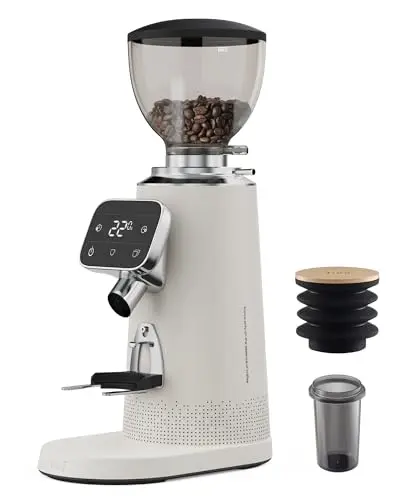
G3 – Commercial-Style Flat Burr for Serious Brewing
The Tuni G3 is the most explicitly commercial-focused grinder in this lineup, built around 64mm stainless steel flat burrs and a 100-setting stepless adjustment ring. It includes a portafilter holder, dosing cup, dosing ring, and dual hoppers, so it can move between single-dose espresso and batch brew without a full reset.
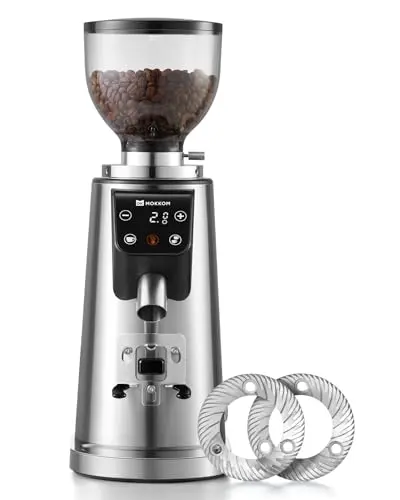
BD-CG308 – 64mm Flat Burr with Dual Hoppers
The MOKKOM BD-CG308 matches the commercial-style 64mm flat burr format with 100 grind settings, a 0.1-second electronic timer, and a full stainless steel body. It ships with both a large bean hopper and a single-dose bellows hopper, plus a plasma anti-static chute for cleaner dosing.
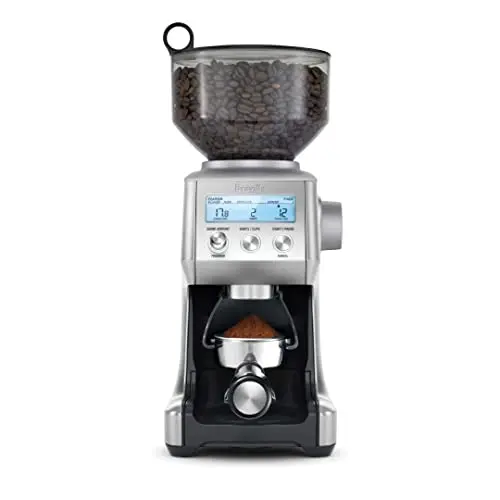
Smart Grinder Pro – Programmable Espresso Dosing
The Breville Smart Grinder Pro is a conical burr grinder with 60 settings, a programmable Dosing IQ timer adjustable in 0.2-second increments, and portafilter cradles for 50-54mm and 58mm baskets. It can grind directly into a portafilter, airtight container, or filter basket.
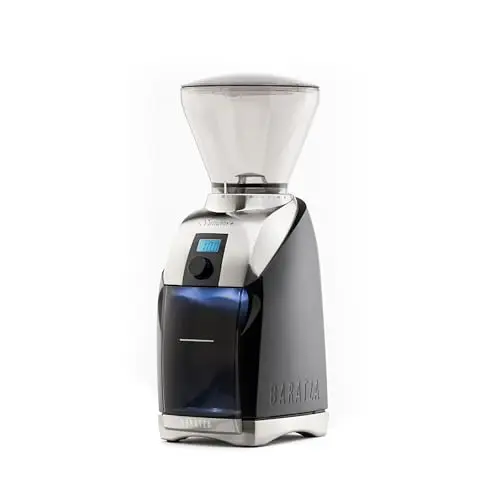
Virtuoso+ – Digital Timer and 40 Grind Settings
The Baratza Virtuoso+ is a conical burr grinder with 40 settings, a 40-second digital timer adjustable to a tenth of a second, and an LED-backlit grounds bin. It uses European-manufactured hardened steel burrs and a DC motor, and it’s backed by Baratza’s support and a 1-year warranty.
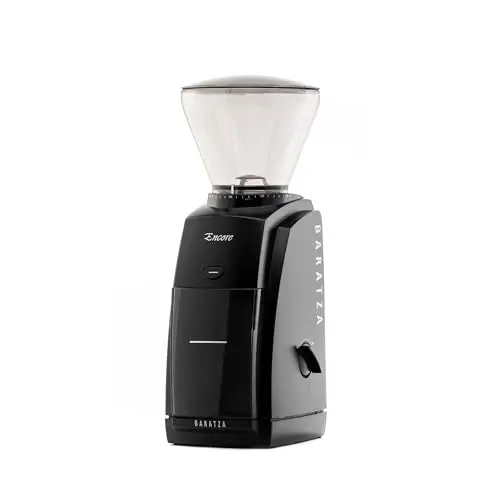
Encore – Entry-Level Conical Burr Workhorse
The Baratza Encore is the entry point to Baratza’s conical burr lineup, with 40mm commercial-grade conical steel burrs, 40 grind settings, and a front-mounted pulse button. It’s aimed at brew methods from Aeropress and V60 to Chemex and French press.
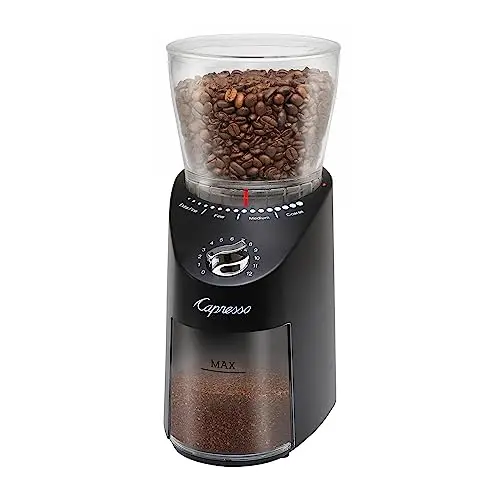
Infinity Plus – Low-Speed Commercial-Grade Burrs
The Capresso Infinity Plus uses solid steel commercial-grade burrs and a gear-reduction motor designed to run at low speed with less friction and heat. It offers 16 grind settings from Turkish to coarse cold brew, an 11-ounce bean container, and a removable 4-ounce grounds container.
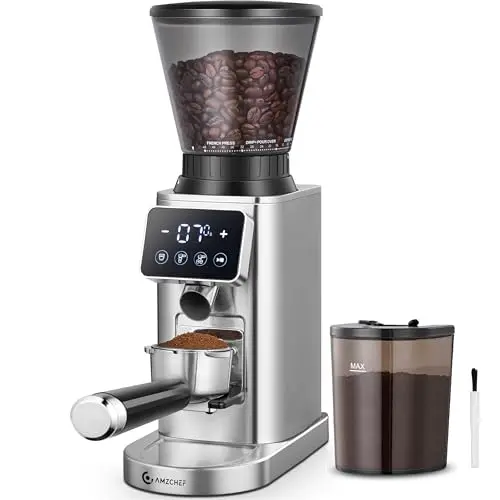
UL-CG209-SV – Anti-Static Conical Burr Value
The AMZCHEF UL-CG209-SV is a conical burr grinder with 48 settings, a 0.5-second LED timer, and a stainless steel body. It includes anti-static technology, a 10.6-ounce UV-blocking hopper, and compatibility with 51-54mm and 58mm espresso portafilters.
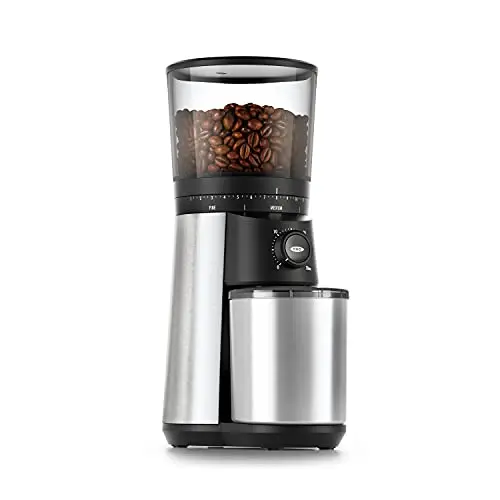
Brew Conical Burr – One-Touch Home Grinding
The OXO Brew Conical Burr Grinder uses 40mm stainless steel conical burrs, 15 main grind settings with 43 micro-adjustments, and a one-touch start that remembers your last setting. The 12-ounce hopper has a UV-blocking tint for freshness.
How We Evaluated These Commercial Coffee Grinders
We didn’t run lab particle-size tests or measure retention on a scale. What we did: cross-referenced eight commercial coffee grinder models from seven distinct brands across five decision axes – burr size and type, grind-adjustment range, dosing and timer control, retention and static behavior, and build and serviceability. We triangulated published specifications, feature sets, owner feedback where available, and use-case fit against the way people actually grind for espresso, drip, and French press.
We mapped each grinder to the job it claims to do. A 64mm flat burr model earns credit for adjustment precision and cafe-style workflow. A conical burr grinder earns credit for simplicity, repairability, and brew-method range. A programmable espresso grinder earns credit for dose consistency and portafilter fit. We also weighed the practical stuff: how easy the hopper is to remove, whether the grounds bin is static-prone, and whether the adjustment system is stepped or stepless.
The scoring framework weighted real-world fit (70%) – how well each grinder delivers on its stated brewing job – against feature differentiation (30%) – the burr design, dosing controls, and workflow details that separate one model from another. We have no commercial relationship with any featured brand; recommendations track fit and differentiation, not brand preference. If you want the closest thing to a commercial-style flat burr setup, the Tuni G3 is the pick; if you want that format with more value emphasis, the MOKKOM BD-CG308 is the stronger route.
How to Choose the Right Commercial Coffee Grinder
1. What Actually Makes a Coffee Grinder Commercial-Grade
The word commercial gets used loosely in coffee grinder listings. A true commercial-grade grinder usually earns the label through burr size and material, a motor and gear reduction built for repeated use, and an adjustment system precise enough to dial in espresso day after day.
For home buyers, the practical question is not whether a grinder is rated for a cafe, but whether it has commercial-style burrs and a duty cycle that matches your daily volume. Serviceability matters too: removable burrs, available replacement parts, and a warranty that covers more than a few months of use.
2. Burr Size, Burr Type, and Grind Adjustment on Commercial Coffee Grinders
64mm flat burrs are the headline spec on the most commercial-focused models here. Flat burrs use a wider cutting surface and are often chosen for espresso clarity and repeatable adjustment. 40mm conical burrs are more common in home grinders and tend to be simpler and easier to service.
Adjustment style matters as much as burr size. A stepped grinder clicks between fixed positions, which is fine for brew coffee but can make espresso dialing fussy. A stepless collar lets you nudge the grind in tiny increments, which is why the flat burr models here emphasize stepless adjustment.
3. Duty Cycle, Motor Design, and Daily Grinding Load
Wattage is not a proxy for commercial durability. A 70W grinder with a well-matched gear reduction can be more consistent than a higher-wattage motor that heats up during back-to-back doses. Look for duty cycle and slow grinding action that fits your routine.
If you grind several pots a day, prioritize a metal-bodied grinder with cooling-friendly thermal behavior. If you make one or two cups, a simpler conical burr grinder is usually enough.
4. Retention, Static, and Workflow Cleanliness
Retention is the amount of ground coffee left inside the chute after dosing. Static makes that retention worse by clinging to plastic and metal surfaces. A single-dose hopper with bellows helps push retained grounds out, while anti-static systems reduce mess.
If clean single-dosing matters most, the MOKKOM BD-CG308 is the pick. Its plasma anti-static chute and dual hopper setup are built around that workflow.
5. Espresso vs. Brew Coffee: Matching the Grinder to Your Bar
Espresso is the hardest job for a grinder because small changes in particle size change shot timing. A portafilter-friendly grinder with a fine, repeatable adjustment range is worth more than a brew-only model with a big hopper.
For espresso-first buyers, the Breville Smart Grinder Pro is the pick. Its Dosing IQ timer and portafilter cradles make it easier to repeat a dose. For drip and French press, a simpler conical burr grinder with a wide range is usually the better fit.
6. Commercial Coffee Grinder Pricing Tiers and Serviceability
The market splits into entry-level, mid-range, and premium tiers. Entry-level grinders usually give you conical burrs and stepped adjustment; premium models add flat burrs, stepless control, metal bodies, and better dosing electronics.
Spend more for warranty coverage and repairability if you plan to keep the grinder for years. If support and repairability matter most, the Baratza Virtuoso+ is the pick; its digital timer and Baratza’s support network are the draw.
Frequently Asked Questions
1. What makes a coffee grinder genuinely commercial-grade?
Genuine commercial-grade grinders usually stand out on burr size, motor and gear reduction, duty cycle, and serviceability. A commercial-style burr set should produce uniform grounds and hold its adjustment over repeated use.
The label alone doesn’t guarantee cafe-level durability. Check whether the burrs are removable, whether replacement parts are available, and whether the motor design is built for your daily grinding volume.
2. Tuni G3 vs. MOKKOM BD-CG308: which flat burr grinder should you choose?
Both grinders use 64mm flat burrs and 100 grind settings, so the core coffee hardware is similar. The Tuni G3 adds a portafilter holder, dosing cup, and dosing ring, which makes it more complete for espresso workflows.
The MOKKOM BD-CG308 leans harder into single-dose flexibility with its bellows hopper and plasma anti-static chute. Choose the Tuni for the fuller espresso accessory set; choose the MOKKOM for value and clean single-dosing.
3. Baratza Virtuoso+ vs. Breville Smart Grinder Pro: which is better for espresso?
The Breville Smart Grinder Pro is the more espresso-focused pick because its programmable dosing and portafilter cradles simplify repeat shots. Its 2-year warranty is also a practical advantage.
The Baratza Virtuoso+ counters with 40 grind settings and a precise digital timer, but it uses a stepped adjustment system. That makes it a better fit for brew coffee and espresso drinkers who don’t need stepless micro-adjustments.
4. Do I need a 64mm flat burr grinder for commercial-style coffee?
A 64mm flat burr grinder is not mandatory, but it is the clearest shortcut to adjustment precision and a cafe-style workflow. Larger flat burrs are often chosen for espresso clarity and repeatable dosing.
If your budget is tighter or you mostly brew drip and French press, a conical burr grinder can still deliver good results. The flat burr premium makes the most sense when espresso dialing and single-dosing are central to your routine.
5. Is a conical burr grinder enough for espresso and French press?
Yes, a conical burr grinder can handle both espresso and French press, but the adjustment system matters. A stepped conical grinder may be less precise for espresso than a stepless flat burr model.
For brew-first drinkers, conical burrs are simple, serviceable, and consistent enough. For espresso-first drinkers, prioritize fine adjustment and portafilter-friendly dosing over burr shape alone.
Final Verdict
For most buyers, the Tuni G3 is the answer – it brings 64mm flat burrs, stepless adjustment, anti-static dosing, and portafilter-ready accessories into a commercial-style package. If value matters more, the MOKKOM BD-CG308 gets you the same 64mm flat burr format and dual hoppers for less. Espresso-first shoppers should look at the Breville Smart Grinder Pro for its programmable dosing and portafilter cradles. And if you want Baratza’s support and a precise digital timer, the Virtuoso+ is the premium brew-focused pick. The throughline is simple: match the burr set and adjustment style to how you brew, not the commercial label on the box.
