
Best Commercial Dehumidifiers For Basement – 2026 Reviews

The first sign is rarely water on the floor. It’s the smell – that closed-in, faintly metallic basement odor that shows up every spring and never quite leaves, along with the white bloom creeping across the concrete. By the time you notice it, moisture has been sitting in the joists and the stacked boxes for months.
Fixing it is a shopping problem, but not a simple one. Two things decide almost everything: rated capacity and drainage. Nearly every unit here leads with a saturation figure that looks enormous next to its AHAM rating, and a dehumidifier that has to be emptied by hand twice a day stops being a dehumidifier and becomes a chore. Get those two right and the rest – footprint, noise, warranty – is fine-tuning.
The third variable is what separates homeowner-grade gear from actual commercial equipment: whether the thing is built to run flat-out for months without a break, in cool air, with dust settling on the coils. We compared the leading options across brands with that in mind – real basement conditions, not showroom conditions – so you can pick the one that fits your space, your drain situation, and your tolerance for maintenance.
Best Commercial Dehumidifiers for Basement – 2026 Reviews
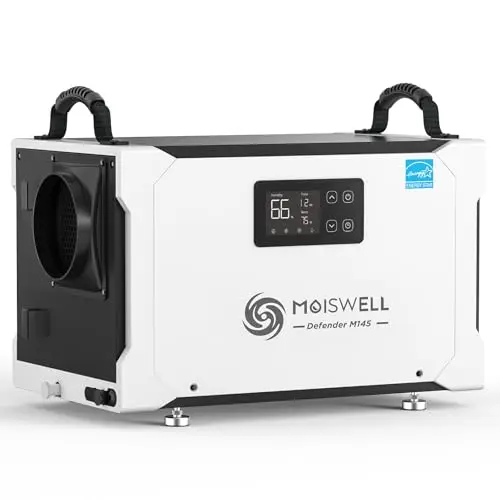
Defender M145 – Low-Profile Commercial Power
A horizontal, low-profile unit built to slide into tight basement footprints and between floor joists. It’s rated at 155 pints a day at saturation and 70 pints at AHAM conditions, with 265 CFM of airflow behind it.
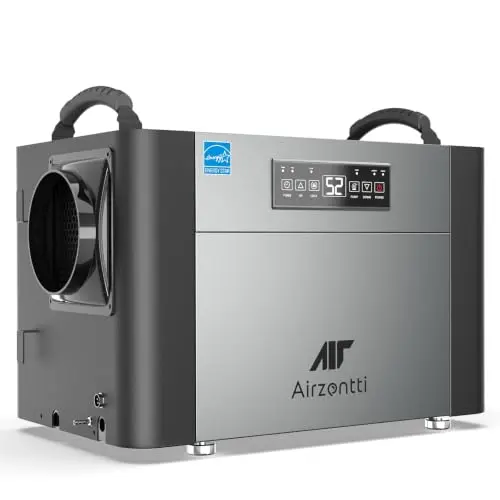
ACD155P – Pump-Equipped Whole-Basement Capacity
A tankless, pump-equipped unit aimed at very large spaces, with coverage claimed up to 7,500 square feet. The built-in pump pushes condensate 16.4 feet vertically, which opens up basement placements a gravity drain can’t reach.
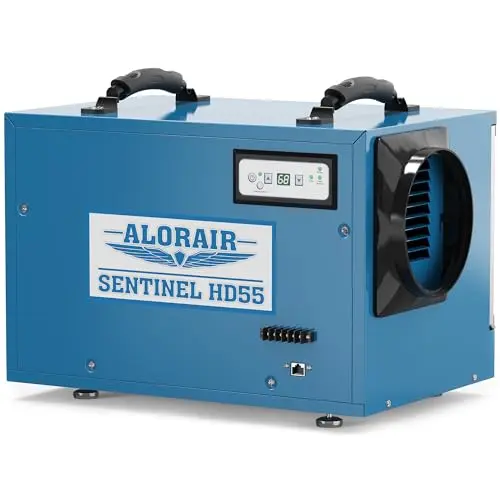
Sentinel HD55 – Rugged Tankless Workhorse
A rugged, tankless commercial unit in a metal cabinet, rated for 113 pints at saturation and 53 pints at AHAM. Designed for crawlspaces and smaller basements where continuous drainage is already in place.
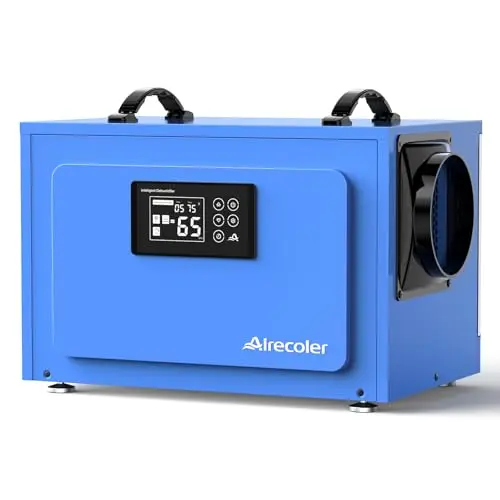
GT-X5 – Compact Mid-Capacity Basement Unit
A 125-pint commercial unit with a metal body and three mounting options – freestanding, countertop, or suspended between joists. Rated for spaces up to 6,000 square feet, with a 6.56-foot drain hose included.
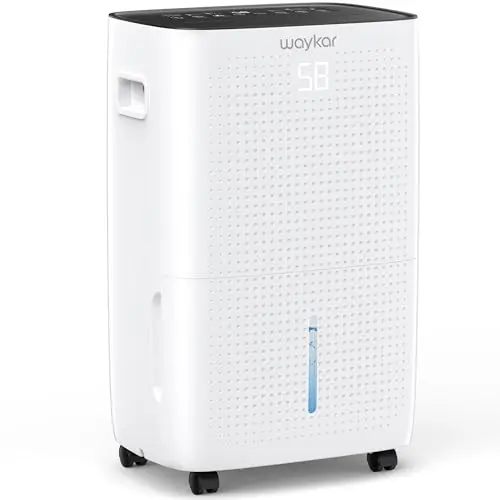
JD026CE-150 – Big-Room Capacity with Auto Swing
A high-capacity, wheeled unit with a large tank and an included drain hose, rated to 150 pints a day across 7,000 square feet. Auto-swing louvers spread dry air around the room instead of aiming it at one spot.
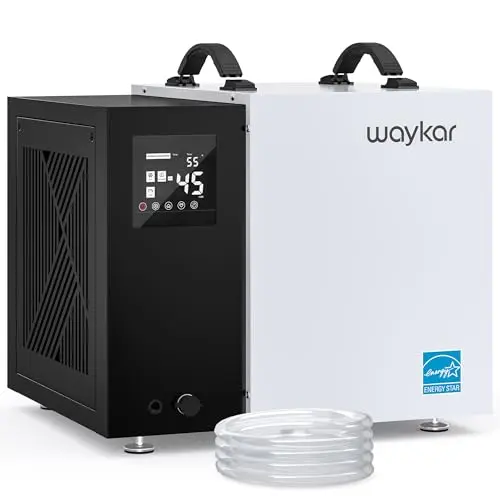
AFW1.5DPM – Pump-Equipped Compact Unit
A compact, pump-equipped unit rated at 70 pints a day for spaces up to 5,000 square feet. Its 10% to 90% humidity range is the widest in this lineup, which suits drying work rather than steady-state control.
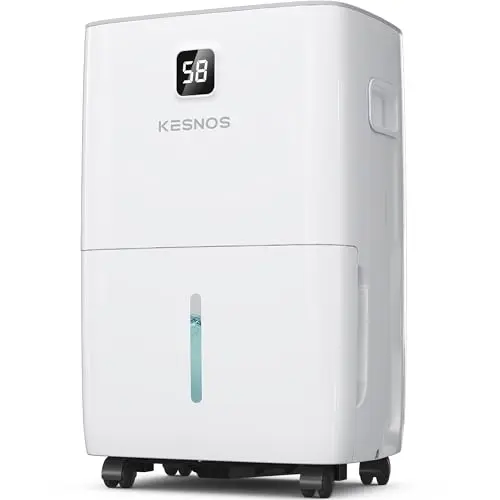
JD026N-150-X2 – Value High-Capacity Tank Unit
A wheeled, high-capacity unit with a removable tank and drain hose, rated to 150 pints and 7,500 square feet. The most affordable way into this capacity class.
How We Evaluated These Commercial Dehumidifiers for Basement
We didn’t flood a test basement or measure moisture removal with a calibrated hygrometer. What we did: cross-referenced 7 commercial dehumidifier models from 6 distinct brands across 5 decision axes – rated capacity at both saturation and AHAM conditions, drainage method, airflow and coverage claims, cabinet material and mounting flexibility, and warranty terms. We triangulated published specifications, manufacturer documentation, and aggregated owner feedback where available, then mapped each unit against the conditions that actually show up downstairs: low ceilings, no floor drain, cool ambient air, and long unattended stretches. Every claim below traces back to a published spec, a documented feature, or a consistent pattern in owner experience.
The gap between marketing numbers and AHAM figures mattered enough to shape the scoring. Several units here advertise a saturation-print rating roughly double the AHAM number, so the 70% real-world fit side of the framework leaned on the conservative figure and on whether the drainage setup suits a real basement. The remaining 30% feature differentiation covered advantages that genuinely change ownership – built-in pumps, duct collars, wide humidity ranges, low-clearance bodies – rather than brand reputation. We have no commercial relationship with any brand here; recommendations track fit and differentiation, not preference. For a typical basement the Defender M145 is the balanced answer, while the ACD155P is the pick when there’s no drain within reach.
How to Choose the Right Commercial Dehumidifier for Basement
1. What Commercial Actually Means in a Basement Dehumidifier
The label gets used loosely. In practice, commercial-grade equipment differs from a residential unit in three ways: a metal or heavy-gauge cabinet instead of molded plastic, a tankless, drain-only design rather than a removable bucket, and components rated for continuous duty in cool, dusty air.
That last point explains why you’ll see auto defrost on nearly every unit in this category. Basements run cold, coils frost up, and a defrost cycle is what stops the compressor from icing itself into a shutdown. If you want the shortest path to that spec sheet, the Sentinel HD55 is the most warranty-forward small-footprint option here, with a metal body and a drain-only configuration.
2. Saturation Pints vs AHAM Pints: Reading Capacity Numbers Honestly
Every unit here leads with a big number – 150 pints, 155 pints – and almost all of them are quoting saturation capacity at roughly 95°F and 90% relative humidity. Your basement is not 90% humidity at 95 degrees. The AHAM rating is taken under milder, more typical room conditions, and it typically lands well below the headline figure – often closer to half.
That’s a difference in test conditions rather than deception, but it changes how you shop. Compare AHAM numbers where they’re published, and treat the saturation figure as a ceiling rather than a daily expectation. A unit advertised at 155 pints with a 70-pint AHAM rating and one advertised at 113 pints with a 53-pint AHAM rating are closer in real-world output than the headline numbers suggest.
3. Drainage Is the Decision That Makes or Breaks a Basement Install
This is where most basement purchases go wrong. A tank-based unit means carrying a bucket up the stairs, sometimes twice a day in a wet season. Gravity drain is the simplest fix – a hose to a floor drain, sump pit, or out through the rim joist – but it only works if the unit sits above the drain point.
When it doesn’t, a built-in condensate pump is the answer, lifting water anywhere from 10 to 16 feet vertically. The ACD155P is the most flexible here on that front, with a pump rated to 16.4 feet, a gravity backup, and an included duct collar for pushing air into an awkward corner.
4. How Much Square Footage Does Your Basement Really Need?
Manufacturer coverage claims assume an open, average-dampness space with normal ceiling height. A finished basement with multiple rooms behaves like several small spaces, and one unit in a corner won’t reach the far end no matter what the box says.
A reasonable rule of thumb: subtract 20% to 30% from the claimed coverage if your basement is divided, has low ceilings, or sits in a wet climate. Airflow in CFM is the number that tells you how well a unit will push air across a wide room. Anything at 250 CFM and up handles an open floor plan, while a 120 CFM unit is better suited to a sealed crawlspace or a single closed room.
5. Low-Clearance Basements: Mounting, Placement, and Drain Height
Basement ceilings limit you more often than floor area does. Horizontal, low-profile units – the Defender M145 and GT-X5 both sit under 15 inches tall – slide between floor joists or under a duct run where a tower unit simply won’t go.
Check the drain height before you commit. A gravity line needs a downward slope across its entire run, and a sagging hose traps water and eventually clogs. Leave a few inches of clearance behind the unit for heat exchange too, since a compressor wedged against a wall runs hotter and less efficiently.
6. What Commercial Dehumidifiers Cost at Each Tier
Pricing in this category splits into three rough bands. Budget-friendly units sit in the low-to-mid hundreds and typically pair a high claimed capacity with a plastic body, a removable tank, and shorter warranty terms. Mid-range covers most of this lineup – metal cabinets, tankless drainage, Energy Star compressors, and three to five years of coverage. Premium picks push toward the top of the range and buy you bigger airflow, built-in pumps, and longer protection.
Chasing the highest pint number at the lowest price is usually a mistake. Warranty length and drainage flexibility are what decide whether the unit is still running in year five. The Kesnos 150 Pint is the value-adjusted pick if a tank-and-hose combo suits your layout.
Frequently Asked Questions
1. Are commercial dehumidifiers overkill for a residential basement?
Not necessarily – it depends on the basement, not the label. A commercial-grade unit earns its keep when the space is large, when nobody is around to empty a tank, or when you want the thing running unattended for months at a time. What you’re paying for is a metal cabinet, tankless drainage, and components rated for continuous duty.
Where it’s overkill: a small, finished, well-sealed basement with a floor drain nearby and an HVAC system already carrying part of the dehumidification load. There a wheeled tank unit is simpler and cheaper to own, and the extra durability buys you nothing you’ll actually notice.
2. Do these units keep working in a cold basement?
They keep working, but check two things before you buy. Every unit here includes auto defrost, which pauses the compressor when the coil ices over and resumes once it clears – without it, a cool basement frosts the evaporator and the unit stalls. The second is the operating range; the models here top out between 90°F and 104°F, and most are happiest in the 60s and 70s.
Below roughly 60°F, compressor units lose efficiency and a desiccant model becomes the better tool. If your basement sits in the 50s through winter, temper your expectations rather than assuming the rated pint number applies year-round.
3. What's the difference between the Defender M145 and the ACD155P?
Both are high-capacity, low-profile commercial units, but they solve different problems. The Defender M145 leads on airflow at 265 CFM, carries Energy Star certification, and backs it with five years of coverage – two years full, three on parts. That’s the best balance of drying power and long-term protection in this lineup.
The ACD155P trades some of that for installation flexibility: a built-in pump rated to 16.4 feet, an included duct collar, and a screen lock for shared spaces. If you have a gravity drain, take the Defender. If you don’t, the pump decides it.
4. How does the Sentinel HD55 compare to the Waykar 70 Pint pump unit?
They land in different weight classes. The AFW1.5DPM is rated at 70 pints and covers up to 5,000 square feet, and its real advantage is a 10% to 90% humidity range – the widest here – plus a 16.4-foot built-in pump for draining upward.
The Sentinel HD55 is smaller, at roughly 1,200 square feet of coverage, but it’s built around a metal cabinet and carries the six-year limited warranty that tops this lineup. Choose the Waykar for a mid-size basement that needs vertical drainage; choose the ALORAIR for a tight space where durability and coverage matter more than square footage.
5. How loud are commercial dehumidifiers in a finished basement?
Louder than a fridge, quieter than a shop vac – and heavily dependent on placement. Compressor noise dominates, and horizontal low-profile units tend to run quieter than tower units because the compressor sits lower and couples less to the floor.
Owner experience is genuinely split: some describe near-silent operation, others find the fan intrusive. Practical moves are to set the unit on a vibration pad, keep it off a shared wall with a bedroom, and use the timer so it runs during the day rather than overnight.
Final Verdict
For most basements, the Defender M145 is the answer. The combination of 265 CFM airflow, a body short enough to fit under a joist, Energy Star efficiency, and five years of coverage is the most complete package here – it dries a large space and doesn’t need babysitting.
If there’s no floor drain within reach, go with the ACD155P. The built-in pump lifts condensate to a sink or window, and the duct collar lets you push air where it’s needed. Working with a basement under about 1,200 square feet, or a tight crawlspace? The Sentinel HD55 is the rugged, warranty-backed option. And if the goal is maximum capacity for the least outlay and you’re fine running a hose to a drain, the Kesnos 150 Pint gets you most of the way there.
