
Best Commercial Dehumidifiers With Pump – 2026 Reviews

A damp basement smells like a problem you’ll deal with ‘later’ – until the joists start to soften and the musty smell creeps upstairs. For homeowners and property managers alike, the fix usually comes down to two things: pulling a lot of water out of the air, and getting rid of that water without hauling buckets every few hours.
That’s where a commercial dehumidifier with a pump earns its keep. The commercial part signals higher capacity, sturdier build, and continuous operation; the pump means condensate goes up and out through a hose instead of pooling in a tank you have to babysit.
This guide sorts through the cross-brand market to help you match capacity, pump lift, and form factor to your space – whether that’s a low-clearance crawl space, a sprawling warehouse, or a flooded job site. The right pick depends far less on brand name than on how the machine fits your actual room.
Best Commercial Dehumidifiers with Pump – 2026 Reviews
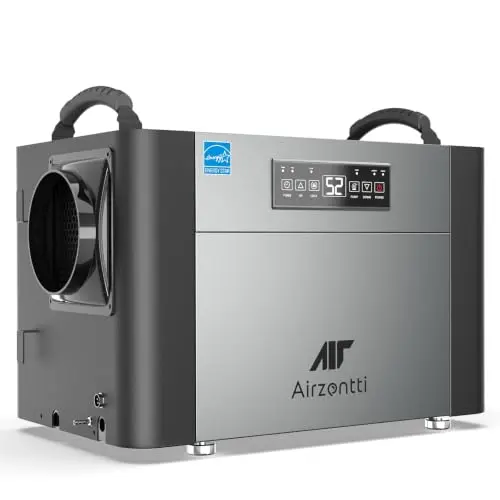
ACD155P-PG100 – Heavy-Duty Whole-Space Drying
The Airzentti ACD155P-PG100 is the most complete package in this lineup, pairing high capacity with genuinely flexible install options. It pulls up to 155 pints per day at saturation (70 pints on the AHAM scale) across a stated 7,500 square feet, and the built-in pump lifts condensate 16.4 feet so you can route water up and out. A duct collar, screen lock, and auto-defrost round out a unit built for unattended commercial work.

GT-XP5 – Compact Crawl-Space Powerhouse
The GT-XP5 is built for tight spots. At roughly 19 by 12 by 13 inches it slips into low-clearance crawl spaces and basements where full-size units won’t fit, while still pulling 125 pints per day at saturation (60 pints AHAM) across a stated 6,000 square feet. The built-in pump lifts water 16.4 feet and ships with a matching 16.4-foot hose, and it can sit on a countertop or hang between floor joists.

Pioneer-XI – High-Capacity Portability
The Pioneer-XI pushes capacity to 160 pints per day at saturation (73 pints AHAM) across a stated 7,000 square feet with 265 CFM of airflow. What separates it from the pack is mobility: 10-inch rear wheels and detachable handles make it easy to roll across rough ground, ramps, and slopes. The built-in pump lifts condensate 16.4 feet, and auto-defrost keeps the coils clear in cold spaces.

Pioneer-XII – Maximum-Capacity Industrial Pick
The Pioneer-XII is the highest-capacity unit in this roundup, rated for 200 pints per day at saturation (90 pints AHAM) across a stated 7,500 square feet. It’s aimed at basements, warehouses, construction sites, and water-damage jobs that need brute-force moisture removal. The built-in pump lifts water 16.4 feet, 8-inch wheels ease transport, and auto-defrost keeps it running in cold conditions.

YDZ-150PM – High-Output Basement Workhorse
The YDZ-150PM removes up to 150 pints per day at saturation (95F, 90% RH) across a stated 7,000 square feet, with humidity adjustable from 30% to 80%. It’s flexible on drainage – a built-in pump that lifts water just under 10 feet, a gravity floor-drain option, or the included 3.3-foot hose. A 1.85-gallon tank with a built-in handle lets you empty without moving the whole unit, and self-drying and auto-defrost keep maintenance low.
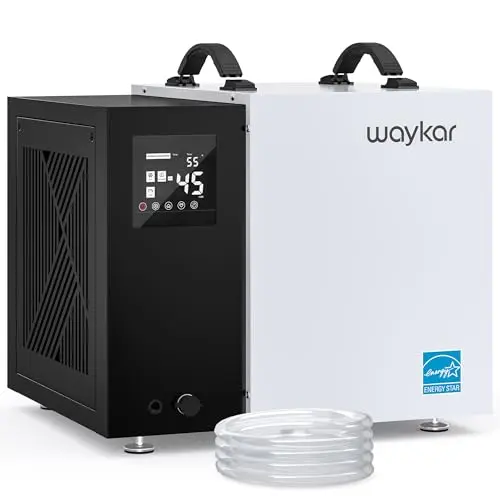
AFW1.5DPM – Compact Crawl-Space Control
The AFW1.5DPM is a compact 70-pint crawl-space unit rated for spaces up to 5,000 square feet. It pairs a 16.4-foot pump hose with a 6.6-foot gravity hose for two drainage paths, and its wide 10%-to-90% humidity range gives more control than most rivals. Heavy-duty metal casing and a service reminder support long-term use, and an optional remote (sold separately) lets you adjust settings from a distance.

Stellar SP10 – Compact with Detachable Remote
The Stellar SP10 is a compact 70-pint unit built for crawl spaces and utility rooms, rated for a stated 1,000 square feet with 206 CFM airflow. Its standout is the detachable control panel that works as a wired remote, so you can set and monitor it from outside the space. A built-in pump lifts water 16.4 feet with a matching hose, and rugged metal housing plus a five-year limited warranty back it for demanding installs.

ADC018 – Budget-Friendly Basement Pump
The ADC018 is the most affordable unit here and the most residential in flavor. It removes up to 90 pints per day at saturation across a stated 4,500 square feet, with a 2.11-gallon top-mounted tank, a built-in pump with 15-foot lift, and three drainage options including gravity and hose. It runs as low as 41 dB, carries Energy Star Most Efficient certification, and includes a five-year manufacturer warranty.
How We Evaluated These Commercial Dehumidifiers with Pump
We didn’t run controlled test-cell moisture-removal trials or long-term durability tests. What we did: cross-referenced 8 commercial dehumidifier models from 5 distinct brands across 6 decision dimensions – moisture-removal capacity, pump lift and drainage flexibility, coverage area, build material and durability, form factor and portability, and warranty support. We triangulated published specifications, feature sets, and owner feedback where available, then mapped each unit against representative buyer profiles: a homeowner drying a damp basement, a contractor handling water-damage work, and a property manager fitting out a low-clearance crawl space. Every claim here traces back to published product information rather than hearsay.
The scoring framework weighted real-world fit (70%) – how well each unit delivers on its stated use case – against feature differentiation (30%) – unique technical advantages like duct collars, detachable remote panels, and long pump lift. We have no commercial relationship with any of the brands featured; recommendations track fit and differentiation, not brand preference. Where manufacturer claims were aggressive, like max pint ratings under ideal heat and humidity, we leaned on the more conservative AHAM figures to keep comparisons honest. If you want the most complete all-rounder, the Airzentti ACD155P-PG100 is your match; if you’re working in a low-clearance crawl space, the Airecoler GT-XP5 serves you better.
How to Choose the Right Commercial Dehumidifier with Pump
1. What Makes a Dehumidifier Commercial-Grade?
Plenty of units advertise ‘commercial’ without earning it. What actually separates a commercial dehumidifier from a residential one is a combination of moisture-removal capacity, build material, and duty cycle. Commercial-grade models are designed to run continuously for days or weeks, often in unheated spaces where a home unit’s coils would ice over.
Look for metal housing over plastic, a compressor rated for continuous operation, and auto-defrost so the unit keeps working in cold crawl spaces and garages. The pint rating also matters: manufacturers cite a max number under ideal heat and humidity, plus an AHAM rating at more realistic conditions. Compare AHAM figures when you can, since they’re the closer apples-to-apples number. If you want the most complete commercial build here, the Airzentti ACD155P-PG100 is a good benchmark.
2. Why the Built-In Pump Changes Daily Life
A pump is the difference between a chore and a set-and-forget install. Without one, gravity drainage requires the unit to sit above a floor drain or a downhill path – rarely how a basement or crawl space is laid out. A built-in pump lifts condensate vertically so you can route it to a utility sink, a window, or a distant drain.
Pay attention to pump lift height: most quality units here push water 16.4 feet up, while a few stop closer to 10 to 15 feet. That extra reach matters if your drain is high or far away. Also confirm the unit includes a drain hose, and keep a gravity drain option in reserve in case the pump ever needs service. If routing water is your priority, the Airecoler GT-XP5 and its long lift are worth a close look.
3. Matching Capacity and Coverage to Your Space
Capacity is where buyers overspend or underspend most often. Match the pint rating and stated square footage to your space, then round up if the area is very wet or open to humid outside air. A 70-pint unit suits a crawl space or a defined room; 150 to 200 pints is the right zone for a large basement, warehouse, or water-damage job.
Remember that the headline number is a maximum measured under hot, saturated conditions. Real-world output at cooler basement temperatures runs lower, which is why the AHAM rating is the more honest guide. When in doubt, size up – a larger unit running part-time can be more efficient than a small one running flat out. For maximum-capacity jobs, the Moiswell Pioneer-XII is the heavy hitter.
4. Crawl Space vs. Open Basement: Form Factor Matters
The same capacity in the wrong shape is useless. Low-clearance crawl spaces and joist bays need a compact body that fits through an access hatch and sits under the floor – the classic commercial box won’t cut it. Open basements, garages, and warehouses favor a freestanding unit with wheels for repositioning.
Check the dimensions against your access point before you buy, and note whether the unit supports countertop or suspended mounting between joists. A detachable remote control panel is a genuine convenience in a crawl space, letting you adjust settings without crawling in. For tight spaces, the Airecoler Stellar SP10 and its detachable remote are purpose-built for exactly this.
5. Airzentti ACD155P-PG100 vs. Moiswell Pioneer-XII: Which Capacity Tier?
These two sit at the top of the capacity ladder but serve slightly different jobs. The Airzentti ACD155P-PG100 emphasizes install flexibility – a duct collar, screen lock, and whole-space coverage make it a strong fit for directed drying and unattended commercial setups. The Moiswell Pioneer-XII leans harder into raw output with a 200-pint max capacity and big wheels for job-site mobility.
If you’re drying a defined zone and want to aim airflow, the Airzentti’s duct collar wins. If you’re fighting a soaked warehouse and want the most pints per day with easy transport, the Pioneer-XII is the brute-force answer. Both handle 16.4-foot pump lift, so drainage isn’t the deciding factor – capacity and airflow are.
6. Build Quality, Filtration, and Long-Term Care
Commercial units live hard lives, so build quality is worth scrutinizing. Metal housing resists dents and corrosion better than plastic, and upgraded copper components tend to hold up in humid, high-impact settings. Check the warranty too – coverage ranges from a basic year to multi-year plans that extend over the refrigeration system.
Maintenance keeps any unit performing. Clean the washable filter regularly, watch the auto-defrost cycle in cold months, and confirm the pump is actually moving water during the first weeks of operation. A service reminder on the unit helps, but a quick monthly check of the filter and drain line prevents most surprises.
Frequently Asked Questions
1. What's the difference between the Airzentti ACD155P-PG100 and the Waykar YDZ-150PM?
Both are high-capacity commercial units, but they trade blows. The Airzentti ACD155P-PG100 edges ahead on install flexibility with a duct collar and a 16.4-foot pump lift, plus a screen lock for shared spaces. The Waykar YDZ-150PM counters with three drainage options and a lighter body, but its pump lift tops out closer to 10 feet.
If you want to aim airflow and route water high, the Airzentti is the stronger choice. If you value drainage versatility and easier handling, the Waykar holds its own. For most commercial setups, we’d lean toward the Airzentti ACD155P-PG100.
2. How does the Airecoler GT-XP5 compare to the Moiswell Pioneer-XI for crawl spaces?
They’re aimed at different priorities. The Airecoler GT-XP5 is the compact specialist – its low-clearance body fits crawl spaces and joist bays that would reject a full-size unit, while still moving 125 pints per day. The Moiswell Pioneer-XI is a capacity-and-mobility play with 160 pints and big terrain wheels, but its larger frame is a tougher fit in tight spaces.
For a true low-clearance crawl space, the GT-XP5 is the better match. If you’re drying a larger basement or job site and rolling the unit around, the Pioneer-XI makes more sense.
3. What actually makes a dehumidifier 'commercial' grade?
It’s less about the label and more about how the unit is built. A commercial dehumidifier typically pairs high moisture-removal capacity with metal housing and a compressor rated for continuous operation in spaces that may be unheated. Auto-defrost is standard, so the coils keep working in cold crawl spaces and garages.
You’ll also see longer warranty coverage and features built for unattended use, like pump drainage and auto-restart. Those traits, not the marketing word, are what separate a true commercial unit from a dressed-up home model.
4. How much pump lift do I need for a basement or crawl space?
Measure the vertical rise from the unit to your drain, then add a margin. Most quality commercial units in this group push water 16.4 feet up, which covers most basements and utility sinks. A few stop closer to 10 to 15 feet, so check the spec against your layout before committing.
Also confirm the unit includes a drain hose long enough to reach the drain and keep a gravity drain path as a backup. If your drain is high or far, prioritize a unit with the full 16.4-foot lift.
5. Can a commercial dehumidifier with a pump run unattended?
Yes – that’s exactly what the pump and continuous-drainage design are for. Once a built-in pump is connected to a hose and routed to a drain, the unit handles condensate on its own, which is ideal for basements and crawl spaces you don’t visit often.
Add auto-defrost and auto-restart and the unit keeps working through cold snaps and power blips. Do a quick check in the first few weeks to confirm the pump is actually moving water, and clean the filter regularly to keep performance steady.
Final Verdict
For most buyers, the Airzentti ACD155P-PG100 is the answer – it pairs high capacity, a 16.4-foot pump lift, and real install flexibility in a way nothing else here quite matches. If your problem space is a tight crawl space, the Airecoler GT-XP5 fits where full-size units can’t. Need maximum throughput for a soaked warehouse or water-damage job? The Moiswell Pioneer-XII brings the most pints per day and wheels to move it. And if budget is the deciding factor, the avylo ADC018 delivers quiet, pump-drained performance at the most accessible price tier for a home basement.
Match the machine to the room, check the pump lift against your drain, and you’ll end up with dry air and far fewer bucket runs.
