
Best Commercial Espresso Machines For Small Cafes – 2026 Reviews

A small cafe doesn’t need a machine that can survive a stadium rush. It needs one that recovers fast between drinks, holds temperature through a short morning line, and doesn’t demand a dedicated barista just to pull a repeatable shot. The tricky part is that commercial gets used loosely. Some machines have commercial-style portafilters and steam wands but are built for low-volume use; others are fully automatic units that trade manual control for speed.
For a small cafe, the decision usually comes down to three things: temperature stability, steam recovery, and whether you want a built-in grinder or a separate one. Counter space matters too, along with how comfortable your staff is with manual dosing and tamping. This guide surveys the market across brands and focuses on machines that make sense for a compact, low-volume cafe setup rather than a high-volume plumbed bar.
Best Commercial Espresso Machines for Small Cafes – 2026 Reviews
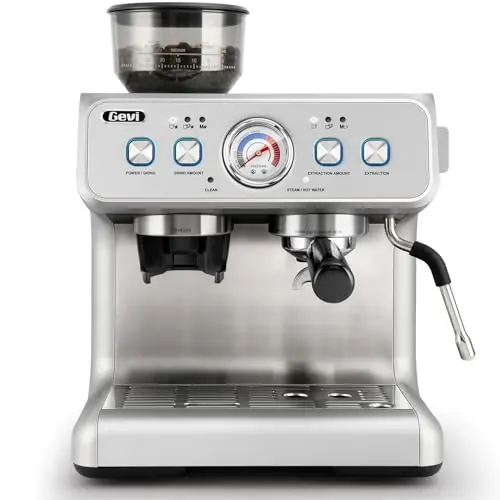
Dual Boiler Espresso Machine – Built-In Grinder and PID Control
The Gevi dual boiler brings the most cafe-oriented spec sheet in this lineup: a built-in burr grinder, a 58mm commercial-style portafilter, and PID temperature control. It is aimed at low-volume cafe setups that want repeatable shots without a plumbed commercial install.
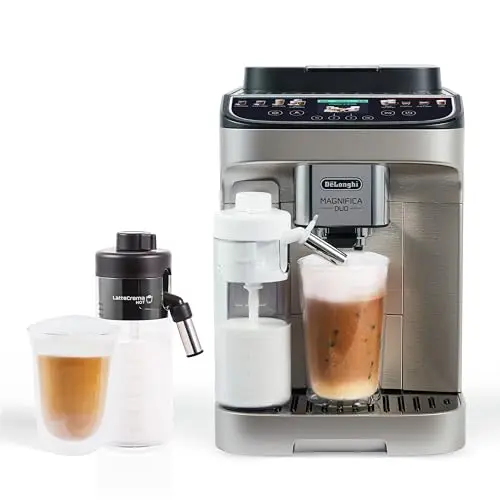
Magnifica Duo ECAM33080SXB – One-Touch Automatic for Low-Volume Cafes
The Magnifica Duo is a fully automatic espresso machine with 20 one-touch recipes, a hot and cold milk frother, and a built-in conical burr grinder. It is the premium route for a low-volume cafe that wants speed, iced drinks, and minimal training.
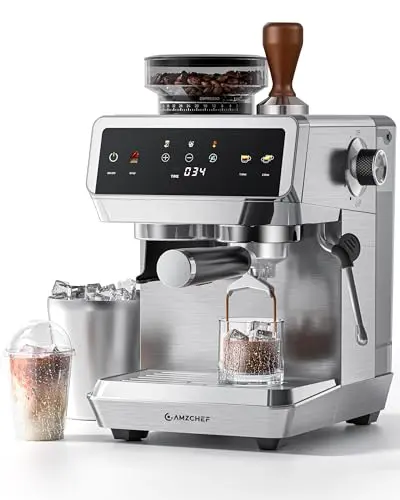
CM1626 Espresso Machine – Built-In Grinder and Temperature Control
The AMZCHEF CM1626 packs a built-in grinder, 44 grind settings, temperature control, and a cold brew mode into a compact footprint. It is aimed at value-conscious startups that want one machine to cover espresso and iced drinks.
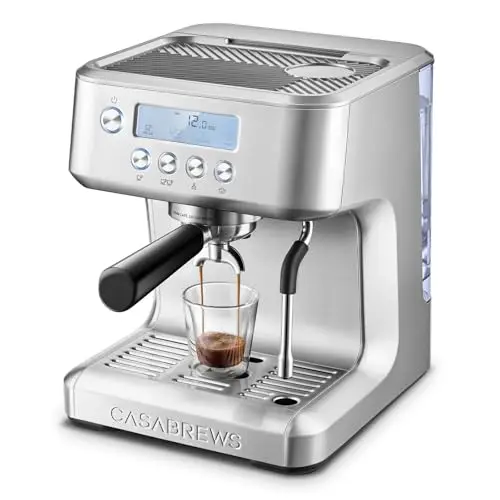
Ultra Espresso Machine – 20-Bar Semi-Automatic with Steam Wand
The CASABREWS Ultra is a 20-bar semi-automatic machine with a 58mm portafilter, LCD display, and a steam wand for milk drinks. It suits a small cafe that already has a grinder and wants a simple, compact espresso station.
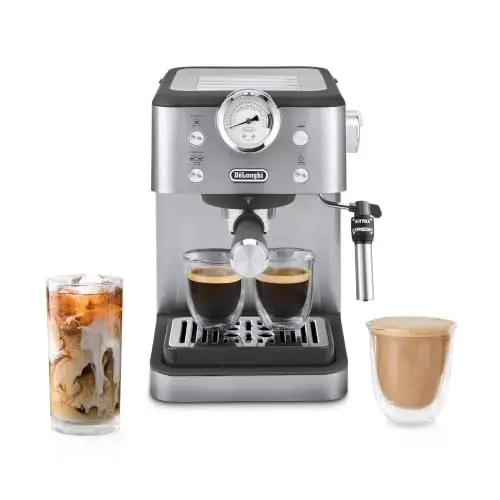
EM450M Classic Signature – Compact Preset Espresso Maker
The EM450M Classic Signature is a compact 15-bar machine with Thermoblock heating, preset single and double shots, and a 2-setting steam wand. It is a simple preset option for a very small cafe counter.
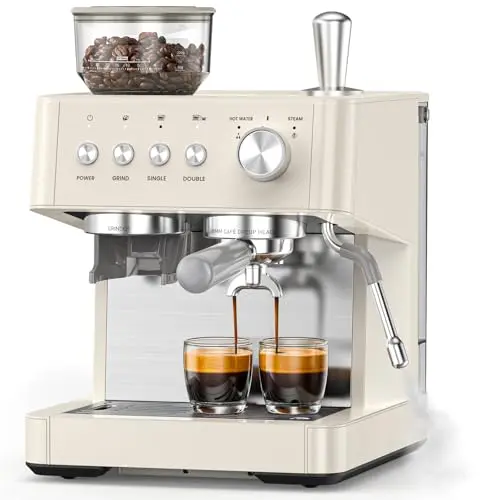
CM5431D-UL Espresso Machine – Anti-Clog Grinder and 58mm Portafilter
The Electactic CM5431D-UL combines an anti-clog built-in grinder, a 58mm portafilter, and a 2.3L water tank with a 15-bar brew system. It is a feature-forward entry-level option for a light-duty cafe or pop-up.

Luxe Cafe Premier ES601GM – 3-in-1 Espresso and Coffee Station
The Ninja Luxe Cafe Premier ES601GM is a 3-in-1 machine that brews espresso, drip coffee, and cold brew with a built-in grinder and hands-free frother. It fits a low-volume cafe with a broad drink menu but not a high-volume commercial bar.
How We Evaluated These Commercial Espresso Machines for Small Cafes
We didn’t plumb these machines into a working cafe bar or run them through back-to-back service shifts. What we did: cross-referenced 7 espresso machine models from 6 distinct brands across 6 decision axes – brew pressure and temperature stability, steam and milk-frothing capability, grinder integration, workflow and footprint, maintenance, and warranty support. We triangulated published specifications, feature sets, owner feedback where available, and use-case fit for low-volume cafe counters.
We audited each spec sheet for boiler type, portafilter size, tank capacity, and warranty terms, then mapped those details to the realities of a small cafe: limited counter space, staff who may not be career baristas, and a menu that likely leans on milk drinks. We weighed those tradeoffs against the reality that many small cafes run a compact menu and need a machine that can be learned quickly by a small team. The scoring framework weighted real-world fit for small-cafe use (70%) – how well each machine handles a compact menu, short rushes, and repeatable shots – against feature differentiation (30%) – dual boilers, PID control, built-in grinders, automatic frothing, and other advantages that change the workflow. We have no commercial relationship with any brand here, and recommendations track fit and differentiation rather than brand preference. If you need manual control and a built-in grinder, the Gevi Dual Boiler Espresso Machine is the strongest match; if one-touch automation and iced drinks matter more, the De’Longhi Magnifica Duo is the better route.
How to Choose the Right Commercial Espresso Machines for Small Cafes
1. What Makes Commercial Espresso Machines Practical for a Small Cafe?
Commercial isn’t a single badge; it’s a set of pressures. A true cafe machine is built for a high duty cycle, fast boiler recovery, plumbed water, and a service network that can get parts quickly. Most compact machines in this category are better described as commercial-style or prosumer. That’s not a dealbreaker for a low-volume cafe, a pop-up, or a food truck, but it does change how you buy.
Start with your busiest hour, not your average day. If you expect a short line of milk drinks, a machine with a capable steam wand and stable brew temperature can keep up. If you expect continuous back-to-back shots, you need a plumbed commercial setup beyond this compact class.
2. Boiler Design and Temperature Stability for Small Cafes
Temperature stability is the difference between a shot that tastes sweet and one that tastes sharp or hollow. Dual boiler machines separate brew and steam, so you can pull a shot and steam milk without waiting for the machine to recover. PID temperature control adds tighter regulation, which matters when beans change. Thermoblock systems heat quickly and save space but may have less steam reserve in continuous use.
For a small cafe with a milk-forward menu, a dual-boiler design is the safer workflow. The Gevi Dual Boiler Espresso Machine is the clearest example in this lineup because it pairs separate boilers with PID control and a built-in grinder.
3. Steam Power and Milk Workflow in a Compact Cafe Setup
Milk drinks pay the bills in many small cafes, so the steam wand deserves as much attention as the brew group. A powerful steam wand creates microfoam faster and recovers between pitchers, while a weak wand turns a two-drink order into a five-minute pause. Manual wands reward practice; automatic frothers trade some control for consistency.
If you want a hands-on semi-automatic workflow and already own a grinder, the CASABREWS Ultra Espresso Machine is a sensible compact option. If your staff changes often, an automatic frother may be the more realistic choice.
4. Built-In Grinders vs Separate Grinders for Commercial Espresso Machines
A built-in grinder saves counter space and simplifies the workflow, which is a real advantage in a tight cafe. The tradeoff is serviceability: when the grinder fails, the whole machine may need attention. A separate grinder gives you more upgrade paths and easier maintenance, but it adds cost and footprint.
For a startup or pop-up, a machine with an integrated burr grinder and enough grind settings can be the faster path. The AMZCHEF CM1626 Espresso Machine is the value-focused example here, with 44 grind settings and temperature control. Just don’t expect the grind consistency or duty cycle of a standalone commercial grinder.
5. Portafilter Size, Baskets, and Repeatable Shots
A 58mm portafilter is the common commercial-style size, which makes it easier to find baskets, tampers, and accessories. Single- and double-wall baskets serve different purposes: single-wall baskets are for fresh, well-ground coffee, while dual-wall baskets are more forgiving with pre-ground coffee. For a cafe, single-wall is the workflow you want once you dial in.
Dose and tamp consistency matters more than a fancy screen. A machine with a stable brew temperature and a familiar 58mm basket gives you a better chance at repeatable shots than one with a pressurised basket and no grinder control.
6. Footprint, Water, and Maintenance in a Small Cafe
Counter space is a real constraint, so measure depth and height before you fall for a spec sheet. A removable water tank is easier to refill and clean than a fixed reservoir, and a drip tray that comes out quickly makes end-of-day cleanup less of a chore. Descaling should be simple enough that staff actually do it.
If you want the lowest-friction automatic workflow and stronger warranty support, the De’Longhi Magnifica Duo is the premium route in this group. It is still a low-volume automatic, not a plumbed commercial machine, but it is built for easy daily operation.
Frequently Asked Questions
1. What's the difference between the Gevi Dual Boiler and the De'Longhi Magnifica Duo for a small cafe?
The Gevi is a semi-automatic dual-boiler machine with a 58mm portafilter and a built-in grinder, so it gives you more manual control over dose, tamp, and shot timing. The De’Longhi Magnifica Duo is a fully automatic machine with 20 one-touch recipes and a hot/cold milk carafe, which is faster for staff who need consistency without barista training. For a cafe that wants to dial in beans and steam manually, the Gevi Dual Boiler Espresso Machine is the more cafe-oriented tool; for a low-volume cafe leaning on iced drinks and one-touch speed, the Magnifica Duo is the easier operator.
2. Is the De'Longhi EM450M or the CASABREWS Ultra a better fit for a low-volume cafe?
The De’Longhi EM450M is the more compact, preset-driven option, with Thermoblock heating and a 2-setting steam wand; it suits a tiny menu and staff who want minimal setup. The CASABREWS Ultra gives you a 20-bar pump, a 58mm portafilter, and a more powerful steam wand, so it is the better fit if you already have a grinder and want a hands-on semi-automatic workflow. For a very low-volume cafe with limited space, the De’Longhi is easier to live with; for a slightly more espresso-focused bar, the CASABREWS has the more familiar cafe-style tools.
3. Are commercial espresso machines for small cafes actually practical without plumbing?
Yes, for low-volume service a tank-fed machine can be practical, especially in a pop-up, kiosk, or rented space where plumbing is not an option. The tradeoff is refill frequency and water quality: you need a routine for filtered water and a clear schedule for descaling and cleaning. If you expect a steady line, a plumbed commercial machine is the safer long-term choice; if you expect short bursts, a removable-tank espresso machine can work.
4. How much steam power do you need for milk drinks in a small cafe?
Look for a steam wand with enough recovery to finish one pitcher and start the next without a long pause. A manual steam wand gives more control for microfoam and latte art; an automatic frother gives consistency with less training. For a menu heavy on cappuccinos and lattes, steam recovery matters more than the brew pressure number.
5. Do I need a built-in grinder for a small cafe espresso setup?
A built-in grinder is convenient for a compact setup because it saves counter space and keeps the workflow tight. A separate grinder is easier to service, upgrade, and replace without losing the espresso machine. If you are starting small and want one integrated package, the AMZCHEF CM1626 Espresso Machine is the value-oriented route with 44 grind settings and temperature control; if you plan to grow, buy the grinder separately.
Final Verdict
For most small cafes, the Gevi Dual Boiler Espresso Machine is the strongest starting point. It brings the cafe-relevant pieces together: dual boilers, PID temperature control, a 58mm portafilter, and a built-in grinder, all in a footprint that can fit a compact counter. It is not a high-volume plumbed workhorse, but it is the most complete low-volume package here.
If your priority is one-touch speed and a menu that runs from espresso to iced lattes, the De’Longhi Magnifica Duo is the premium automatic pick. For a lean startup budget, the AMZCHEF CM1626 Espresso Machine gets you grinding, temperature control, and a steam wand without the premium outlay. And if you already own a grinder and want a simple semi-automatic backup, the CASABREWS Ultra Espresso Machine is the practical compact choice.
