
Best Commercial Soap Dispensers – 2026 Reviews

Walk into almost any restaurant restroom, office kitchen, or clinic washroom and you’ll spot it within seconds – a soap dispenser that’s either dripping down the wall, empty again, or creaking like it’s about to give up. In a home, that’s a minor annoyance. In a commercial space, it’s a maintenance ticket that repeats every week.
The word doing the heavy lifting here is commercial. A dispenser earns that label through capacity, a refill system that survives constant reloading, build quality that holds up to pressing and the occasional vandal, and a mounting approach that suits your actual wall. The two axes that separate a genuinely commercial unit from a beefed-up home pump are the refill system – sealed bag-in-box versus bulk pour – and the build-and-mount combo that decides how it fares in a shared space.
We looked across the major brands selling into this space, from hygiene heavyweights to smaller stainless specialists, to sort out which dispensers suit a high-traffic public washroom, a snug office kitchen, or a clinic where hands-free matters. Here’s what actually holds up.
Best Commercial Soap Dispensers – 2026 Reviews
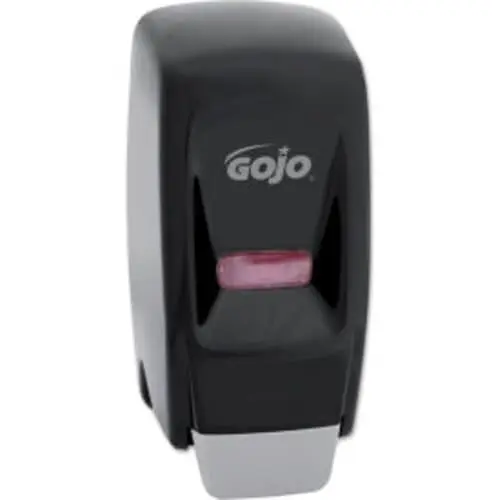
800 Series Push-Style – Sealed Bag-in-Box Hygiene
The GOJO 800 Series is a push-style commercial dispenser built around sealed bag-in-box refills. The 800 mL cartridges drop straight in without you touching the soap, and each push delivers a portioned dose. It’s a workhorse choice for restrooms and kitchens where hygiene and controlled use matter more than pouring your own bulk soap.
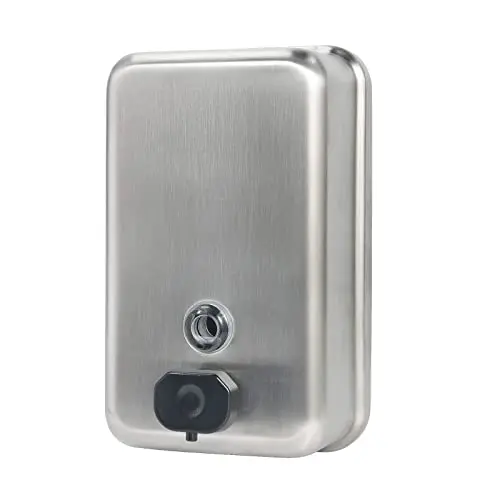
1100ml Stainless – Vandal-Resistant for High Traffic
The Stardrix is a heavy-duty stainless wall dispenser aimed at high-traffic and public restrooms. It pairs a large 1100 mL tank with a locked filler top, internal wall fastening, and a corrosion-proof plastic liner inside the steel body.
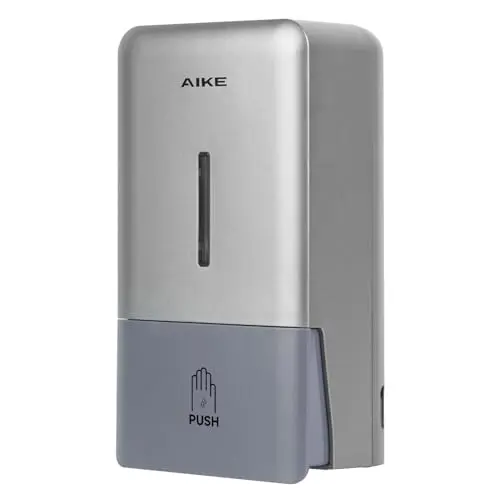
AK1006 – Dual-Mount Commercial Dispenser
The AIKE AK1006 is a 27-ounce ABS commercial dispenser with an oversized push panel, a safety lock to stop tampering, and a dual mounting design that lets you choose adhesive or screws. It’s built for daily use in offices, restaurants, and shared bathrooms.
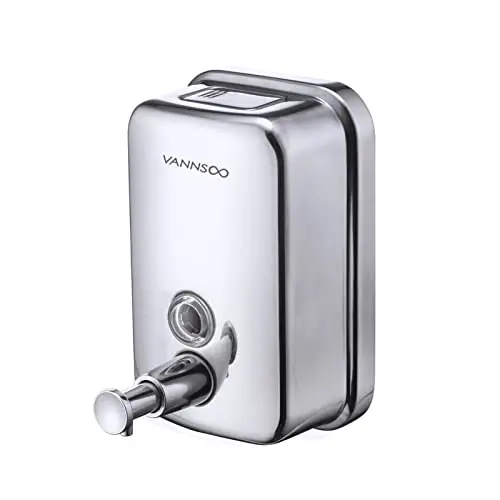
ZSH3-500A – 304 Stainless Steel Pump
The VANNSOO is a 500 mL wall dispenser in 304 stainless steel with a mirror-polished finish, a single-hand pump, and a transparent level window. It’s aimed at bathrooms and washrooms that want a cleaner, metal look.
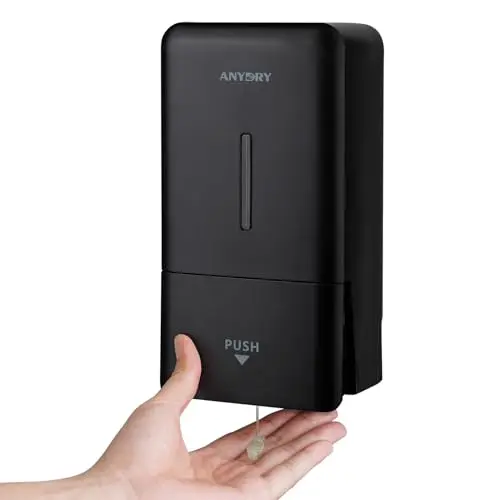
27oz Wall Mount – Wide-Opening Easy Refill
The anydry 27-ounce wall dispenser is a durable ABS unit with a wide refill opening, a sleek black housing, and a screw-mount install. It’s designed for liquid soaps in commercial bathrooms and public spaces.
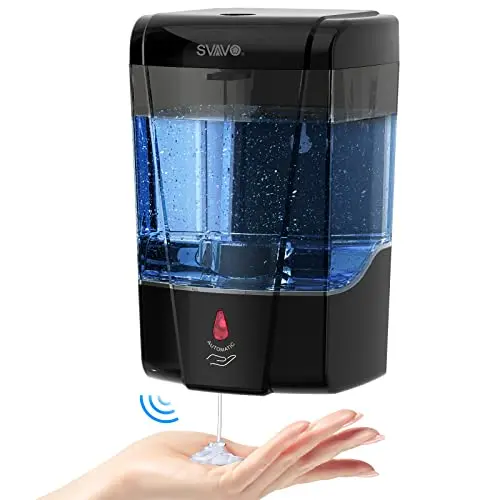
V-410 Automatic – Touchless Sensor Pump
The SVAVO V-410 is a battery-operated touchless dispenser with an infrared sensor, a non-drip dispensing valve, and a 600 mL reservoir. It’s built for shared restrooms, kitchens, and clinics where hands-free hygiene matters.
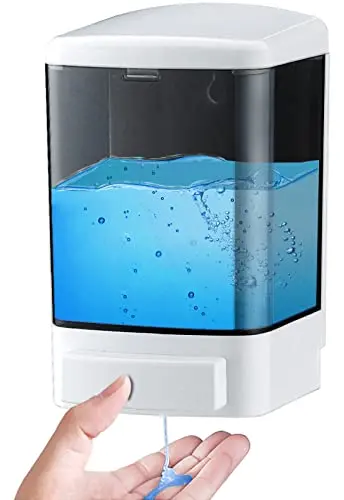
ZYQ-1000ML-B – 1000ml Bulk-Fill Wall Mount
The IEALODS is a 1000 mL manual wall dispenser in ABS with a transparent reservoir, a non-drip pump, and a lift-lid refill. It’s a budget-friendly option for offices, restaurants, and public spaces.
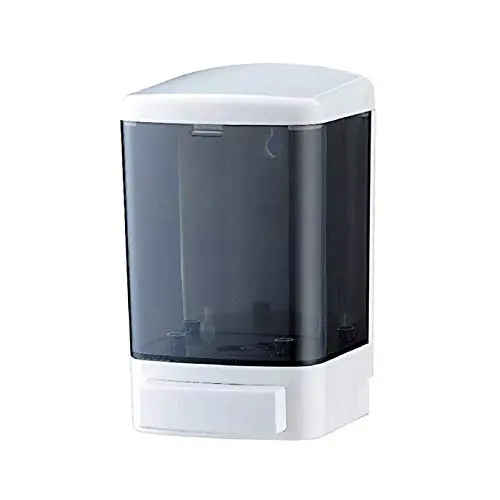
E-ABS1000ML – Transparent 1000ml Chamber
The Evhome is a 1000 mL manual dispenser in ABS with a transparent chamber, a push-button pump, and a drill-mount install. It takes liquid soap, sanitizer, shampoo, and lotion in commercial and home settings.
How We Evaluated These Commercial Soap Dispensers
We didn’t spend weeks refilling these in a working restaurant restroom or clock pump cycles against a stopwatch. What we did: cross-referenced 8 commercial soap dispenser models from 8 distinct brands across five decision axes – refill system, capacity, build material and vandal resistance, dispensing action, and mounting and installation. We triangulated published specifications, feature sets, owner feedback where available, and real-world fit against common commercial buyer profiles like restaurants, offices, clinics, and public restrooms. Where a brand leaned on a proprietary refill format, we weighed that against the hygiene and portion-control benefits it delivers in shared settings.
The scoring framework weighted real-world fit (70%) – how well each dispenser handles capacity, refill frequency, and durability in its intended setting – against feature differentiation (30%) – unique advantages like sealed refills, touchless dispensing, or vandal-resistant hardware. We pressure-tested the lineup against the scenarios buyers actually describe: a small half-bath with no counter space, a clinic that wants hands off the unit, and a busy corridor where the dispenser gets pressed constantly through the day. Built-in reliability – a pump that keeps metering after months of use – counted heavily, since a failed dispenser becomes a maintenance ticket fast. We have no commercial relationship with any brand here; recommendations track fit and differentiation, not brand preference. If you’re fitting a hygiene-critical restroom where contact-free refills matter, the GOJO 800 Series is the match; if you’re outfitting a high-traffic public washroom that takes abuse, the Stardrix stainless dispenser is the better call.
How to Choose the Right Commercial Soap Dispensers
1. What Actually Makes a Soap Dispenser Commercial?
The label commercial gets thrown around loosely, but it means something concrete. A commercial soap dispenser is built to survive shared, high-use environments – more capacity so it isn’t topped off daily, a refill system that holds up to repeated loading, build materials that resist vandalism and constant pressing, and a mounting approach suited to the wall you’re working with. Add a real warranty and you’ve got the full picture.
A beefed-up home pump usually falls short on at least two of those fronts. It might hold half a liter and mount with tape – fine on your kitchen sink, nowhere near enough in a restaurant corridor. The gap isn’t marketing; it shows up as refill frequency, replacement rate, and whether the thing is still working in a year.
2. Sealed Bag-in-Box vs Bulk Pour for Commercial Dispensers
This is the first real fork in the road. Sealed bag-in-box systems such as the GOJO deliver soap in a closed cartridge you drop straight in – staff never touch the soap, there’s no open reservoir to collect grime, and dosing tends to be tightly portioned. The catch is proprietary refills: you buy the brand’s cartridges, so there’s an ongoing supply cost and dependency.
Bulk pour dispensers let you fill from any liquid soap you like, usually for less per fill and with more formula flexibility. The trade-off is an open tank that’s more exposed to contamination and more prone to clogging with the wrong soap. If hygiene and controlled dosing lead your requirements, go sealed; if cost per fill and flexibility matter more, go bulk.
3. Capacity and Refill Frequency for Commercial Soap Dispensers
Capacity is a labor decision as much as a specs one. A 500 mL unit is fine for a quiet washroom but means frequent refills in a busy one; step up to around 1000 mL for moderate-to-heavy traffic, and larger tanks make sense in public restrooms where staff time is the real cost. The bigger the tank, the fewer interruptions – but the heavier the unit and the more it leans on a solid wall. Match capacity to your actual traffic rather than maxing it out for its own sake.
4. Manual vs Automatic: Picking the Right Dispensing Action
A manual push pump is simple, needs no batteries, and tends to be more rugged – there’s less to break. An automatic touchless dispenser trades that simplicity for hands-free hygiene, which genuinely matters in clinics, shared offices, and public restrooms where nobody wants to touch a pump. Touchless units run on batteries, want thinner soap, and add a sensor that can occasionally misfire. Where hygiene is the priority, the SVAVO automatic dispenser is the pick; everywhere else, a manual pump is the lower-maintenance answer.
5. Build Materials, Vandal Resistance, and Mounting Options
Stainless steel units resist vandalism and look harder to damage, and the better ones fasten from the inside and lock the filler top – worth it in public or unsupervised restrooms. ABS plastic is lighter and cheaper and fine for offices and staff-only areas, but it won’t take the same abuse. On mounting, you’ll usually choose between adhesive for hard-to-drill surfaces and screws or drilling for a permanent hold; pick based on your wall and how permanent the install needs to be. If drilling isn’t an option, the AIKE AK1006 lets you choose adhesive or screws.
6. Pricing Tiers and What You Get at Each Level
Entry-level commercial dispensers cover the basics – a plastic body, high capacity, and a working pump – and suit lighter traffic and tighter budgets. Mid-range buys add better materials, tighter leak control, and more thoughtful mounting hardware. Premium picks bring stainless build and vandal-resistant locking in larger tanks for public restrooms. The smart move is to spend where your setting punishes cheap parts: a heavy-traffic corridor justifies steel; a quiet office kitchen doesn’t.
Frequently Asked Questions
1. What's the difference between the GOJO 800 Series and the Stardrix stainless dispenser?
They solve different problems. The GOJO 800 Series is a sealed bag-in-box system – refills stay closed, dosing is portioned, and staff never handle the soap, which suits hygiene-critical settings like restaurants and clinics. The Stardrix stainless dispenser is a bulk-fill, vandal-resistant tank with a much larger 1100 mL capacity and a locked top, built for high-traffic public restrooms that take abuse. Choose GOJO for hygiene and portion control, Stardrix for durability and capacity with any liquid soap.
2. How does the SVAVO automatic dispenser compare to the AIKE AK1006?
The SVAVO is touchless – an infrared sensor and battery operation give you hands-free hygiene, but it needs thinner soap and a battery change roughly once a year. The AIKE AK1006 is a manual push unit with a tamper safety lock and a dual adhesive-or-screw mount, making it more rugged and installation-flexible. Pick SVAVO where contact-free use is the priority; pick AIKE for a simple, lockable, easy-to-mount dispenser.
3. Are commercial soap dispensers actually different from home dispensers?
Yes, and the difference is practical, not cosmetic. Commercial units typically carry larger capacity so refills are less frequent, use a more durable refill and pump system, mount to walls rather than sitting on a counter, and come with vandal resistance and warranties aimed at shared use. A home pump on a kitchen sink isn’t built for the pressing and abuse a public restroom dishes out.
4. Which commercial soap dispenser works best in a small restroom or half-bath?
In a tight space, a compact wall mount saves counter room and keeps things tidy. The VANNSOO 304 stainless pump is a strong fit – a smaller 500 mL unit with a slim stainless profile and a transparent level window, so it looks good and signals when it’s low without hogging space. For even less footprint, a touchless wall unit works too, as long as you leave clearance for the sensor.
5. Do commercial soap dispensers work with any liquid soap?
Not really – formula matters. Many units, especially automatic and sealed systems, want a thinner liquid soap; thick, foaming, or particle-laden formulas can clog the pump or dispense poorly. Bulk-fill manual dispensers are more forgiving but still perform best with smooth liquid soap. Check the manufacturer’s guidance before filling, and avoid dish soap or gritty scrubs in anything but the most tolerant manual units.
Final Verdict
For most commercial spaces, the GOJO 800 Series is the answer – the sealed bag-in-box system keeps soap contact-free and portioned, and the ADA-friendly push handles steady traffic without complaint. If budget and capacity top your list and you don’t mind bulk-filling, the IEALODS 1000ml wall mount gets you big volume at an entry-level tier. And where touchless hygiene genuinely matters – clinics, shared offices, busy corridors – the SVAVO automatic dispenser is purpose-built for it. Match the refill system and mounting to your wall and your traffic, and any of these will outlast the creaky plastic pump you’re replacing.
