
Best Compression Socks For Running – 2026 Reviews

A run can feel easy for miles and then your calves start sending signals. That heavy, tight, achy feeling is where compression socks for running earn their place: they add graduated support, help with swelling and fatigue, and give you one less thing to think about on long efforts. But the category is crowded, and the difference between a sock that helps and one that just squeezes is usually in the details.
The two axes that matter most are compression level and fit. A 15-20 mmHg sock is easier to wear all day; a 20-30 mmHg sock feels firmer and more performance-oriented. Fit matters just as much, because a sock that is too small will bind at the calf, and one that is too large will slide. Cushioning, breathability, and toe seams separate the running-specific options from the medical-stocking crowd.
We surveyed the market across major brands to find compression socks and calf sleeves that make sense for runners, from budget-friendly multi-packs to focused recovery sleeves. The goal is simple: help you pick the right pair for your mileage, your calf size, and how much squeeze you actually want.
Best Compression Socks for Running – 2026 Reviews
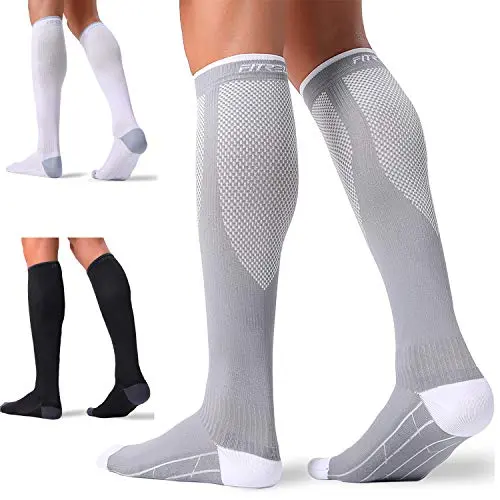
3 Pairs 20-30mmHg – Graduated Support for Running
FITRELL’s three-pair set is built around 20-30 mmHg graduated compression and five support zones. The knee-high design adds mesh ventilation, moisture-wicking fabric, a seamless toe, and cushioning through the sole for runners who want firm support without giving up comfort.

3 Pairs 15-20 mmHg – Budget-Friendly Daily Compression
CHARMKING’s three-pair bundle uses 15-20 mmHg graduated compression in a knee-high, unisex sock. The fabric is built for 360-degree stretch, breathability, and all-day wear, with two size ranges and a soft feel that works for running, travel, and long shifts.
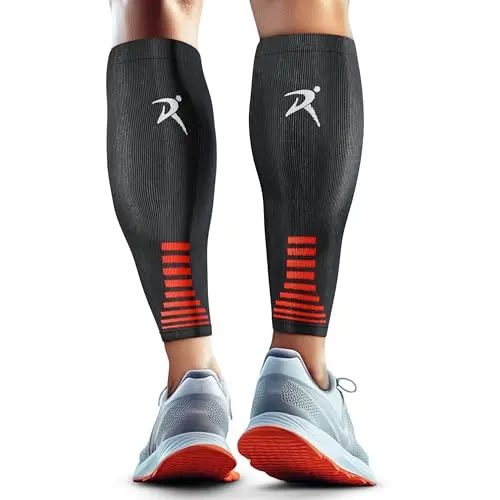
Calf Compression Sleeves – Targeted Shin Splint Relief
Rymora’s calf sleeves are a two-piece pair made from nylon, polyester, and elastane. They use graduated compression to support the calf and shin area without covering the foot, making them a focused option for shin splints, post-run recovery, and runners who prefer their own socks.

Compression Running Socks – Cushioned Crew for Blister-Prone Feet
Rahhint’s three-pair crew socks combine 15-20 mmHg gradient compression with a cushioned footbed and CoolMax fiber. Mesh knitting improves airflow, while thick loops at the heel, sole, and toe reduce friction for runners dealing with blisters and impact.
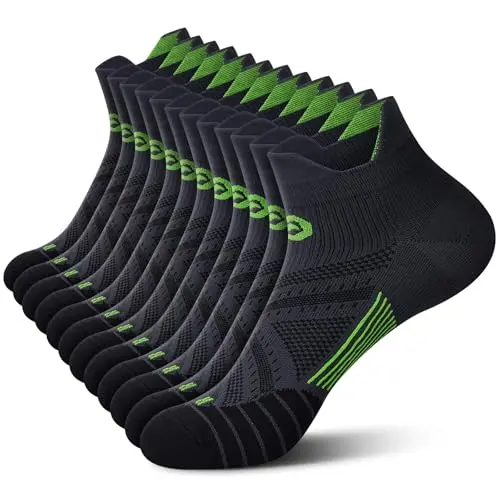
Ankle Compression Socks – Low-Cut Arch Support
PAPLUS takes a low-cut approach with 15-20 mmHg ankle compression, 3D circular pressure, and a breathable mesh build. The no-show design adds arch support and ankle stability for runners who prefer minimal coverage and less fabric around the calf.
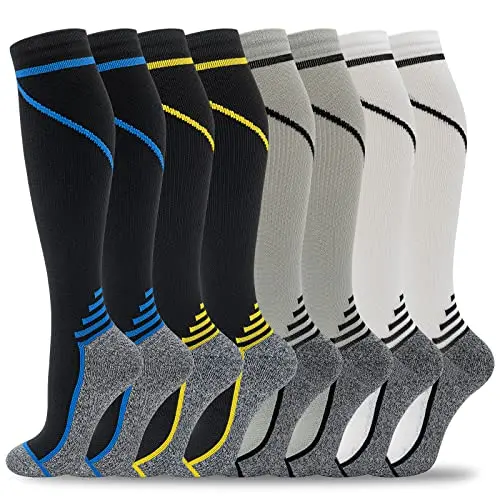
8 Pairs 20-30 mmHg – High-Compression Bulk Value
fenglaoda’s eight-pair bundle delivers 20-30 mmHg knee-high compression with non-slip ribbing, thickened heel and toe, and arch support. The socks are designed for running, nursing, travel, and long standing, with two size ranges and machine-washable care.
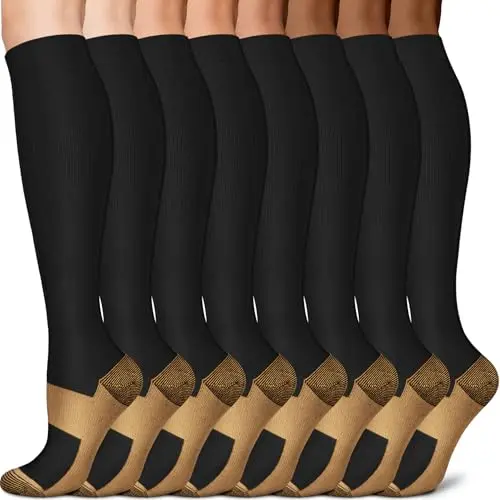
Copper Compression Socks 8 Pack – All-Week Rotation
Sooverki’s eight-pair set uses 15-20 mmHg graduated compression with copper fiber in a nylon and polyester blend. The knee-high socks are aimed at circulation, recovery, and all-day wear for runners, nurses, travelers, and anyone on their feet.

Calf Compression Sleeves – Shin Splint and Recovery Support
BLITZU’s footless calf sleeves use graduated compression and patented kinesiology strips to support the calf, shin, and lower leg. The breathable nylon build is designed for running, recovery, travel, and long hours on your feet, with a pull-on fit and machine-washable care.

Copper Compression Socks 3 Pack – Mild Everyday Circulation
FuelMeFoot’s three-pair set uses a copper-infused nylon blend for mild knee-high compression. The socks are designed for circulation, warmth, and comfort during running, work, travel, or daily wear, with a soft feel and machine-washable care.
How We Evaluated These Compression Socks for Running
We didn’t put these through a full marathon training block or lab-measure pressure gradients. What we did: cross-referenced 9 compression options from 9 distinct brands across six decision axes – compression level and gradient, sizing and calf fit, fabric and breathability, cushioning and arch support, running-specific comfort, and care and durability. We triangulated published specifications, feature sets, owner feedback where available, and use-case fit for runners logging road miles, treadmill sessions, and longer training weeks.
The scoring framework weighted real-world running fit and performance (70%) – how well each sock or sleeve matched its stated compression level, stayed put, and handled heat and impact – against feature differentiation (30%) – graduated zones, cushioning, moisture management, and recovery-focused design. We have no commercial relationship with any brand here; recommendations track fit and differentiation, not brand preference. If you want firm graduated support, the FITRELL 3 Pairs 20-30mmHg is the first place to look; if you want moderate compression at a budget-friendly tier, the CHARMKING 3 Pairs 15-20 mmHg is the smarter match.
We also separated full socks from calf sleeves rather than treating them as interchangeable. A knee-high sock has to manage foot fit, toe seams, and shoe volume; a sleeve has to stay put without covering the foot. That distinction matters for running, where a bulky toe box or a rolling cuff can end a long run faster than mild compression will help it. Where owner feedback was uneven, we weighted the published specs and the design intent more heavily and flagged the caveat in the product card.
How to Choose the Right Compression Socks for Running
1. How Much Compression Do Running Compression Socks Need?
Running compression socks usually land in one of two ranges: 15-20 mmHg or 20-30 mmHg. The lower range is easier to wear for long periods and works well for runners who want gentle support, travel comfort, or recovery. The higher range feels firmer and is better for runners who want noticeable calf and ankle support during hard efforts. Neither is automatically better; the right choice depends on your tolerance for squeeze and how long you plan to wear the sock.
If you are new to compression, start with 15-20 mmHg. If you already like firm support or use compression for shin splints, 20-30 mmHg may suit you better. The FITRELL 3 Pairs 20-30mmHg is the firm option in this lineup, while the CHARMKING set sits in the moderate range.
2. Sizing Compression Socks for Running: Measure the Calf First
Compression socks are not sized like ordinary socks. Use a soft tape to measure the thickest part of your calf, then compare that number with the brand chart. Calf measurement matters more than shoe size, especially with knee-high socks that need to stay put without pinching. If you are between sizes, read the brand guidance carefully: some socks are meant to be sized up for comfort, while firmer medical-style socks may call for a closer fit.
Do not assume your clothing size will translate. A sock that is too small can bind at the cuff and leave marks; one that is too large may slide down mid-run. When a product card flags mixed sizing feedback, treat that as a signal to measure twice.
3. Calf Sleeves vs Compression Socks for Running
Calf sleeves leave the foot uncovered, so you keep your usual running sock and shoe fit. That makes them a good match for shin splints, calf tightness, and post-run recovery, especially if you already have a favorite sock. Full socks add foot coverage, cushioning, and toe protection, which can matter more on long road miles or in shoes with roomy toe boxes.
For shin splints and focused lower-leg support, a sleeve can be the cleaner choice. If you want compression plus underfoot comfort, choose a sock. The Rymora Calf Compression Sleeves are the focused shin-splint pick here.
4. Cushioning, Arch Support, and Blister Control for Running
Cushioning is where running-specific compression socks separate themselves from travel or medical socks. Look for thicker loops at the heel, sole, and toe if you are prone to hot spots. Arch support can add a snug, secure feel underfoot, while blister control depends on reducing friction and managing moisture.
More cushioning is not always better. A heavily padded sock can feel warm or bulky in race shoes. For blister-prone feet, the Rahhint Compression Running Socks add heel and toe padding with a crew height that covers more of the ankle.
5. Fabric, Breathability, and All-Day Comfort
Breathable fabric matters because compression socks cover more skin than standard running socks. Mesh zones, lightweight knits, and moisture-wicking fibers help manage heat and sweat, especially in summer or on long efforts. Nylon blends are common because they hold shape and provide stretch; elastane adds rebound.
A sock that feels great for 20 minutes may feel restrictive after three hours. If you plan to wear compression beyond the run, prioritize a softer knit and a cuff that does not dig in.
6. Budget vs Premium Compression Socks for Running
The budget tier usually means multi-packs, simpler fabric blends, and less precise sizing. That can be a smart way to try compression or build a laundry rotation. The premium tier tends to add stronger graduated designs, more targeted cushioning, and better sizing charts. Neither tier guarantees a perfect fit, so measure first.
If you want the lowest-cost entry, the CHARMKING 3 Pairs 15-20 mmHg is the budget pick. If you need firmer support or a more running-specific build, spend toward the mid-range or premium options.
Frequently Asked Questions
1. What is the difference between FITRELL and CHARMKING compression socks for running?
FITRELL is the 20-30 mmHg option with a five-zone graduated design and a firmer feel for hard training days. CHARMKING sits at 15-20 mmHg, with a softer, easier-wearing fit and a budget-friendly three-pair format. If you want pronounced calf support, FITRELL is the stronger match; if you want moderate compression for all-day wear, CHARMKING is easier to live with. The FITRELL 3 Pairs 20-30mmHg is the pick if firmness is the priority.
2. Are Rymora or BLITZU calf sleeves better than full compression socks for running?
Calf sleeves and full socks solve different problems. Rymora and BLITZU both use footless designs that leave your running sock and shoe fit alone, which helps if your shoes already feel dialed in. Rymora leans toward graduated calf support for shin splints and recovery; BLITZU adds kinesiology strips for targeted support. Full socks like FITRELL add foot cushioning and toe coverage. If you want foot support, choose a sock; if you want focused calf support, choose a sleeve. The Rymora Calf Compression Sleeves are the more focused shin-splint pick.
3. What compression level is best for running?
Most runners do well with 15-20 mmHg for daily training and recovery because it is easier to wear for longer stretches. 20-30 mmHg is better if you want a firmer feel or use compression for shin splints and heavy calf fatigue. Start with the lower range if you are unsure, then move up only if the sock feels too light.
4. Do compression socks for running help with shin splints?
They can help with the heavy, achy feeling around the shin and calf, especially when the fit is snug and graduated. Look for targeted calf support, a measured fit, and a compression level you can tolerate for the length of your run. Compression is not a substitute for load management or strength work, but it can make training feel more comfortable. A calf sleeve like Rymora is the most focused option here.
5. How do I choose between PAPLUS ankle socks and Rahhint crew socks for running?
Choose PAPLUS if you want a low-cut sock with ankle and arch compression and less fabric around the calf. Choose Rahhint if you want a cushioned crew with heel and toe padding and blister control for longer road miles. PAPLUS is better for warm-weather minimalists; Rahhint is better for runners who want more underfoot comfort.
Final Verdict
For most runners, the FITRELL 3 Pairs 20-30mmHg is the answer. It pairs firm graduated compression with a cushioned sole, seamless toe, and enough breathability for real training weeks. If you want moderate compression at the budget-friendly end, the CHARMKING 3 Pairs 15-20 mmHg is the easier all-day wear. If shin splints are the main issue and you want to keep your own running socks, the Rymora Calf Compression Sleeves are the focused pick. And for blister-prone feet that want a cushioned crew, the Rahhint Compression Running Socks are the better match. Start with the fit that matches your calf measurement, then choose the compression level you will actually wear.
