
Best Consumer Espresso Machines – 2026 Reviews

Somewhere between the third forgettable café latte of the week and a bag of beans going stale in the cupboard, most people start doing the math on a home espresso setup. The appeal isn’t complicated: fresh grounds, milk steamed the way you actually like it, and no queue. The hard part is that “espresso machine” covers everything from a capsule brewer that’s ready in under a minute to a manual machine that asks you to learn dosing, tamping, and milk texture before it hands you anything drinkable.
Two axes separate the machines worth your counter space from the ones that end up on a resale listing. The first is whether the machine grinds. A built-in burr grinder means fresh coffee every shot and one less appliance to buy, but it also means more cleaning and more places for something to wear out. The second is how much of the work you want to own. Assisted machines push you toward a decent shot on day one; manual machines hand you the controls and the learning curve with them.
Then there’s the “consumer” half of consumer espresso machines, which is doing real work here. Home machines run on a standard kitchen circuit, hold smaller boilers and thermoblocks, and are built for a few drinks a day rather than a continuous queue of orders. That shapes everything from heat-up time to how quickly you can steam milk after pulling a shot. What follows is a cross-brand map of the market so you can pick the machine that matches your mornings instead of the flashiest spec sheet.
Best Consumer Espresso Machines – 2026 Reviews
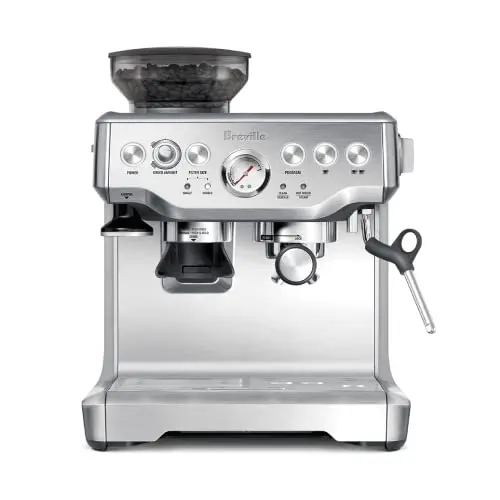
Barista Express – Grinder and Espresso in One
A genuine all-in-one: conical burr grinder on top, 54mm portafilter below, and a steam wand that textures milk by hand. Digital PID temperature control and low-pressure pre-infusion handle the invisible work while you manage dose, tamp, and timing. The 67 oz tank and half-pound hopper are sized for a household rather than a single drinker.
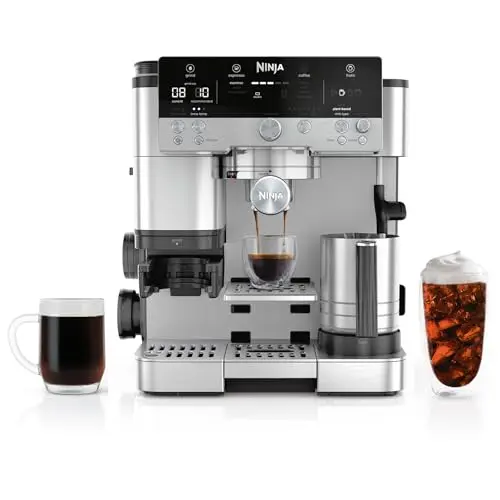
Luxe Cafe Premier ES601 – Guided Brewing for Beginners
A 3-in-1 that pulls double or quad shots, brews drip coffee, and makes cold brew – with a built-in 25-setting burr grinder and an assisted tamper. Barista Assist handles grinding, weight-based dosing, tamping guidance, and real-time temperature and pressure adjustment so a beginner can land a drinkable shot without dialing anything in.
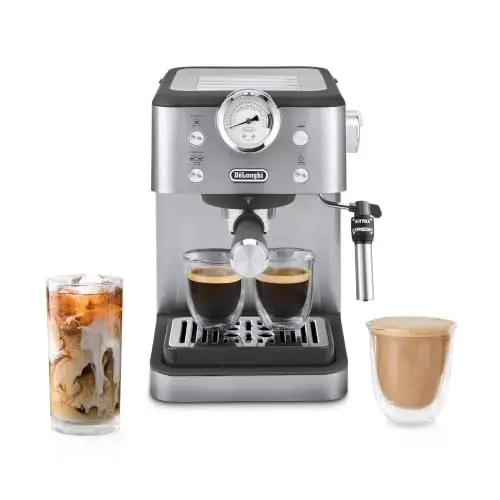
Classic Signature EM450M – Fast Heat, Simple Milk
A semi-automatic with customizable single and double shot presets, a 15-bar pump, and Thermoblock heating that shortens the wait before your first shot. The two-setting steam wand switches between steamed milk and a denser microfoam, and a pressure gauge gives you something concrete to read while you learn.
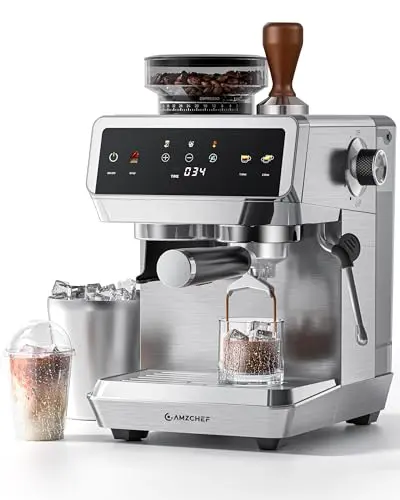
CM1626 – Grinder and Temp Control on a Budget
An all-in-one with a built-in grinder offering 44 settings, adjustable brew temperature from 190F to 201F, and a one-touch cold brew mode. The touch display shows grind time, brew time, and temperature at a glance, and the 60 oz tank covers several drinks before a refill.
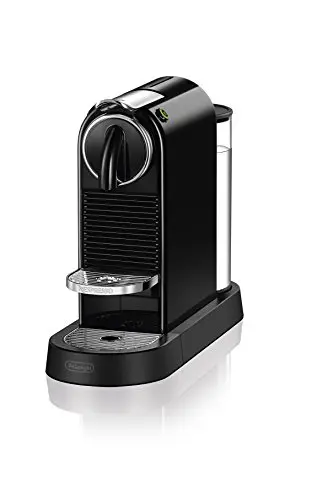
CitiZ EN167B – One-Button Espresso, Small Footprint
A capsule machine with a 19-bar pump and fast heat-up, brewing espresso or lungo at the press of a button. There’s no grinder and no portafilter – drop in a Nespresso Original capsule, hit a button, and you’re done. The removable tank and slim profile suit small kitchens and small appetites for fuss.

Stilosa EC260BK – Straightforward Manual Espresso
The most straightforward route into manual espresso: a 15-bar pump, a stainless steel boiler, single and double filter baskets, and a manual steam wand for texturing milk. Nothing here is automated beyond the pump, which keeps the cost low and the learning curve honest.
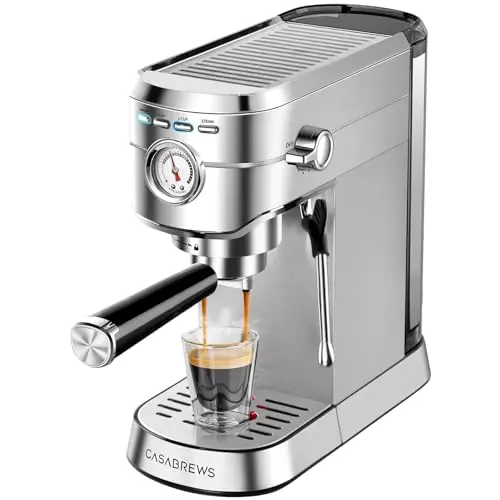
CM5418 – Pressure Gauge for Dialing In
A compact semi-automatic with a 20-bar pump, a 1350W heating system, and a built-in pressure gauge that shows what’s happening during extraction. Single and double baskets, a 51mm portafilter, and a tamper with spoon are included, and the 34 oz tank lifts out for refilling.

3700 Essential – Budget Route Into Milk Drinks
A stripped-back semi-automatic: 20-bar pump, 1350W heating, single and double baskets, and a manual steam wand, plus the largest water tank in its price bracket at 43.9 oz. No pressure gauge, no presets – just the basics in a narrow body that fits tight counters.
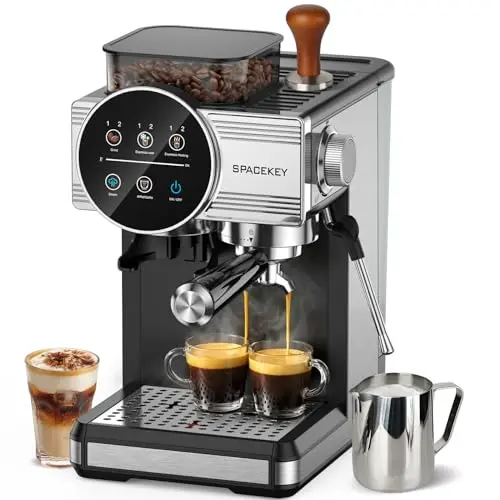
CM5510 – PID Control and 30 Grind Settings
An all-in-one with a conical burr grinder, 30 settings, a 20-bar pump, and PID temperature control, plus a dedicated cold brew function. A 61 oz removable tank and an LED display with a real-time heating indicator round it out, along with a 51mm portafilter, dosing ring, and wood-handled tamper.
How We Evaluated These Consumer Espresso Machines
We didn’t pull shot after shot through a refractometer or run a months-long reliability trial in a test kitchen. What we did: cross-referenced nine consumer espresso machines from seven distinct brands across five decision axes – brew pressure and temperature control, grinder presence and range, milk-frothing capability, footprint and tank capacity, and how much skill each machine demands from its owner. We triangulated published specifications, feature sets, and owner feedback where available, then mapped each option against realistic buyer profiles: the total beginner, the commuter who needs one fast drink, and the tinkerer who wants to learn.
Because this is the consumer end of the market, we weighted the things that shape daily life over the things that look good on a spec sheet. Real-world fit carried 70% of the score – whether a machine reliably produces the drink you actually order, at the pace you actually drink it. Feature differentiation took the remaining 30% – grind range, temperature stability, pre-infusion, frothing systems, and anything else that separates one machine from the next.
We have no commercial relationship with any brand here; rankings track fit and differentiation rather than brand preference. If you want one machine that grinds and pulls without a second purchase, the Barista Express is the closest match. If you’d rather be guided through every step, the Luxe Cafe Premier is the friendlier route.
How to Choose the Right Consumer Espresso Machine
1. What 'Consumer' Actually Means in a Home Espresso Machine
The word consumer is doing real work in this category. A home machine runs on a standard kitchen circuit, typically in the 1100-1650W range, holds a smaller boiler or thermoblock than a café machine, and is engineered for a handful of drinks a day rather than a continuous queue. That shapes which specs deserve your attention: heat-up time and recovery time matter more than headline wattage, and a machine that pulls two excellent shots is more useful at home than one that pulls twenty mediocre ones.
It also explains the honest ceiling. A single boiler means you brew, then steam, then wait, because both functions share one heating element. Machines with a cool-down cycle between milk and espresso aren’t broken; they’re built to a different budget and footprint. If you make four lattes back to back every morning, that pause will annoy you. If you make one, you’ll never notice it.
2. Grinder or No Grinder: The Choice That Shapes Your Counter and Your Coffee
A built-in burr grinder is the single biggest factor in how good your espresso tastes, because coffee starts staling within minutes of being ground. It also makes the machine a one-appliance purchase and removes the bag-of-pre-ground compromise. The cost is complexity: more parts to clean, one more thing to fail, and a hopper that holds beans you’ll want to finish within a week or two.
Going without a grinder drops the cost substantially and can be the smarter move if you already own a decent burr grinder or prefer a capsule system. Freshness is the trade you’re accepting. If you want the all-in-one approach and don’t want to shop for two machines, the Barista Express is where most people land.
3. Manual, Semi-Automatic, or Capsule: Matching the Machine to Your Mornings
Manual machines give you a portafilter, a pump, and a steam wand, and they expect you to manage dose, tamp, and timing. That’s where the learning curve lives, and also where the ceiling is highest. Semi-automatic machines add presets, pressure gauges, or assisted tamping, which shortens the path to a drinkable shot. Capsule machines remove everything except pressing a button.
Be honest about your mornings. A manual machine at 6am before a commute is a different proposition than a manual machine on a slow Sunday. If convenience tops your list, the CitiZ is the zero-effort route, at the cost of being tied to capsules.
4. Pressure, Temperature, and Pre-Infusion: Which Espresso Machine Specs Actually Matter
Pressure ratings have become a marketing arms race – 15 bar, 19 bar, 20 bar – but extraction happens around 9 bar, and the extra headroom mostly reflects pump capability rather than what reaches your puck. A well-built 15-bar pump can outperform a cheap 20-bar one. What matters is stability.
PID temperature control is the spec worth paying for where it’s available, because it keeps brew temperature from drifting between shots. Pre-infusion is second: a gentle wetting phase before full pressure reduces channelling and produces a more even extraction. Extras like a pressure gauge are genuinely useful for learning, because they turn a guess into feedback.
5. Counter Space, Tank Size, and the Reality of Daily Cleanup
Measure before you buy. Most machines here land in the 10-16 inch range on depth and width, but height is what catches people out – anything with a hopper on top needs clearance under your cabinets. Tank size matters more than you’d expect: a 34 oz tank means refilling every couple of drinks, while something in the 44-67 oz range gets you through a morning.
Then there’s daily maintenance: emptying the drip tray, purging the steam wand after every use, and descaling on a schedule. Machines with removable tanks and accessible parts are meaningfully easier to live with, and a steam wand that’s awkward to wipe down will simply stop getting wiped down.
6. Entry-Level, Mid-Range, and Premium: What Each Tier Buys You
Entry-level machines get you a pump, a boiler, and a steam wand. They pull real espresso if you bring decent beans and reasonable technique, and they’re the right call if you’re not certain the hobby will stick. Mid-range adds temperature control, better wands, pressure feedback, or occasionally a grinder. Premium buys an integrated grinder, assisted or automated workflows, and more forgiving consistency across drinks.
Spend on the grinder before the machine if you can only pick one. If you want the least expensive credible entry, the 3700 Essential delivers a working pump and steam wand for very little; if you’d rather buy once, the premium tier is where the true all-in-ones live.
Frequently Asked Questions
1. Breville Barista Express vs Ninja Luxe Cafe Premier: which is the better first machine?
They solve the same problem from opposite ends. The Barista Express hands you a grinder, a 54mm portafilter, a PID-controlled brew path, and a manual steam wand – plenty of control, and a learning curve to match. The Luxe Cafe Premier automates the parts beginners struggle with: it weighs the dose, assists the tamp, adjusts temperature and pressure in real time, and froths milk hands-free.
Pick the Breville if you want to learn the craft and can tolerate a week of imperfect shots. Pick the Ninja if you want a good latte on day one and would rather not think about dose and grind. The Breville also gives you more variables to adjust as your palate develops, while the Ninja throws in drip coffee and cold brew as a bonus.
2. De'Longhi Stilosa vs CASABREWS CM5418: what's the difference?
Both are compact pump machines that expect you to grind and tamp yourself, but they aim at different buyers. The Stilosa is the simpler of the two: a 15-bar pump, a stainless steel boiler, a manual steam wand, and very little to configure. The CM5418 adds a built-in pressure gauge and a 20-bar pump, so you get visible feedback while you dial in a shot.
If you want the least complicated entry into manual espresso, the Stilosa is the safer pick. If you learn better with a needle telling you what’s happening, the CM5418 gives you something to read while you adjust.
3. Are consumer espresso machines actually capable of café-quality shots?
Yes, with caveats. A home machine with a stable brew temperature, a decent burr grinder, and fresh beans can produce shots that hold up next to a good café’s. What it won’t do is replicate the pace: single-boiler machines need a cool-down between brewing and steaming, and most home setups can’t match a commercial group head’s thermal stability across dozens of consecutive shots.
The gap that matters most at home isn’t the machine, it’s the grinder and the beans. A mid-range machine paired with a good grinder beats a premium machine fed pre-ground coffee nearly every time.
4. How long should a home espresso machine last?
Longer than most people keep them, in theory. Machines with stainless steel boilers and accessible descaling routines can run for years with regular cleaning, and scale buildup is the most common avoidable cause of early failure. In practice, the weak points are the pump, the heating element, and on all-in-ones the grinder.
Budget accordingly. An entry-level machine is closer to a several-year purchase, while a premium all-in-one is a longer-term investment you should treat as such – with descaling and wand purging as non-negotiables.
5. Is a capsule machine like the Nespresso CitiZ still real espresso?
Mechanically, yes – a 19-bar pump pushing hot water through a packed capsule extracts espresso in the same way a portafilter does, just with the dose and grind pre-decided for you. What you give up is control: no grind adjustment, no dose change, and no different beans unless a roaster makes compatible capsules.
What you get is consistency and speed. The CitiZ heats up fast, brews at the touch of a button, and produces genuine crema. If you drink one or two shots a day and don’t want a hobby, that’s a good trade.
Final Verdict
For most people, the Barista Express is the answer. It’s the machine here that takes you from whole beans to a textured latte without buying anything else, and its PID control and pre-infusion leave room to improve rather than a machine you outgrow in a year. If you’d rather be coached through every step – or your household also wants drip coffee and cold brew – the Luxe Cafe Premier is the friendlier path.
On a tight budget, the 3700 Essential gets you a real pump, a real steam wand, and a big tank for very little. And if the whole ritual is what you want to avoid, the CitiZ delivers a consistent shot with one button and almost no cleanup.
