
Best Contour Neck Pillows – 2026 Reviews

You wake up, roll your neck toward the ceiling, and there it is again – that dull catch at the base of the skull that fades by mid-morning and comes back the next night. Most people blame their mattress, their desk, their stress. Very few think about the pillow, even though it’s the one variable that touches the problem for eight hours straight.
A contour pillow isn’t a magic fix, but it changes where support lands. The head settles into a defined channel while a raised roll carries the cervical curve, and that geometry either matches your sleeping position or fights it. Two things separate the options that work from the ones that end up in a closet: the loft height relative to your shoulder width, and whether the foam actually holds its shape through the night instead of flattening into a slab.
What follows is a cross-brand survey of the category as it stands now, not a pitch for one label. We look at butterfly shells with shoulder cutouts, hollow-center designs that cradle the skull, adjustable layered builds you can tune, and one travel-sized option for people whose neck routine falls apart in hotel rooms. The goal is simple: figure out which shape and height suits how you actually sleep, then pick accordingly.
Best Contour Neck Pillows – 2026 Reviews
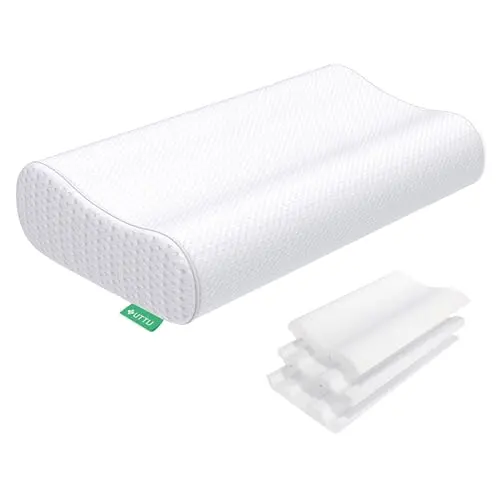
Sandwich Pillow – Three-Layer Adjustable Neck Support
The Sandwich Pillow is the most adjustable design in this lineup. It ships with a 5.2-inch high contour and a 4.5-inch low, and removing the middle layer drops those to 4.0 and 3.2 – two distinct height profiles from one pillow. The fill is UTTU Dynamic Foam, a 3-lb high-density memory foam with a slow rebound that stays consistent in cold rooms. The polyester-viscose cover is breathable and machine washable, and the queen footprint measures 23.6 by 13.8 inches.
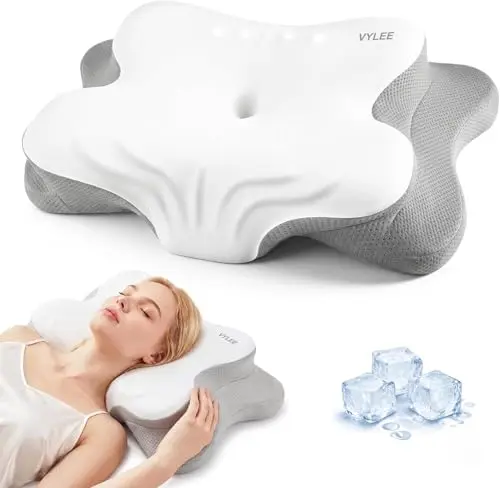
LYM101 Cervical Pillow – Five-Zone Butterfly Support
The LYM101 uses a butterfly shell with five separate contour zones, so the head, neck, shoulders, and arms each get a defined landing spot. Two heights – 3.9 and 4.9 inches – cover side and back sleeping without inserts. The cover is an 87% nylon, 13% spandex blend that feels cool to the touch, zips off, and washes in the machine. The memory foam core is slow rebound and should not be washed. VYLEE includes a 12-month warranty.

Hollow Contour Pillow – Arc-Chill Cooling for Hot Sleepers
Cozyplayer’s contour pillow centers on a hollow concave surface tilted at 15 degrees, which cradles the back of the head instead of pushing it forward. Around it sit six contour zones for the neck, shoulders, and arms. Height adjusts two ways: rotate the pillow 180 degrees or remove the bottom insert. The Arc-Chill pillowcase uses a dense 3D mesh weave for airflow over a memory foam core, and the brand offers a 100-night trial window.
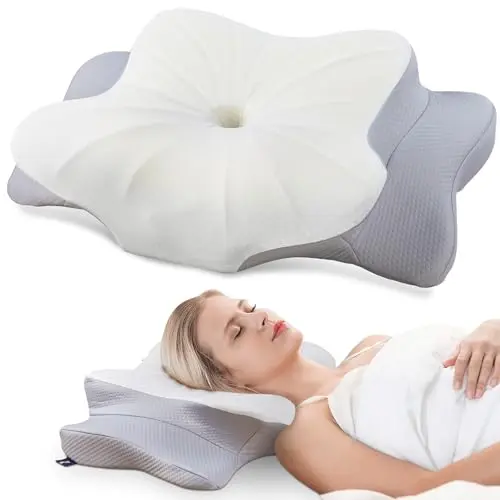
JK79 Cervical Pillow – Dual-Height with Armrest Grooves
The DONAMA contour pillow pairs a dual-height profile with under-pillow armrest grooves, so side sleepers can tuck an arm without cutting off circulation. The foam is CertiPUR-US certified slow rebound, and the double-layer cotton-poly cover is hypoallergenic, zippered, and machine washable. Replacement covers are sold separately, which extends the pillow’s usable life. Overall dimensions are 24.8 by 14.96 inches at 5.51 inches tall, and a one-year warranty is included.
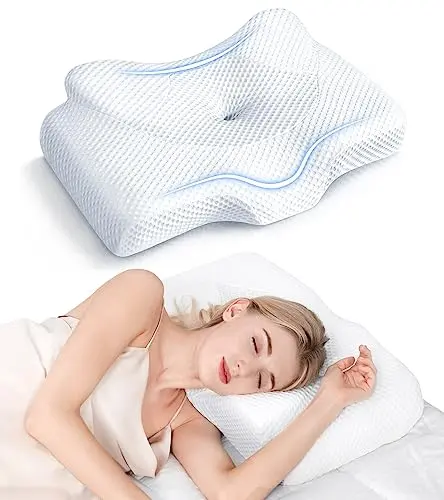
Osteo004 Hollow Pillow – Odorless Foam and Mesh Cover
The Osteo pillow’s defining feature is a hollow center that cradles the head and keeps the cervical curve open. It’s the largest pillow in this lineup at 25.5 by 16.5 inches, and height adjusts two ways: rotate the shell 180 degrees for the higher or lower profile, or remove the bottom insert for extra range. The foam is CertiPUR-US certified and Oeko-Tex approved, the 3D mesh pillowcase is designed to let heat escape, and the brand emphasizes an odorless build.
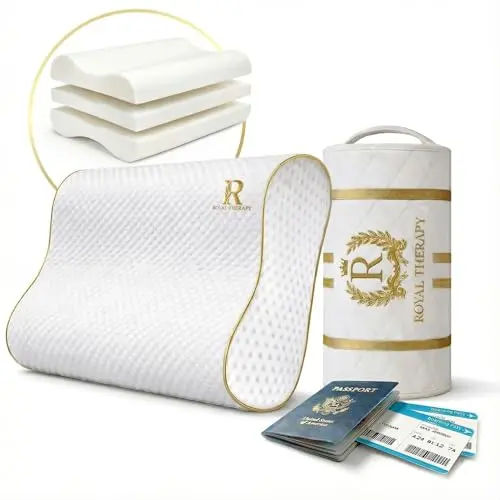
Travel Cervical Pillow – Full Support in a Packable Size
Royal Therapy’s travel pillow keeps a cervical contour in an 18 by 12-inch footprint, which is small enough to pack. The three-layer build lets you remove the middle layer to change loft, useful when shoulder width and mattress firmness vary from one hotel bed to the next. The foam is CertiPUR-US certified and ventilated rather than solid, and the OEKO-TEX cover wicks moisture and washes. It’s designed for side and back sleepers.
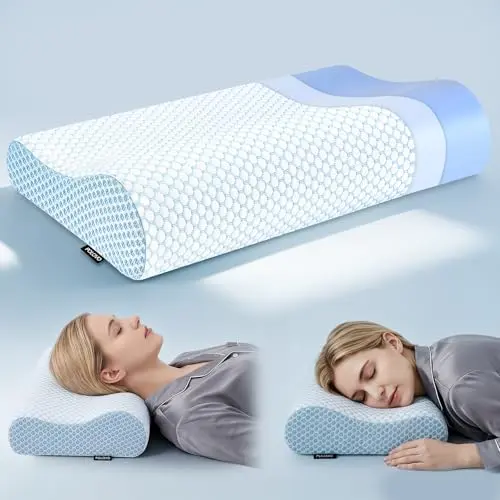
KD209 Neck Pillow – Slow-Rebound Comfort on a Budget
The KD209 is built on five-second slow-rebound memory foam, which gives it a softer, more contouring feel than the firmer foams in this category. It offers two neck heights – 5.3 and 3.7 inches – on a 23.6 by 13.8-inch shell. The pillowcase is removable, has mesh side panels for airflow, and is machine washable. Polovo is explicit that this is a comfort product and not a medical device.
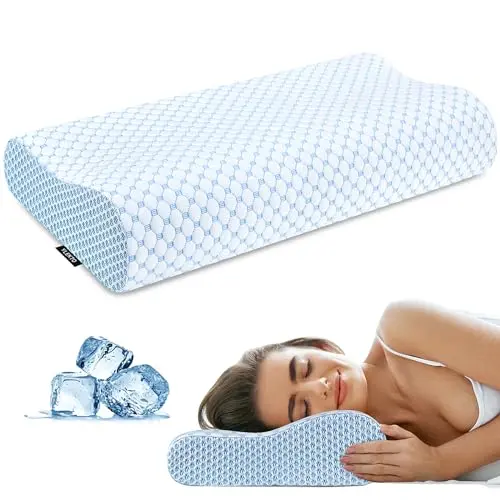
KD0217 Cervical Pillow – Cold Silk Cover and Two Heights
The KD0217 uses a dual-height contour – 5.3 inches on one side, 3.7 on the other – so you can rotate the pillow to suit side or back sleeping. The slow-rebound foam carries both CertiPUR-US and Oeko-Tex certifications. Its double-layer pillowcase is made with cold silk technology fabric, unzips for machine washing, and is designed to stay cool against the skin. The shell measures 23.6 by 13.8 inches.
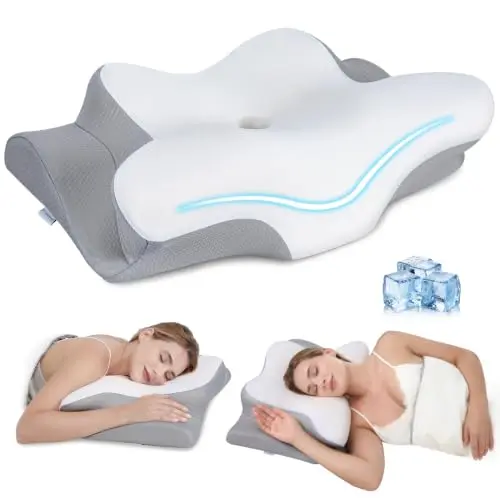
Cervical Neck Pillow – Ice Silk Cover with Dual Contours
Missleep’s pillow uses a butterfly contour with two heights – 3.54 and 4.72 inches – that you switch by turning the pillow 180 degrees, making it the shallowest option here on its low side. The foam is high-density slow rebound and carries OEKO-TEX, CertiPUR-US, and ISPA certifications. The ice silk cover is removable and machine washable, and the pillow comes with a six-month warranty.
How We Evaluated These Contour Neck Pillows
We didn’t sleep on these pillows for weeks in a controlled sleep lab. What we did: cross-referenced nine contour neck pillow models from nine distinct brands across five decision axes – contour geometry, loft height and adjustability, foam density and rebound, cover material and breathability, and care and warranty terms. We mapped published specifications against real sleeping positions, triangulated fabric blends and certification claims, and weighed owner feedback where available to see which designs held up in daily use rather than only on paper.
Every pillow here is a memory foam contour design, so the differences that matter are narrower than they first appear: how many contour zones a shell carries, whether loft can be changed with a layer or a rotation, and how the cover handles heat. We audited each of those against side, back, and stomach sleeping profiles, because a pillow tuned for side-sleeper shoulder clearance can be entirely the wrong height for someone on their back.
The scoring weighted real-world fit (70%) – how well each pillow’s geometry and height serve the sleepers it claims to serve – against feature differentiation (30%) – the adjustments, covers, and certifications that separate one model from the next. We have no commercial relationship with any brand featured here; recommendations track fit and differentiation, not brand preference. If you want the most tuneable option in the group, the Sandwich Pillow is the one. If you’d rather have a fixed shape that simply works, the LYM101 is the easier call.
How to Choose the Right Contour Neck Pillow
1. What Makes a Pillow a Contour Neck Pillow
A contour pillow isn’t simply a pillow with a dip pressed into it. The term describes a shaped surface with raised edges and a central channel, so your head settles into a defined position instead of drifting flat. A cervical contour pillow adds a raised neck roll along one or both long edges, which is what puts support under the cervical curve rather than behind the skull.
Within that definition, shapes diverge quickly. Butterfly contours add shoulder cutouts and arm channels. Hollow-center designs drop the middle of the pillow so the back of the head sinks and the neck stays open. Rectangular contours keep a conventional outline with a roll at each side. None is universally better – they load pressure in different places, and which one feels right depends on how you sleep.
2. Loft Height and Sleep Position: Getting the Contour Fit Right
Loft is the single biggest reason a contour pillow works or doesn’t. Side sleepers need enough height at the shoulder edge to keep the neck level with the spine, which usually means the taller of the two sides. Back sleepers want the lower profile so the chin isn’t pushed toward the chest. Stomach sleepers need the least height of all, which is why most of this category is a compromise for them.
This is where adjustability earns its keep. If you flip positions during the night, a pillow that lets you change loft – by pulling a layer, removing an insert, or rotating the shell – will fit you better than any fixed height. If you sleep in one position consistently, the LYM101 gives you two contours to switch between without asking you to rebuild anything.
3. Foam Density and Rebound: Why Firmness Feedback Disagrees
Almost every pillow in this category uses memory foam, but the feel varies enormously. Slow-rebound foam takes several seconds to spring back and reads as soft and contouring. Higher-density foams return faster and feel firmer. Neither is inherently better; they suit different body weights and preferences.
This is also why firmness complaints are so common across the category. A pillow that feels right for a lighter sleeper can bottom out under a heavier one, and the same foam reads as too hard to someone expecting a plush bed pillow. Treat firmness claims as a starting point and give any new pillow a week before deciding.
4. Cooling Covers and Breathability for Hot Sleepers
Memory foam traps heat. Every manufacturer here knows it, which is why you’ll see cooling covers, 3D mesh weaves, and nylon-spandex or ice silk fabrics on the feature list. What actually helps is airflow through the cover and a foam core that isn’t fully sealed.
Be realistic about the ceiling. A cooling cover feels cool on contact and helps at the margins, but it won’t counteract a warm room. If heat is your main problem, the Cozyplayer hollow contour has the most developed cooling setup in this group, with an Arc-Chill cover over a 3D mesh base.
5. Adjustability: Layers, Inserts, and the 180-Degree Flip
There are three ways a contour pillow changes height, and they aren’t equivalent. A removable middle layer gives the widest range – often an inch or more – but means unzipping and restacking. A removable bottom insert offers a smaller adjustment. A 180-degree rotation between two molded heights is the fastest and most common, though you’re limited to the two profiles the manufacturer chose.
If your ideal height is still a mystery, favor layered designs. If you already know you want roughly a four-inch loft, rotation is plenty. Be wary of pillows where “adjustable” only means the cover comes off.
6. The Contour Neck Pillow Price Tiers
Contour neck pillows cluster into three loose tiers. Entry-level options cover the basics – a molded contour, a washable cover, two heights – and are the right place to start if you’re unsure the shape suits you. Mid-range picks add better foam, more contour zones, and longer warranties. The premium end is smaller than you’d expect; you’re mostly paying for certified foam, better covers, and in some cases a travel-friendly footprint.
Spending more doesn’t reliably buy better sleep here, because fit dominates everything. A well-matched budget pillow beats a premium one that sits an inch too tall for your shoulders. If cost is the deciding factor, the KD209 is the sensible entry point.
7. Break-In, Off-Gassing, and Care
Memory foam ships compressed. Give any new pillow 24 to 48 hours to fully expand before judging it, and expect a mild manufacturing smell that fades. Covers are almost always machine washable; cores are almost never. Wash the cover monthly and spot-clean the core.
Also budget a week or two of adjustment. A contour pillow changes how your neck is supported, and muscles used to a flat pillow will complain briefly. If it’s still uncomfortable after two weeks, the height or the shape is wrong – not you.
Frequently Asked Questions
1. Are all contour neck pillows the same shape?
No, and the differences are larger than they look. Butterfly contours have shoulder cutouts and arm channels. Hollow-center contours drop the middle so your head sits lower and the neck stays open. Rectangular contours keep a conventional outline with a raised roll along both long edges. Each shape loads pressure differently, so a pillow that suits one person’s side-sleeping posture can feel completely wrong to someone who sleeps on their back.
2. What's the difference between the UTTU Sandwich Pillow and the VYLEE LYM101?
The Sandwich Pillow is built around layered adjustability – three layers, so you can shift between roughly 5.2 and 4.0 inches of high contour by removing the middle one. It’s a rectangular shell with a neck roll. The LYM101 is a butterfly contour with five zones, shoulder cutouts, and two heights you switch by rotating the pillow. If you want to tune loft precisely, go with the Sandwich Pillow. If you want shoulder clearance for side sleeping and don’t want to reassemble anything, the LYM101 is the better fit.
3. How does the Osteo hollow pillow compare with the Cozyplayer hollow contour pillow?
Both use a hollow center, but they solve different problems. The Osteo earns its place on odor control and surface area – CertiPUR-US and Oeko-Tex foam, a 3D mesh cover, and the largest footprint in this group. Cozyplayer leans harder into heat management, with an Arc-Chill cover and a six-zone shell, plus a 15-degree tilt in the hollow that changes how your head sits. Pick Osteo if smell and roominess matter most; pick Cozyplayer if you overheat at night.
4. How long does it take to get used to a contour neck pillow?
Expect one to two weeks of adjustment. Contour pillows change where support sits under your neck, and your muscles are used to whatever you slept on before, so mild stiffness in the first few nights is common. If discomfort persists past two weeks – or if you wake with numbness in an arm – the loft height is probably wrong for your sleep position. Try the other side of the pillow or remove a layer before giving up on it.
5. Do contour neck pillows help with snoring?
Sometimes, and indirectly. Snoring often gets worse when the chin drops toward the chest, so a lower back-sleeping profile can help keep the airway straighter. Several pillows here are shaped with that in mind, and some owners report quieter nights. That said, a pillow isn’t a treatment for sleep apnea, and persistent snoring deserves a conversation with a doctor rather than a new purchase.
Final Verdict
For most people, the Sandwich Pillow is the answer. Its layered build lets you dial in loft instead of guessing, the slow-rebound foam holds its shape overnight, and the washable cover makes it livable night after night. If you run hot, the Cozyplayer hollow contour pillow is the better match – the Arc-Chill cover and six-zone shell are built for exactly that problem. Travelers should skip the queen-size options entirely and pack the Royal Therapy travel pillow, which keeps the ergonomics intact in a packable size. And if you simply want to find out whether contour shapes work for you before committing, the KD209 is the low-risk way in.
