
Best Contour Pillows For Side Sleepers – 2026 Reviews

There’s a specific kind of morning where you wake up with a numb arm, a stiff neck, and the vague sense that your pillow spent the night working against you. Side sleepers know it well. Your head has to clear your shoulder, and most pillows simply aren’t built to do that – they’re too flat, too soft, or shaped for someone lying on their back.
Two things separate a contour pillow that works for side sleeping from one that doesn’t. The first is loft height: get it right and your neck stays neutral all night; get it wrong and you’re loading the joint for eight hours. The second is whether that height can be changed at all. Shoulder width varies enormously from person to person, and a pillow with removable layers or extra fill lets you correct after a night or two instead of starting over.
We surveyed the market across a range of brands, weighing molded memory foam against shredded fill, two-height designs against continuously adjustable ones, and cooling covers against plain ones. What follows is a practical guide to picking a contour pillow for side sleeping – including which ones to skip if your shoulders are broader than average, and which to skip if you sleep hot.
Best Contour Pillows for Side Sleepers – 2026 Reviews
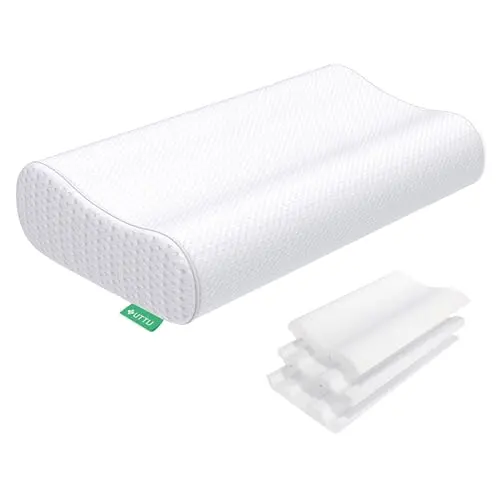
Sandwich Pillow – Adjustable Loft for Side Sleeper Alignment
A three-layer memory foam contour pillow with a 5.2-inch high side and a 4.5-inch low side, both of which drop by roughly an inch when you pull the middle layer out.
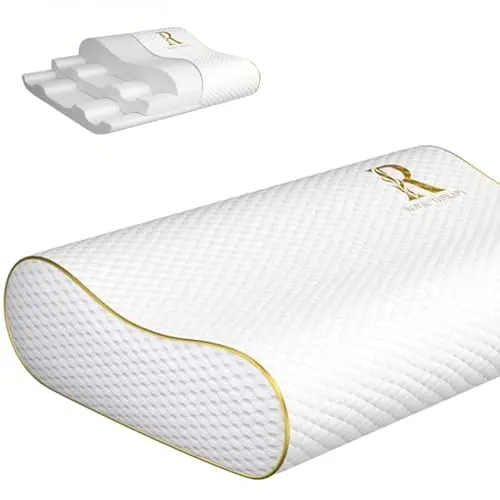
Memory Foam Cervical Pillow – Three-Layer Adjustable Height
A medium-firmness contour pillow with a removable middle foam layer, CertiPUR-US certified foam, and a bamboo-derived rayon cover that wicks moisture better than most in this category.

Adjustable Curved Pillow – Shredded Fill You Can Dial In
A curved pillow filled with loose shredded foam and polyester fiber, shipped with extra fill so you can tune the loft to your own shoulder height instead of picking between presets.
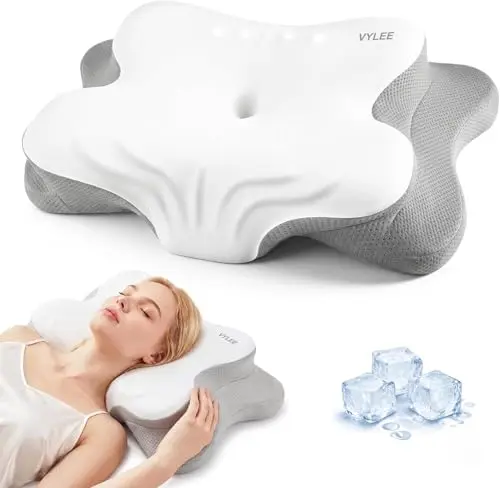
Cervical Neck Pillow – Butterfly Contour with Dual Heights
A butterfly-shaped contour pillow with five zones, 4.9-inch and 3.9-inch sides, and a stretchy cooling cover that stays cool to the touch.
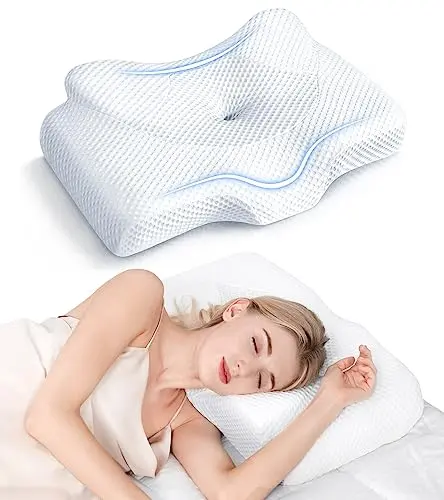
Cervical Pillow – Hollow-Center Design with Height Adjustability
A contour pillow with a recessed hollow center for the head, raised side bolsters, and two ways to adjust height – a 180-degree flip plus a removable insert.
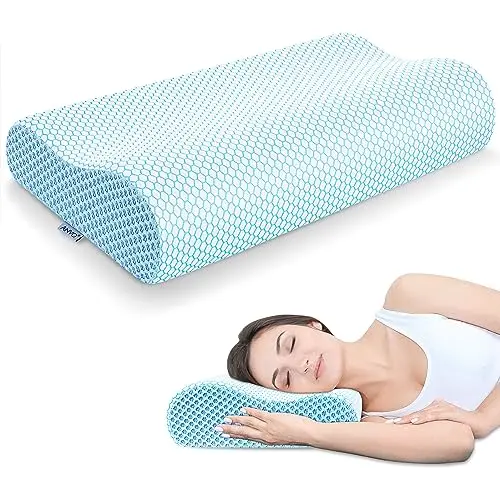
Memory Foam Contour Pillow – Firm Support with Two Heights
A firm CertiPUR-US certified contour pillow with 3.5-inch and 4.7-inch neck support levels and mesh panels for airflow.
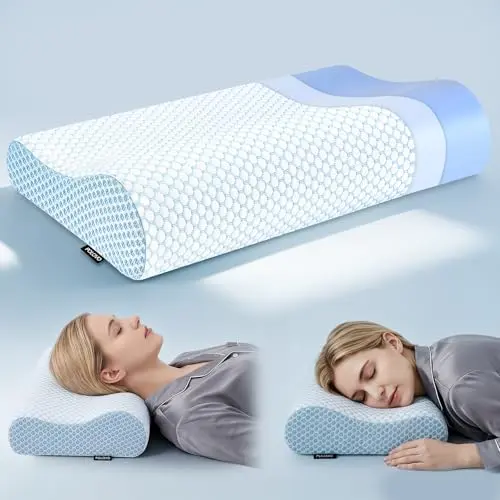
Neck Support Memory Foam Pillow – Budget-Friendly Contour
A two-height contour pillow with 5.3-inch and 3.7-inch sides, slow-rebound memory foam, and a removable washable cover.
How We Evaluated These Contour Pillows
We didn’t sleep on each of these pillows for a month straight or measure neck alignment with imaging. What we did: cross-referenced 7 contour pillow models from 7 distinct brands across five decision axes – loft height and adjustability, fill type and firmness behavior, cover fabric and breathability, footprint and shape, and care requirements. We triangulated published specifications, feature sets, and owner feedback where available, then mapped each pillow against realistic side-sleeper profiles: broad-shouldered combination sleepers, hot sleepers, and people who’ve already failed with a fixed-height contour pillow. Published dimensions and loft specs were checked against the shoulder-clearance ranges that tend to work for average-to-broad adult frames.
The scoring framework weighted real-world fit (70%) – how well a given pillow actually delivers shoulder clearance and neck support for a side sleeper – against feature differentiation (30%) – adjustable layers, cooling covers, and shapes you won’t find elsewhere. We audited care instructions separately, because a washable cover matters more over a year than a millimeter of loft. We have no commercial relationship with any brand here; recommendations track fit and differentiation, not brand preference. If your shoulders are wider than average, the Sandwich Pillow is the easiest place to start; if you want continuous loft tuning rather than discrete layers, the Adjustable Curved Pillow is the better match.
How to Choose the Right Contour Pillows
1. Why Loft Height Matters More Than Fill for Side Sleepers
Lie on your side and your head has to clear your shoulder. Get that wrong in either direction and you spend the night loading your neck – too low and your neck bends down while the shoulder rolls forward, too high and your chin tucks toward your chest. That’s why loft height should be your first filter, ahead of fill material or cover fabric. For average-to-broad adult shoulders, a high contour somewhere in the 4.5- to 5.5-inch range is a sensible starting point; narrower frames can go lower.
This is where adjustable loft earns its keep. A pillow with a removable middle layer or extra fill lets you correct in either direction after a night or two. The Royal Therapy pillow is a good example of the layered approach – pull the middle foam and the profile drops roughly an inch without changing the overall shape.
2. Memory Foam vs Shredded Fill: Which Contour Pillow Suits You
Molded memory foam gives you a shaped surface: a defined neck roll, a recess for the head, sometimes shoulder cutouts. It’s predictable and supportive, and the shape is fixed unless the pillow has removable layers. Shredded fill sits at the other end – the pillow is stuffed loose, so it conforms rather than molds, and you can add or remove material to change height on your own terms.
The practical difference shows up in who likes what. People who’ve bounced off molded contours often do well with shredded fill, because there’s nothing rigid pushing against the jaw or shoulder. If you want a firm, shaped platform under your neck, molded foam is still the right call.
3. Contour Pillow Shapes and What They Do for Shoulder Clearance
Most contour pillows fall into three shapes. A rectangular contoured block is the classic: a raised neck roll across one or both long edges and a shallow dip in the middle. A butterfly contour adds cutouts so your shoulder has somewhere to sit instead of being pushed up. A hollow-center design recesses the middle further still, cradling the back of the head rather than lifting it.
For side sleepers, the shoulder cutout is the feature that matters most – it’s the difference between a pillow that clears your shoulder and one that fights it. The VYLEE Cervical Neck Pillow is the clearest butterfly shape here, with five separate zones and a taller edge on the side-sleeping side.
4. Cooling Covers, Care, and the Long Game
Every pillow in this category pairs a removable cover with a foam core you cannot wash. That makes cover material a bigger deal than it first appears. Breathable knit covers stay cool initially but hold heat once you’re deep in sleep; nylon-spandex covers feel distinctly cooler to the touch and dry fast; bamboo-derived rayon wicks moisture well and is often OEKO-TEX certified. Whichever you get, plan on washing the cover every couple of weeks and airing the foam core periodically.
Certifications are worth a glance too. CertiPUR-US covers foam content and emissions, which matters if you’re sensitive to that new-foam smell. None of these cores should go in a washing machine, and none should go in a hot dryer – both shorten the life of the foam considerably.
5. What Contour Pillows Cost at Each Tier
The entry tier gets you a two-height molded contour with a washable cover and little else – enough to find out whether contour sleeping works for you at all. The mid-range adds adjustable layers, better cover fabrics, and often a certification or two. The premium tier is mostly about material quality and cover construction rather than dramatic changes in shape.
Our advice: spend at the bottom until you know your loft number, then move up. The Neck Support Memory Foam Pillow is a reasonable place to start that experiment, and the gap between it and a premium pillow is refinement rather than a fundamentally different sleep.
6. Common Mistakes When Buying a Contour Pillow for Side Sleepers
The most common error is buying for the wrong loft – people pick a pillow that looks supportive rather than one that clears their shoulder. The second is expecting instant relief: most contour pillows take several nights before your neck muscles stop fighting the new shape. The third is ignoring the return policy, which matters more in this category than almost any other, because fit is so individual.
One more: don’t assume a pillow will fix a medical issue. These are comfort products. If you have persistent neck or shoulder pain, a pillow is a supporting player, not a treatment.
Frequently Asked Questions
1. What's the difference between the UTTU Sandwich Pillow and the Royal Therapy memory foam pillow?
Both use a three-layer memory foam construction with a removable middle insert, so both let you choose between two heights. The UTTU runs a 5.2-inch high side that drops to 4.0 inches with the layer out; the Royal Therapy sits at a similar 5-inch loft. The real split is the cover: Royal Therapy uses a bamboo-derived rayon blend that wicks moisture better and is OEKO-TEX certified, while UTTU uses a polyester-viscose blend that’s simpler to care for. UTTU’s foam is also designed specifically to resist cold-weather hardening, which matters if your bedroom runs cool.
2. How is the Sidney Sleep pillow different from the VYLEE cervical pillow?
The Sidney Sleep pillow uses shredded visco foam and polyester fiber rather than a molded block, so its height is continuously adjustable instead of switching between two presets. The VYLEE is a molded butterfly contour with five zones and dual heights of 3.9 and 4.9 inches, plus a cooling nylon-spandex cover. If you want a shaped, fixed surface with shoulder cutouts, VYLEE is the pick; if you’d rather tune the loft yourself and prefer a looser, conforming feel, go with the Adjustable Curved Pillow.
3. What loft height should a side sleeper look for in a contour pillow?
Aim for a pillow that keeps your head level with your spine when you’re lying on your side – roughly the distance from your neck to the outer edge of your shoulder. In practice that means a high contour somewhere in the 4.5- to 5.5-inch range for average-to-broad shoulders, and less for narrower frames. This is exactly why adjustable loft beats a fixed height: you can find your number by trial instead of guessing. Pillows that ship with removable layers or extra fill give you room to correct in either direction.
4. Do contour pillows for side sleepers help with shoulder pain too?
Often yes, because shoulder pressure and neck alignment are linked. A pillow that’s too low lets the shoulder roll forward and puts weight through the joint; too high and the upper trap stays compressed all night. A contoured surface with shoulder cutouts – like a butterfly shape – gives the shoulder somewhere to go instead of pushing against it. That said, a pillow can’t diagnose or treat a shoulder condition, and persistent pain deserves a professional opinion.
5. Are contour pillows for side sleepers comfortable if you also sleep on your back?
Most of the models here are designed for multiple sleep positions, usually with a taller side for side sleeping and a lower side for back or stomach sleeping. The catch is that a pillow tuned for side sleeping can feel too high on your back, so an adjustable model is the safer bet for combination sleepers. The Osteo Cervical Pillow goes further with a recessed hollow center that cradles the head for back sleeping while the raised bolsters handle side sleeping.
Final Verdict
For most side sleepers, the Sandwich Pillow is the answer. Its adjustable three-layer build handles the one variable that actually decides whether a contour pillow works – how much height your shoulder needs – and the foam stays consistent instead of firming up in a cold room. If your shoulders are broad enough that preset contours have never worked, the Adjustable Curved Pillow is the better bet; you’re tuning loose fill continuously rather than picking between two layers. And if you want to find out whether contour sleeping suits you before spending much, the Neck Support Memory Foam Pillow covers the basics at the entry tier. Whichever you choose, give it a week before you judge it.
