
Best Cooler Bags For Medication – 2026 Reviews

A vial of insulin left in a hot car doesn’t just lose potency – it can become unusable, and replacing it mid-trip is rarely convenient. That’s the daily reality for anyone traveling with insulin, GLP-1 injectables, peptide vials, or other temperature-sensitive medications. A good cooler bag exists to hold that medication in a safe range for hours at a time, with no electricity and without turning your carry-on into a mini-fridge.
Most cooler bags for medication look similar from the outside, but two things separate the reliable ones from the disappointing ones. First is real cooling duration – how long the included ice packs or ice bricks actually hold a safe temperature once the bag is packed and zipped. Second is fit: the internal capacity and compartment layout that decide whether your specific pens or vials travel protected or rattle around loose.
We compared a spread of medication cooler bags across major brands to help you match the right one to how you actually travel – a daily commute, a weekend away, or a long-haul flight. The picks below run from compact everyday cases to larger cooling bags, and each one earns its spot on cooling performance and practical capacity rather than marketing claims.
Best Cooler Bags for Medication – 2026 Reviews
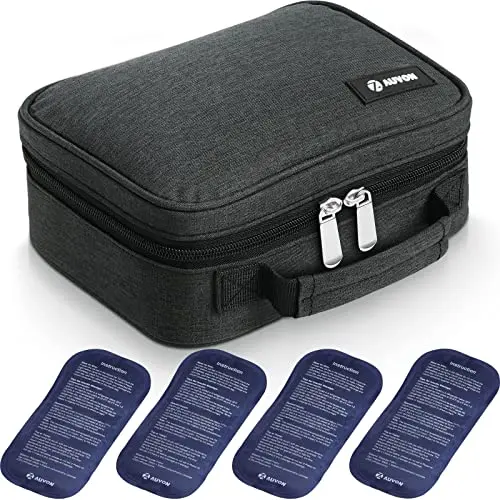
Large Insulin Cooler – Extended Cooling for 8 Pens
The AUVON Large is built for people who need medication to stay cold through a long travel day. It pairs a three-layer insulated shell with four generous 160g ice packs, so you can run two at a time and keep the others frozen as backups. Three compartments hold up to eight insulin pens or several GLP-1 pens alongside wipes and supplies.
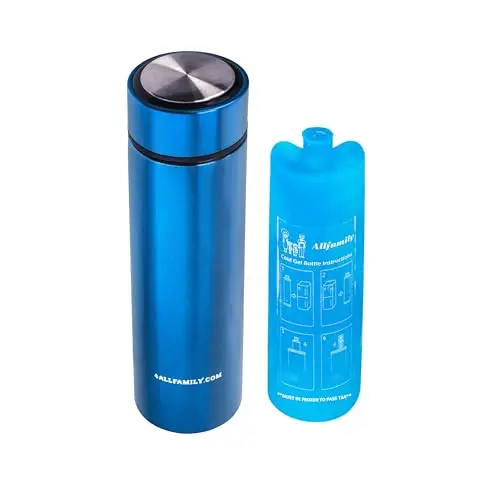
Nomad Insulin Travel Cooler – Long-Haul Temperature Control
The Nomad is the pick when you’re heading somewhere hot or flying long-haul. Its Biogel freeze pack is engineered to freeze around 36°F so medication stays in a stable chilled range without freezing solid, and the medium case holds up to thirteen pens while still fitting in a carry-on.
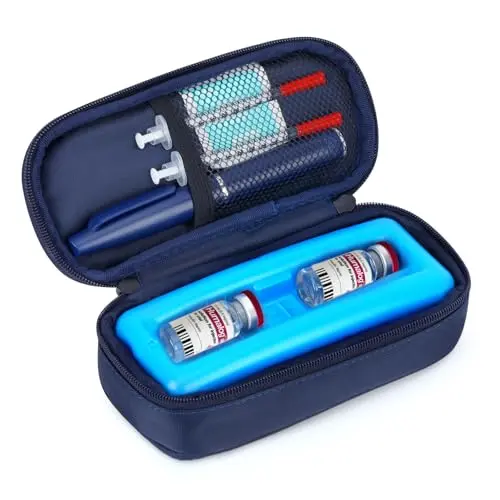
Insulin Vials Cooler Case – Protective Ice Brick Design
A vial-specific cooler bag that treats fragile bottles as the priority. Instead of loose gel packs, it uses a dedicated protective ice brick that both chills and shields two 110ml vials, with a mesh side pocket for syringes and small supplies.
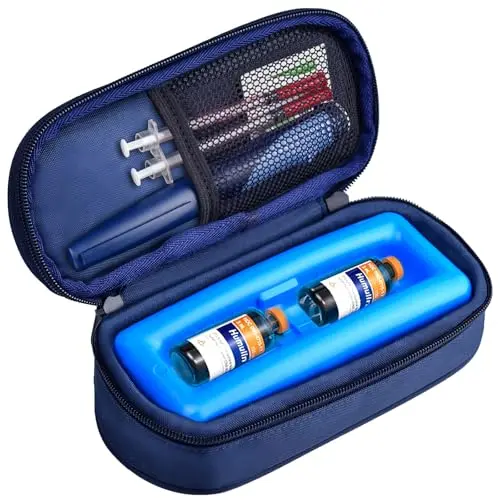
Insulin Vial Cooler Case – Compact Vial Protection
The Cruxer takes the vial-first approach at a lower tier, using a shock-absorbing ice brick that chills two 110ml vials and cushions them against knocks. A mesh pocket handles syringes and wipes, and the compact body fits easily into luggage.
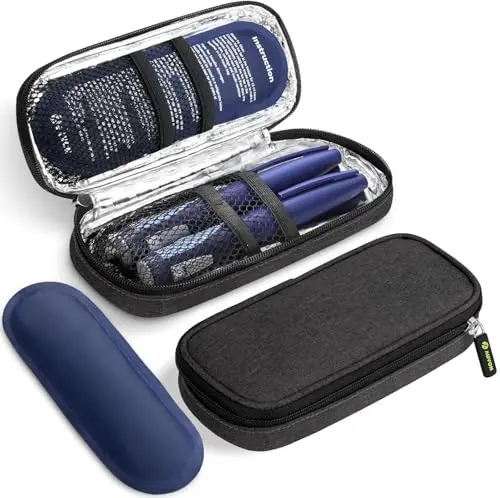
Lightweight Insulin Cooler – Slim Daily Commute Bag
The slimmest, most affordable way into a reliable medication cooler. Two 90g ice packs and a three-layer insulated shell keep a couple of pens cold for a normal day out, all in a case that disappears into a handbag.
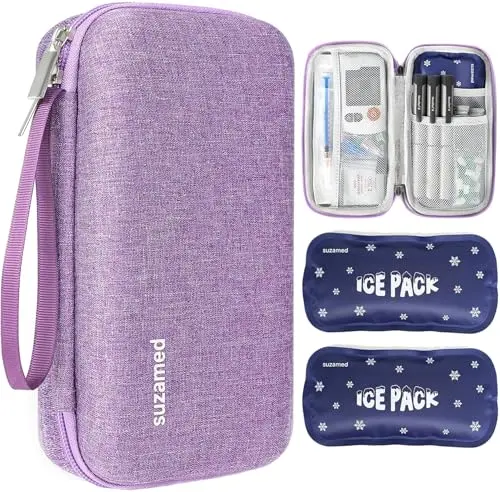
Insulin Cooler Travel Case – Roomy Daily Diabetic Kit
The suzamed squeezes surprising capacity into a slim bag, holding up to seven pens plus a glucose monitor behind an EVA outer and aluminized lining. Two 150g ice packs do the cooling.
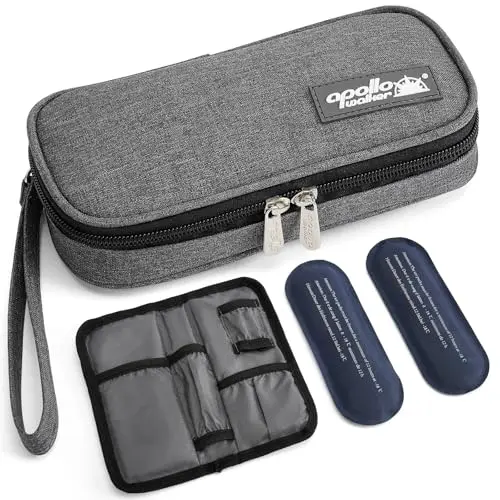
Insulin Cooler Travel Case – Organized Pen and Supply Storage
A tidy, organized case for keeping pens, vials, and supplies separated on the go. Two 90g gel packs and a foil-lined, Oxford-wrapped shell handle cooling, while a wrist strap makes it an easy grab-and-go.
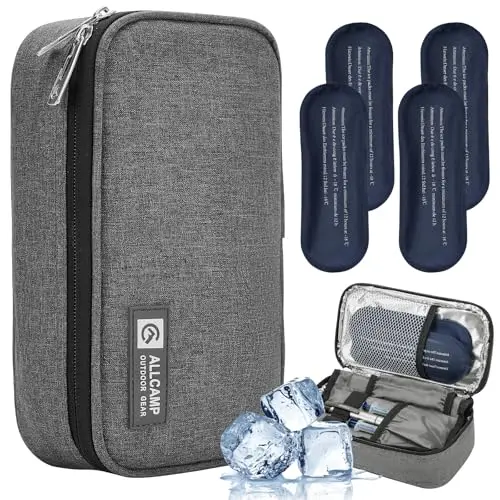
Insulin Travel Cooler Case – Multi-Pocket Organizer
The ALLCAMP leans on a multi-layer build – 600D Oxford, insulating cotton, and aluminum foil – with four reusable ice packs and elastic loops that keep pens and vials from sliding around. It wipes clean in seconds.
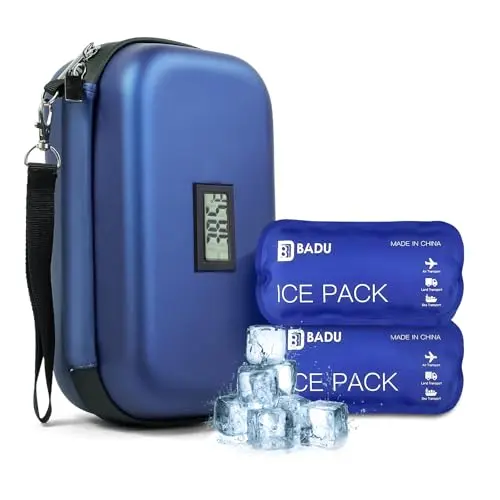
Insulin Cooler Travel Case – Built-In Temperature Display
The Gosemai’s headline is a Fahrenheit display on the outside that lets you check the internal temperature without opening the lid and losing cold air. A hardcover EVA shell and two 180g ice packs back it up.
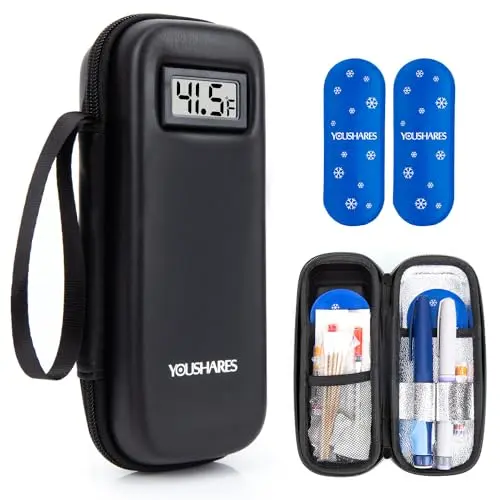
Insulin Pen Cooler Case – Real-Time Temperature Monitoring
A pen-focused cooler that pairs a Fahrenheit display with two TSA ice packs, sized to hold a couple of insulin or GLP-1 pens including auto-injectors. The PU, EVA, and foil build is slim enough for a backpack.
How We Evaluated These Cooler Bags for Medication
We didn’t run controlled temperature-chamber testing or timed cooling trials in a lab. What we did: cross-referenced 10 medication cooler bags from 8 distinct brands across five decision axes – cooling duration, insulation build, capacity and layout, portability and TSA-fit, and included ice packs. We weighed each case’s published cooling ratings against its real interior dimensions and the types of medications it’s meant to hold.
We then triangulated three signal sources: published specifications, feature sets, and aggregated owner feedback where available. That last piece matters here, because a cooler’s real-world cooling time is exactly where listings and lived experience tend to diverge. A note on cooling claims: ratings are typically measured at moderate ambient temperatures and will shorten in genuine heat, so we treated published hours as a starting point rather than gospel.
The scoring framework weighted real-world performance (70%) – how long each bag actually protects medication and how well it fits a real carry – against feature differentiation (30%) – the build quality, ice-pack design, and layout choices that set one case apart from another. We have no commercial relationship with any brand featured; recommendations track fit and differentiation, not brand preference. If you’re organizing a multi-pen kit for longer trips, the AUVON Large is the natural match; for hot-weather and long-haul travel, the Nomad buys you more margin.
How to Choose the Right Cooler Bag for Medication
1. What to Look For in a Cooler Bag for Medication
Buying a cooler bag for medication comes down to five things: cooling duration, insulation build, capacity and layout, portability and TSA-fit, and the ice packs included. Get those right for how you travel and almost everything else falls into place.
Start with the medication itself. A couple of pens for a commute needs far less cooling headroom than a multi-week trip through a hot climate, and the case that fits one job well won’t necessarily fit the other.
2. Cooling Duration and Insulation: The Heart of a Medication Cooler
Insulation is where cheap cases and good ones part ways. Look for layered builds – typically Oxford or EVA fabric, a foam or pearl-cotton core, and an aluminum foil lining that reflects heat rather than soaking it in. The more layers and the thicker the foam, the more slowly cold air escapes and outside heat gets in.
The cooling source matters too. Gel ice packs and ice bricks both work, but bricks tend to sit tighter against vials and add a little impact protection. Either way, cooling duration depends heavily on ambient temperature and how full the bag is – a packed case holds its cold longer than an empty one.
3. Pens vs Vials: Matching the Case to Your Medication Format
Most cases are built around one format. Pen cases use flat compartments and loops to hold injector pens side by side, while vial cases use a molded protective ice brick and snug slots that keep glass bottles from knocking together. If you carry medication in small glass vials, that protection is worth prioritizing.
If vials are your format, the YOUSHARES vial case is built around exactly that job, cushioning and chilling two 110ml bottles at once. For a lower-cost vial option, the Cruxer takes a similar approach.
4. Size, Capacity, and TSA-Friendly Cooler Bag Design
Capacity claims are worth checking against real dimensions. A compact cooler bag around eight inches long typically holds two to three pens, while larger multi-compartment cases can take seven to eight pens plus wipes and a meter. Bigger isn’t automatically better – a case that’s too bulky ends up left at home.
For air travel, most frozen gel packs are allowed through security as long as they’re solid when screened, so pack them fully frozen. A slim, one-hand case slips into a carry-on far more easily than a rigid box, which is why the AUVON Lightweight is an easy daily flyer’s pick.
5. Reading Cooling Claims Realistically
Cooling ratings are almost always measured at moderate ambient temperatures and under a specific load, so treat published hours as a best-case guide rather than a guarantee. In genuine summer heat, expect shorter cooling and plan to re-freeze sooner.
The practical move is to build in margin. If a case’s cooling window roughly matches your longest leg, it’ll likely fall short on a hot day. Choose one with headroom, or carry a spare frozen pack.
6. Re-Freezing Ice Packs on the Road
Multi-day trips live or die on re-freezing. A hotel mini-fridge usually does the job overnight, and packing a spare frozen pack buys you a buffer if one softens early. Ice bricks that freeze solid hold their shape and re-freeze more evenly than floppy gel packs.
Frequently Asked Questions
1. What's the difference between the AUVON Large and the 4ALLFAMILY Nomad?
They target different trips. The AUVON Large leans on four 160g ice packs and a triple-compartment layout, so it suits multi-pen kits and longer days where you want spare cooling on hand. The Nomad uses a Biogel freeze pack that holds a stable chilled range without freezing medication, and it’s rated for hot climates and long-haul flights. If capacity and spare packs matter most, go AUVON; if you’re chasing stable temps in real heat, the Nomad is the better match.
2. Should I choose a pen case like the AUVON Lightweight or a vial cooler like the Cruxer?
Let the medication decide. Pen cases lay injectors flat in loops and stay slim, which makes the AUVON Lightweight an easy commute pick for a couple of pens. Vial coolers like the Cruxer use a shock-absorbing ice brick and snug slots to protect glass bottles, which pen compartments don’t do as well. If your medication is in vials, favor the vial-first design; if it’s in pens, the slim pen case wins on everyday portability.
3. How long will a cooler bag keep medication cold in real heat?
Shorter than the box suggests. Most cooling ratings are measured at moderate ambient temperatures, so a bag rated for a full day may hold a safe range for several hours less when it’s genuinely hot outside. Pack the case full, freeze the packs solid, and add a spare frozen pack for long days. The larger multi-pack cases generally carry more margin than slim daily cases.
4. Are frozen ice packs allowed through airport security?
Yes, in most cases. Frozen gel packs and ice bricks are generally permitted in carry-on when they’re solid at screening, which is why the cases here specify TSA-compliant packs. Freeze them fully before you fly and keep medication and cooling packs together for inspection. A case with a measured, slim footprint slides through security more smoothly than a bulky box.
Final Verdict
For most people managing medication on the go, the AUVON Large is the pick that balances cooling headroom, capacity, and portability without veering into premium territory. If you’re traveling somewhere hot or flying long-haul, the Nomad is worth the step up for its stable Biogel range and longer cooling margin. And if your medication comes in vials, the YOUSHARES vial case protects bottles better than any pen-style bag here. On a tight budget, the AUVON Lightweight covers a normal commute with a couple of pens and little fuss. Match the case to how you actually travel – a daily carry versus a long trip, pens versus vials – and the choice gets simple fast.
