
Best Cooling Down Comforters – 2026 Reviews

A comforter that sleeps hot is a special kind of frustrating. You kick it off, then get cold, then pull it back on and wake up damp. The cooling down comforter category exists to solve that loop, but the label gets stretched across very different builds: feather-and-down fiber inserts, down alternatives, and dedicated cooling fabrics.
The two axes that separate useful cooling comforters from marketing are breathability and heat movement. A breathable cotton shell and even fill distribution matter more than a cooling word on the tag, and a comforter that traps heat in thick baffles will feel warm no matter how light the fill is.
We cross-shopped the category across major brands and focused on options that can genuinely work for hot sleepers, warm rooms, or year-round use. Some are traditional down blends with breathable shells. Others are purpose-built cooling layers. The right pick depends on whether you want a true cooling surface or a lighter down-style comforter.
Best Cooling Down Comforters – 2026 Reviews

Cooling Comforter – Dual-Side Cooling for Hot Sleepers
A dedicated cooling comforter built around dual-side cooling fabric and a lightweight feel. It is aimed at hot sleepers and night-sweat-prone rooms rather than traditional down warmth.
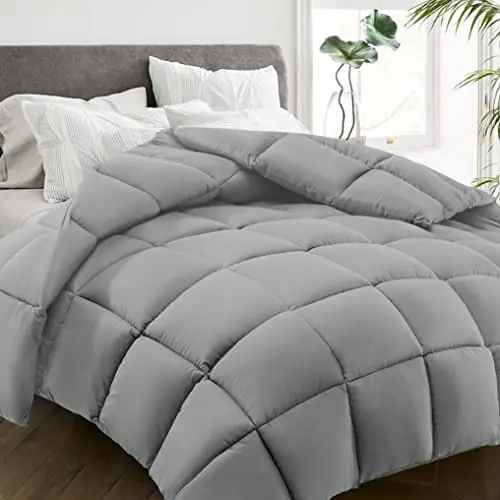
All-Season Cooling Comforter – Down Alternative Value
A budget-friendly down-alternative comforter with a soft brushed cover and cooling fiber fill. It is a practical option for warm rooms, guest beds, and anyone avoiding down.
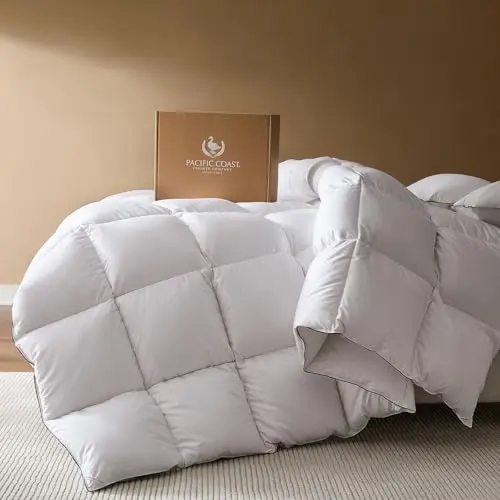
Goose Feather Down Comforter – 3D Baffle Box Luxury
A premium feather-and-down comforter with a hidden baffle box design and certified fill. It is built for hotel-style loft and even fill control rather than dedicated cooling tech.
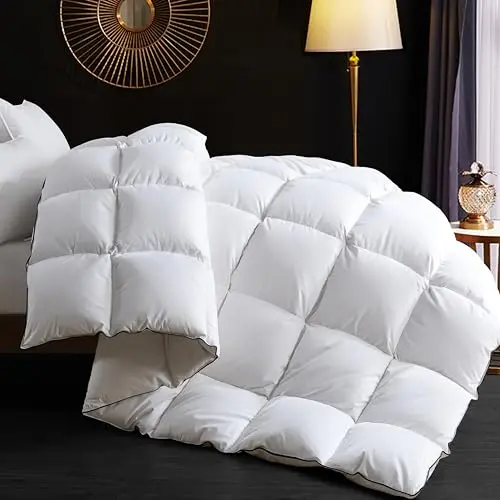
Cool Touch Down Duvet – Cotton Shell for Hot Sleepers
A down-fiber duvet insert with a cool-touch surface and a cotton shell. It aims to balance hotel-style loft with breathability for hot sleepers.
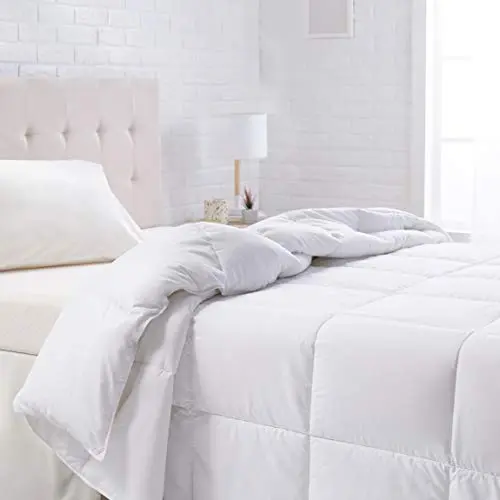
Down Alternative Comforter – Lightweight All-Season Insert
A simple lightweight down-alternative comforter with corner tabs and easy machine care. It works as a duvet insert or a low-maintenance stand-alone layer.

All-Season Down Alternative Comforter – 4D Spiral Fiber
A lightweight down-alternative comforter with spiral fiber fill and baffle-box stitching. It is designed to resist clumping while staying breathable for year-round use.
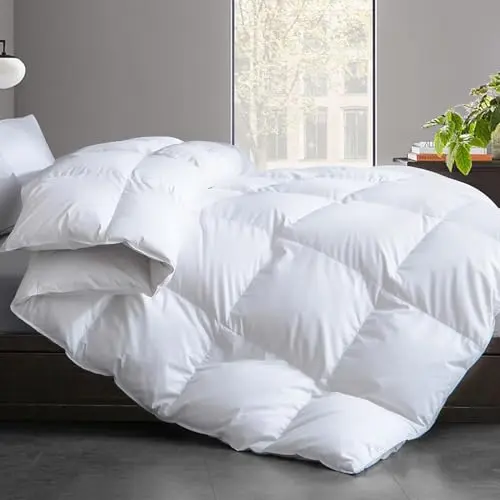
Feather & Down Fiber Insert – Medium Warmth Hotel Feel
A cotton-shell feather and down fiber insert with medium warmth. It is aimed at hotel-style loft and breathable year-round use.

Goose Down Fiber Comforter – Baffle Box Hotel Luxury
A high-fill goose down fiber comforter with a cotton cover and baffle box construction. It is a traditional hotel-style option for buyers who prioritize loft.
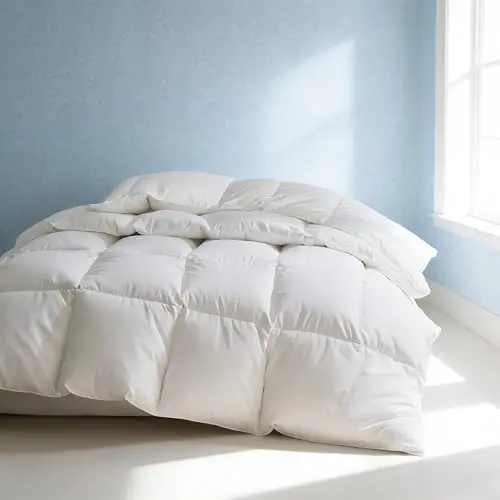
Goose Feather Down Comforter – Hotel Collection Medium Warmth
A hotel-style goose feather and down fiber comforter with a cotton shell and multiple warmth levels. It is a classic bedroom upgrade with a traditional down feel.
How We Evaluated These Cooling Down Comforters
We didn’t run controlled thermal-lab measurements or multi-month durability trials. What we did: cross-referenced 9 cooling down comforter models from 9 distinct brands across 6 decision axes – fill type and loft, shell fabric and breathability, warmth versus cooling claims, construction and fill control, care requirements, and size and fit. We triangulated published specifications, feature sets, owner feedback where available, and use-case fit for hot sleepers, warm rooms, and year-round bedding. We also weighed how each comforter behaves as a stand-alone layer and as a duvet insert, because the same fill can feel very different depending on how it is covered and used. That distinction matters in this category, where a breathable cotton shell and even fill distribution often do more for comfort than a cooling label.
The scoring framework weighted real-world fit for cooling and breathability (70%) against feature differentiation (30%) – dedicated cooling fabrics, cotton shells, baffle or box construction, and care practicality. We mapped each option to a likely buyer: the hot sleeper who wants a cool-to-the-touch surface, the down loyalist who wants a breathable cotton shell, and the value shopper who wants a lighter down alternative. We have no commercial relationship with any of the brands featured; recommendations track fit and differentiation, not brand preference. If your priority is a dedicated cool-to-the-touch surface, the Cooling Comforter is the closest match. If you want a cooler down-alternative feel at a budget-friendly tier, the All-Season Cooling Comforter is the value route.
How to Choose the Right Cooling Down Comforter
1. What Makes a Cooling Down Comforter Actually Cool
Cooling is not a single material property. It comes from airflow, moisture movement, and how much heat the fill and shell hold near your body. A breathable cotton shell helps, but so does a fill that stays evenly distributed instead of packing into dense pockets. Dedicated cooling nylon fabrics can add a cool-to-the-touch surface, while a lightweight down-alternative fill can reduce the heat-trapping bulk that makes some comforters feel stifling.
The word cooling on a label is not enough. Look for a lightweight warmth rating, a shell that does not feel plasticky, and construction that prevents clumping. If you sleep hot but still want a down-style feel, a cotton-shell down-fiber comforter can work well in a climate-controlled room. If you overheat easily, a dedicated cooling fabric is the safer route. For a purpose-built option, the Cooling Comforter is the one to start with.
2. Fill Power, Loft, and Warmth: Matching the Comforter to Your Sleep Temperature
Fill weight and loft determine how much warmth a comforter traps. A high-loft down comforter can feel airy and still sleep warm, while a thinner down-alternative comforter may feel cooler because there is less insulation. The mistake is assuming that more fill always means better comfort. For hot sleepers, a lightweight or medium-warmth comforter with even distribution is usually more comfortable than a heavy, high-loft comforter.
Down and feather blends offer loft and breathability, but they are not automatically cooling. Down alternatives can be lighter and easier to wash, though some polyester fills trap heat more than expected. If you want a middle path, the Cool Touch Down Duvet pairs a cotton shell with a down-fiber blend and a cooler surface feel.
3. Shell Fabric and Breathability: Why Cotton and Cooling Nylon Feel Different
The shell is the first thing your skin touches, so it shapes the sleep experience as much as the fill. 100% cotton shells feel breathable and natural, and they work well under a duvet cover. Cooling nylon and performance fabrics feel cooler at first touch and can wick heat away from the skin, but they have a different texture and may feel slippery to some sleepers.
A brushed microfiber or polyester shell can be soft and budget-friendly, but it may sleep warmer than cotton or cooling nylon. If you are sensitive to texture, choose a cotton shell or a silky cooling fabric rather than a crisp synthetic. The best shell for you depends on whether you want a cool initial touch or a breathable, natural feel all night.
4. Construction Details That Keep a Cooling Comforter Even
Baffle box construction creates walls between fill chambers, which allows more loft and helps prevent cold spots. Box stitching and sewn-through construction are simpler and lighter, but they can create slightly cooler spots at the seams. For a cooling comforter, even fill distribution matters because clumps create warm pockets that defeat the purpose.
Look for corner tabs or loops if you plan to use a duvet cover. A comforter that shifts inside its cover can bunch up and sleep warmer in some areas. The Goose Feather Down Comforter is a good example of premium baffle-box construction, while lighter down alternatives often use simpler box stitching to keep weight down.
5. Care and Maintenance for Down and Down-Alternative Comforters
Machine-washable down alternatives are the easiest to live with, especially in a family or pet household. Use a gentle cycle and low heat, and make sure the comforter is fully dry before storing it. Down and feather comforters often need dry cleaning or spot cleaning, which is a real ownership cost. Always check the care label before buying, because a comforter that is hard to clean may not stay fresh for long.
Store comforters loosely in a breathable bag rather than a vacuum-sealed one for long periods. Regular fluffing helps maintain loft, and a duvet cover can reduce how often you need to clean the comforter itself. If you want low maintenance, choose a machine-washable shell and a fill that does not clump.
6. Budget vs Premium Cooling Comforters: What You Actually Pay For
Budget-friendly comforters usually use polyester fill and simpler stitching. They can still sleep cool if the fill is light and the shell is breathable, but they may not hold their loft as long as down or high-end alternatives. Mid-range options often add a cotton shell, better fill distribution, or a cooler surface fabric. Premium down comforters cost more because of the fill, certification, and construction, not because they are automatically cooler.
Spend more for better fill control, a breathable shell, and care that fits your routine. If you want a premium down feel, the Goose Feather Down Comforter is the splurge. If you want a budget-friendly cooling layer, the All-Season Cooling Comforter is the value pick. There is no need to pay premium prices for a comforter that will be used as a light summer layer.
Frequently Asked Questions
1. Are cooling down comforters actually cool, or is it marketing?
Some are genuinely cooler, and some are just lighter comforters with a marketing label. Real cooling usually comes from one of three things: a cool-to-the-touch fabric, a breathable shell that moves moisture, or a lightweight fill that traps less heat. A down comforter can be breathable, but it is not automatically cooling. If you overheat easily, a dedicated cooling fabric is more reliable than a traditional down fill.
2. What's the difference between the DOWNCOOL Cooling Comforter and the HYLEORY All-Season Cooling Comforter?
The Cooling Comforter is built for surface cooling with a dual-side cooling fabric and a silky feel. The All-Season Cooling Comforter is a down-alternative value pick with a softer brushed cover and a lighter price tier. Choose DOWNCOOL if night sweats are the main problem and you want the coolest touch. Choose HYLEORY if you want a budget-friendly comforter for a warm room and do not need a dedicated cooling fabric. Both are machine washable, which makes them easier to live with than most down comforters.
3. How does the Ubauba Cool Touch Down Duvet compare with the Pacific Coast Goose Feather Down Comforter?
The Ubauba Cool Touch Down Duvet leans toward hot sleepers with a Cool Touch surface and a 100% cotton shell, but owner feedback notes a noisy cover and some fit inconsistency. The Pacific Coast Goose Feather Down Comforter is the more traditional luxury down option, with a 3D baffle box, certified fill, and a medium-weight feel. Ubauba is the better fit for a warm bedroom and a cooling-focused routine. Pacific Coast is better for a guest room or master bedroom where down feel and construction matter more than surface cooling.
4. Can a down comforter work for hot sleepers?
Yes, but it depends on the fill weight and shell. A medium-warmth down comforter with a breathable cotton shell can work in a climate-controlled bedroom, especially if you use a light duvet cover. A heavy or high-loft down comforter will usually sleep too warm. If you want down feel but run hot, look for a lighter fill weight, a cotton shell, and construction that prevents clumping. A dedicated cooling comforter is still the safer choice for night sweats.
5. How do I wash a cooling down comforter?
Check the care label first. Machine-washable down alternatives can usually go on a gentle cycle with cold water, then tumble dry on low. Down and feather comforters often require dry cleaning or spot cleaning. Use a large capacity dryer with dryer balls to break up clumps, and make sure the comforter is completely dry before storing. A duvet cover reduces how often you need to wash the comforter itself.
Final Verdict
For most hot sleepers, the Cooling Comforter is the answer. It delivers the cool-to-the-touch surface and lightweight feel that the category promises, and it does not ask you to compromise on breathability. If you want a budget-friendly down alternative, the All-Season Cooling Comforter gets you most of the way there for a lot less. If you want a traditional down feel with a cotton shell and a cooler surface, the Cool Touch Down Duvet is the middle path. And if you are furnishing a guest room or master bedroom and want a premium down comforter, the Goose Feather Down Comforter is the splurge pick. Start with the problem you actually have: surface heat, trapped warmth, or a desire for down-style loft. The right cooling comforter follows from that.
