
Best Crawlspace Dehumidifiers – 2026 Reviews

A crawlspace dehumidifier has a harder job than a basement unit. It has to fit under a low subfloor, keep working in cool and damp air, and get rid of water without someone hauling a tank up a ladder. That is why the best crawlspace dehumidifiers are judged less by a dramatic pint number and more by whether they actually fit, drain, and hold up.
The category splits around a few practical choices. Gravity drain or built-in pump decides how flexible installation can be. AHAM capacity is a better real-world guide than the big saturation number on the box. And form factor matters as much as airflow: a low-profile horizontal unit can slide between joists, while a taller cabinet may not.
We compared the serious crawlspace-focused options across brands, from compact 70-pint pump units to 155-pint commercial machines. The goal is simple: match the unit to your space, drainage plan, and how much drying headroom you want.
Best Crawlspace Dehumidifiers – 2026 Reviews
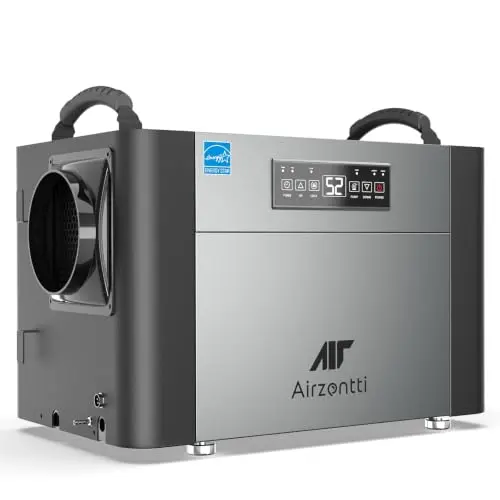
ACD155P-PG100(B) – Large-Space Crawlspace Dehumidifier with Pump
The ACD155P-PG100(B) is a commercial-grade crawlspace dehumidifier built for large, wet spaces. It combines a 155-pint maximum removal rate with a built-in pump, auto defrost, and a metal cabinet.
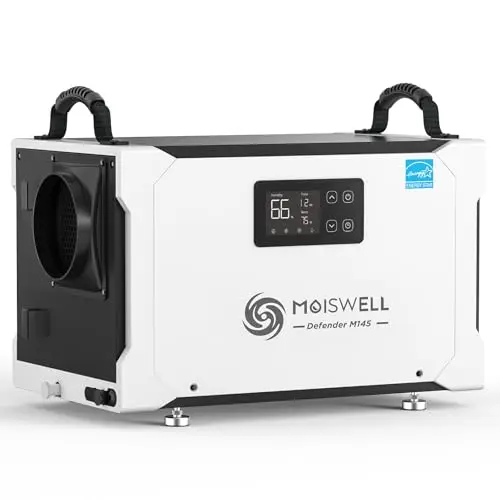
Defender M145 – Compact 155-Pint Crawlspace Workhorse
The Defender M145 is a low-profile commercial dehumidifier designed to slide into crawlspaces and between floor joists. It brings 155-pint maximum capacity, high airflow, and a horizontal metal chassis.
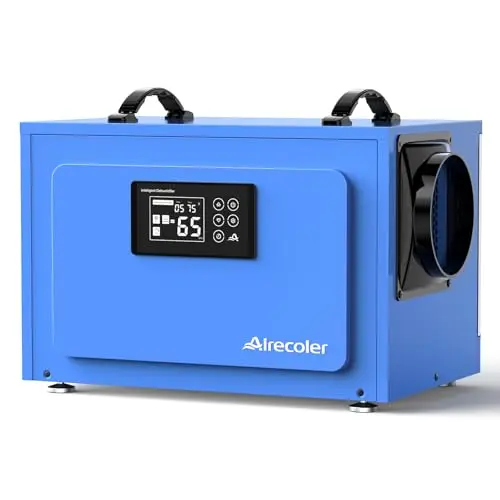
GT-X5 – High-Value Commercial Crawlspace Power
The GT-X5 is a compact commercial crawlspace dehumidifier with strong airflow, R32 refrigeration, and a footprint that fits tight joist bays. It is built for large damp spaces but skips an onboard pump.
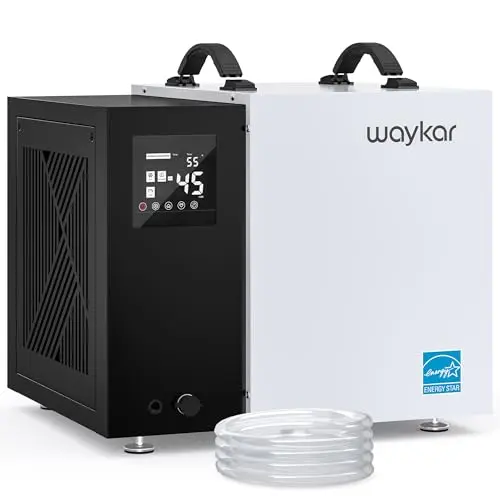
AFW1.5DPM – Pump-Equipped Crawlspace Unit
The AFW1.5DPM is a 70-pint crawlspace dehumidifier with a built-in pump and dual drainage hoses. It is aimed at moderate spaces where lifting condensate is more useful than maximum pint capacity.

Stellar SP10 – Compact Pump Drain for Tight Crawlspaces
The Stellar SP10 is a compact 70-pint crawlspace dehumidifier with a built-in pump and a detachable control panel that works as a wired remote. It is sized for tight, low-clearance spaces.
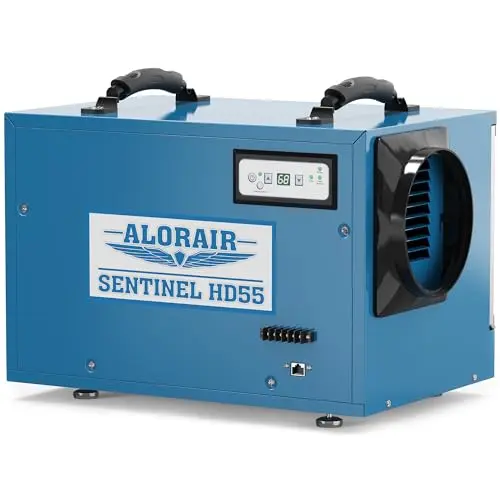
Sentinel HD55 – Small-Space Crawlspace Dehumidifier with Long Warranty
The Sentinel HD55 is a metal-bodied crawlspace and basement dehumidifier with 113-pint maximum removal and a long limited warranty. It is best suited to smaller crawlspaces and commercial spots where compact capacity matters.
How We Evaluated These Crawlspace Dehumidifiers
We didn’t install these beneath a subfloor or run them through a full summer of crawlspace humidity. What we did: cross-referenced 6 crawlspace dehumidifier models from 5 distinct brands across 5 decision axes – AHAM and maximum capacity, low-clearance fit, drainage method, airflow and coverage, and build and warranty. We triangulated published specifications, feature sets, and owner feedback where available, then mapped each unit to common crawlspace scenarios: tight joist bays, large dirt-floor spaces, and installations where gravity drainage is not practical. We also weighed installation friction: whether a unit can sit between joists, be suspended, or needs a dedicated shelf; how much clearance the filter and drain need; and how accessible the controls are once the unit is in place.
The scoring framework weighted real-world fit and performance (70%) – how well each dehumidifier handles the messier realities of a crawlspace – against feature differentiation (30%) – pump lift, defrost behavior, remote controls, and other advantages that separate one unit from another. That matters in a category where a strong spec sheet can still produce a bad install. We have no commercial relationship with any of the brands featured; recommendations track fit and differentiation, not brand preference. If you want the most capable pump-equipped machine for a large space, the Airzentti ACD155P-PG100(B) is the pick; if you prefer a proven horizontal chassis and can gravity drain, the Moiswell Defender M145 is the better fit.
How to Choose the Right Crawlspace Dehumidifiers
1. Start With Crawlspace Fit, Not Just Pint Ratings
Crawlspace dehumidifiers are not interchangeable with basement portables. The first question is whether the unit will physically fit under the house, between joists, or on a shelf you can actually reach. A horizontal chassis like the Moiswell Defender M145 or Airecoler GT-X5 is easier to slide into a low bay than a tall tank-style unit.
Pay attention to depth, width, and height, plus whether the unit can be suspended. A machine that fits but cannot be serviced is still a bad install. Leave room for the drain hose, filter access, and airflow clearance.
2. AHAM Capacity vs. Saturation Ratings: What Actually Matters
The big pint number on a crawlspace dehumidifier is usually a maximum saturation rating measured at hot, extremely humid conditions. The AHAM rating is the more useful comparison because it reflects a lower, more typical test condition. The Airzentti and Moiswell units both list 155-pint maximums but 70 PPD at AHAM; the Airecoler GT-X5 lists 125 pints maximum and 60 PPD at AHAM.
That gap matters. A unit advertised at 70 pints may deliver far less in a cool crawlspace. Use the AHAM number when you can find it, and treat the maximum rating as a ceiling, not a promise.
3. Drainage: Gravity Hose vs. Built-In Pump
Crawlspaces rarely have a convenient floor drain. A gravity drain works only if the hose can slope continuously downhill. A built-in pump gives you vertical lift, which is why pump-equipped models are so common in this category. Most pumps here list 16.4 ft of lift, enough to route water up and out.
If you need pump drainage but do not need commercial capacity, the Waykar AFW1.5DPM is the straightforward pick. It includes both a pump hose and a gravity hose, so you can choose the simpler path if your layout allows it.
4. Airflow and Coverage: Matching the Dehumidifier to Your Crawlspace
Airflow is what spreads dry air through the space. A 265 CFM unit moves more air than a 120 CFM model, but coverage also depends on obstructions, ducting, and how open the crawlspace is. Use the manufacturer’s square-foot rating as a starting point, then size up if the space is divided or especially wet.
For a large space where value matters, the Airecoler GT-X5 balances 265 CFM airflow with a mid-range price tier. It does not have a pump, so pair it with gravity drainage or a separate condensate pump.
5. Defrost, Temperature, and Long-Term Reliability
Crawlspace air runs cool, so auto defrost is not a bonus feature; it is basic protection against frost buildup on the coil. Most units here cycle the compressor while the fan keeps running, then resume normal operation. Look for a stated operating temperature range if your crawlspace gets cold in winter.
Reliability is the harder part. Feedback across the category includes long runs without trouble and occasional failures after a year or more. If you have a smaller space and want the longest warranty, the AlorAir Sentinel HD55 is the safer fit, though it covers less square footage than the commercial units.
6. What Crawlspace Dehumidifier Warranty Really Covers
A 5-year limited warranty often means one or two years of full-unit coverage, then several more years on the refrigeration system only. That is still useful, but it is not the same as five years of complete replacement. Read the warranty description closely and note whether registration is required.
Also check the filter and drain hose requirements. A washable filter is easier to maintain than a disposable one, and a clogged filter can make a good dehumidifier look weak. The best warranty is the one you never need, but clear coverage terms make a repair less painful.
Frequently Asked Questions
1. What's the difference between the Airzentti ACD155P-PG100(B) and Moiswell Defender M145?
They are close on raw capacity: both list a 155-pint maximum and a 70 PPD AHAM rating. The Airzentti adds a built-in pump with 16.4 ft lift and a bit more coverage, while the Moiswell uses a horizontal chassis with higher 265 CFM airflow and gravity drainage. If pump drainage matters, the Airzentti ACD155P-PG100(B) is the pick; if you can gravity drain, the Moiswell is the better fit.
2. Do I need a crawlspace dehumidifier with a built-in pump?
Only if gravity drainage is impractical. A gravity hose needs a continuous downhill slope, which many crawlspaces do not offer. A built-in pump gives you vertical lift and more routing options, but it adds a component that can fail. If you have a reliable drain point, a gravity-drain unit is simpler and often cheaper to own.
3. How many pints do I need for a crawlspace?
Start with the AHAM rating, not the maximum pint number. For a small, tight crawlspace, a 70-pint class unit with pump drainage may be enough. For a large dirt-floor space, look at 125- to 155-pint maximum units with AHAM ratings around 60 to 70 PPD. Match the square-foot coverage to your actual footprint, then add headroom if the space is divided or very damp.
4. Is a 70-pint crawlspace dehumidifier enough for a large crawlspace?
Usually not. A 70-pint maximum rating is often measured at hot, saturated conditions, and the real-world output can be much lower. Compact units like the Airecoler Stellar SP10 are rated for about 1,000 sq ft, while 5,000-plus sq ft spaces need a larger commercial unit with higher airflow. Check the AHAM capacity and square-foot rating before sizing down.
5. Waykar AFW1.5DPM vs. Airecoler Stellar SP10: Which compact pump unit fits better?
Both are 70-pint pump-equipped crawlspace units, but they aim at different spaces. The Waykar AFW1.5DPM lists 158 CFM and coverage up to 5,000 sq ft, so it suits a larger crawlspace that still needs pump drainage. The Airecoler Stellar SP10 has a detachable control panel and a very compact body, but it is rated for only about 1,000 sq ft. For tight spaces, Stellar is the better fit; for more coverage, choose Waykar.
6. Are commercial crawlspace dehumidifiers too loud for a home?
They are generally louder than a basement portable, but the crawlspace itself buffers much of the sound. Feedback on the units here often describes quiet operation, though noise rises during auto defrost cycles and when the compressor kicks on. If the crawlspace shares a wall with a bedroom, look for a model with vibration-reducing feet or place it away from the shared wall.
Final Verdict
For most crawlspace owners, the Airzentti ACD155P-PG100(B) is the strongest all-around answer. It pairs serious 155-pint drying capacity with a built-in pump, generous airflow, and enough coverage for large dirt-floor spaces, so you are not fighting the installation.
If your crawlspace has a natural drain point and you would rather skip pump complexity, the Moiswell Defender M145 is the horizontal workhorse to beat. Budget-conscious shoppers should look at the Airecoler GT-X5; it gives up some capacity and pump convenience but keeps commercial-grade airflow and a lower price tier. And for tight, low-clearance spaces, the Airecoler Stellar SP10 is the compact pump-equipped pick. Match the machine to the space first, and the rest gets easier.
