
Best Cuban Coffee Makers – 2026 Reviews

Cuban coffee is less about a single machine and more about a strong, sweet, concentrated shot that gets whisked into a foamy cafecito. The maker you choose sets the tone: a stovetop moka pot gives you that old-school gurgle and hands-on ritual, while an electric cafetera trades the burner for a detachable base and a switch. Both can get you to the same place, but they suit different kitchens and different morning rhythms.
The two axes that matter most are brewing format and heat-source compatibility. Stovetop models are simple, portable, and often aluminum; electric models are easier to walk away from but add a cord and a base. Capacity matters too, because Cuban coffee is usually served in small, powerful doses rather than big mugs. We looked across the market at both styles, from iconic Italian moka pots to electric makers built specifically for Cuban coffee, so you can pick the one that fits your counter and your crowd.
Best Cuban Coffee Makers – 2026 Reviews
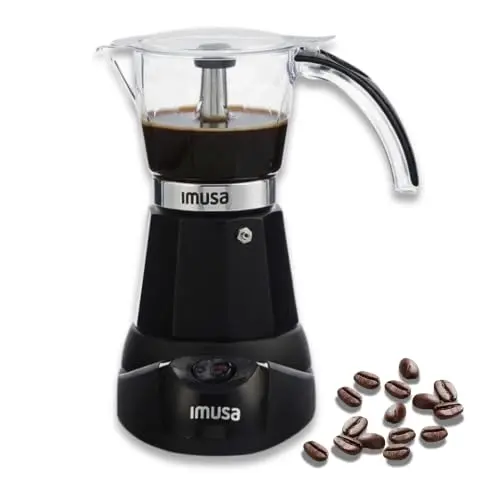
Electric Espresso Maker – Cuban Coffee Without the Stovetop
A push-button electric espresso maker built for Cuban-style coffee. The cast aluminum base and brown tinted carafe brew six or three espresso cups, while the detachable base, on/off switch, and visual brewing indicator keep the process simple. A cool-touch handle and gift-box packaging round it out.
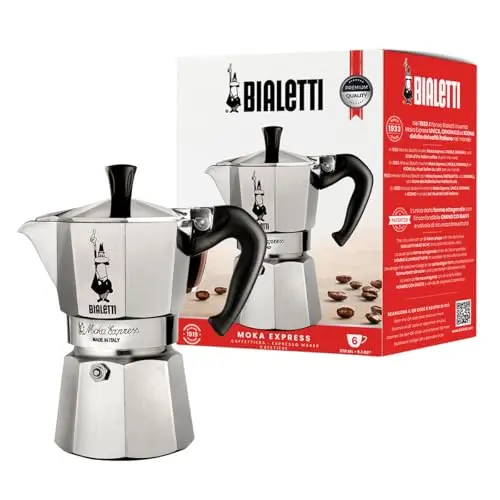
Moka Express – The Iconic Stovetop Cuban Coffee Workhorse
The original Italian moka pot, with the angular aluminum body and moustachioed gentleman that date back to the 1930s. The six-cup model works on gas and electric stovetops, uses a patented safety valve, and brews a concentrated pot of coffee in minutes. It’s hand-wash only and needs an adapter plate for induction.

Venus Induction – Stainless Steel Moka for Induction Stoves
A stainless steel moka pot built for induction and other hob types. The four-cup Venus uses an 18/10 stainless body, a reusable filter, and the same stovetop brewing method as a classic moka. It’s hand-wash only and sized for small households.

Milano – Large-Batch Stovetop Moka for Crowds
A large-format aluminum moka pot for gas, electric, and propane stoves. The nine-espresso-cup Milano has an enlarged soft-touch handle, a burn guard, and an Italian safety valve. It’s hand-wash only and suited to brewing for a crowd.
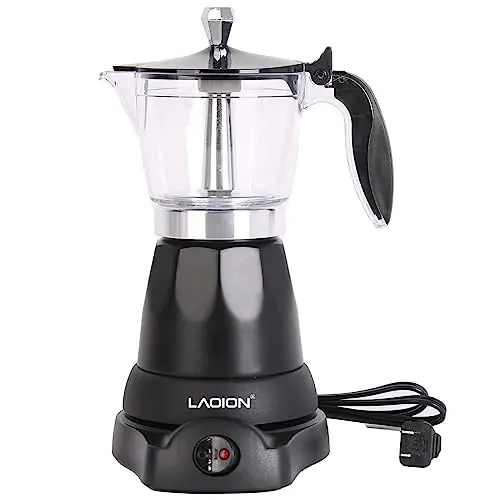
Electric Cuban Coffee Maker – Transparent Brewing, No Stovetop
An electric Cuban coffee maker with a transparent top, detachable base, and two auto-shut-off protections. The six-cup pot uses a BPA-free upper chamber and food-grade aluminum lower chamber. It’s designed for push-button moka brewing without a stovetop.

Classic Stovetop Espresso Maker – Budget-Friendly Cuban Cafecito
A classic aluminum stovetop espresso maker with a six-cup capacity and a flip-top lid. The cast aluminum body is built for even heat, and the heat-resistant knob and handle make pouring safer. It’s explicitly positioned for Cuban and Italian coffee and works on gas, electric, and propane stoves.

Stovetop Espresso Maker – Compact Moka with Wood-Accent Handle
A six-cup aluminum moka pot with a black finish and wood-accent handle. It has a built-in safety valve, heat-resistant handle and knob, and a pouring spout. The pot is designed for medium-heat stovetop brewing and comes with a two-year guarantee.

Stainless Steel Moka Pot – Induction-Ready Cuban Coffee
A stainless steel moka pot for gas, electric, and induction stovetops. The six-cup model has a reusable filter and a 10-ounce capacity. It’s designed for Cuban and Italian coffee and includes leak-prevention guidance for a snug seal.
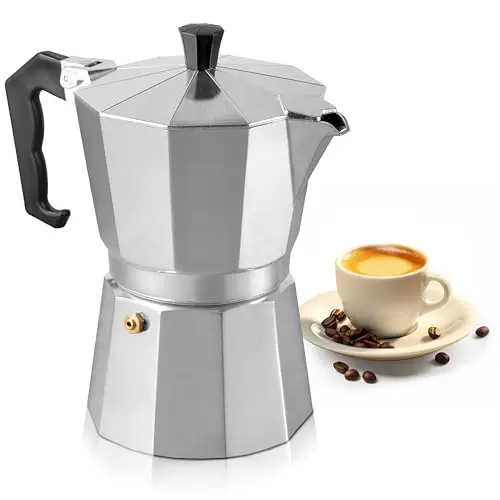
3-Cup Moka Pot – Compact Cuban Coffee for Small Spaces
A compact three-cup aluminum moka pot that brews about five ounces total. It has a pressure safety valve and a heat-resistant handle with finger grip. The pot works on gas and electric stoves but not induction, and it’s sized for small kitchens, RVs, and camping.
How We Evaluated These Cuban Coffee Makers
We didn’t run controlled extraction labs or measure brew pressure at the spout. What we did: cross-referenced nine Cuban coffee maker models from seven distinct brands across six decision axes – brewing format, capacity, material, heat-source compatibility, cleaning routine, and owner feedback where available. We triangulated published specifications, feature sets, and use-case fit against the way Cuban coffee is actually served: strong, small, and often shared.
The scoring framework weighted real-world fit (70%) – how well each maker delivers a concentrated, cafecito-ready brew for its intended setup – against feature differentiation (30%) – induction support, safety valves, detachable bases, and other details that separate one model from the next. We have no commercial relationship with any brand here; recommendations track fit and differentiation, not brand preference. If you want push-button convenience, the IMUSA Electric Espresso Maker is the one we’d start with. If you’d rather stay stovetop, the Moka Express is the classic route.
We also weighed how each maker behaves after the first cup – whether the gasket is easy to reseat, whether the handle stays cool, and whether the pot asks for hand washing. We compared how each one handles the small-cup serving size Cuban coffee calls for. No maker in this group is maintenance-free, and the brew you get depends on grind, water level, and heat. That’s why we mapped the lineup by buyer profile instead of declaring one universal winner.
How to Choose the Right Cuban Coffee Maker
1. Stovetop vs Electric Cuban Coffee Makers
Cuban coffee makers usually fall into two camps: stovetop moka pots and electric cafeteras. A stovetop model is essentially a two-chamber pot: water boils in the base, pressure pushes through the coffee, and the brew collects up top. It’s hands-on, portable, and easy to store. An electric model adds a detachable base and a switch, so you can set it and walk away. The tradeoff is a cord, a footprint, and more parts that can wear out.
If you like the ritual – filling the base, leveling the grounds, listening for the gurgle – a stovetop maker is the more satisfying pick. If you want repeatable convenience for a daily cafecito, an electric model is easier to live with. For many kitchens, the IMUSA Electric Espresso Maker is the simplest route to Cuban-style coffee without watching a burner.
2. Aluminum vs Stainless Steel Cuban Coffee Makers
Most traditional moka pots are aluminum, which heats quickly and keeps the pot light. Aluminum is also the material many Cuban coffee makers have used for generations, so it’s familiar. The catch: it’s hand-wash only, and detergents can dull the finish and affect flavor over time. Stainless steel models cost more up front, but they’re often induction-compatible and easier to wipe down. They also handle acidic coffee oils differently, which some brewers prefer for easy cleaning.
Neither material is automatically better. Aluminum is the classic choice for a reason, but stainless steel is the safer bet if you have an induction cooktop or want a pot that can take a little more neglect. If induction is non-negotiable, the Bialetti Venus is the model to shortlist.
3. Capacity and Cup Sizes in Cuban Coffee Makers
Cuban coffee is served in small, intense pours, so capacity is usually measured in espresso cups rather than mugs. A three-cup maker is right for one person or a small afternoon pick-me-up. Six-cup models are the practical middle ground for couples or small families. Nine-cup and larger pots make sense when you’re entertaining or brewing for a crowd, but they take up more cabinet space and can be overkill for daily use.
Don’t assume the cup count matches standard coffee mugs. Moka pot cups are small demitasse servings, and the actual yield depends on how far you fill the base. If you want a compact pot for a small kitchen or an RV, the Mixpresso 3-Cup Moka Pot is sized for that job.
4. Heat Source Compatibility and Stovetop Fit
Check your heat source before you buy. Gas and electric coils are the most forgiving; most aluminum moka pots work on both. Induction cooktops are pickier and need a magnetic base, so an aluminum pot won’t work unless you add an adapter plate. Camping stoves and propane burners are another use case where a simple stovetop pot shines. Electric models sidestep the issue entirely, but they need a nearby outlet and a stable counter.
Also think about handle clearance and pot height. A tall moka pot can crowd a low cabinet or a small burner. If you’re brewing on induction or want a pot that works across gas, electric, and induction, prioritize a stainless model with a clearly labeled induction base.
5. Cleaning, Care, and Leak Prevention
Every Cuban coffee maker here needs hand washing with warm water and a soft cloth. Skip the dishwasher; heat and detergent can damage gaskets, dull aluminum, and leave a soapy taste in the next brew. Rinse promptly, dry all parts, and reseat the gasket evenly so it doesn’t pinch. A safety valve should stay clear of grounds and scale.
Leaks usually trace back to three things: overfilling past the valve, packing the coffee too tightly, or not screwing the chambers down snugly. A little care goes a long way. If your pot sputters or steams from the seam, stop and check the gasket before the next brew.
Frequently Asked Questions
1. What's the difference between the IMUSA electric espresso maker and the Bialetti Moka Express?
They’re two different brewing styles. The IMUSA electric espresso maker uses a detachable base and a switch, so you can brew without a stovetop and monitor the visual brewing indicator. The Bialetti Moka Express is a classic stovetop moka pot with no cord and no base; you control the heat yourself. The IMUSA is easier for daily push-button cafecito, while the Bialetti is more portable and gives you the traditional gurgle-and-pour ritual. For most people who want convenience, the IMUSA Electric Espresso Maker is the more practical starting point.
2. Is the GROSCHE Milano or Primula Classic better for Cuban coffee?
Both are aluminum stovetop pots, but they’re sized differently. The GROSCHE Milano is a nine-espresso-cup brewer with a soft-touch handle and burn guard, which makes it better for entertaining or brewing multiple small servings. The Primula Classic is a six-cup pot with a simpler flip-top lid and heat-resistant handle; it’s the more compact choice for everyday Cuban coffee. The Primula is easier to store, while the GROSCHE gives you more headroom for a crowd.
3. What makes a coffee maker a Cuban coffee maker?
A Cuban coffee maker isn’t a separate appliance category with a proprietary mechanism. It’s usually a moka pot or an electric cafetera that brews a strong, concentrated shot in small espresso-cup servings. Those small, intense pours are the base for cafecito, the sweet, foamy Cuban coffee style. The key traits are a small capacity, a safety valve, and a build that handles fine grounds without clogging. Aluminum is traditional; stainless steel is the more induction-friendly route.
4. Do I need an induction-compatible Cuban coffee maker?
Only if your cooktop is induction. Aluminum moka pots, including most traditional Cuban coffee makers, won’t heat on an induction surface without an adapter plate. A stainless steel model with a magnetic base is the cleaner solution. The Bialetti Venus is built for induction and also works on gas and electric hobs. If you have a standard gas or electric coil stove, you don’t need to pay extra for induction compatibility. For induction kitchens, the Bialetti Venus is the pick here.
5. Why does my moka pot leak or sputter?
Leaks and sputtering usually come from technique, not a defective pot. Don’t fill water past the safety valve, don’t tamp or pack the grounds, and twist the top and bottom chambers until snug. A pinched or worn gasket is the other common culprit; reseat it evenly or replace it if it’s cracked. Use medium heat and pull the pot off as soon as it starts to gurgle. If coffee still escapes from the seam, check that the filter basket is seated flat before brewing.
Final Verdict
For most Cuban coffee drinkers, the IMUSA Electric Espresso Maker is the practical answer. It brews a strong, small-format cup without a stovetop, and its detachable base and visual indicator make daily cafecito feel less like a project. If you want the ritual and portability of a classic pot, the Bialetti Moka Express is still the benchmark. Induction owners should go straight to the Bialetti Venus, which brings stainless steel and hob flexibility. And if counter space is tight or you’re brewing for one, the Mixpresso 3-Cup Moka Pot is the compact budget-friendly route. Pick by your heat source and serving size, and you’ll land on the right Cuban coffee maker without overthinking it.
