
Best Custom Ironing Board Covers – 2026 Reviews

An ironing board cover is one of those purchases you make only when the old one starts scorching at the nose or bunching under the iron. That’s usually the moment you discover ‘custom’ covers aren’t sold by measurement the way a tailored shirt is.
In this category, custom fit is a practical promise: the cover is shaped and tensioned for a standard or compact board rather than draped loosely over it. The difference between a cover that feels made for your board and one that fights you comes down to measured sizing, a secure attachment system, and padding that stays flat under heat.
We compared covers across major brands on those axes, then sorted out which ones suit standard 15×54 boards, compact boards, thick-padding fans, and anyone who wants an uncoated cotton surface. The goal is simple: find the cover that fits your board and your ironing routine, not the one with the loudest pattern.
Best Custom Ironing Board Covers – 2026 Reviews
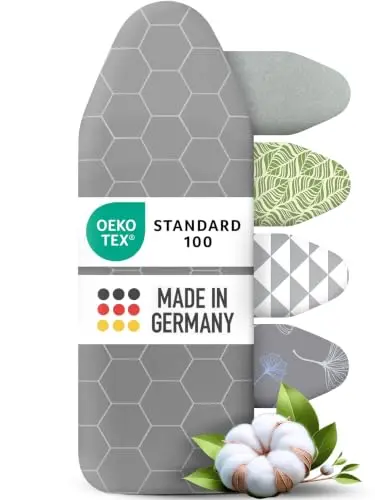
15×54 Ironing Board Cover – Four-Layer Heat Reflective Fit
A four-layer 15×54 cover with a heat-reflective aluminum layer under the cotton top, a firm foam core, and a drawstring cinch. It is built for standard boards and buyers who want a taut, no-velcro fit.
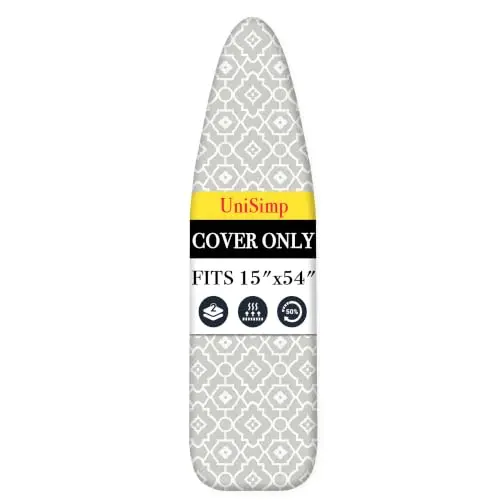
15×54 Cover and Pad – Chemical-Free Cotton Comfort
A 15×54 cover with a 6mm needle-punched felt pad and a 100% cotton canvas top, free of silicone or chemical coatings. Two elastic fasteners and a nose pocket keep it snug.
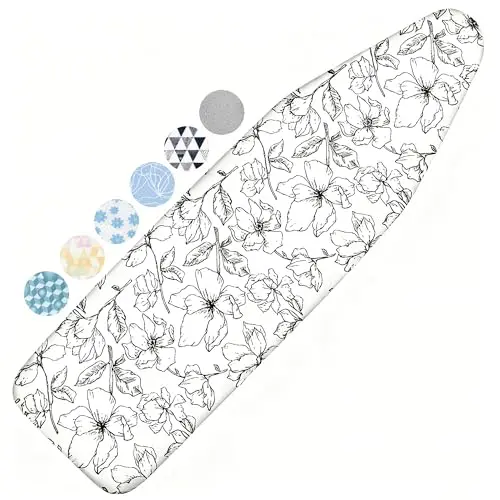
15×54 Cover and Pad – Extra-Thick Padding with Four Fasteners
A 15×54 cover with a 6mm synthetic fiber and foam pad, a breathable cotton top, and four adjustable fastener clips. It includes a protective mesh cloth for delicate fabrics.
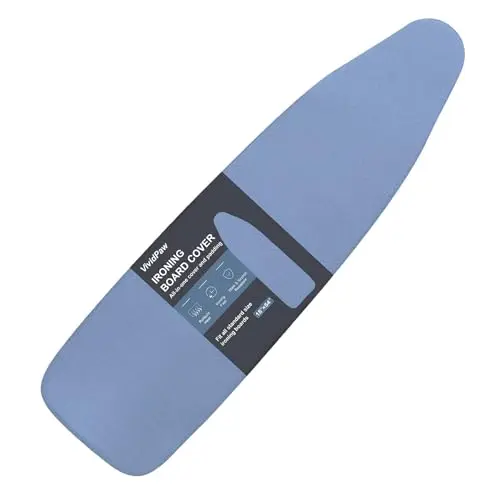
15×54 Cover and Pad – Silicone-Coated Secure Fit
A 15×54 cover with a sewn-in felt pad, reflective silicone coating, and an elastic edge plus hook-and-loop strap. The cotton surface is designed for scorch and stain resistance.
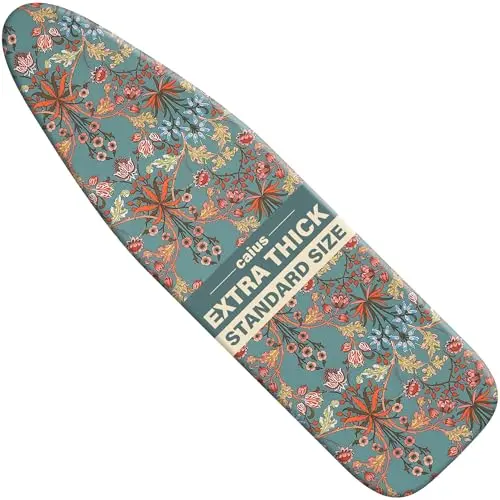
15×54 Cover and Pad – Triple-Layer Heat Reflection
A 15×54 cover with a triple-layer heat-reflective build, cotton face, waterproof backing, and hook-and-loop straps. It carries a two-year warranty.
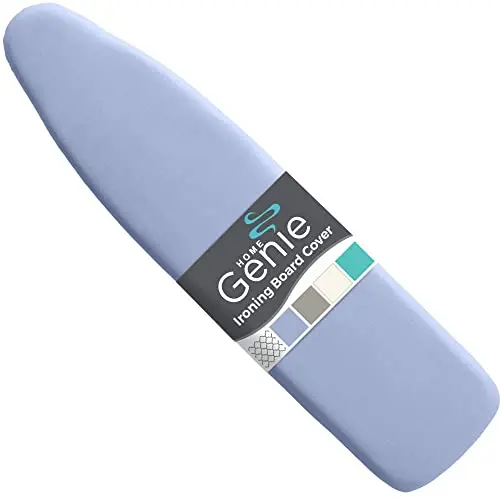
15×54 Cover with Extra Thick Padding – Silicone Scorch Resistance
A 15×54 cover with a silicone coating rated to resist scorching and staining, extra-thick padding, and elastic edges plus two hook-and-loop straps. It is built for standard boards.
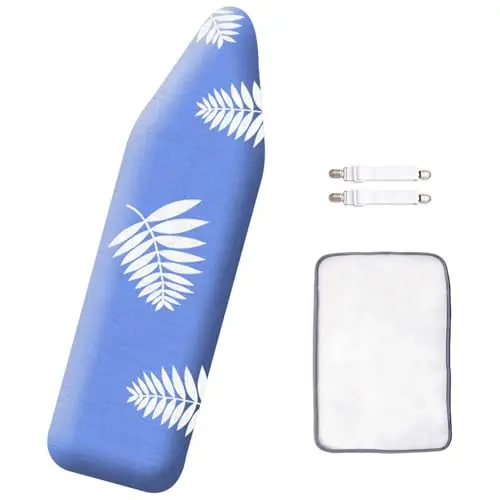
13×43 Cover and Pad – Compact Board Fit
A compact 13×43 cover with a three-layer silicone-coated top, thick padding, and elastic binding plus two hook-and-loop fasteners. It is sized for smaller foldable boards.
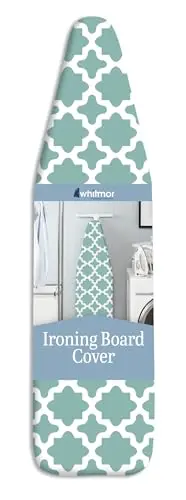
Deluxe 15×54 Cover – Scorch-Resistant Budget Pick
A 15×54 cover with a sewn-in 6mm fiber pad, scorch-resistant cotton surface, elastic edge, and tailored nose pocket. It is the budget-friendly way to refresh a standard board.
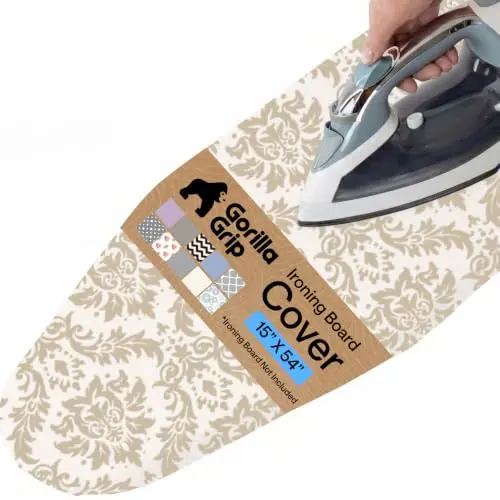
15×54 Padded Cover – Heavy-Duty Silicone Surface
A 15×54 cover with a silicone coating rated to 400F, extra-thick padding, elastic edges, and two underside hook-and-loop straps. The Damask pattern gives it a more decorative look.
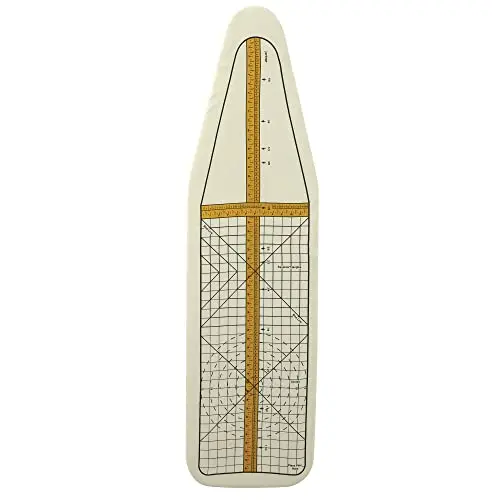
Deluxe Replacement Pad and Cover – Craft-Friendly Larger Fit
A deluxe replacement pad and cover with a 4mm woven fiber pad, pure cotton face, NANOmax coating, cord binding, and a side pocket. The larger cut and sewing-guide pattern suit craft and quilt pressing.
How We Evaluated These Custom Ironing Board Covers
We didn’t run controlled ironing lab trials, wash-cycle durability tests, or months of daily pressing. What we did: cross-referenced 10 custom ironing board cover models from 10 distinct brands across six decision axes – measured fit and size range, padding thickness, cover material and coating, attachment system, heat reflection and scorch resistance, and care or warranty coverage. We triangulated published specifications, feature sets, and owner feedback where available, then mapped each cover against common board sizes and real ironing routines. We also audited how each attachment system was likely to behave on a board that gets opened and closed regularly, because a cover that shifts at the nose is a daily annoyance.
The scoring framework weighted real-world fit and performance (70%) – how well a cover stays taut, cushions the board, and handles heat – against feature differentiation (30%) – unique materials, coatings, attachment designs, and care advantages. We have no commercial relationship with any brand here; recommendations track fit and differentiation, not brand preference. If you want the most heat-efficient standard-board cover, the arteneur 15×54 cover is the one we’d start with; if you prefer an uncoated cotton surface, the UniSimp 15×54 cover is the better route.
Fit is the axis that most often separates a cover that feels custom from one that fights you. We weighed nose-pocket shape, elastic tension, drawstring or hook-and-loop security, and whether the stated dimensions match the board size most buyers actually own. Thin padding, loose edges, and vague sizing got marked down even when the material story was strong.
How to Choose the Right Custom Ironing Board Covers
1. What Custom Fit Means for Ironing Board Covers
In this category, custom fit is less about bespoke sewing and more about a cover that is cut and tensioned for a specific board footprint. Most standard boards are roughly 15 inches wide by 54 inches long, but compact boards and older wooden boards vary. A cover marketed as custom should use a nose pocket, elastic edge, drawstring, or hook-and-loop straps to pull the fabric taut instead of letting it bunch.
The practical test is simple: a good cover should sit flat at the tip, wrap the edges without excess fabric, and stay put when you lift the board. If the product listing only says ‘fits most boards’ and gives no measured range, treat that as a warning sign.
2. Measure Your Board Before You Buy an Ironing Board Cover
Measure the length from the nose to the back edge and the width at the widest point. Do not assume every board is 15×54. A 13×43 cover is a different product, and an oversized cover will wrinkle under the iron no matter how thick the padding is. For compact boards, the SheeChung 13×43 cover is the direct fit; for standard boards, the arteneur 15×54 cover and most 15×54 options in this guide are the right starting point.
Check the board’s nose shape too. A tailored nose pocket matters more than a pretty pattern if your board has a tapered tip. If you have an older wooden board, the cover’s elastic range may need to stretch further than the listing suggests.
3. Padding Thickness and Heat Reflection: What Changes Your Ironing Results
Padding thickness is not just comfort. A thicker pad creates a barrier between the board mesh and your garment, which helps prevent mesh marks on knits and delicates. A heat-reflective layer – silicone, aluminum, or a reflective coating – can push heat back through the fabric instead of letting the board absorb it.
If you want the most cushioned press in this lineup, the Dalykate 15×54 cover pairs a 6mm pad with four fastener clips. If you prefer a firmer, less spongy surface, a 4mm to 6mm pad is the practical range to shop; very thin covers are better for light touch-ups than daily garment care.
4. Attachment Systems: Elastic, Drawstring, or Hook-and-Loop?
Elastic edges are the fastest to install and work well on standard boards. Drawstrings can pull a cover tighter at the corners, which is why they show up on more precise fits. Hook-and-loop straps add security underneath but can wear out or collect lint over time.
The best system depends on how often you open and close the board. A cover with a nose pocket plus elastic is the easiest all-rounder; a drawstring is better if you want a snug, custom-like tension and don’t mind a few extra seconds of setup. Check that the straps or cord are sewn into a reinforced channel, not just tacked on.
5. Cotton vs. Silicone-Coated Covers: Which Surface Suits You?
Pure cotton covers are breathable, quiet under the iron, and free of chemical coatings, which is why the UniSimp 15×54 cover is a strong choice for sensitive households. Silicone-coated covers resist scorching and staining more aggressively and help reflect heat, but they can feel less breathable.
If you iron a lot of dark or delicate fabrics, a protective mesh cloth is a useful add-on; some covers include one. If you mostly press cottons and linens, a treated cotton surface is usually enough.
6. Care, Longevity, and When to Replace an Ironing Board Cover
Most covers here can be hand washed in cold water or run on a gentle cycle, but check the specific listing before washing. Avoid dry cleaning, and air-dry rather than tumble-drying to protect the padding and coating. A cover needs replacing when the padding flattens, the surface scorches, or the elastic stops holding tension.
If you iron weekly, expect the pad to compress over time. Rotating the cover and keeping the board dry will extend its useful life. A stained cover isn’t automatically finished, but a scorched or shiny surface usually is.
Frequently Asked Questions
1. What's the difference between the arteneur 15×54 cover and the UniSimp 15×54 cover?
The arteneur cover is built around heat reflection: a four-layer stack with an aluminum coating, a firm foam core, and a drawstring cinch. The UniSimp cover takes the opposite approach with an uncoated cotton surface and a 6mm needle-punched felt pad. Choose arteneur if you want faster heat transfer and a tighter drawstring fit; choose UniSimp if you want a chemical-free cotton surface and don’t need a reflective coating.
2. How do the Dalykate and VividPaw covers compare for thick padding?
The Dalykate cover leans on a 6mm pad and four adjustable clips, plus a protective mesh cloth for delicates. The VividPaw cover uses a silicone-coated cotton surface and a sewn-in felt pad, with an elastic edge and hook-and-loop strap for security. If maximum cushioning is the goal, Dalykate is the more padded pick; if you want heat reflection and a simpler elastic fit, VividPaw is the better match.
3. Are custom ironing board covers actually custom-made?
Usually not. In this category, custom means the cover is fitted to standard board dimensions rather than loosely draped. A truly custom-like fit comes from a measured size range, a nose pocket, and an attachment system that pulls the fabric taut. If a listing gives only a vague ‘fits most boards’ claim, it is not offering a custom fit in any meaningful sense.
4. Will a 15×54 cover fit a 13×43 ironing board?
No. A 15×54 cover is designed for standard boards and will bunch on a 13×43 board. For a compact board, use a purpose-sized compact cover such as the SheeChung 13×43 cover. Excess fabric at the nose is not just cosmetic; it can shift under the iron and create uneven pressure.
5. How often should you replace an ironing board cover?
Replace it when the padding flattens, the surface develops scorch marks, or the elastic tension stops holding the cover flat. A washable cover can last longer with gentle cleaning, but a compressed pad or shiny scorched surface is a sign that the cover is no longer doing its job. If you iron weekly, check the nose and center of the board first, since those areas wear fastest.
Final Verdict
For most buyers, the arteneur 15×54 cover is the answer – its four-layer build, heat-reflective aluminum layer, and drawstring cinch make it the most convincing custom-fit package for a standard board. If you want an uncoated cotton surface, the UniSimp 15×54 cover is the cleaner choice, with thick felt padding and no silicone treatment. Budget-minded shoppers can refresh a standard board with the Whitmor 15×54 cover and still get a sewn-in pad and scorch-resistant surface. And if your board is compact, skip the standard sizes and go straight to the SheeChung 13×43 cover, which is cut for the smaller footprint.
