
Best Dehumidifiers With Drain Hose – 2026 Reviews

A dehumidifier with a drain hose sounds like a small upgrade until you’ve emptied a full tank in a damp basement for the third time in a day. Continuous drainage is the difference between a unit you babysit and one you can set up in a corner and forget about. The catch is that “drain hose included” doesn’t guarantee an easy install.
The first thing to sort out is where the water will go. A gravity hose needs a floor drain or sump below the outlet; a built-in pump can push condensate upward to a sink, window, or utility drain. That single detail decides whether a budget model works or whether you need a pump-equipped unit. After that, capacity and coverage matter – an 80-pint dehumidifier is overkill for a bedroom but sensible for a large, open basement.
Noise, footprint, and hose length separate the merely capable options from the ones you’ll actually want to live with. We looked at dehumidifiers across brands to find the models that make continuous drainage genuinely practical, not just a checkbox on the spec sheet.
Best Dehumidifiers with Drain Hose – 2026 Reviews
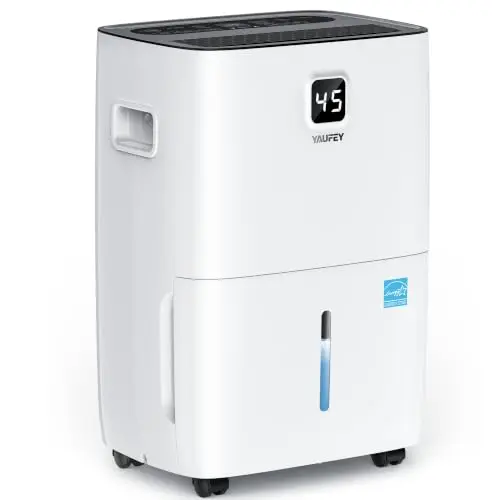
JD-Q 80 Pint – Whole-Home Continuous Drain
The yaufey JD-Q is an 80-pint compressor dehumidifier built for large basements and open living areas. It includes a 3.28 ft drain hose for gravity drainage, plus a 1.06-gallon tank with auto shutoff when you want to empty manually. Four operating modes and three fan speeds let you tune it to changing humidity.
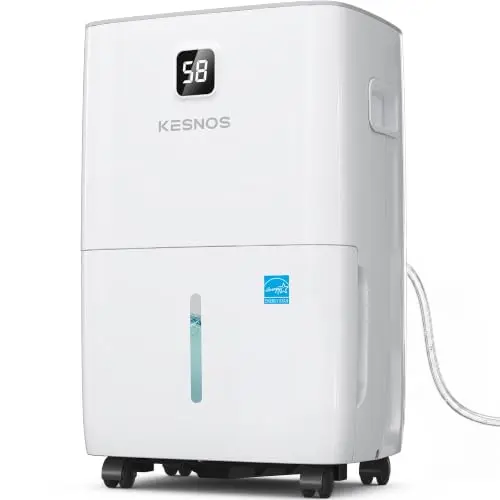
JD-N 80 Pint – Large-Space Drainage
The Kesnos JD-N covers up to 6,000 sq ft with 80-pint daily moisture removal and includes a 3.3 ft drain hose for continuous gravity drainage. A front humidity display makes the setpoint easy to read, and MIRAGE sleep mode turns the display off while the unit keeps working. The 1.06-gallon tank handles manual emptying when a drain isn’t handy.

ADC018 – Pump-Assisted Continuous Drain
The avylo ADC018 is a 90-pint max-capacity dehumidifier with a built-in pump and a 15 ft drain hose, so it can push condensate upward to a sink, window, or utility drain. A 2.11-gallon top-mounted tank gives you a manual option, and the unit is rated for spaces up to 5,000 sq ft. It’s the widest drainage setup here.

JD025CE-80 – 80-Pint Basement Workhorse
The Waykar JD025CE-80 is an 80-pint dehumidifier for spaces up to 5,000 sq ft, with a 90-degree auto-swing airflow feature and a 30% to 80% humidity range. It includes a 6.56 ft drain hose and a 1.14-gallon tank, so you can run continuous gravity drainage or empty manually. The unit is Energy Star certified and rated around 42 dB.
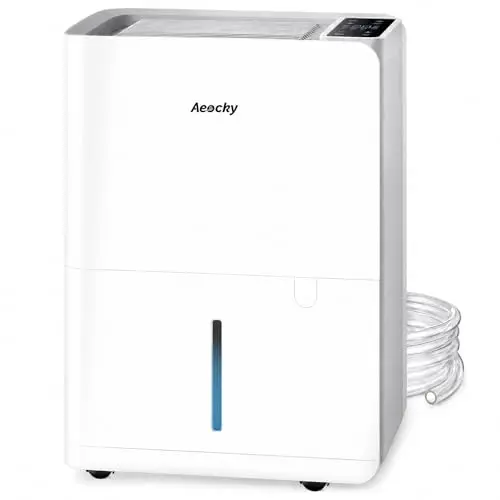
BOREAS-001 – Compact 50-Pint Quiet Drain
The AEOCKY BOREAS-001 is a 50-pint dehumidifier for spaces up to 3,500 sq ft, with a compact body and a 0.8-gallon tank. It includes a 2 m drain hose and a garden-hose adapter for longer gravity runs. The unit is rated around 40 dB and backed by a 3-year machine warranty.

YC3 – Compact 21-Pint Drainage
The GoGuess YC3 is a compact 21-pint dehumidifier for smaller spaces up to 1,600 sq ft, with a 2.3 L tank and an included 3.28 ft drain hose. It offers DEHU, TURBO, and SLEEP modes, plus a color-changing humidity light and a 40 dB noise rating. It’s the budget-friendly entry point for continuous drainage in a bedroom, RV, or small basement.
How We Evaluated These Dehumidifiers with Drain Hose
We didn’t run controlled moisture-removal chamber tests, measure drain rates with a flow meter, or put these units through a multi-season compressor durability trial. What we did: cross-referenced 6 dehumidifier models from 6 distinct brands across 6 decision axes – pint capacity, square-footage coverage, drain-hose setup, noise, energy use, and footprint. We triangulated published specifications, feature sets, and owner feedback where available, then mapped each unit against realistic buyer profiles: a damp basement with a floor drain, a bedroom that needs quiet operation, and a utility room where a pump is the only way to drain upward. We also audited the practical details that decide whether a drain-hose setup works in daily life – whether the hose is included, how long it is, whether the tank must stay installed, and whether a pump is needed to reach a higher drain point.
The scoring framework weighted real-world performance (70%) – how well each dehumidifier removes moisture and supports continuous drainage in its stated use case – against feature differentiation (30%) – pump capability, hose length, humidity range, modes, and portability. We have no commercial relationship with the brands featured; recommendations track fit and differentiation, not brand preference. If you have a low floor drain and a large basement, the yaufey JD-Q is the balanced starting point. If your drain sits above the unit, the avylo ADC018 is the more practical route.
How to Choose the Right Dehumidifier with Drain Hose
1. Continuous Drainage Setup: Gravity Hose vs. Built-In Pump
The two drainage paths behave differently. Gravity drainage relies on a hose running downhill to a floor drain, sump, or outside outlet; it’s simple, but the drain must sit lower than the unit’s outlet. A built-in pump adds a lift capability, so you can send condensate up to a sink or window. If your basement has a floor drain, a gravity unit like the yaufey JD-Q is the simpler choice. If the only drain is above the unit, the avylo ADC018 is the practical route. In both cases, confirm the drain hose is included and that the tank can stay installed if the model requires it.
2. Match Pint Capacity and Square-Footage Coverage to Your Space
Manufacturers rate pint capacity at hot, humid test conditions, so a unit rated for 80 pints may pull less in a cool basement. Treat square-footage coverage as a rough guide, not a guarantee. For a large, open basement, look at 70- to 80-pint models; for a medium room, 50 pints is often enough; for a bedroom or RV, 20- to 30-pint units can work. The real-world conditions in your space – temperature, dampness, and air circulation – matter more than the biggest number on the box. For a big open basement, the Kesnos JD-N is the pick I’d start with.
3. Hose Length, Drain Height, and Tank Bypass Details That Matter
Hose length decides where you can place the unit. Included hoses range from about 3 ft to 6.5 ft; a standard garden hose can extend a gravity run, but every extra foot needs a consistent downward slope. Drain height is the other half of the puzzle: gravity models need a low outlet, while pump models can lift water upward. Check whether the unit supports tank bypass – some dehumidifiers still require the tank to be installed even when a hose is connected. A kinked or uphill hose will stop drainage and trigger a shutdown.
4. Noise, Energy Use, and Footprint Tradeoffs in Dehumidifiers with Drain Hose
Compressor dehumidifiers are not silent, but the better ones land around 40 to 42 dB on low or sleep settings. Look for a sleep mode if the unit will run near a bedroom. Energy Star certification is a useful efficiency filter, especially for continuous operation, though real consumption depends on room conditions. Footprint matters too: an 80-pint unit can weigh around 30 pounds and take up real floor space, while a 50-pint compact model is easier to tuck into a corner. For a bedroom-adjacent setup, the AEOCKY BOREAS-001 is the quieter route.
5. Common Dehumidifier Buying Mistakes to Avoid
The most common mistake is oversizing for a small room and then dealing with a bulky unit that cycles too hard. The second is ignoring drain location and buying a gravity model when the only drain is uphill. Also confirm the hose is included rather than assuming it is, and plan to rinse the washable filter regularly. Finally, don’t judge capacity by tank size alone; a small tank is fine if the drain hose does the work, but a large tank is a useful backup during power outages or setup changes.
Frequently Asked Questions
1. Can I leave a dehumidifier with a drain hose running continuously?
Yes, provided the hose is set up correctly. Continuous drainage works best with a gravity-fed hose that slopes downward without kinks, or with a pump model if the drain is uphill. Keep the auto shutoff active as a backup, and check the hose every few weeks for algae or debris. For true unattended operation, confirm the unit doesn’t require you to empty the tank even when the hose is connected.
2. What's the difference between the yaufey JD-Q and Kesnos JD-N?
Both are 80-pint dehumidifiers with a 30% to 80% humidity range and an included drain hose, so the decision comes down to controls and coverage. The yaufey JD-Q gives you four modes and three fan speeds, which is more tuning flexibility for changing basement conditions. The Kesnos JD-N leans on a 6,000 sq ft coverage claim, a front humidity display, and MIRAGE sleep mode. Choose yaufey for more control; choose Kesnos if you want the display at eye level and a bigger coverage target.
3. Do I need a dehumidifier with a built-in pump?
Only if your drain location is above the unit or too far for a gravity hose. A gravity drain is simpler and has fewer parts to fail. A built-in pump adds flexibility because it can lift condensate to a sink, window, or utility drain; the avylo ADC018 offers a 15 ft lift via its included hose. If you have a floor drain or sump, save the complexity and go gravity.
4. How long can a dehumidifier drain hose be?
Most included hoses run about 3 ft to 6.5 ft. You can extend a gravity line with a garden hose adapter, but drain hose length is limited by physics: the run needs a steady downhill slope and no high spots. Long, flat runs invite gravity flow problems and clogs. If you need to go uphill or across a long basement, pump-assisted drainage is the safer choice.
5. What's the difference between the GoGuess YC3 and AEOCKY BOREAS-001?
The GoGuess YC3 is a compact dehumidifier with 21-pint capacity and a 2.3 L tank, aimed at bedrooms, RVs, and small damp rooms. The AEOCKY BOREAS-001 steps up to 50-pint capacity and a 3,500 sq ft coverage target, with a larger body and a 40 dB quiet operation rating. Both include a drain hose, so either can run continuously. Pick GoGuess for a tight footprint; pick AEOCKY for a medium basement or a room where quiet operation matters most.
Final Verdict
For most buyers, the yaufey JD-Q is the answer – it pairs 80-pint capacity with a 3.28 ft drain hose, four modes, and three fan speeds, so it can handle a large basement without making drainage a daily chore. If your space is bigger and you want a front-read humidity display, the Kesnos JD-N is the large-space alternative. If your drain sits above the unit, the avylo ADC018 is the pump-equipped pick that can lift water where gravity won’t. And for a bedroom, RV, or small damp room, the GoGuess YC3 gets you continuous drainage at a budget-friendly price. Match the unit to your drain location first; capacity and noise come next.
