
Best Dehumidifiers For Allergies – 2026 Reviews

You wake up congested, the windows are fogged on the inside, and the bedroom smells faintly like a wet towel. That’s not a pollen problem. It’s a humidity problem, and no amount of antihistamine fixes it.
Dust mites and mold both need moisture to reproduce, which is why a dehumidifier is one of the few purchases that actually moves the needle for indoor allergies, provided it can hold a room at a specific humidity level and keep holding it. Two things separate the machines that work from the ones that sit in a corner blinking: setpoint control and uninterrupted drainage. A unit with a big pint rating and no humidistat will overshoot and then drift. A unit that shuts off every time its tank fills isn’t really running most of the day.
The field splits cleanly into three camps: tiny thermoelectric boxes for closets and bathrooms, mid-size compressors that can hold a bedroom or a finished basement, and high-output units built for genuinely wet spaces. Below we’ve mapped all three across different brands and price tiers so you can match the machine to the room you’re actually trying to fix.
Best Dehumidifiers for Allergies – 2026 Reviews

22 Pint Dehumidifier – Steady Whole-Room Humidity Control
A compressor dehumidifier built for real rooms rather than closets. It pulls up to 22 pints a day and holds a humidity setpoint anywhere from 35% to 85%, which is the range that matters when you’re trying to keep dust mites and mold from settling in.
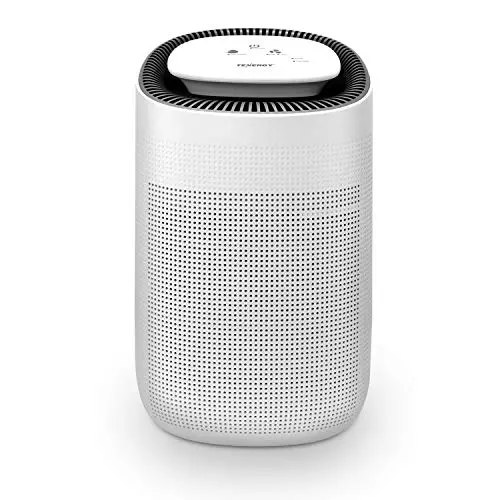
Sorbi Dehumidifier – HEPA Filtration Plus Moisture Removal
A two-in-one for small, damp, enclosed spaces. The Sorbi pairs Peltier moisture removal with a true HEPA filter, so the same box that dries a closet also traps a meaningful share of the particles floating around in it.
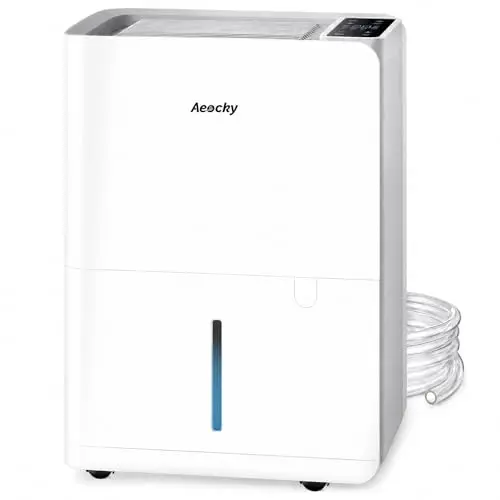
BOREAS-001 – 50-Pint Whole-Home Drying
A high-output compressor unit aimed at big, humid spaces. Fifty pints a day of rated extraction and a 40 dB ceiling make it the pick when a basement or garage is the moisture source feeding the rest of the house.
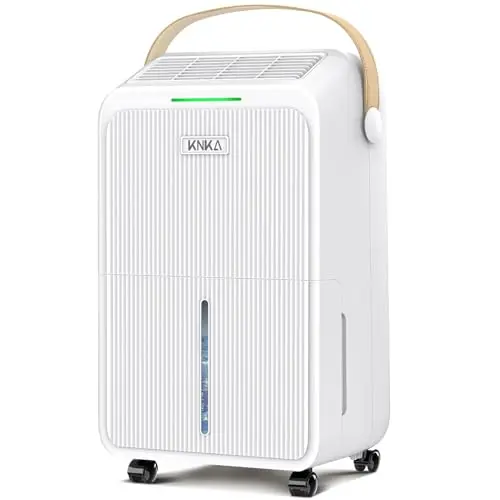
PD22SC-12 – 34-Pint Three-Mode Dehumidifier
A mid-size compressor unit with three working modes, a drain hose in the box, and a humidity readout that stays visible even when the unit is off. It sits between the small Peltier boxes and the whole-home machines.
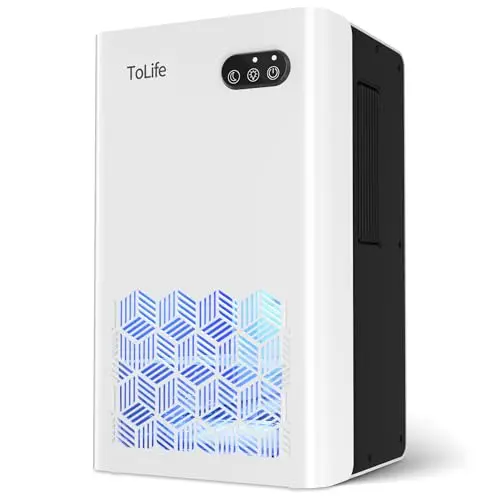
TZ-C2 – Budget Bedroom Dehumidifier
An inexpensive thermoelectric unit sized for a bedroom, closet, or bathroom. Two modes, a sleep setting under 30 dB, and a claimed sub-45% humidity target make it a low-cost way to take the edge off a muggy room.
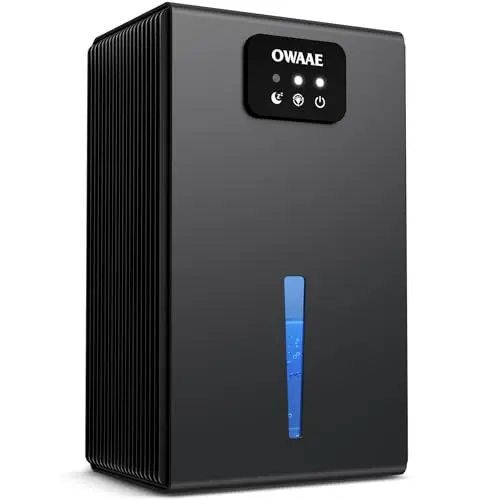
TZ-C4S – Slim Quiet Dehumidifier for Small Rooms
A narrow thermoelectric unit built for tight spots. The 4.9-inch width lets it slide between a toilet and a wall, and the sub-30 dB sleep mode keeps it unobtrusive in a nursery or a small bedroom.
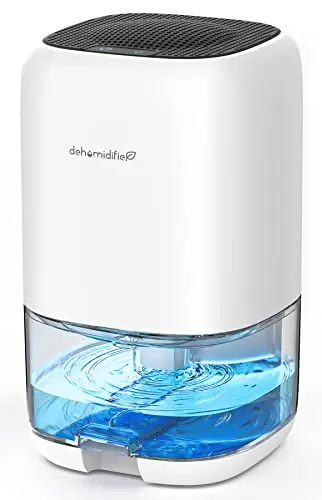
DH-CS01 – Tiny Closet and RV Dehumidifier
The smallest unit in the group. A 28 dB Peltier box with a 35-ounce tank, sized for a closet, an RV, or a bathroom where a full-size dehumidifier simply won’t go.
How We Evaluated These Dehumidifiers for Allergies
We didn’t seal these units into a humidity chamber and measure spore counts before and after. What we did: cross-referenced 7 dehumidifier models from 7 distinct brands across six decision axes – rated moisture removal, humidity setpoint control, drainage options, filtration, noise, and footprint. Then we mapped each one against the two ways a dehumidifier actually helps an allergy sufferer: holding indoor humidity below the roughly 50% threshold where dust mites thrive, and capturing airborne particles before they settle into carpet and bedding. A unit that nails the first job but not the second is still worth owning. A unit that claims both and delivers neither is not.
The scoring framework weighted real-world allergy fit (70%) – how reliably each unit holds a low humidity setpoint in a real room, day after day – against feature differentiation (30%) – filtration, drainage flexibility, setpoint granularity, and noise. We triangulated published specifications, feature sets, and aggregated owner feedback where available. Coverage claims were discounted where they clearly outran the rated pint output. We have no commercial relationship with any brand featured; recommendations track fit and differentiation, not brand preference. If your problem room is a basement or an open living area, the Midea 22 Pint Dehumidifier is the straightforward answer. If you want filtration in the same box, the Tenergy Sorbi is the only unit here that offers it.
How to Choose the Right Dehumidifier for Allergies
1. Why Humidity Level Matters More Than Any Single Dehumidifier Feature
Allergy relief from a dehumidifier comes down to one number: relative humidity. Dust mites stop reproducing somewhere below 50% relative humidity, and mold struggles to establish itself under about 60%. Get a bedroom to 45% to 50% and keep it there, and you’ve addressed the source rather than the symptom.
That’s why adjustable humidistats matter more than raw capacity for most households. A unit that blasts moisture out of the air but has no setpoint will overshoot into the thirties, feel uncomfortably dry, then cycle off while humidity creeps back up. You want a machine that reads the room and holds a target.
2. Choosing a Dehumidifier for Allergies in Bedrooms vs. Basements
Where the unit lives changes what you should prioritize. A bedroom needs low noise, because anything much above 45 dB will get switched off at night, which defeats the purpose. It also needs a sleep mode that dims the display and a footprint that doesn’t eat floor space. A compact thermoelectric unit can hold a small, closed bedroom if the door stays shut.
A basement is the opposite problem. You want high pint-per-day output, a continuous drain so it never shuts off mid-week, and auto-defrost for cool months. Noise barely matters down there. Buying a bedroom-grade unit for a wet basement is the most common mistake in this category.
3. Dehumidifier Capacity: Matching Pints per Day to Real Room Size
Pint ratings are measured under punishing conditions, usually 95 degrees and 90% relative humidity, so the number on the box is a ceiling and not a promise. In a 68-degree basement at 60% humidity, expect meaningfully less. Budget for roughly 10 pints per 500 square feet of damp space as a starting point, then round up if the room has laundry, a bathroom, or exposed foundation walls.
Compact thermoelectric dehumidifiers are rated differently, in milliliters or ounces per day, and the numbers are small, often under a liter. That’s fine for a closet. It is not fine for a 400-square-foot basement. If you’re drying a large or genuinely wet space, the AEOCKY BOREAS-001 is the pick here, with the highest rated output in this group.
4. HEPA Dehumidifiers vs. Standard Moisture Removal
Most dehumidifiers move air across a cold coil and blow it back out through a basic washable mesh filter that catches dust and pet hair but nothing smaller. A true HEPA filter is a different class of hardware, rated to capture 99.97% of particles at 0.3 microns, which includes a lot of what makes allergy season miserable.
The catch is airflow. A dehumidifier’s fan is tuned for moisture removal, not for the air changes per hour a standalone purifier delivers. So HEPA in a dehumidifier is a genuine bonus rather than a replacement for a dedicated purifier in a large room. In a closet or small bathroom it’s often enough on its own, and the Tenergy Sorbi is the one unit here that pairs the two.
5. Drainage and Setpoints: Why Continuous Drain Beats Emptying a Tank
A dehumidifier that shuts off when its tank fills isn’t controlling humidity. It’s controlling humidity until you get home. In a wet space a small tank can fill in a day, which means the unit sits idle for hours at a stretch. Gravity drain via a hose solves this outright and should be the default setup in any basement or crawlspace.
If a drain line isn’t practical, look for a large removable tank, an auto-shutoff that reliably triggers, and ideally support for an external reservoir. The KNKA PD22SC-12 ships with a drain hose and accepts an optional larger tank, which is a practical combination for a room without a floor drain.
6. What Dehumidifier Price Tiers Actually Buy You
Entry-level money buys a compact thermoelectric unit: quiet, light, cheap to run, and limited to one small enclosed room. These are genuinely useful in closets, bathrooms, and RVs, and largely oversold everywhere else.
Mid-range money buys a real compressor in the 20-to-35-pint range with a humidistat, a drain port, and wheels. This is the sweet spot for most allergy households, because it’s the first tier that can actually hold a setpoint across a room. Premium money buys 50-pint output, longer warranties, better cold-weather behavior, and quieter operation at high output. You’re paying for capacity and durability, not extra features.
Frequently Asked Questions
1. Do dehumidifiers actually help with dust mite and mold allergies?
Yes, indirectly but meaningfully. Dehumidifiers don’t remove allergens; they remove the conditions that let allergen sources multiply. Dust mites absorb moisture from the air and stop thriving when relative humidity stays below about 50%. Mold and mildew need a similar ceiling. Bring a damp bedroom or basement down to 45% to 50% and keep it there, and you’ve cut the source rather than filtered the output.
What a dehumidifier won’t do is capture pollen, pet dander, or particles already airborne. For that you need filtration, either a dedicated purifier or a dehumidifier with a true HEPA filter. The two approaches stack well.
2. What humidity level should I set for allergy relief?
Target 45% to 50% relative humidity in bedrooms and living areas. That’s low enough to suppress dust mites and most mold growth, and high enough that you won’t wake up with a dry throat and irritated sinuses. Dropping below 40% is usually counterproductive for allergy sufferers, since very dry air irritates membranes that are already sensitive.
Set the humidistat and let the machine cycle on its own. If your unit has no setpoint, put an inexpensive hygrometer in the room and switch the dehumidifier on and off manually. Crude, but far better than running it blind.
3. Midea 22 Pint vs. AEOCKY BOREAS-001: which is better for a damp basement?
Both are compressor units with real output; the difference is scale. The Midea 22 Pint holds a setpoint from 35% to 85%, drains continuously, and covers around 1,500 square feet. It’s the more controlled, more precise machine for a finished basement you actually use.
The AEOCKY BOREAS-001 is the brute: 50 pints per day rated output, north of 3,500 square feet of coverage, and a 3-year warranty. If the space is genuinely wet with weeping walls, a garage, or a crawlspace, go with the BOREAS-001. If it’s merely humid and you want fine control, the Midea is the better fit.
4. Tenergy Sorbi vs. ToLife TZ-C2: is HEPA worth it in a small bedroom?
Depends on which problem bothers you more. The Tenergy Sorbi adds a true HEPA filter to a small Peltier dehumidifier, so it addresses both moisture and airborne particulates. That’s useful in a closet, bathroom, or small office where one box has to do everything, though its output is modest and the one-liter tank needs attention.
The ToLife TZ-C2 is the simpler, cheaper answer: a 95-ounce tank, a sub-30 dB sleep mode, and no filter to replace. If your bedroom is humid but the air is otherwise clean, the ToLife covers it for less money. If you’re also fighting dust, the Tenergy’s filtration earns its keep.
5. Can a small Peltier dehumidifier keep a bedroom dry enough for allergies?
Usually yes, with conditions. Thermoelectric units like the TABYIK DH-CS01 and OWAAE TZ-C4S pull under a liter a day, which is plenty for a closed bedroom under 200 square feet that’s merely humid rather than wet. They’re quiet, inexpensive to run, and easy to live with.
What they can’t do is rescue a room with an actual moisture source: a leak, a damp crawlspace beneath, or an unvented bathroom. In those cases the unit runs constantly, never catches up, and the tank fills while humidity stays high. Fix the source, or move up to a compressor dehumidifier with real pint-per-day output.
Final Verdict
For most allergy households, our Best Overall pick, the Midea 22 Pint Dehumidifier, is the answer. It holds a precise humidity setpoint, drains continuously so it never quits in the middle of the night, and covers a real room rather than a closet. Pair it with a standalone purifier and you’ve handled both moisture and particles.
If you want filtration built in, the Tenergy Sorbi is the only unit here that pairs a true HEPA filter with moisture removal, as long as you accept that it’s a small-space tool. For a genuinely wet basement or garage, the AEOCKY BOREAS-001 outruns everything else in this group. And if the budget is tight and the room is small, the ToLife TZ-C2 gets you quiet overnight drying for very little.
Match the machine to the room. That’s the whole game here.
