
Best Dehumidifiers For Bathroom Without Vent – 2026 Reviews

You step out of the shower, and the mirror is still fogged ten minutes later. The towels feel damp by evening, the grout never quite dries, and there’s no exhaust fan to pull the steam out. That’s the specific problem a dehumidifier for a bathroom without a vent is trying to solve.
The two main routes are powered mini dehumidifiers and passive moisture absorbers. Powered units move air and collect water faster, but they need an outlet and a tank you’ll empty. Passive absorbers are silent and cordless, yet they work slowly and suit smaller spaces.
We looked across brands to find the models that make the most sense for trapped bathroom humidity, from compact electric units to no-power options. The right pick depends on bathroom size, how often the shower runs, and how much maintenance you’re willing to do.
Best Dehumidifiers for Bathroom Without Vent – 2026 Reviews
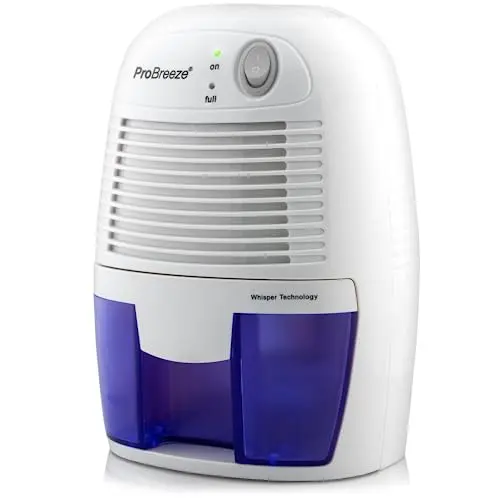
PB-02 – Compact Bathroom Dehumidifier
A compact electric mini dehumidifier sized for bathrooms, bedrooms, closets, and other small rooms. It has a 16-ounce tank, auto shutoff, and quiet operation for around-the-clock use.
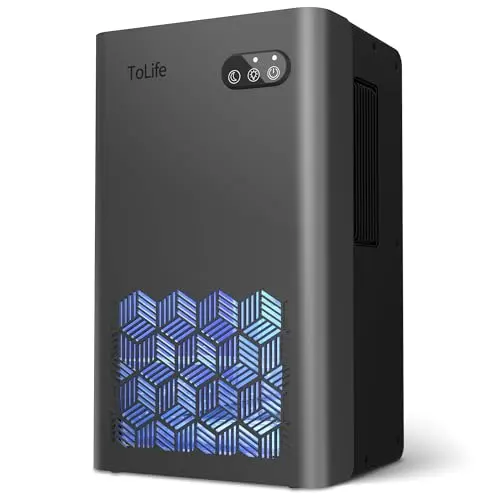
TZ-C2 – Large-Tank Moisture Control
A high-capacity portable dehumidifier with a 95-ounce tank, two modes, auto shutoff, and seven-color lighting. Built for bathrooms, basements, bedrooms, closets, and RVs.
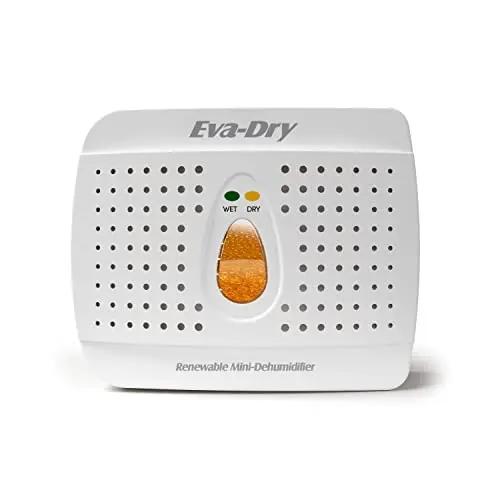
E-333 – Cordless Mini Absorber
A cordless, rechargeable silica-gel dehumidifier for closets, bathrooms, cars, and other small enclosed spaces. It needs no batteries or cables and includes a hanging hook.
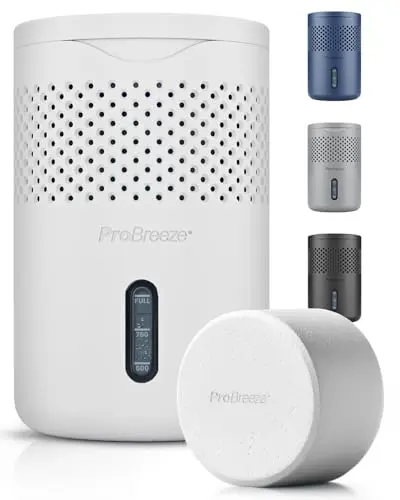
Osmo – No-Power Moisture Absorber
A refillable, no-electricity moisture absorber with a 44-fluid-ounce tank and a long-lasting tablet. It’s fragrance-free and designed for closets, bathrooms, bedrooms, and RVs.
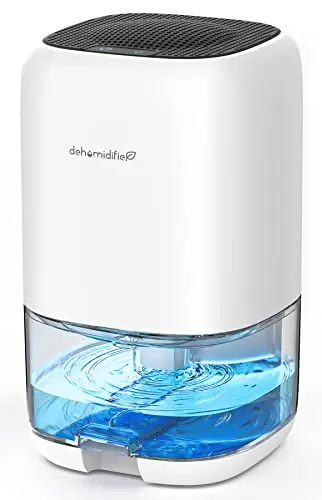
DH-CS01 – Quiet Small-Space Dehumidifier
A compact Peltier dehumidifier with a 35-ounce tank, 28 dB operation, seven-color lighting, and auto shutoff for bedrooms, bathrooms, closets, and RVs.
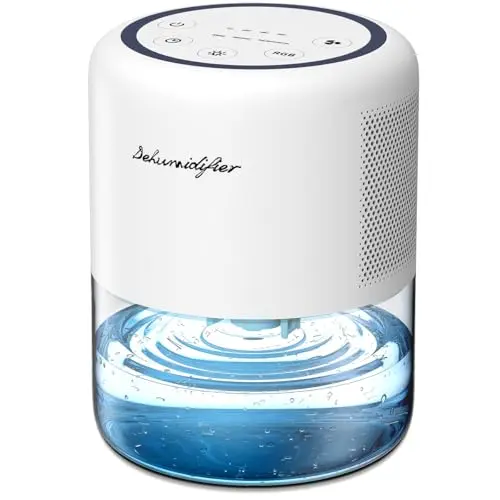
DH-D2 – Multi-Mode Compact Dehumidifier
A compact dehumidifier with a 44-ounce tank, three operating modes, multiple timers, auto defrost, and ten color lights for small rooms and bathrooms.
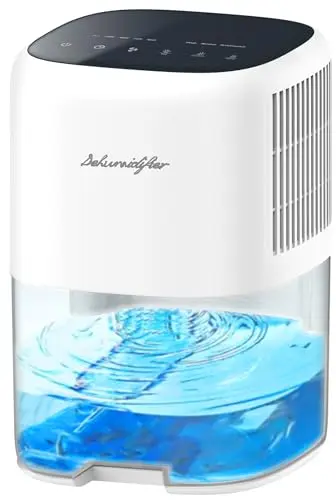
E2-DH-WHITE – Timer-Equipped Compact Dehumidifier
A small dehumidifier with a 44-ounce tank, three modes, five timer settings, auto defrost, and color lighting for bathrooms, basements, closets, and RVs.
How We Evaluated These Dehumidifiers for Bathroom Without Vent
We didn’t run controlled humidity-chamber tests or measure moisture removal with calibrated instruments. What we did: cross-referenced 7 dehumidifier models from 6 brands across six decision axes – moisture-removal capacity, tank size, power draw, noise, auto-shutoff and defrost features, and footprint for a ventless bathroom. We audited coverage ratings against likely bathroom dimensions, triangulated published specifications, feature sets, owner feedback where available, and use-case fit for small, poorly ventilated rooms where humidity lingers after showers.
That use-case lens matters more than raw coverage claims. A passive absorber and a powered Peltier unit solve the same problem differently, so we mapped each model to the buyer it actually suits: tiny powder rooms, shared family bathrooms, rentals where wiring is limited, and rooms with no exhaust fan at all. We also weighed maintenance realities like tank emptying, filter cleaning, tablet replacement, and recharging schedules. A small unit with a well-designed tank can beat a bigger model that is awkward to place.
The scoring framework weighted real-world fit (70%) – how well each option handles trapped bathroom humidity without constant attention – against feature differentiation (30%) – tank design, portability, timers, and passive-versus-electric tradeoffs. We have no commercial relationship with the brands featured; recommendations track fit and differentiation, not brand preference. If you want a bathroom-sized unit, the Pro Breeze PB-02 is your match; if you want fewer tank empties, the ToLife TZ-C2 serves you better.
How to Choose the Right Dehumidifier for a Bathroom Without Vent
1. Why a Bathroom Without a Vent Needs a Different Dehumidifier
A bathroom without an exhaust fan holds moisture longer than most people expect. Steam settles on mirrors, grout, towels, and window frames, and it has nowhere to go. That makes air movement, continuous moisture removal, and easy emptying more important than a big coverage number on the box.
You have two practical paths: a powered mini dehumidifier that pulls air through a cold element and collects water in a tank, or a passive absorber that quietly traps moisture with silica gel or a tablet. Neither replaces a fan, but both can take the edge off between showers.
2. Match Dehumidifier Capacity to Your Bathroom Size
Most bathrooms are small enough that a mini dehumidifier with a 16- to 44-ounce tank is the right starting point. If the room is especially damp or shared by several people, a larger tank means fewer interruptions. For a tight room, the Pro Breeze PB-02 is a natural fit because its compact body and auto-shutoff suit countertop or floor placement.
Don’t overbuy coverage for a single bathroom. A unit rated for a much larger room can still work, but it may be bulkier and louder than you need. Pay more attention to tank size and auto shutoff than to the biggest square-footage claim.
3. Electric Mini Dehumidifiers vs Passive Moisture Absorbers
Powered units remove moisture faster and give you a visible tank to empty, but they need an outlet and add fan noise. Passive absorbers are silent, cordless, and ideal for rentals or rooms without a free socket, yet they work slowly and suit small enclosed spaces best.
For a ventless bathroom that gets daily showers, a powered dehumidifier is usually the more proactive choice. For a guest bath or a room used occasionally, a passive absorber can be enough. The Eva-Dry E-333 is the simplest no-power route if you want to hang it and forget it.
4. Tank Capacity, Auto Shutoff, and Maintenance
A full tank is the most common reason a mini dehumidifier stops working quietly. Look for auto shutoff, a water-level window, and a tank that is easy to remove and rinse. Models with auto defrost are more useful in cool bathrooms where the coil can frost over.
Plan on regular emptying during humid weeks, and clean the intake vents so airflow doesn’t drop. Passive absorbers need their own rhythm: recharging silica gel, replacing tablets, or emptying a collection tank.
5. Noise, Footprint, and Nighttime Use in a Bathroom Without a Vent
If the bathroom sits next to a bedroom, low noise matters. Many minis claim quiet operation, but sleep modes and fan-speed control are the features that make nighttime use realistic. A compact footprint also helps in a room where floor space is already tight.
Colored lights and timers are nice extras, not core performance. Prioritize quiet operation, stable placement, and a cord that reaches your outlet without blocking the door.
6. What to Expect at Each Dehumidifier Price Tier
Entry-level picks are usually passive absorbers or very small electric units; they cost less but demand more frequent attention. Mid-range minis add larger tanks, auto-shutoff, and sleep modes. Premium models bring bigger tanks, more modes, and timers, but they can be overkill for a single bathroom.
Spend for capacity and convenience, not for decorative lighting. The best value is usually the unit that matches your bathroom’s size and your tolerance for emptying a tank.
Frequently Asked Questions
1. Do I need an electric dehumidifier for a bathroom without a vent?
Not always. A passive absorber can help a lightly used bathroom, especially if you don’t have a free outlet. But a powered mini dehumidifier is more proactive for daily showers because it moves air and collects water faster. If the room stays steamy for hours, start with electric; if it only gets occasional use, cordless may be enough.
2. ToLife TZ-C2 vs Pro Breeze PB-02: which fits a ventless bathroom?
They solve different-sized problems. The ToLife TZ-C2 has a 95-ounce tank and a much larger coverage rating, so it suits a busy family bathroom or a damp room where you want fewer emptying trips. The Pro Breeze PB-02 is more compact and bathroom-focused, with a smaller tank that needs more attention. For most standard bathrooms, the ToLife TZ-C2 is the easier long-term pick; for a tiny powder room, the Pro Breeze PB-02 is less intrusive.
3. Eva-Dry E-333 vs Pro Breeze Osmo: which no-power absorber should you choose?
The Eva-Dry E-333 is a rechargeable silica-gel design you hang or place, and it’s handy for very small spaces. The Pro Breeze Osmo uses a tablet and collection tank, which makes the water level easier to see and empties less often. Choose Eva-Dry for a closet-sized bathroom or a spot with no floor room; choose Osmo if you want a refillable tank and don’t mind a larger footprint.
4. How often will I need to empty a mini dehumidifier in a bathroom?
It depends on humidity, tank size, and how often the shower runs. A small tank can fill in a day or two during damp weather, while a larger tank may stretch to several days. Auto-shutoff prevents overflow, but it doesn’t reduce the need to check the tank regularly.
5. Can a small dehumidifier actually prevent mold in a bathroom without a fan?
It can help, but it isn’t a guarantee. A small dehumidifier lowers surface moisture and keeps the room from staying soggy, which reduces mold-friendly conditions. You still need air circulation, quick wipe-downs, and a dry towel routine. If the bathroom has serious recurring dampness, treat the dehumidifier as one part of the fix, not the whole fix.
Final Verdict
For most ventless bathrooms, the Pro Breeze PB-02 is the right starting point: it’s compact, quiet, and built for the room rather than a whole basement. If you want fewer tank empties and don’t mind a larger unit, the ToLife TZ-C2 is the high-capacity alternative, though check its voltage spec first. And if you want no cord, no outlet, and no fan noise at all, the Eva-Dry E-333 is the simple set-and-forget absorber for small rooms. Match the unit to your bathroom’s size and your tolerance for maintenance, and you’ll get the most out of a ventless setup.
