
Best Dehumidifiers For Grow Tents – 2026 Reviews

A grow tent can swing from dripping-wet after a watering to bone-dry by lights-out, and that humidity whiplash is where mold, bud rot, and powdery mildew get a foothold. The right dehumidifier isn’t just the one with the biggest tank or the loudest ‘coverage” claim. It’s the one that can keep pulling moisture without you babysitting it every day.
For a grow tent, two specs separate useful units from frustrating ones: continuous drainage and real-world moisture removal in an enclosed, warm, humid space. Tank size, noise, heat, and built-in lighting all matter too, especially if the tent sits near a bedroom or runs a photoperiod schedule.
We looked across active dehumidifiers from several brands and focused on models that make sense for enclosed grow spaces. The goal is simple: help you pick a unit that keeps humidity steadier without turning your grow into a daily emptying routine.
Best Dehumidifiers for Grow Tents – 2026 Reviews
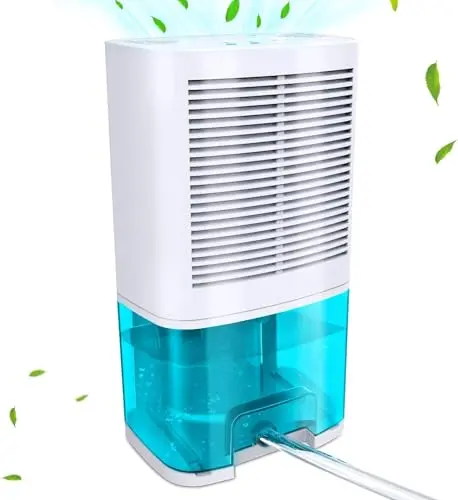
YXTX-607D – Continuous-Drain Grow Tent Dehumidifier
The Levoair YXTX-607D is a compact Peltier dehumidifier with a 2000 ml tank and a 5 ft drain hose for continuous operation. It’s rated for up to 650 sq ft and can pull roughly 1000 ml per day in warm, humid conditions. Auto shutoff, memory function, and a carry handle make it practical for grow tents, closets, bathrooms, and RV spaces.
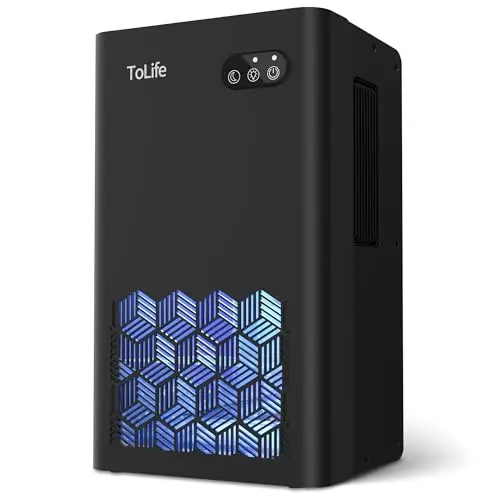
TZ-C2 – Large-Tank Dehumidifier for Bigger Tents
The ToLife TZ-C2 is a 95 oz tank dehumidifier with two modes, a sub-30 dB sleep setting, auto shutoff, and seven-color ambient lighting. It’s built for bedrooms, bathrooms, basements, and other enclosed spaces, with a portable body and a claimed coverage area up to 1000 sq ft.

TZ-C4S – Quiet 95 oz Tank for Small Grow Rooms
The OWAAE TZ-C4S is a 95 oz tank dehumidifier with a quiet sleep mode, auto shutoff, and seven-color LED lighting. It’s positioned for bedrooms, basements, bathrooms, closets, and RVs, with a compact portable body and claimed coverage up to 1000 sq ft.
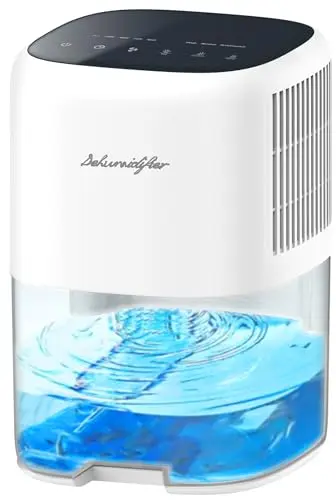
E2-DH-WHITE – Budget-Friendly Grow Tent Dehumidifier
The Newo E2-DH-WHITE is a compact 44 oz dehumidifier with three working modes, five timer settings, auto-defrost, and auto shutoff. It’s aimed at small rooms, closets, bathrooms, and RVs, with a quiet sleep mode rated below 28 dB and a claimed coverage area up to 260 sq ft.
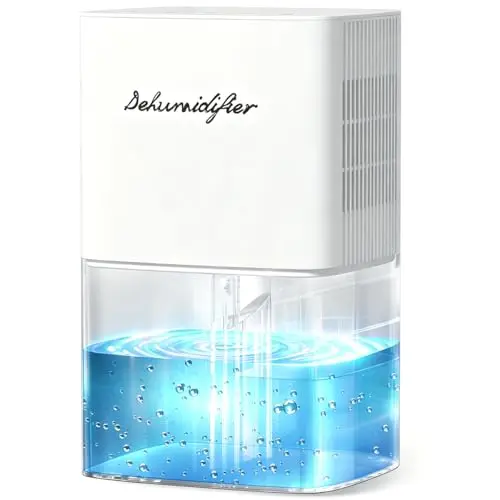
DH-A2 – Multi-Mode Dehumidifier with Defrost
The BeOkay DH-A2 is a 1657 ml dehumidifier with three modes, five timer settings, auto-defrost, auto shutoff, and ten-color lighting. It’s designed for small enclosed spaces such as bedrooms, bathrooms, closets, and grow areas, with a compact body and a claimed coverage area up to 230 sq ft.
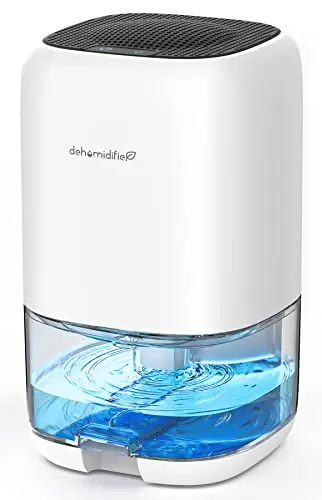
DH-CS01 – Compact Quiet Dehumidifier for Small Tents
The TABYIK DH-CS01 is a 35 oz dehumidifier with a 28 dB quiet mode, auto shutoff, and seven-color lighting. It’s built for bedrooms, bathrooms, closets, and RVs, with a compact body and a claimed coverage area up to 280 sq ft.
How We Evaluated These Dehumidifiers for Grow Tents
We didn’t run these dehumidifiers inside a flowering tent through a full grow cycle or measure canopy humidity with calibrated sensors. What we did: cross-referenced 6 dehumidifier models from 6 distinct brands across 7 decision axes – moisture removal capacity, tank size and drain options, noise, heat, footprint, mode and timer controls, and light output. We triangulated published specifications, feature sets, owner feedback where available, and fit for the enclosed, humid, often light-sensitive grow-tent environment.
The scoring framework weighted real-world fit for a grow tent (70%) – how well each unit handles persistent transpiration without constant babysitting – against feature differentiation (30%) – continuous drainage, auto-defrost, timers, sleep modes, and other useful extras. We have no commercial relationship with any brands featured; recommendations track fit and differentiation, not brand preference. If you need set-and-forget drainage, the Levoair YXTX-607D is the natural starting point; if you’re managing a larger tent and prefer a bigger tank, the ToLife TZ-C2 makes more sense.
We weighed the realities that matter in a grow space: a dehumidifier that pulls water but needs emptying every day is a chore, a unit that runs hot can push temperatures in a small tent, and built-in lights need to be switched off during dark periods. Where owner feedback was thin or mixed, we treated durability and long-term moisture removal as open questions rather than settled strengths. The result is a lineup built around usable moisture control, not spec-sheet theatrics.
How to Choose the Right Dehumidifier for Grow Tents
1. How Much Dehumidification Does a Grow Tent Really Need?
Grow tents are small but demanding. Plants transpire constantly, and an enclosed tent traps that moisture, so a unit that looks oversized for the square footage may still be right for a humid canopy. Moisture removal capacity matters more than the box’s coverage claim; a compact Peltier dehumidifier that pulls around a liter per day can help a small tent, while a larger or heavily planted tent needs more headroom. Auto shutoff and tank size decide how often you intervene. If you want the most hands-off setup, the Levoair YXTX-607D is the pick because its drain hose lets it run continuously.
2. Tank Size and Drain Options for Grow Tent Dehumidifiers
Tank capacity is the quiet spec that shapes daily ownership. A 35 oz tank can fill fast in a humid tent, while a 95 oz tank buys you more time between empties. A continuous drain hose is the real upgrade: route it to a reservoir and the dehumidifier stops being a chore. Not every unit includes one, so check before buying. If you prefer a big tank over a hose, the ToLife TZ-C2 is the better fit for a larger tent; if you want set-and-forget drainage, stay with the Levoair.
3. Noise, Heat, and Light in a Small Grow Tent
Peltier dehumidifiers are generally quieter than compressor models, but they still release heat into the tent. In a small space, that can nudge temperatures upward, so placement and airflow matter. Look for a sleep mode or a low-decibel rating if the tent sits near a bedroom. The bigger grow-tent gotcha is lighting: many compact units include seven-color LEDs or night lights. Those are fine in a bathroom, but in a photoperiod-sensitive grow tent they should be switched off or covered during dark hours.
4. Peltier vs. Compressor Dehumidifiers for Grow Tents
Most compact grow-tent dehumidifiers use Peltier thermoelectric cooling. They’re small, quiet, and cheap to run, but they lose efficiency in cool rooms and generally pull less water than a compressor unit. A compressor dehumidifier is the stronger tool for a large, high-humidity tent, but it’s heavier, louder, and harder to fit in a tight space. For a small tent or a supplemental setup, a Peltier unit with a drain hose or a large tank is usually the practical compromise. The Newo E2-DH-WHITE is a sensible budget starting point for a small space, provided you manage expectations.
5. Placement and Airflow Inside the Grow Tent
Put the dehumidifier where air moves, not jammed behind a pot. Near an intake or exhaust path is usually better than a dead corner, and elevating it slightly keeps the drain hose flowing. Don’t block the canopy or create a hot spot against a wall. If you use a continuous drain, run the hose with a gentle downward slope and check for kinks. Auto-defrost is worth having in cooler garages or basements, but it doesn’t replace good airflow.
6. What to Skip When Shopping for a Grow Tent Dehumidifier
Skip passive silica absorbers for an active grow. They’re useful in closets and safes, but a transpiring canopy produces far more moisture than a small rechargeable pack can handle. Also be skeptical of coverage claims that ignore humidity load, and don’t pay extra for ambient lighting you’ll only need to cover. Prioritize drain options, tank size, and a quiet mode over feature clutter.
Frequently Asked Questions
1. Do I need a drain hose for a grow tent dehumidifier?
A drain hose is not mandatory, but it’s the difference between set-and-forget moisture control and a daily chore. In a humid grow tent, a small tank can fill quickly, and auto shutoff will stop the unit until you empty it. A continuous drain hose lets the dehumidifier run through a humid spell without babysitting. If that matters to you, the Levoair YXTX-607D is the pick; if you’d rather have a bigger tank and manual empties, choose a large-tank model instead.
2. Levoair vs. ToLife: Which dehumidifier is better for a grow tent?
They solve different problems. The Levoair YXTX-607D has a continuous drain hose, so it’s better for a tent that stays humid for days and you want hands-off operation. The ToLife TZ-C2 has a 95 oz tank and a quiet sleep mode, but no drain hose, so you’ll empty it manually. For a small-to-mid tent with a drain reservoir nearby, Levoair is the more practical fit; for a larger tent where a big tank is the priority, ToLife TZ-C2 makes more sense.
3. OWAAE vs. ToLife: What's the difference for grow tent use?
They’re close on paper: both use a 95 oz tank, auto shutoff, and a sub-30 dB sleep mode, and both include color lighting that you’ll want off during dark periods. The ToLife adds a two-speed operation and a more conventional upright footprint; the OWAAE has a similarly quiet profile and a compact body. Neither has a drain hose, so both require manual emptying in a humid tent.
4. Will a small Peltier dehumidifier keep up with a flowering grow tent?
It depends on tent size, plant count, and airflow. A small Peltier dehumidifier can help a tiny tent or a supplemental setup, but a flowering canopy transpires heavily and may overwhelm a 35-44 oz tank quickly. Look for continuous drainage or a larger tank, and pair the unit with good exhaust and circulation. If humidity stays high, a compressor dehumidifier is the stronger tool, even though it’s bulkier.
5. How often will I need to empty a grow tent dehumidifier?
More often than the box suggests in a humid tent. Tank size and moisture removal capacity set the interval: a 35 oz tank may need daily attention, while a 95 oz tank buys more time. Auto shutoff prevents overflow when you’re away, but it also means the unit stops dehumidifying until you empty it. If you want to avoid the cycle entirely, use a continuous drain hose.
Final Verdict
For most grow tents, the Levoair YXTX-607D is the pick that solves the real problem: it has a continuous drain hose, a large tank, and enough capacity for a small-to-mid tent without turning humidity control into a daily chore. If your tent is larger or you prefer a bigger tank and don’t mind manual empties, the ToLife TZ-C2 is the better fit. On a tighter budget, the Newo E2-DH-WHITE covers small spaces with useful modes and timers, though you’ll empty it more often. If light discipline matters, disable or cover any built-in LEDs during dark periods. That’s the simplest path to steadier humidity.
