
Best Dehumidifiers For Gun Safe In Garage – 2026 Reviews

A gun safe in a garage lives a harder life than one in a climate-controlled closet. The door opens into humid air, the steel cools overnight, and condensation finds every inch of bluing and every box of ammunition. You don’t need a laboratory-grade drying system, but you do need a plan that matches the garage’s swings.
The first decision is method. A plug-in heating rod runs continuously and asks almost nothing of you. A rechargeable desiccant stick or canister stays cordless inside the safe but needs a renewal routine. Disposable absorber packs are the simplest to place and the easiest to forget. The second decision is scale: a compact pistol safe and a tall rifle safe don’t need the same capacity, and a leaky door gasket can make a good dehumidifier look useless.
This guide surveys the market for gun safe dehumidifiers that make sense in a garage. We’ll compare continuous rods, cordless silica options, and reusable canisters, then help you match one to your safe’s size, seal, and power access.
Best Dehumidifiers for Gun Safe in Garage – 2026 Reviews
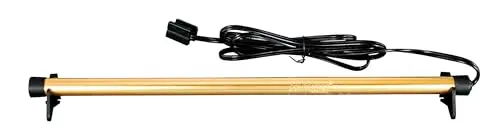
Golden Rod 18-Inch – Continuous Gun Safe Protection
The Golden Rod 18-Inch is a plug-in heating rod built for gun safes and small cabinets. It raises the interior temperature slightly above the surrounding air to help drive out moisture, and the 18-inch length is rated for up to 200 cubic feet. Attachable legs let it sit on a shelf or floor, while the six-foot cord and removable plug make it easier to route through a safe’s back wall.
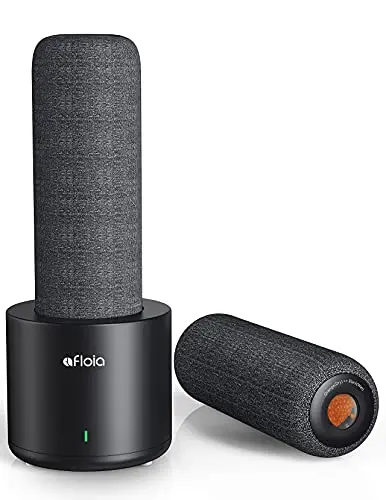
TOP-Z – Rechargeable Cordless Safe Dehumidifier
The TOP-Z pairs a cordless silica gel stick with a wired heating base. The stick absorbs moisture inside the safe, and when the beads change color you set it on the base for a renewal cycle. The 360-degree intake is meant to pull damp air from small enclosed spaces, and the base shuts off automatically to avoid overcharging. It’s a good fit for safes where you don’t want a cord running inside.
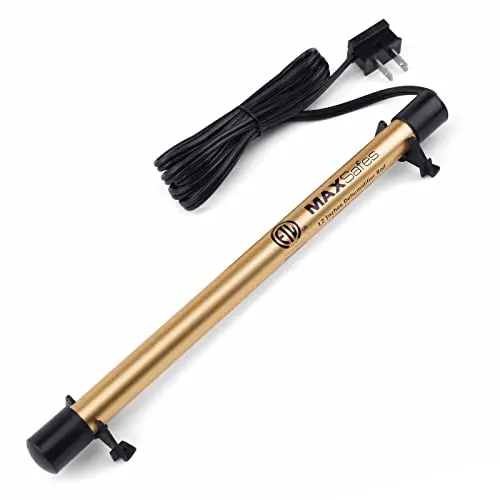
Dehumidifier Rod 12-Inch – Plug-In Safe Humidity Control
The MAXSafes Dehumidifier Rod is a 12-inch plug-in heating rod for gun safes and cabinets. It warms the interior slightly above ambient temperature to reduce condensation, and the snap-on brackets let you mount it vertically or horizontally. The removable plug helps with cord routing, and the aluminum body has an ETL rating. It’s a straightforward entry-level rod for smaller safes.
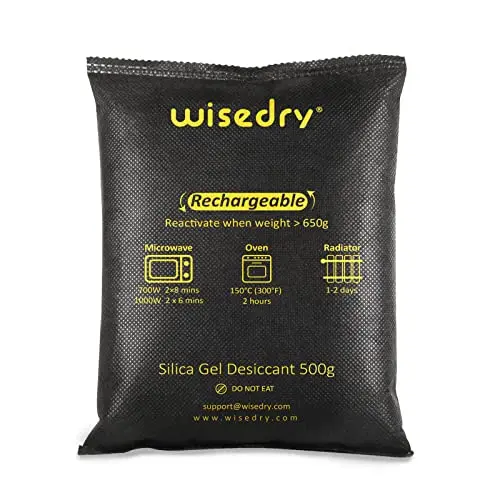
2 x 500g Silica Gel Packets – Rechargeable Moisture Absorber
This wisedry set includes two 500-gram silica gel packets for enclosed spaces like gun safes, closets, and garage storage. Each packet can absorb up to about 150 grams of moisture, and when it’s saturated you reactivate it in a microwave in roughly 10 minutes. The packets are reusable multiple times and come double-packed so the spare stays dry until you need it.
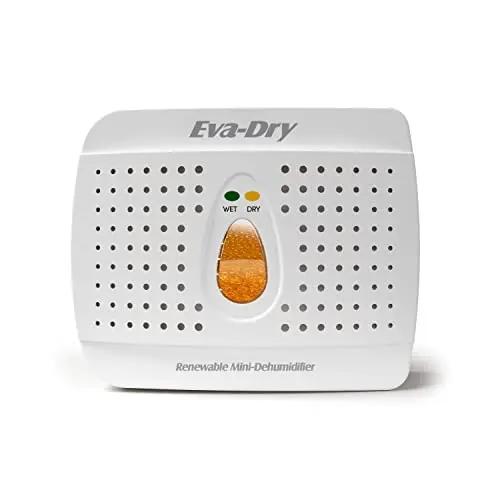
E-333 Mini Dehumidifier – Cordless Compact Moisture Control
The Eva-Dry E-333 is a cordless mini dehumidifier that uses renewable silica gel beads. It hangs from the included hook or stands on a shelf, and when the beads are saturated you plug the unit in to recharge. It’s designed for small enclosed spaces like closets, cars, and gun safes, with a six-ounce capacity and a five-year warranty.
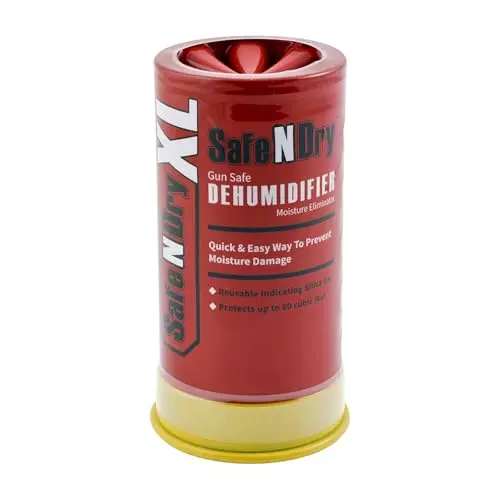
XL Gun Safe Dehumidifier – Reusable Indicating Silica Gel
The SafeNDry XL is a reusable silica gel canister with 450 grams of color-indicating beads. It’s rated for enclosed spaces up to 60 cubic feet, and when the beads turn pink you remove the inner pouch and reactivate it in an oven at 240 degrees Fahrenheit for about three hours. The plastic canister is spill-proof and designed to increase airflow inside a safe.
How We Evaluated These Dehumidifiers for Gun Safe in Garage
We didn’t run a controlled humidity-chamber test or monitor these inside sealed safes through seasonal garage swings. What we did: cross-referenced 6 dehumidifier models from 6 distinct brands across five decision axes – moisture-removal method, safe-size coverage, power and cord handling, maintenance cadence, and garage-environment fit. We triangulated published specifications, feature sets, owner feedback where available, and use-case fit against the realities of a garage safe: temperature swings, door gaskets, and limited interior space.
The scoring framework weighted real-world fit (70%) – how well each option delivers on its stated use case – against feature differentiation (30%) – unique technical advantages and use-case specificity. We also weighed maintenance burden, because a dehumidifier that needs weekly attention in a garage is less likely to stay in service. We have no commercial relationship with any of the brands featured; recommendations track fit and differentiation, not brand preference. If you want set-and-forget protection, the Lockdown Golden Rod 18-Inch is the pick; if you need cordless convenience, the Afloia TOP-Z is the better match.
We looked at how each unit handles a garage’s worst-case rhythm: hot afternoons, cool nights, and a safe door that opens and closes. We mapped coverage claims against realistic safe volumes and weighed whether the product needs an outlet, a microwave, an oven, or nothing at all. Where owner feedback was uneven, we treated it as a caution rather than a verdict. That’s why the final ranking favors gear that is easy to live with, not just the biggest absorption number on the box.
How to Choose the Right Dehumidifiers for Gun Safe in Garage
1. Why a Garage Gun Safe Needs Different Moisture Control
A garage safe is not a closet safe with a car in front of it. It sees temperature swings that push warm, damp air into the safe, then cool suddenly and leave condensation on steel. That’s the recipe for rust on bluing, bolts, and any stored paper. The fix isn’t just absorbing water; it’s staying ahead of the cycle. A safe that sits against a concrete wall or near a garage door is especially exposed. Before you buy, check the door gasket and the safe’s interior volume. A dry safe with a poor seal will overwhelm even a good dehumidifier.
2. Heating Rods vs. Rechargeable Desiccant vs. Absorber Packs
Heating rods are the set-and-forget option: they plug in, warm the safe slightly, and run continuously. Rechargeable silica gel is cordless inside the safe, but you’ll need a microwave, oven, or heating base to renew it. Absorber packs are the lowest-maintenance up front but create ongoing replacement costs. If your safe has power nearby and you want the least fuss, the Lockdown Golden Rod 18-Inch is the pick. If running a cord inside the safe isn’t practical, the Afloia TOP-Z is the better fit. For a no-power safe with a microwave nearby, a silica set like the wisedry two-pack makes sense.
3. Sizing a Dehumidifier to Your Gun Safe's Interior
Manufacturers rate these products in cubic feet, but most buyers don’t know their safe’s interior volume. Measure the inside dimensions and multiply height by width by depth. A small pistol safe may need only a compact silica pack, while a tall rifle safe can benefit from a rod rated for 200 cubic feet or a larger desiccant canister. The door gasket matters as much as the rating: a leaky seal lets humid garage air back in as fast as the dehumidifier removes it. If your safe is near a garage door or concrete floor, size up rather than down.
4. Power, Cords, and Placement in a Garage Gun Safe
Most garage safes don’t have an outlet inside. That makes cord routing a real buying criterion. Look for a removable plug or a slim cord that can pass through a back hole or existing bolt-down opening. If your safe is on the smaller side, the MAXSafes Dehumidifier Rod 12-Inch is the pick. Heating rods and Peltier dehumidifiers need continuous power, so confirm the outlet is GFCI-protected and not shared with a freezer or power tool. If you can’t route power, choose a cordless desiccant instead. Placement matters too: don’t block the dehumidifier with foam or lean it against a gun stock. Air needs to move around it.
5. Maintenance Cadence and Humidity Monitoring
Every dehumidifier has a rhythm. Heating rods run continuously but need an occasional dust check. Silica gel needs renewal when the beads change color or when the unit stops pulling moisture. A hygrometer inside the safe takes the guesswork out of recharge cadence; aim for a stable, dry reading rather than chasing a single number. In a garage, expect more frequent renewals in summer and during rainy stretches. Keep a spare desiccant pack or a second rechargeable stick so you’re not leaving the safe open while one unit dries.
6. What to Avoid When Buying a Gun Safe Dehumidifier
Avoid oversized room units that are designed for a basement or bedroom but won’t fit inside a safe. Avoid relying on an unsealed safe and a small absorber to fix a garage-wide moisture problem. And don’t place a heating rod where it can contact ammunition, paper, or foam directly. If your garage is consistently damp, solve the room and the safe: a safe dehumidifier protects the interior, but it can’t dry the whole garage. Skip products that promise a precise coverage number without explaining how the unit is mounted or powered.
Frequently Asked Questions
1. How do I keep a gun safe dry in an unheated garage?
Start with seal and placement: keep the safe off a bare concrete floor, away from the garage door, and check the door gasket for gaps. Then choose a moisture-control method that matches your power situation. A heating rod is the simplest continuous option if you have an outlet, while rechargeable silica gel works when you don’t. Add a hygrometer inside the safe so you can see whether the setup is actually holding. In an unheated garage, expect more frequent checks during humid months.
2. Lockdown Golden Rod vs. MAXSafes Dehumidifier Rod: Which fits a garage gun safe?
The Lockdown Golden Rod 18-Inch is the better choice for larger safes because it’s rated for up to 200 cubic feet and has attachable legs for flexible placement. The MAXSafes 12-inch rod is more compact, with snap-on brackets and an ETL rating, so it suits smaller cabinets or tight interiors. Both are continuous plug-in designs, which means no recharge schedule. If you have the space and want more coverage, the Lockdown Golden Rod 18-Inch is the pick; for a compact safe, the MAXSafes rod is the more proportionate fit.
3. Afloia TOP-Z vs. Eva-Dry E-333: Which cordless dehumidifier is better for a gun safe?
The Afloia TOP-Z has a wired heating base that renews the silica stick without a kitchen appliance, plus a 360-degree intake and automatic shutoff on the base. The Eva-Dry E-333 is smaller and simpler, with a hanging hook and a five-year warranty, but it recharges by plugging the whole unit in. If you want a more purpose-built safe kit and don’t mind the base, the Afloia TOP-Z is the stronger pick. If you want the smallest footprint for a tight safe, the E-333 makes more sense.
4. Do silica gel packs work in a garage gun safe?
Yes, as long as you match capacity to the space and stay on top of renewal. Silica gel works by adsorbing moisture until it’s saturated, then it needs heat to release the water. In a garage, temperature swings and a leaky door gasket can shorten the useful cycle. Use a hygrometer to confirm the pack is actually keeping the interior dry, and keep a spare pack ready so the safe isn’t left unprotected during recharge. Silica is a good fit for safes without power, but it is not a set-and-forget solution.
5. How often should I recharge or reactivate a gun safe dehumidifier?
There’s no single schedule because garage humidity, safe volume, and door seal all change the load. A heating rod doesn’t need recharging, but check it for dust and keep the outlet clear. Rechargeable silica should be renewed when the indicator beads change color or when the hygrometer starts climbing. In a damp garage, that may mean a weekly or biweekly check; in a drier season, you can stretch it. The right cadence is the one that keeps the interior stable, not the one printed on the box.
Final Verdict
For most garage gun safe owners, the Lockdown Golden Rod 18-Inch is the answer. It brings continuous, corded protection, enough rated coverage for a full-size safe, and a placement-friendly design that doesn’t ask you to remember a recharge schedule. If your safe has no interior outlet, the Afloia TOP-Z is the cordless alternative I’d route you toward; it trades a little maintenance for freedom from cords. And if you want the simplest no-power backup, the wisedry 2 x 500g Silica Gel Packets give you a reusable desiccant rotation without a heating base. Match the pick to your safe’s size, seal, and power access, and you’ll spend less time worrying about rust and more time shooting.
