
Best Dehumidifiers For Mobile Homes – 2026 Reviews

A mobile home can feel fine at noon and clammy by bedtime. The rooms are compact, the airflow is often uneven, and moisture from showers, cooking, and laundry has fewer places to escape. That’s why a dehumidifier for a mobile home has to solve a different problem than a basement unit: it needs to fit tight spaces, run quietly near living areas, and handle steady humidity without constant babysitting.
The two axes that separate useful picks from frustrating ones are capacity-to-layout fit and drainage. Too much capacity in a small room can be noisy and bulky; too little in a damp double-wide just runs and runs. Then there’s placement: a unit that’s awkward to move or empty won’t get used.
We compared the market with mobile homes in mind – compact compressor models, high-capacity options for larger layouts, and small-room units for bedrooms and bathrooms. The goal is to help you choose by fit, not by brand loyalty.
Best Dehumidifiers for Mobile Homes – 2026 Reviews
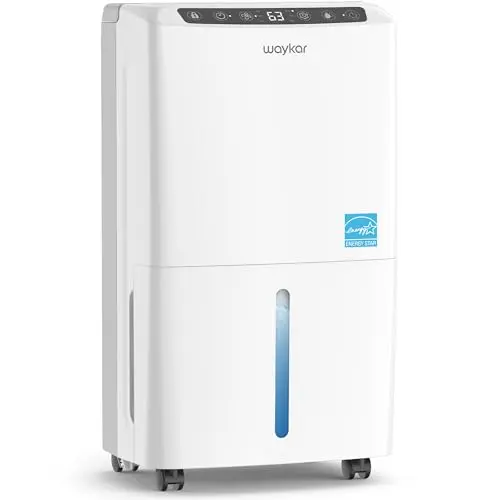
PD160B-PRO – Energy-Efficient Compact Dehumidifier
A compact 34-pint dehumidifier with ENERGY STAR efficiency, 38 dB operation, and dual drainage for small-to-mid mobile homes.
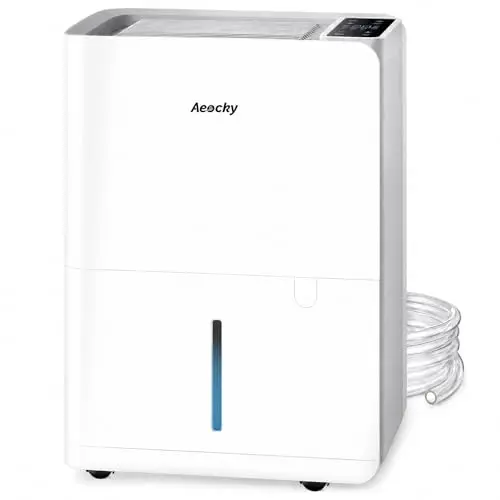
BOREAS-001 – High-Capacity Mobile-Home Dehumidifier
A high-capacity 50-pint unit built for larger or damper mobile homes, with 40 dB operation, auto-defrost, and a 3-year warranty.
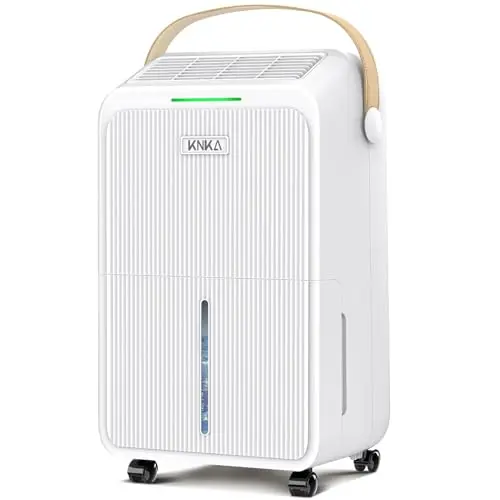
PD22SC-12 – Quiet 34-Pint with Flexible Drainage
A quiet 34-pint dehumidifier with three drainage paths, 360-degree wheels, and a color-changing humidity light for flexible room placement.
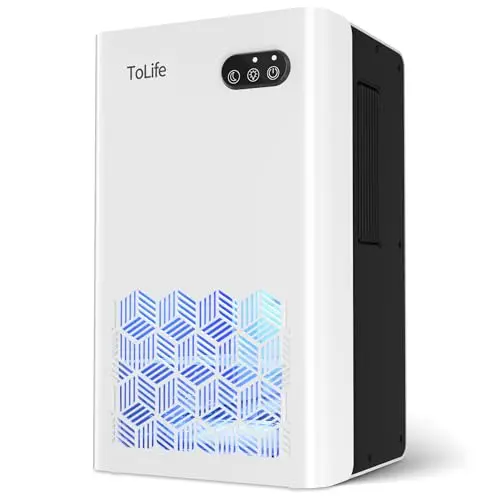
TZ-C2 – Compact Sleep-Mode Dehumidifier
A compact sleep-mode dehumidifier for bedrooms, bathrooms, and small enclosed rooms, with a 95 oz tank and 7-color ambient light.
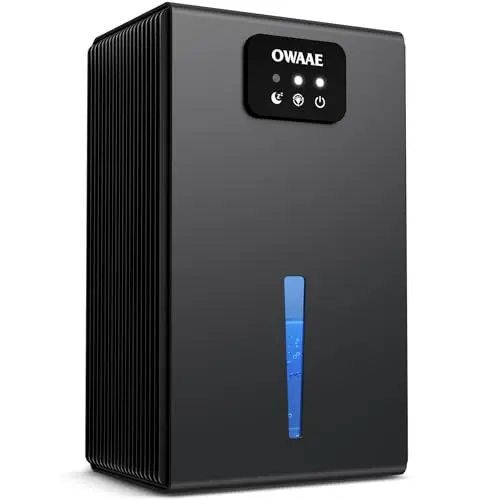
TZ-C4S – Small-Space Quiet Dehumidifier
A small-space dehumidifier with under-30 dB sleep mode, a 95 oz tank, and 7-color lighting for quiet bedroom or bathroom use.
How We Evaluated These Dehumidifiers for Mobile Homes
We didn’t install these units in mobile homes or run controlled moisture-removal trials across a full season. What we did: cross-referenced 5 dehumidifier models from 5 distinct brands across 6 decision axes – pint capacity, square-footage coverage, drainage flexibility, noise level, footprint, and energy efficiency. We triangulated published specifications, mapped owner feedback where available, and weighed each unit against the realities of manufactured housing: tight floor plans, limited outlet placement, and humidity that builds in bedrooms, bathrooms, and crawl-adjacent spaces. We also cross-checked each model’s stated coverage against realistic mobile-home room sizes, because manufacturer square-footage claims assume open, well-mixed air.
The scoring framework weighted real-world fit for mobile homes (70%) – how well each dehumidifier matches the size, layout, and moisture load of a manufactured home – against feature differentiation (30%) – drainage options, smart controls, portability, and warranty support. We audited model dimensions, tank capacity, and drain-hose compatibility, then pressure-tested each pick against common mobile-home scenarios: a single-wide bedroom, a double-wide living area, and a bathroom that never quite dries out. We have no commercial relationship with any of the brands featured; recommendations track fit and differentiation, not brand preference. If you want the most balanced starting point for a typical mobile home, the Waykar PD160B-PRO is our pick; if your home runs larger or damper, the AEOCKY BOREAS-001 is the higher-capacity route.
How to Choose the Right Dehumidifiers for Mobile Homes
1. Why Mobile Home Humidity Needs a Different Dehumidifier Strategy
Mobile homes are not just smaller houses. Their tighter envelope, shallower room depth, and limited airflow can push damp air into bedrooms, bathrooms, and closet corners. That makes the moisture load feel heavier than the square footage suggests, especially during humid stretches or when a clothes dryer vents indoors.
A dehumidifier that works well in a basement may be overkill in a single-wide, while a tiny thermoelectric unit can struggle in an open living area. The right choice starts with matching capacity to your actual layout, then checking drainage and placement.
2. Match Pint Capacity and Square Footage to Your Mobile Home
Pint capacity and square-footage coverage are the first filters. A 34-pint unit suits many single-wide and smaller double-wide mobile homes, particularly when humidity is moderate. Step up to a 50-pint model if your home is larger, feels damp year-round, or has a crawlspace or leak-prone area feeding moisture indoors.
For most mobile homes in the 1,000-2,000 square-foot range, the Waykar PD160B-PRO is the pick because it balances 34-pint capacity with a compact body and strong efficiency. Smaller rooms can use a compact unit, but don’t expect one to dry an entire open-plan mobile home.
3. Drainage Options That Work in Tight Mobile Home Layouts
Continuous drainage is the feature you’ll appreciate most in a humid climate. A drain hose lets the unit run unattended, which matters if you’re away or if the tank would fill daily. If hose routing is awkward, look for a large tank, an external-tank option, or reliable auto shut-off.
The KNKA PD22SC-12 is worth a look if you want three drainage paths, including an optional external tank. Just note that small tanks fill fast in steady damp weather, so gravity drainage is usually the lower-effort setup in a mobile home.
4. Noise, Footprint, and Placement in a Mobile Home
Noise level and footprint decide whether a dehumidifier actually gets used. In a mobile home, you may be placing it in a hallway, bedroom, or laundry nook, so a loud compressor can wear thin quickly. A sleep mode and caster wheels help, but placement still matters: keep doors open, avoid corner dead zones, and leave clearance for airflow.
For a bedroom or small enclosed room, the ToLife TZ-C2 is the compact pick because it runs quietly and moves easily. For whole-home use, accept a larger body and put it where the sound won’t bother anyone at night.
5. Energy Efficiency and Runtime Costs in Mobile Homes
Energy efficiency is not just a marketing label. A unit with an ENERGY STAR rating and lower wattage costs less to run continuously, which is common in humid mobile-home settings. Check whether the model has auto-defrost, because frost buildup in cool spaces can otherwise reduce performance.
Don’t buy by capacity alone. A slightly smaller, efficient unit that matches your layout may beat an oversized model that short-cycles or blasts noise through thin walls.
6. When a Compact Dehumidifier Makes Sense for a Mobile Home
A compact dehumidifier makes sense for a single bedroom, bathroom, closet, or RV-style addition. These units are easy to move and quiet enough for nighttime use, but they remove less moisture per day and are not a substitute for a compressor-based whole-home unit in a damp mobile home.
Use one as a targeted fix, not the main solution, unless your space is genuinely small and enclosed. If the whole home feels clammy, start with a 34-pint or 50-pint compressor model and use a compact unit only where humidity concentrates.
Frequently Asked Questions
1. What size dehumidifier do I need for a mobile home?
Start with square footage and moisture load, not just tank size. For many single-wide or smaller double-wide mobile homes, a 34-pint dehumidifier is enough. If your home is larger, feels damp year-round, or has a crawlspace, a 50-pint model gives more headroom. For a single bedroom or bathroom, a compact unit can work, but it won’t dry the whole home.
If you want one balanced pick for a typical mobile home, the Waykar PD160B-PRO is the place to start.
2. Waykar PD160B-PRO vs AEOCKY BOREAS-001: Which is better for a mobile home?
The Waykar PD160B-PRO is the more efficient, compact choice for typical mobile homes, with 34-pint capacity and strong energy performance. The AEOCKY BOREAS-001 steps up to 50-pint capacity and broader coverage, which helps in larger or damper homes, but it is heavier and its tank is small relative to output.
Choose the Waykar for everyday balance; choose the AEOCKY BOREAS-001 if whole-home moisture is the bigger problem.
3. ToLife TZ-C2 vs OWAAE TZ-C4S: What's the difference?
Both the ToLife TZ-C2 and OWAAE TZ-C4S are compact, quiet units aimed at small rooms. The ToLife has a 95 oz tank, two modes, and a 7-color LED light; the OWAAE offers similar tank size and lighting with a slightly different body and control layout.
Neither is a whole-home solution. Pick either for a bedroom, bathroom, or closet, and choose the one whose footprint fits your space.
4. Can I use a dehumidifier with a drain hose in a mobile home?
Yes, provided you can route the hose without creating a trip hazard or a kink. Continuous drainage is especially useful in a mobile home because it removes the daily tank-emptying chore. Use the included drain hose, keep the outlet slightly downhill, and confirm the unit has auto shut-off as a backup.
If hose routing isn’t practical, choose a model with a larger tank or an external-tank option, and empty it before humidity spikes.
Final Verdict
For most mobile-home buyers, the Waykar PD160B-PRO is the answer. It pairs 34-pint capacity with a compact body, quiet operation, and strong efficiency – the balance most manufactured homes actually need. If your home is larger or persistently damp, the AEOCKY BOREAS-001 is the capacity upgrade, with a 3-year warranty and enough output for tougher spaces.
On a tighter budget or for a single room, the ToLife TZ-C2 is the compact pick. And if you want flexible drainage and very quiet operation in a bedroom-focused setup, the KNKA PD22SC-12 earns a look. Match the unit to your layout first; that matters more than chasing the biggest tank or the longest feature list.
