
Best Dehumidifiers For Small Apartments – 2026 Reviews

A one-bedroom with a single window that never quite dries out. A bathroom with no exhaust fan. A closet that smells faintly of damp every August. In a small apartment, humidity has nowhere to go, and the standard advice – install a whole-home system, run a big compressor unit in the basement – doesn’t apply when your entire square footage fits inside someone else’s living room.
What actually works at this scale is a smaller, quieter class of machine. Two things separate the good ones from the frustrating ones. First, tank capacity relative to how much water the unit actually pulls – a modest tank on a thirsty unit means you’re dumping it twice a day, in the same room you’re trying to keep dry. Second, noise at the lowest setting, because in a studio the dehumidifier is in the room you sleep in.
We looked across major brands at both halves of this market: powered thermoelectric units that actively pull moisture from the air, and passive absorbers that simply sit there collecting it. They solve different problems, and knowing which problem is yours matters more than any spec sheet. Below is where each one earns its place in a small apartment – and which tradeoffs you’re accepting.
Best Dehumidifiers for Small Apartments – 2026 Reviews
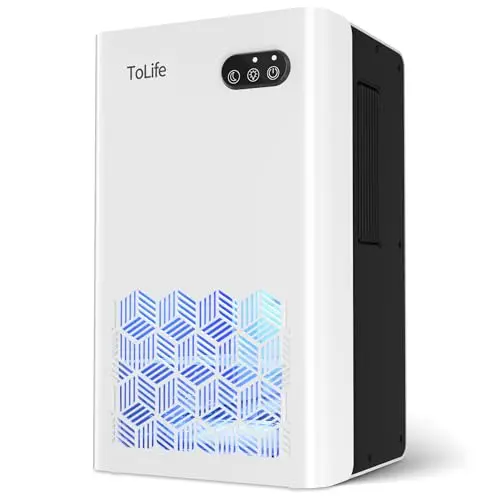
TZ-C2 – Big-Tank Quiet Pick for Studio Living
The ToLife TZ-C2 pairs a genuinely large tank for this class with a quiet sleep mode, which is the exact combination most small-apartment shoppers are chasing. It runs two speeds, shuts off automatically when the tank fills or sits wrong, and drops into a corner without dominating it.
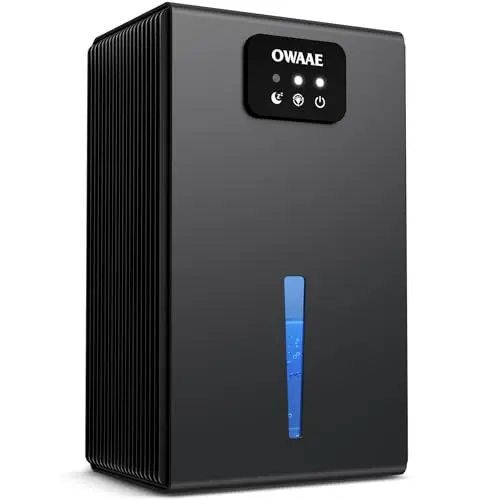
TZ-C4S – High-Capacity Moisture Control for Enclosed Rooms
A close cousin to our top pick in both concept and execution: a big tank, a genuinely quiet sleep mode, and the same focus on enclosed rooms. The TZ-C4S leans toward bathrooms and closets where steam and standing damp build up fastest.
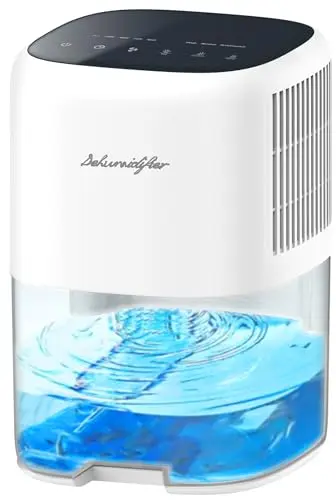
E2-DH-WHITE – Programmable Comfort with Auto-Defrost
The most programmable unit in this lineup: three working modes, five shutoff timers, and an auto-defrost cycle for cold rooms. If you want a dehumidifier that behaves differently at 2 a.m. than at 2 p.m., start here.

DH-CS03 – Compact Quiet for Tight Corners
A genuinely small cube – about five inches on each side – that trades tank size for a footprint you can tuck almost anywhere. Built for a wardrobe shelf, a bathroom corner, or a nightstand in a tight studio.

US164 – No-Power Moisture Absorber 6-Pack
No cord, no fan, no compressor. These are calcium chloride buckets that pull moisture passively and hold it in a sealed reservoir. Six to a pack, so you can spread them across a closet, a bathroom cabinet, and a storage bin.
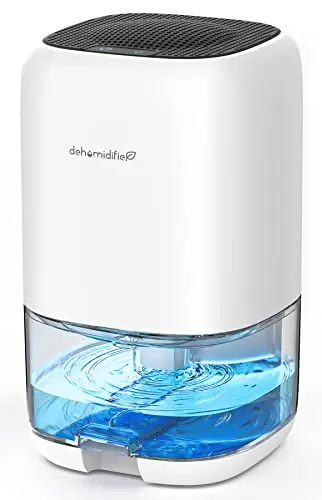
DH-CS01 – Transparent Tank with Bedroom Lighting
A compact thermoelectric unit with a transparent tank, a genuinely low noise figure, and a color-light feature aimed squarely at bedrooms. Middle of the road here on capacity and price tier.
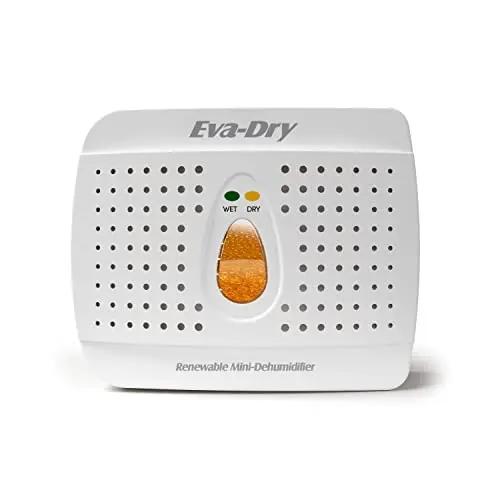
E-333 – Cordless Rechargeable Mini Absorber
A cordless, reusable silica gel absorber about the size of a paperback. Hang it or stand it in a closet, and when the beads are spent you plug it into a wall outlet to dry out and go again.
How We Evaluated These Dehumidifiers for Small Apartments
We didn’t run these units in a sealed test chamber with a hygrometer for a month, and we can’t tell you how any specific model behaves in your particular apartment. What we did: cross-referenced 7 dehumidifier models from 7 distinct brands across 6 decision axes – tank capacity, moisture-removal rate, noise at the low setting, footprint, power draw, and safety plus maintenance features. We triangulated published specifications, absorbed owner feedback where available, and mapped every unit against the realities of small-apartment life: a closed bedroom door, one steamy bathroom, and no floor space to spare.
The scoring framework weighted real-world fit for a small apartment (70%) – how much water a unit actually pulls, how often you’ll empty it, and whether you can sleep in the same room – against feature differentiation (30%) – programmable modes, defrost cycles, lighting, and the other details that separate near-identical thermoelectric boxes. We have no commercial relationship with any brand here; recommendations track fit and differentiation, not brand preference. If you want the least babysitting in a studio, the ToLife TZ-C2 is the match. If you’d rather program modes and timers for a bedroom, the Newo E2-DH-WHITE is the better call.
One thing worth saying plainly: passive absorbers and powered thermoelectric units are not substitutes, and we scored each on the job it’s built for rather than against the other. A bucket that keeps a closet dry is doing its job even though it will never move a room’s humidity reading.
How to Choose the Right Dehumidifiers for Small Apartments
1. How Much Dehumidification Does a Small Apartment Actually Need?
The number that matters on a spec sheet isn’t the square-footage claim – it’s the pint-per-day or liter-per-day removal rate. Small thermoelectric units in this lineup typically land around a pint or less per day in genuinely humid air, which is enough for a single room and not much more. Treat the advertised coverage as a closed room of roughly that size, not an open-plan apartment where air moves freely between rooms.
Practically, that means matching one unit to one problem room. A bathroom with a door, a closet that smells damp, or a bedroom where condensation collects on the windows are all realistic targets. A studio where the kitchen, sleeping area, and living space share one volume is a harder ask – you’ll either move the unit around or accept partial improvement.
2. Tank Size and Emptying Frequency in a Small Apartment
Tank volume determines how often you’ll be carrying water to the sink, and in a small apartment that chore happens in the same room you’re trying to keep dry. The lineup here spans roughly 25 oz to 95 oz, and the difference is real: a heavy pull on a small tank can mean emptying twice a day during a humid stretch.
If you’d rather empty once a day than three times, the ToLife TZ-C2 and its 95 oz tank are the obvious route. If the unit lives on a shelf where a big tank won’t fit, smaller is the trade you make. Either way, check that the tank lifts out cleanly – a removable tank with a handle earns its keep in daily use far more than an extra feature you’ll never touch.
3. Why Noise Levels Matter More in a Small Apartment
In a studio, a dehumidifier sits in the room you sleep in, which makes the dB rating at the lowest setting a headline spec rather than a footnote. Units here are rated between roughly 28 dB and 35 dB in their quiet modes, and that gap is audible when the machine is three feet from your pillow.
Look specifically for a dedicated sleep mode rather than a single-speed unit that happens to run quietly. The difference is that a sleep mode usually drops fan speed without stopping the cooling cycle, so moisture removal continues at a lower rate. Also worth noting: auto shutoff matters more overnight, because a full tank at 3 a.m. should mean silence, not a puddle on the floor.
4. Peltier Dehumidifiers vs. Passive Moisture Absorbers
These are two different tools. Thermoelectric (Peltier) units actively pull moisture out of the air and can move a room’s humidity reading. Passive absorbers – calcium chloride buckets and silica gel canisters – sit silently and collect whatever drifts into them. Neither is better; they solve different problems.
For a closet, a storage bin, or a cabinet with no outlet and no airflow, the Vacplus US164 six-pack is a smarter spend than a powered unit with nowhere to sit. For a single drawer, a cabinet, or a gym bag, the rechargeable Eva-Dry E-333 does the same job without consumables to keep buying. For a room you actually occupy, though, you need a powered unit – a bucket will not keep a bedroom dry.
5. Where to Place a Dehumidifier in a Studio or One-Bedroom
Placement does more for performance than most buyers expect. A dehumidifier needs some air movement around it, so tucking it flush against a wall or inside a closed cabinet defeats the point. Put it where the damp actually is: beside the bathroom door, in the corner where condensation forms, or on a nightstand or dresser at breathing height rather than on the floor behind furniture.
If your only free surface is a nightstand, the avylo DH-CS03 is sized for exactly that spot. In a one-bedroom, a workable pattern is one unit in the bedroom overnight and moved to the bathroom after showers – mildly annoying, but far more effective than one underpowered machine trying to cover the whole apartment at once.
6. What's Worth Paying For in a Small-Apartment Dehumidifier
A few things inflate the price tier without improving the job. Oversized coverage claims are the big one – a compact thermoelectric unit rated for a thousand square feet is still a single-room machine. Continuous drain hoses are genuinely useful, but only if you have somewhere for the water to go, which in a rental you usually don’t.
What is worth paying for: a removable tank with a visible water level, a sleep mode you’ll actually use, auto shutoff, and – if the unit lives somewhere cold like a basement or a poorly heated spare room – auto-defrost, which stops the coil icing over and losing efficiency. Ambient lighting is a nice extra. It is not a reason to choose one unit over another.
Frequently Asked Questions
1. What's the difference between the ToLife TZ-C2 and the OWAAE TZ-C4S?
They’re close cousins. Both pair a 95 oz tank with a sleep mode under 30 dB and auto shutoff. The TZ-C2 adds a second speed setting and a light color you can lock; the TZ-C4S runs a little higher on wattage and pitches itself at bathrooms and other enclosed spaces.
For a studio where the unit sits in your main living room, the ToLife TZ-C2 gets the nod because of the two speeds. If you’re buying a dedicated bathroom unit that only runs after showers, either one works and the TZ-C4S is the more natural fit.
2. Is the Eva-Dry E-333 enough for a whole small apartment?
No, and it isn’t built for that. The 333 cubic feet rating describes a closet, a cabinet, or a very small bathroom – not an apartment’s worth of air. It’s a silica gel absorber, so it works by soaking up moisture that reaches it rather than circulating room air.
That makes it a good supplement and a poor primary. Think of it as closet insurance: run a powered unit for the room, and park the E-333 where damp clothes and shoes live. If you want a small powered unit for a tight corner instead, the avylo DH-CS03 covers considerably more ground.
3. Do dehumidifiers actually work in a small apartment without central air?
Yes, within limits. A compact thermoelectric dehumidifier will pull real water out of a closed bedroom or bathroom – you’ll see it in the tank. What it won’t do is dry out an entire open-plan apartment, because it processes a limited volume of air per hour and air keeps mixing between rooms.
The workable approach in a small apartment is one room at a time: close the door, run the unit for a few hours, then move it. Pair that with bathroom ventilation and a closet absorber for the dead zones, and you’ll usually get the damp smell under control even if the rest of the apartment stays average.
4. How often will I have to empty the tank in a small apartment?
It depends almost entirely on tank size relative to moisture removal rate. In genuinely humid conditions, a 25 oz tank can need emptying daily, while a 95 oz tank buys you a couple of days. Most units shut off automatically before the tank is completely full, so usable volume is a little less than the spec.
If emptying is a chore you’ll resent, that is the single strongest argument for a larger tank over extra features. It’s also why several picks here emphasize tank size over lighting or app controls.
5. Newo E2-DH-WHITE vs. avylo DH-CS03: which is better for a bedroom?
Different weights. The Newo E2-DH-WHITE has the larger 44 oz tank, three working modes, five timers, and an auto-defrost cycle – more machine, more to configure, and a bigger footprint. The avylo DH-CS03 is a five-inch cube with a 25 oz tank and essentially no programming to speak of.
For a bedroom you’ll run all night, the Newo wins on quiet-mode control and fewer refills. For a wardrobe shelf or a genuinely tiny room where space is the constraint, the avylo is the better fit. Neither comes with a long-term reliability guarantee; both have owner feedback worth reading before you commit.
6. Vacplus US164 vs. Eva-Dry E-333: which absorber type fits which space?
The Vacplus US164 is calcium chloride in a bucket – fragrance-free, leak-locked, with a visible water reservoir, and you buy them in a six-pack because each one is spent once it fills. It’s the right call for a closet, cabinet, basement corner, or RV where there’s no outlet and little airflow.
The Eva-Dry E-333 is silica gel that you recharge in a wall outlet and reuse for years. It suits smaller enclosed volumes – a drawer, a safe, a gym bag – and costs less per year over time. If you want zero maintenance, buy the buckets; if you want zero repeat purchases, buy the canister.
Final Verdict
For most small apartments, the ToLife TZ-C2 is the answer. A 95 oz tank means you’re not emptying it every morning, the sleep mode is quiet enough to leave running overnight, and two speeds give you a daytime setting with real pull. It handles the room you actually live in.
If your damp problem is concentrated in one room, route accordingly. A bedroom you want to program gets the Newo E2-DH-WHITE, with its timers and defrost cycle. Closets and cabinets don’t need a powered unit at all – the Vacplus US164 six-pack handles those silently, with nothing to plug in.
Buy for the room you have, not the square footage printed on the box. In a small apartment, one well-placed unit beats a bigger one that never gets moved.
