
Best Dehumidifiers For Small Basement – 2026 Reviews

A small basement has a way of announcing itself before you see it. The stairwell smells faintly musty, the storage boxes feel cool and damp, and the dehumidifier you bought for a bedroom closet fills up before lunch. The problem isn’t that the space is small; it’s that basements hold moisture differently, and a tiny Peltier unit that works fine in a bathroom may not keep up with concrete walls and cool air.
The right pick comes down to two things: real moisture-pulling capacity for the square footage, and a drainage setup you can live with. A small basement often needs continuous drainage more than a giant tank, and auto-defrost matters in cool corners where coils can ice up. Noise and footprint matter too, especially if the unit sits near a guest room or laundry area.
We compared dehumidifiers across brands with those basement realities in mind, from compact Peltier models to a compressor unit with serious capacity. The goal is simple: help you choose the right small-basement dehumidifier without paying for capacity or features you won’t use.
Best Dehumidifiers for Small Basement – 2026 Reviews
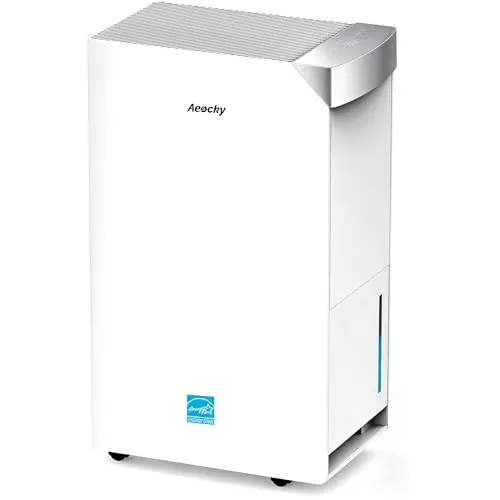
LEO-Lite – High-Capacity Basement Dehumidifier
A high-capacity compressor dehumidifier for damp basements, with a 74-pint daily rating, Energy Star 6.0 efficiency, auto-defrost, and a drain hose for continuous operation.

CT6 – Compact Basement Dehumidifier with Drain Hose
A compact 1000-square-foot dehumidifier with dual-core moisture removal, a 98-ounce tank, a drain hose, and a quiet sleep mode for small basement spaces.
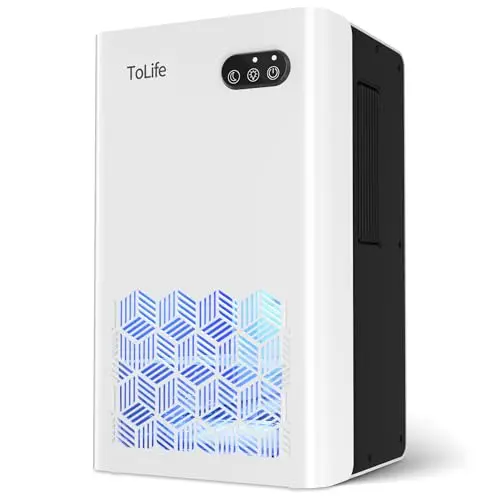
TZ-C2 – Quiet 1000 Sq Ft Dehumidifier
A straightforward 1000-square-foot dehumidifier with semiconductor condensation, a 95-ounce tank, two speeds, and a sub-30dB sleep mode.
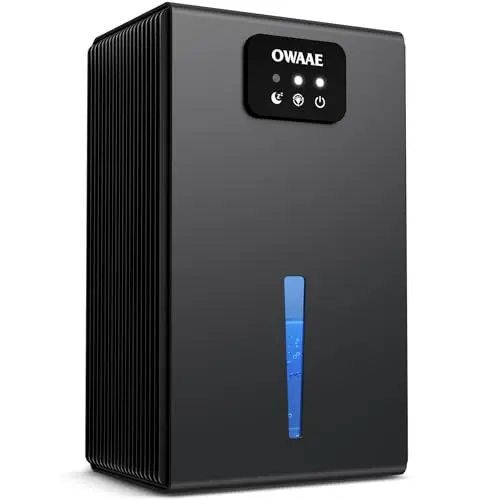
TZ-C4S – Quiet Compact Dehumidifier
A quiet compact dehumidifier with a 95-ounce tank, sub-30dB sleep mode, auto shut-off, and 7-color ambient lighting.
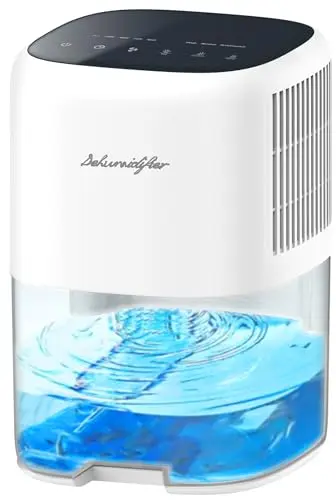
E2-DH-WHITE – Compact 44 oz Dehumidifier
A small-space dehumidifier with a 44-ounce tank, auto-defrost, three operating modes, and five timer settings for tight basement corners.
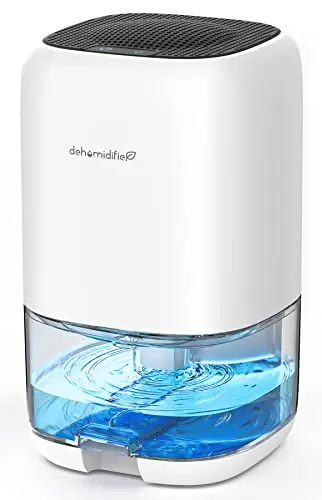
DH-CS01 – Budget 35 oz Dehumidifier
A budget-friendly compact dehumidifier with a 35-ounce tank, auto shut-off, and 7-color mood lighting for small rooms.
How We Evaluated These Dehumidifiers for Small Basement
We did not run controlled humidity-chamber tests or measure moisture removal in a sealed basement. What we did: cross-referenced 6 dehumidifiers from 6 brands across five decision axes – moisture-removal capacity, drainage setup, auto-defrost, noise and footprint, and basement-specific fit. We triangulated published specifications, feature sets, owner feedback where available, and use-case fit against the realities of a small basement: cool air, concrete walls, limited floor space, and the need to run for days without constant emptying. We also mapped each unit’s stated coverage against its actual extraction rate, because a compact Peltier model and a compressor dehumidifier can claim similar square footage while behaving very differently in a damp basement.
The scoring framework weighted real-world basement fit (70%) – how well each unit matches a small basement’s actual humidity load and drainage needs – against feature differentiation (30%) – the extras and design choices that separate one model from another. We audited tank size, hose compatibility, defrost behavior, timer controls, and placement flexibility, then checked whether those features solved real small-basement problems or just filled a spec sheet. We have no commercial relationship with the brands featured; recommendations track fit and differentiation, not brand preference. If you need serious moisture pull in a damp basement, the LEO-Lite is the compressor pick; if you want a compact unit with a drain hose for moderate dampness, the CT6 is the better fit.
How to Choose the Right Dehumidifier for a Small Basement
1. How Much Dehumidifying Power Does a Small Basement Need?
For a small basement, the pint-per-day rating matters more than the tank size. A compact Peltier model may handle a few hundred square feet in mild humidity, but a cool concrete basement often needs a compressor unit with a higher extraction rate. Match the rating to the actual square footage and how damp the space feels, not the optimistic coverage claim on the box. If the walls sweat or the air smells musty year-round, lean toward more capacity.
2. Drainage Options for Small Basement Dehumidifiers
A drain hose changes the ownership experience. Instead of emptying a tank every day, you route the hose to a floor drain or sump and let the unit run. The CT6 includes a drain hose and a 98-ounce tank, so you can start with manual emptying and switch to continuous drainage. Compressor units like the LEO-Lite also include a hose, which is the better setup for a basement that stays humid for weeks. If you have no drain access, a larger tank and auto shut-off are the next best thing.
3. Why Auto-Defrost Matters in a Cool Basement
Basements run cooler than the rest of the house, and cool air makes dehumidifier coils frost up. A unit with auto-defrost can melt that frost and keep working instead of shutting down. This is one of the clearest differences between a basement-ready dehumidifier and a basic compact model. If your basement stays below the mid-60s, prioritize defrost protection.
4. Noise, Footprint, and Placement in a Small Basement
Small basements leave little room for a bulky appliance, so measure the corner or shelf before you buy. Compact units with handles are easier to move, and a low-noise sleep mode helps if the basement sits under a bedroom. Keep the unit a few inches from the wall and away from stored fabrics so air can circulate. A quiet dehumidifier that fits in the room is more likely to stay running.
5. Peltier vs. Compressor Dehumidifiers for Small Basements
Peltier dehumidifiers are compact, light, and often quiet, but their extraction rate is modest. They suit a small basement room with moderate dampness, especially if you can drain them continuously. Compressor dehumidifiers are heavier and louder, but they pull far more moisture and handle cool, damp basements better. The tradeoff is size and weight, not just capability. For a finished small basement that feels clammy, a compressor unit is usually the more reliable long-term choice. If you want a simple Peltier pick with two speeds, the TZ-C2 fits moderate dampness.
6. What to Skip When Shopping for a Small Basement Dehumidifier
Skip coverage claims that sound too good for a small Peltier unit. A 1000-square-foot rating on a compact model is a best-case number, not a guarantee in a cool basement. Also skip tanks without auto shut-off, units with no defrost in cool spaces, and any dehumidifier that lacks a drain option if the basement runs humid for days. Those omissions are more important than extra lights or aroma slots.
Frequently Asked Questions
1. What's the difference between the AEOCKY LEO-Lite and the boglvr CT6 for a small basement?
The LEO-Lite is a compressor dehumidifier with a 74-pint daily rating, auto-defrost, and a drain hose, so it can handle a cool, genuinely damp basement. The CT6 is a compact Peltier unit with a 98-ounce tank and a drain hose; it’s quieter and easier to tuck into a corner, but its moisture pull is more modest. Choose the LEO-Lite if your basement smells musty or the walls sweat; choose the CT6 if the space is small and only moderately humid.
2. Is the ToLife TZ-C2 or the OWAAE TZ-C4S better for a small basement?
Both the TZ-C2 and TZ-C4S use a 95-ounce tank and a sub-30dB sleep mode, and neither includes a drain hose. The TZ-C2 adds two speeds and a straightforward setup; the TZ-C4S leans on a compact body and quiet operation. For most small basements, the TZ-C2 is the simpler pick, but plan on regular tank emptying either way.
3. How many pints per day do I need for a small basement?
Start with the dampness, not just the square footage. A compact Peltier dehumidifier often removes around a liter per day, which may be enough for a small room with mild humidity but not for a cool basement with damp walls. A compressor dehumidifier can remove far more moisture, and features like auto-defrost, a drain hose, and auto shut-off matter as much as the pint rating. If the basement smells musty year-round, size up.
4. Can a compact dehumidifier keep a small basement dry without a drain hose?
Yes, if the basement is only moderately humid and the tank is large enough. A 98-ounce tank with auto shut-off reduces overflow risk, but you’ll still empty it often in steady humidity. If the basement runs damp for days, continuous drainage is the better setup, and a compressor unit with a hose will keep up more reliably than a compact Peltier model.
Final Verdict
For most small basements, the LEO-Lite is the pick that actually behaves like a basement dehumidifier. It has the compressor capacity, auto-defrost, and drain hose to handle cool, damp air without constant babysitting. If your basement is only moderately damp and you want a compact unit that tucks into a corner, the CT6 is the better fit, with a 98-ounce tank and a drain hose for longer runs. For a simple, quiet setup with a large tank and no hose, the TZ-C2 is a sensible alternative. And if you’re covering a tiny basement room on a budget, the DH-CS01 gets you basic moisture control in a small footprint. Match the unit to the dampness you actually have, not the biggest number on the box.
