
Best Devices For Putting On Compression Socks – 2026 Reviews

The moment compression socks stop being optional – after surgery, during pregnancy, or because a doctor put them on the daily list – putting them on becomes the hardest part of the morning. Compression fabric is tight by design, so a device that works fine for an everyday sock can collapse, slip, or leave you wrestling with the cuff.
The right device for putting on compression socks solves three practical problems: it holds the sock opening wide enough to load, keeps the cuff from sliding off while you pull, and reaches your foot from a seated position. Shell width, grip security, and handle reach separate the genuinely useful aids from the generic sock sliders.
We looked across the market at purpose-built compression sock aids and mainstream alternatives to see which ones make the routine calmer. The goal isn’t to crown a brand; it’s to match the aid to your compression level, foot size, and how much bending you’re trying to avoid.
Best Devices for Putting on Compression Socks – 2026 Reviews
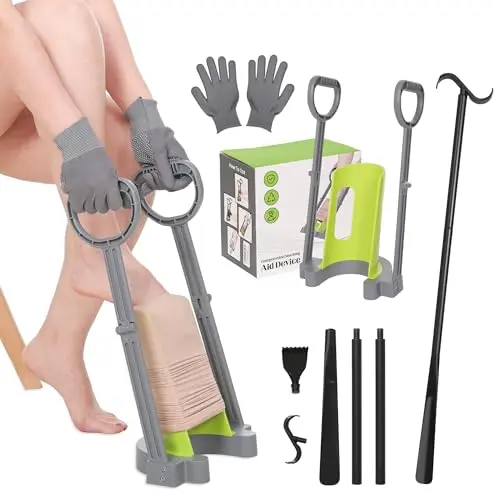
Compression Sock Aid Device – Firm-Hosiery Helper with Dressing Stick
A purpose-built compression sock aid with a rigid shell that’s intended to handle medium-to-high elasticity hosiery. The detachable dressing rod adds reach and a few extra dressing tasks, making it a more complete kit for anyone who can’t bend freely.
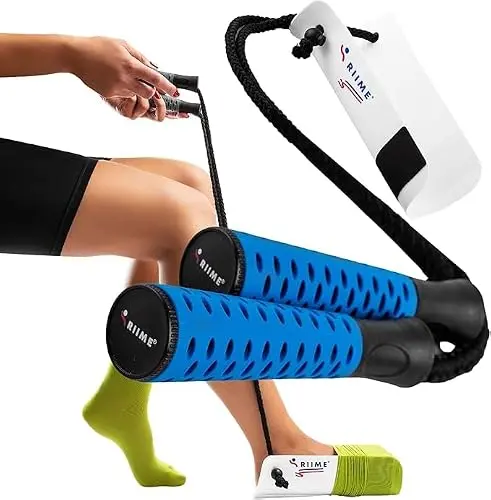
Sock Aid for Compression Socks – Ergonomic Grip for Daily Hosiery
A compression-sock-oriented aid with a soft-touch shell, full-width anti-slip band, and breathable handles. It’s less expensive than the premium pick but still aims at medium compression and everyday hosiery.
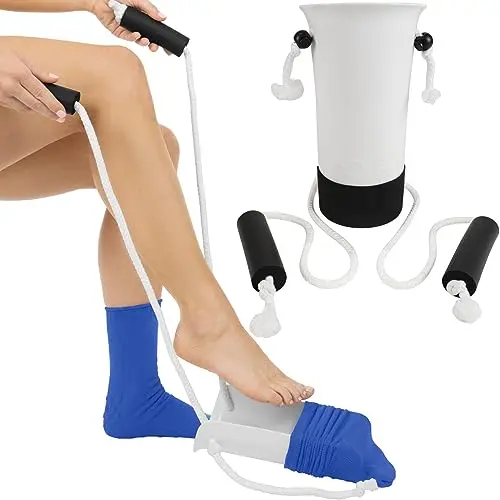
Sock Aid – Mainstream Helper for Lighter Compression
A mainstream sock aid with a contoured shell, foam-padded handles, and a slip-resistant cuff. It’s widely used for general dressing assistance, though it isn’t purpose-built for firm compression hosiery.
How We Evaluated These Devices for Putting on Compression Socks
We didn’t put these aids through a clinical dressing assessment or a multi-week trial with every compression class. What we did: cross-referenced 3 compression-sock devices from 3 distinct brands across 5 decision axes – shell width and foot fit, grip and handle reach, shell rigidity, compression-sock compatibility, and care or storage needs. We triangulated published specifications, feature sets, and owner feedback where available, then mapped each option against realistic buyer scenarios: post-surgery recovery, pregnancy, arthritis, and daily use with medium or firm hosiery. We also weighed how each aid loads a sock while seated, how much hand strength the handles demand, and whether the shell could hold its shape under the tension of compression fabric without turning the morning routine into a fight. That matters because a compression sock aid can look simple and still fall short at the exact moment you need it.
The scoring framework weighted real-world fit for compression socks (70%) – how well each aid actually loads and pulls firm hosiery – against feature differentiation (30%) – unique handle designs, dressing extras, and use-case specificity. We have no commercial relationship with any of the brands featured; recommendations track fit and differentiation, not brand preference. If you’re dealing with firm compression, the JFMkaer Compression Sock Aid Device is the most purpose-built pick; for everyday medium compression, the RIIME Sock Aid is the easier daily driver.
How to Choose the Right Device for Putting on Compression Socks
1. Start With Shell Width and Foot Fit for Compression Socks
Compression socks are harder to load than everyday socks because the fabric fights back. A device that’s too narrow can bunch the sock opening, while one that’s too wide lets the sock slip off before your foot is in. Look for a shell width that matches your foot and a wide opening that can hold the sock’s cuff without stretching it out of shape. If you have wide feet or swollen ankles, check the published dimensions rather than assuming one size works.
2. Why Grip and Handle Reach Matter When Putting On Compression Socks
The best compression sock aid is the one you can use while seated, without leaning forward or twisting. Foam-padded handles help if your grip is weak, and adjustable cords let you set the reach for a chair, bed, or wheelchair. A long-handle design can also reduce shoulder strain, but it may be harder to store. Test the reach mentally against where you’ll actually sit when dressing.
3. Rigid vs. Flexible Sock Aid Shells for Firm Hosiery
Flexible shells are easier to load and more forgiving for casual socks. Firm compression hosiery usually demands a rigid plastic shell that keeps its shape under tension. If you’re using medium compression, a semi-flexible cradle can be enough; for firm medical-grade stockings, look for a non-slip band that grips the cuff. A floppy aid may collapse exactly when you need leverage.
4. What to Know About Compression Levels and Sock Fabric
Compression socks range from light travel socks to firm medical hosiery, and the same aid won’t handle every level. Thicker fabric and stronger elastic need more shell rigidity and a secure cuff grip. Lighter compression socks are more forgiving, so a mainstream sock aid may be enough. If your doctor prescribed a specific compression class, match the aid to that level rather than buying the cheapest generic slider.
5. Budget, Mid-Range, and Premium Sock Aid Devices
Budget-friendly sock aids can work for lighter compression, but they often have thinner shells and less comfortable handles. Mid-range devices usually add better grip materials and more secure cuffs. Premium picks may include dressing extras, wider shells, or more adjustable reach. If you’re using compression socks daily, the mid-range or premium tier is often the better long-term buy; for occasional use, a budget-friendly option can be enough. If firm hosiery is your daily reality, the JFMkaer Compression Sock Aid Device is the purpose-built route. For medium compression, the RIIME Sock Aid is the more approachable daily pick.
6. Care, Storage, and When to Replace Your Sock Aid
Most sock aids wipe clean with a damp cloth, but check the care instructions before using harsh cleaners. Store the device within reach of where you dress, and keep the cords untangled so you’re not fighting knots before you’ve had coffee. Replace the aid if the shell cracks or the foam handles split. A worn aid can turn a simple routine back into a struggle.
Frequently Asked Questions
1. What's the difference between the JFMkaer Compression Sock Aid Device and the RIIME Sock Aid?
The JFMkaer is the more purpose-built compression tool: its rigid shell is designed for medium-to-high elasticity hosiery, and it adds a detachable dressing rod for reach. The RIIME is lighter and more everyday, with a soft-touch shell and a full-width anti-slip band that suits medium compression. If your socks are firm or you want one tool for more dressing tasks, the JFMkaer Compression Sock Aid Device is the clearer match. If you want a simpler daily aid, the RIIME is easier to live with.
2. Can a standard sock aid work with compression socks?
Sometimes, but it’s not a safe assumption. Standard sock aids are often designed for everyday socks and may not hold a firm compression cuff under tension. A device needs a rigid shell, a secure grip band, and enough handle reach to pull without bending. If your compression socks are medically prescribed, choose an aid explicitly intended for compression hosiery rather than a generic slider.
3. How do I choose between the Vive Sock Aid and the RIIME Sock Aid for lighter compression?
The Vive Sock Aid is the more familiar, budget-friendly design with a contoured shell and foam-padded handles. It can work for lighter compression socks, but feedback is split on firmer hosiery. The RIIME Sock Aid is the more compression-focused choice, with an anti-slip band and a soft-touch shell. If your socks are only lightly compressive and you want a simple aid, the Vive is reasonable; if you want more grip security for medium compression, the RIIME is the better fit.
4. What should I do if a sock aid feels too wide or too narrow?
Fit matters more with compression socks because the fabric is less forgiving. A device that’s too narrow can bunch the cuff, while one that’s too wide can let the sock slip off. Check the published shell dimensions against your foot width, and look for adjustable width if you’re between sizes. If the aid digs into your arch or heel, a contoured shell or a different size may solve the problem before you give up on sock aids entirely.
Final Verdict
For most people putting on compression socks, the JFMkaer Compression Sock Aid Device is the answer. Its rigid shell is built for firm hosiery, and the dressing rod adds reach without turning your morning into a bending exercise. If your compression socks are medium rather than medical-grade firm, the RIIME Sock Aid is the easier daily driver, with a softer shell and secure grip band. And if you’re using lighter compression socks and want a simple, budget-friendly aid, the Vive Sock Aid is the familiar choice, provided you check the shell width first. The right pick comes down to how firm your hosiery is and how much reach you need from a seated position.
