
Best Dish Soap Dispensers For Kitchen Sink – 2026 Reviews

The kitchen sink is where dish soap either lives neatly or becomes a sticky bottle sliding around the counter. A dispenser can solve that – but only if it matches your sink and your habits.
The biggest fork is built-in versus countertop. Built-in models thread through a predrilled hole and keep the deck clear; countertop models install in seconds and move with you. The second axis is pump and refill style: manual versus touchless, top-fill versus wide-mouth, dose control versus a free-flowing glug.
This guide sorts the market by how each dispenser handles a real kitchen sink: wet hands, greasy pans, tight counters, and the occasional lazy refill. We’ll help you pick a format that fits your sink, not just a pretty bottle.
Best Dish Soap Dispensers for Kitchen Sink – 2026 Reviews
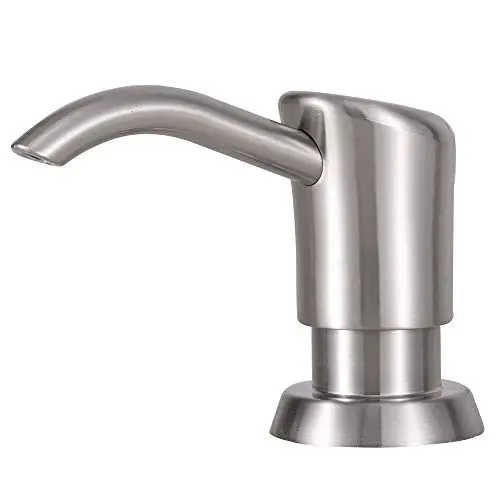
G16068-11 – Built-In Top-Refill Dispenser
A built-in sink dispenser for predrilled holes, with a 17-ounce bottle that refills from the top and a 360-degree swivel pump. It suits kitchens that want soap at the sink deck without a countertop bottle.
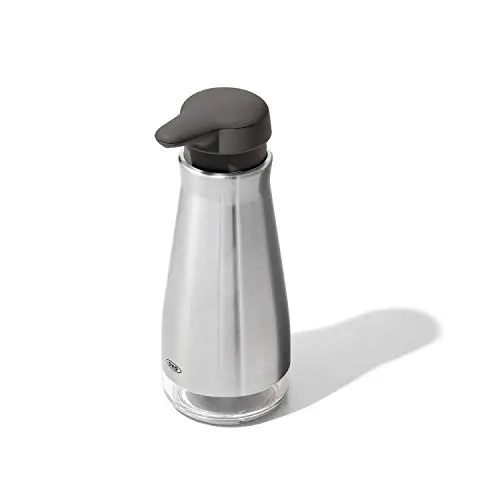
Good Grips Stainless Steel – One-Handed Countertop Pump
A countertop dispenser with a weighted nonslip base, soft angled pump, and clear fill window. It’s a one-handed option for kitchens that don’t want to drill the sink deck.
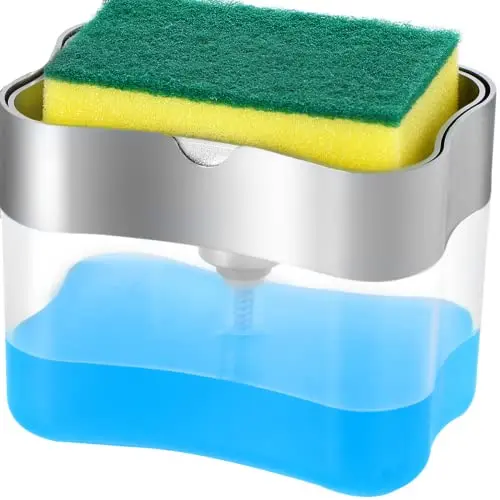
Effortless Soap Dispenser – Sponge Caddy Combo
A compact countertop dispenser with a built-in sponge caddy, 13-ounce reservoir, and BPA-free plastic body. It keeps soap and a scrubber together at the sink.
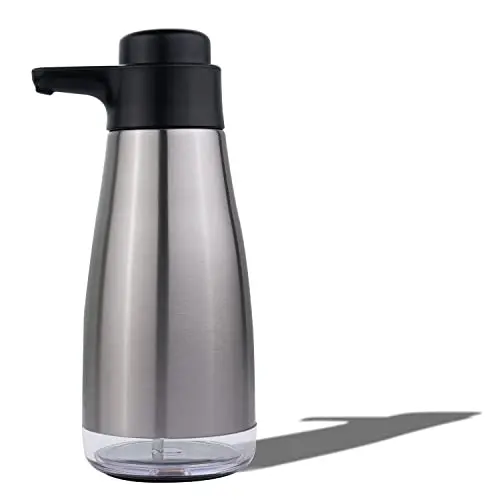
AK1062 – Stainless Countertop Pump
A stainless countertop dispenser with a 15-ounce reservoir, clear liquid window, wide refill opening, and one-year warranty. It’s a simple manual pump for kitchen sink or bathroom use.
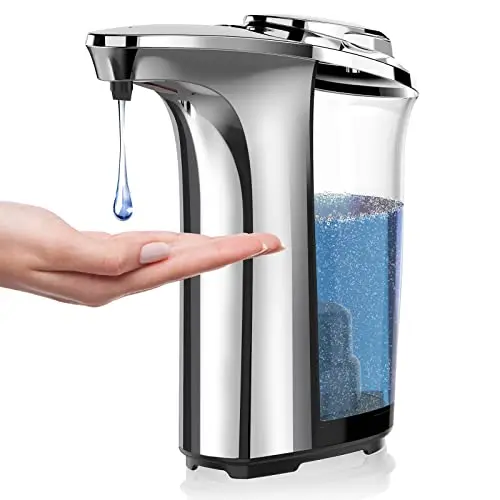
YM-201 – Touchless Sensor Dispenser
A battery-powered touchless dispenser with a 17-ounce reservoir, infrared sensor, five soap-volume settings, and IPX4 water resistance. It suits kitchens that want less mess on the pump.
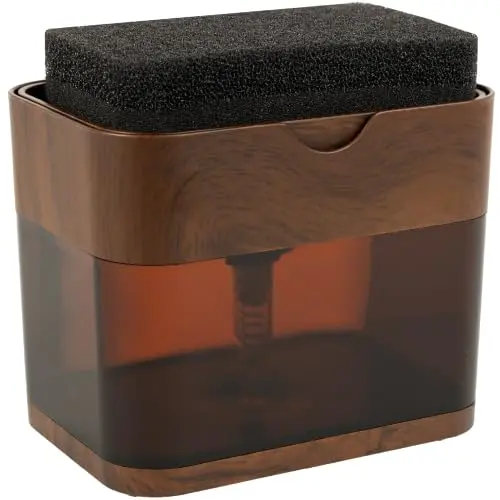
776101 – Soap-and-Sponge Sink Caddy
A countertop soap dispenser and sponge holder in one, with a 13-ounce reservoir, elevated drying plate, and non-slip feet. It’s a sink-side caddy for soap and scrubber.
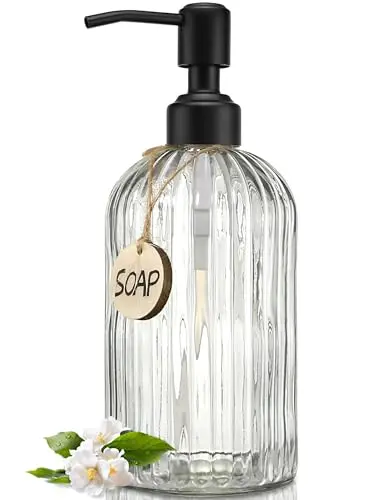
GB-VT-BLK – Vertical-Stripe Glass Dispenser
An 18-ounce clear glass dispenser with a black rust-proof stainless pump and vertical stripe texture. It’s a refillable countertop bottle for dish soap or hand soap.
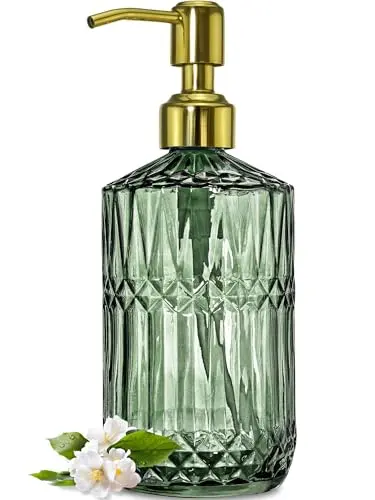
GB-FD2-GP – Diamond-Cut Glass Dispenser
An 18-ounce green glass dispenser with a diamond-cut textured body and gold stainless pump. It’s a dishwasher-safe refillable bottle for dish soap, hand soap, or lotion.
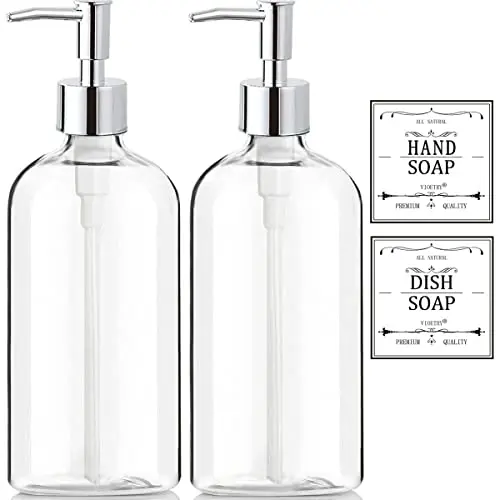
2-Pack Clear Dispenser – Waterproof Label Set
A two-pack of clear 16.9-ounce PET plastic dispensers with rust-proof pumps and waterproof hand-soap and dish-soap labels. They’re refillable bottles for kitchen or bathroom use.
How We Evaluated These Dish Soap Dispensers for Kitchen Sink
We didn’t run controlled kitchen lab tests or multi-month durability trials. What we did: cross-referenced 9 dish soap dispensers from 8 brands across five decision axes – capacity, pump style, refill access, installation footprint, and materials/durability signals. We triangulated published specifications, feature sets, owner feedback where available, and use-case fit for a kitchen sink. We mapped each dispenser to scenarios like a predrilled sink hole, a rented kitchen with no drilling allowed, a small counter with no spare inches, and a cook who prefers touchless pumping. We also weighed whether the refill routine was realistic: top-fill through a built-in collar, a wide-mouth countertop bottle, or a pump that has to be removed every time.
The scoring framework weighted real-world fit (70%) – how well each dispenser handles daily dishwashing at the sink – against feature differentiation (30%) – unique pump, refill, or storage advantages. We did not treat a higher price or a fancier finish as proof of better performance. We have no commercial relationship with any of the brands featured; recommendations track fit and differentiation, not brand preference. That avoids the most common mismatch: a well-made dispenser that doesn’t fit the hole or the counter. If your sink is already drilled, the GAGALIFE G16068-11 is the natural match; if it isn’t, the OXO Good Grips Stainless Steel is the countertop route we’d start with.
How to Choose the Right Dish Soap Dispenser for a Kitchen Sink
1. Built-In vs. Countertop Dish Soap Dispensers for Kitchen Sink
The first fork in the road is whether your kitchen sink already has a soap hole. A built-in dispenser threads through a predrilled opening and keeps the counter clear. If your deck is already drilled, the GAGALIFE G16068-11 is the built-in pick; check the hole diameter and sink deck thickness before ordering, since those two numbers decide fit. If your sink is undrilled, the OXO Good Grips Stainless Steel is the stronger countertop route, and it can move to a new kitchen without leaving a hole behind.
2. How Pump Style and Refill Access Affect Daily Kitchen Sink Use
A manual pump is simple and doesn’t need batteries; a touchless sensor cuts down on greasy fingerprints but adds electronics. For dish soap, look at dose control: a pump that delivers a small, controlled amount wastes less than one that floods the sponge. Top refill is a real convenience at a built-in sink, while a wide mouth matters more on a countertop bottle. If you often pump with wet hands, a weighted or non-slip base helps keep the dispenser planted. The best kitchen sink dispenser for you is the one whose refill and pump routine you’ll actually repeat every day.
3. Capacity, Footprint, and Sponge Storage at the Kitchen Sink
Capacity is a tradeoff between refill frequency and counter space. A 13-ounce reservoir is fine for a small household, while 17 to 18 ounces stretches the time between top-offs. If your sink is tight, a compact footprint matters more than maximum volume. A sponge caddy can earn its space by keeping a wet scrubber off the counter and catching drips. Just check that the caddy drains and that the whole unit has non-slip feet; a soap dispenser that slides around is worse than one that holds less soap.
4. Materials That Hold Up to Dish Soap and Water
Plastic is light, shatter-resistant, and budget-friendly, but the pump is usually the first part to wear out. Stainless steel resists rust and fingerprints, though it can still develop a stiff pump over time. Glass looks better and doesn’t absorb odors, but it’s heavier and breakable near a busy sink. Check for a rust-proof pump, a BPA-free body if plastic is your choice, and a wide opening for cleaning. Avoid foam soap in dispensers that aren’t designed for it, and rinse the pump occasionally to keep thick dish soap from clogging the works.
5. Budget, Mid-Range, and Premium Dish Soap Dispenser Tiers
At the entry level, expect plastic bodies, basic pumps, and shorter service life; that can still be the right call for a rental or a low-traffic kitchen. Mid-range options add better pump feel, clearer fill windows, and sturdier bases. The premium tier buys glass, stainless, sensor electronics, or a more polished finish, but it doesn’t automatically buy a longer-lasting pump. Match the tier to how hard your kitchen sink works and how much visual polish you want on the counter.
Frequently Asked Questions
1. GAGALIFE G16068-11 vs. OXO Good Grips Stainless Steel: which suits a kitchen sink better?
The GAGALIFE is a built-in dispenser for a predrilled sink hole, so it clears the counter and refills from the top. The OXO is a countertop pump with a weighted base and no installation. Choose the GAGALIFE G16068-11 if your sink deck is already drilled and you want a seamless look. Choose the OXO Good Grips Stainless Steel if you rent, have a solid-surface counter, or want to move the dispenser around.
2. PZOTRUF YM-201 vs. AIKE AK1062: which is better for a busy kitchen sink?
The PZOTRUF is touchless and battery-powered, with five dose settings, so it suits cooks who pump with messy hands. The AIKE is a manual stainless dispenser with a clear window and a one-year warranty; there are no batteries to replace. For a high-traffic kitchen sink, the AIKE’s simpler routine may be easier to live with; for less mess on the pump, the PZOTRUF has the edge.
3. How do I measure my kitchen sink hole for a built-in dish soap dispenser?
Measure the hole diameter with calipers or a close ruler; many built-in models fit 1 to 1.5 inches. Then check the sink deck thickness under the rim, because the threaded shank has to reach through and still leave room for the nut. Clear away grime and old sealant before installing, and test the pump before you tighten everything down. If the hole is undersized or the deck is too thick, a countertop dispenser is the safer route.
4. Do automatic dish soap dispensers work with thick dish soap?
Many automatic dispensers handle standard liquid dish soap, but thick or gel formulas can clog the nozzle or dispense unevenly. Check the manufacturer’s guidance for liquid soap compatibility, and avoid foaming soap unless the unit is made for it. If the pump hesitates, rinse the nozzle with warm water and run a cycle of thin soap. A manual pump is usually more forgiving with whatever dish soap you already buy.
Final Verdict
For most kitchen sink setups, the GAGALIFE G16068-11 is the pick – if you have a predrilled hole, it keeps soap on the deck and refills from the top without a countertop bottle. If your sink isn’t drilled, the OXO Good Grips Stainless Steel is the better countertop answer, with a weighted base and one-handed pump. Budget-conscious shoppers who want sponge storage should look at the LIFEEZY Effortless Soap Dispenser; it combines soap and a drying caddy at the entry-level end. And if you want touchless dosing, the PZOTRUF YM-201 is purpose-built for hands-free dishwashing. Match the dispenser to your sink’s hole situation and your pump routine, and you’ll avoid the most common regret in this category: buying a good dispenser that doesn’t fit your actual kitchen sink.
