
Best Double Curtain Rods – 2026 Reviews

You hang the blackout curtains, step back, and there’s still a bright seam running down each side of the window. That gap is almost never the curtain’s fault. It’s the rod – specifically, a single flat rod that holds one layer against the wall and lets light spill around the edges.
A double rod fixes that by giving you two poles on one set of brackets: a heavier outer layer for blackout or decorative panels, and a lighter inner layer for sheers. The details that separate a good one from a frustrating one are unglamorous. Front-rod diameter, rated weight capacity, and whether the ends curve back toward the wall or sit flat matter far more than the finial shape.
What follows is a cross-brand look at the category, from budget-friendly entry points to premium hardware, with an eye on which rod suits which window. Match the span and the weight you’re hanging first. The finish is the easy part.
Best Double Curtain Rods – 2026 Reviews
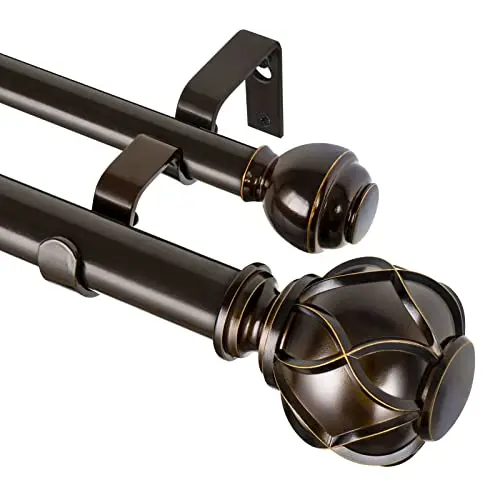
Double Curtain Rod 72-144 Inch – Netted Texture Finials
KAMANINA’s long-span double rod pairs a 1-inch front pole with a 3/4-inch back pole, so heavy blackout panels sit in front and sheers float behind. The netted-texture finials give it a decorative edge that plain end caps don’t, and the recycled-metal build carries a Global Recycled Standard certification.
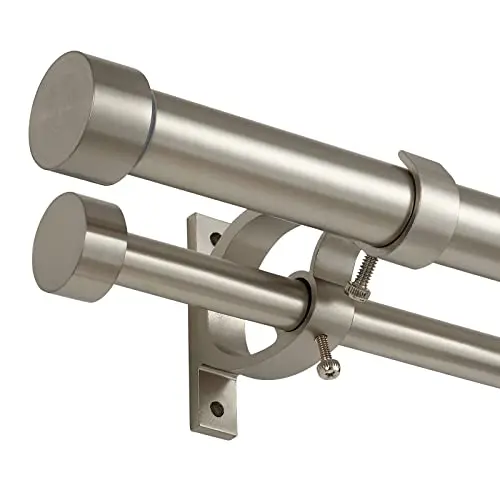
End Cap Double Curtain Rod 72-144 Inch – Aluminum Wind Ear Brackets
A 1-inch front rod and 5/8-inch back rod built for the heavyweight end of the category. Lwiiom’s aluminum end caps and wind-ear double brackets skip the iron rust problem entirely, and the cured coating resists scratching through daily curtain traffic.
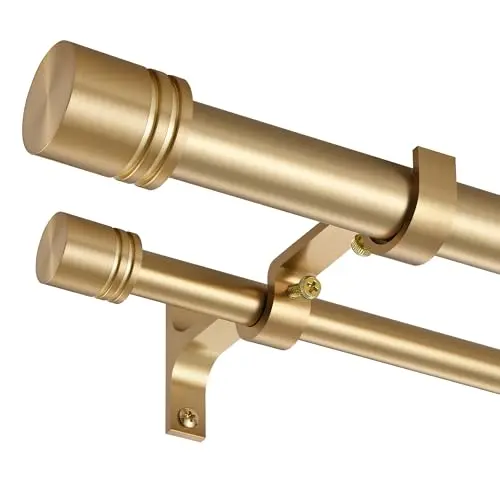
Double Curtain Rod 72-144 Inch – Aluminum Alloy Brackets and Finials
Vimayta’s differentiator is material consistency: brackets and finials are both aluminum alloy rather than cast iron, which means no rust at the contact points and no paint flaking off cheap hardware. The 1-inch front rod spans up to 144 inches.
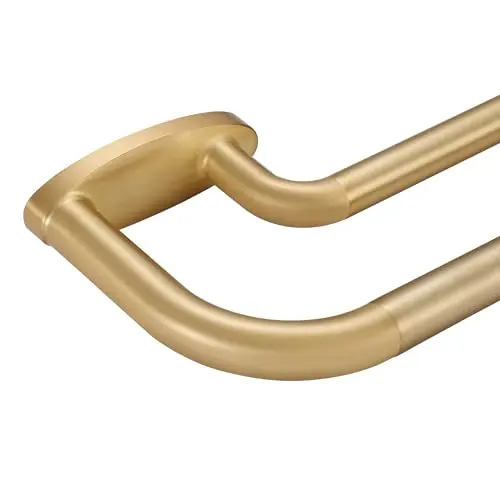
Double Curtain Rod 72-144 Inch – Hidden Base Wrap-Around Design
A wrap-around double rod with a twist: instead of visible brackets, the assembled rod plugs into a base plate that the curtain then hides. The curved geometry pulls panels tight to the wall at both ends, which is exactly where most light leaks happen.

Double Curtain Rod 66-120 Inch – Minimalist End Caps
KAMANINA’s shorter-span dual rod trades decorative finials for clean end caps, which suits modern and farmhouse rooms equally well. A 1-inch front rod and 3/4-inch back rod carry up to 33 pounds of layered curtain.
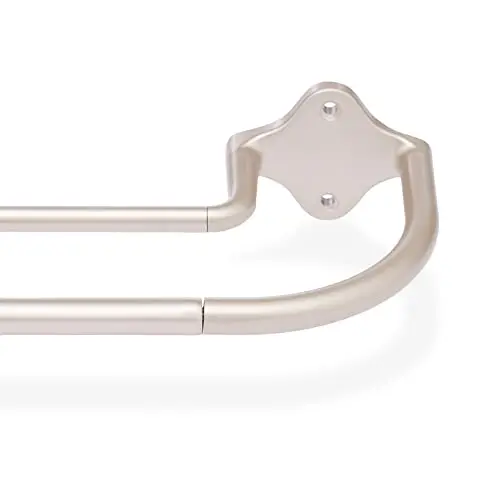
Room Darkening Double Curtain Rod 48-88 Inch – Curved Wrap Ends
A no-nonsense dual rod with curved ends that push curtains back toward the wall, cutting the side light gaps that make blackout curtains feel like they aren’t working. Nickel finish over rust-resistant metal, with mounting hardware in the box.
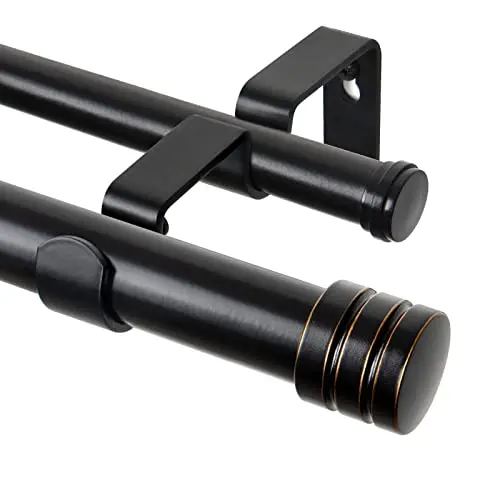
Double Curtain Rod 36-144 Inch – Classic Finial Heavy Duty
TONIAL’s dual rod is built to be configured rather than simply extended: segment the rod sections for broad coverage or slide the ends for fine adjustment. Classic finials and a 1-inch front pole keep it traditional without being ornate.
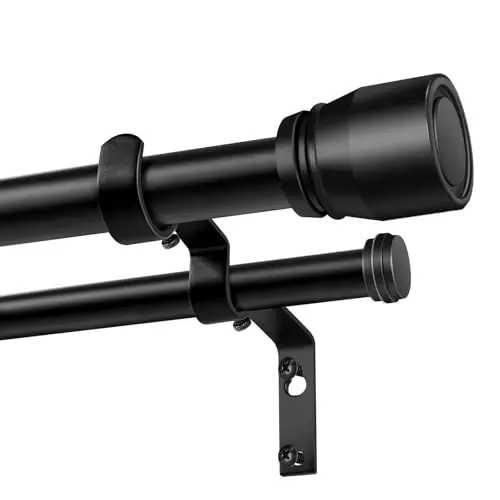
Double Curtain Rod 32-120 Inch – Spliced Long-Span Build
A multi-segment kit built to stretch from small windows to sliding doors using the same set of short rods. The 1-inch main pole carries the heavy layer, and the matte black finish keeps the whole assembly unobtrusive.
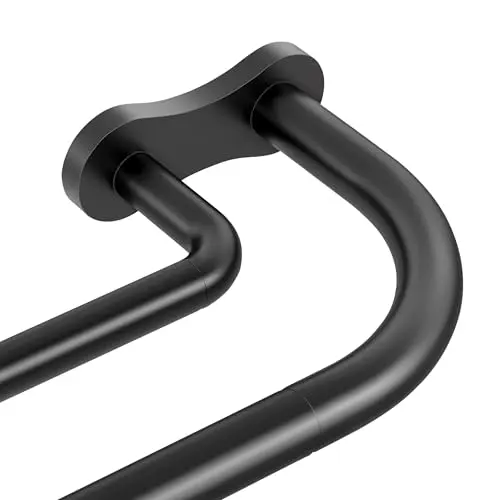
Double Curtain Rod 34-92 Inch – Curved Room-Darkening Wrap
Wolistsa’s curved wrap-around design pulls both curtain layers tight to the frame for a near-total light seal – the setup light-sensitive sleepers and shift workers ask for. Carbon steel poles with aluminum end brackets.
How We Evaluated These Double Curtain Rods
A few things we can’t tell you: how these rods feel after a year of sliding blackout panels back and forth, or whether your particular wall studs will cooperate with the brackets. What we can tell you is how the field sorts out on paper. We cross-referenced 9 double curtain rod models from 8 distinct brands across 6 decision axes – front and back rod diameter, rated weight capacity, adjustable span and splicing structure, mounting geometry, material and finish, and what actually ships in the box. We triangulated published specifications, absorbed owner feedback where available, and mapped each rod against representative buyer profiles: renters with standard windows, homeowners with wide sliding doors, and anyone chasing a genuine blackout setup.
The scoring framework weighted real-world performance (70%) – how well a rod holds the weight it claims and covers the span it advertises – against feature differentiation (30%), meaning the details that separate one dual-rod kit from another: aluminum versus iron hardware, hidden bases, curved ends. We have no commercial relationship with any of these brands, and recommendations track fit and differentiation rather than brand preference. If you’re outfitting a wide living-room window with heavy panels, the KAMANINA Double Curtain Rod 72-144 Inch is built for it; if light blocking on a tighter budget is the goal, the Amazon Basics Room Darkening Double Curtain Rod covers that ground.
How to Choose the Right Double Curtain Rods
1. Front Rod vs. Back Rod: Why Diameter Decides Everything
Nobody hangs two curtains of equal weight on a double rod. The design assumes a heavier outer layer – blackout panels or drapes – on the front pole and a lighter sheer behind it, and the diameters reflect that. A 1-inch front rod is the workhorse: it looks substantial, spreads load across the brackets, and won’t bow under lined fabric. A 3/4-inch front rod handles medium curtains fine and reads a little lighter visually. The back rod is usually 5/8 inch, which is plenty for sheers and voile.
Where people go wrong is buying on looks alone and then hanging velvet on a 5/8-inch pole. Match the diameter to the fabric weight first, then worry about finials.
2. Weight Capacity: Read the Rating, Then Leave Headroom
Published capacity ratings in this category run from modest to optimistic, and the honest way to read them is as a ceiling, not a target. A rod rated for 30 pounds will hold 30 pounds of curtain, but without much margin for someone yanking a panel open every morning. Leave breathing room: if your lined blackout drapes land around 20 pounds, a 40 lb rated rod is the sensible match.
Bracket count matters as much as the number on the box. A center support bracket is what stops a long span from sagging in the middle, and skipping it is the most common install shortcut. If you’re hanging genuinely heavy drapes across a wide window, the Lwiiom End Cap Double Curtain Rod is the pick here.
3. Standard Brackets vs. Wrap-Around Double Curtain Rods
Wrap-around rods curve back toward the wall at both ends, closing the gap where light escapes past blackout panels. If you’ve ever taped a curtain to the wall to get a dark room, this is the design that solves it permanently. Curved wrap ends also make the window look more finished from the side. Standard bracket rods sit flatter and let curtains hang straight, which is usually the better look in a living room where light control isn’t the priority.
If a genuinely dark bedroom is the goal, the Mayrhyme Double Curtain Rod is the pick here, with its curved ends and hidden mounting base.
4. Measuring the Span: Telescoping, Splicing, and How Much Overhang
Double rods come in two adjustable styles. Telescoping rods slide inside one another for continuous adjustment; spliced rods join fixed segments and only fine-tune at the ends. Telescoping is smoother to adjust, while splicing covers longer spans with fewer parts bowing under load.
Either way, plan for 4 to 12 inches of overhang past the window frame on each side. That’s what lets curtains stack clear of the glass when open and still block light when closed. A rod that exactly matches your window width will always look skimpy and leak light. For a wide sliding door, the Hradecti Double Curtain Rod is the pick here.
5. Finishes, Materials, and What Survives Humidity
Iron is the most common rod material and the most rust-prone at the brackets and finials. Look for aluminum hardware or a high-temperature cured coating if the window sits in a bathroom or a humid climate, since those contact points are where corrosion starts.
Finish naming is loose across the category. Antique bronze often reads warmer and more gold in person, brushed gold ranges from pale champagne to something close to real brass, and the blacks split between matte and semi-gloss. Order a swatch if the rod has to match existing hardware in the room.
6. Budget, Mid-Range, and Premium Double Curtain Rods
Entry-level rods get you the basic two-pole setup with iron hardware and standard finials. Expect to compromise on either capacity or finish consistency, sometimes both. Mid-range is where aluminum brackets, wrap-around geometry, and heavier wall thickness show up – this is the sweet spot for most buyers, and where the strongest value sits.
Premium buys finish quality, hidden mounting designs, and the widest span ranges. Past a certain point you’re paying for decoration rather than function, and a well-specified mid-range double curtain rod will hold more curtain than a pretty budget one.
Frequently Asked Questions
1. What's the difference between the Lwiiom and Vimayta double curtain rods?
Both are 1-inch front rods aimed at wide windows, and both use aluminum hardware to dodge the rust problem – the difference is where the money goes. Lwiiom puts it into weight capacity and a longer warranty, with wind-ear brackets and a 72-144 inch span. Vimayta puts it into finish quality: a warmer brushed gold, matched aluminum finials and brackets, and a slightly lighter build.
If you’re hanging heavy lined drapes, go with the Lwiiom End Cap Double Curtain Rod. If the room’s hardware palette matters more than maximum load, Vimayta is the better match.
2. What's the difference between the TONIAL and Wolistsa double curtain rods?
They solve different problems. TONIAL is a configurable spliced rod that stretches all the way to 144 inches, with classic finials and a flat bracket mount – the better choice for a traditional room or an awkward window width. Wolistsa is a wrap-around design built specifically to seal light at the edges, with a shorter 34-92 inch span and carbon steel poles.
If darkness is the goal, Wolistsa. If flexibility and styling are, TONIAL.
3. How is the KAMANINA 72-144 inch rod different from the 66-120 inch version?
Same family, different jobs. The longer version uses netted texture finials and a 3/4-inch back rod for more separation between layers, and covers wide living-room windows. The shorter version switches to minimalist end caps, drops to a 66-120 inch range, and carries a slightly higher 33 lb rating.
The end-cap version is the better fit for a standard bedroom where the hardware should disappear into the curtain.
4. Can a double curtain rod be mounted on drywall without studs?
Yes, with the right anchors, and most kits include them. The caveats matter though. Drywall anchors are rated for pull-out force, not for the daily side-to-side tug of a heavy curtain, so hitting at least one stud at an end bracket is worth the extra effort.
Long spans also need the center support bracket anchored properly or the rod will bow. With heavy blackout drapes, treat stud-finding as mandatory rather than optional.
5. Is a 1-inch front rod always better than 3/4 inch?
No – it depends on what you’re hanging. A 1-inch rod looks more substantial, spreads load better, and won’t bow under lined fabric. A 3/4-inch rod is lighter visually and perfectly adequate for medium-weight curtains on a standard window, and it often suits a smaller room better.
The mistake is buying the slim rod because it looks elegant and then hanging velvet on it.
Final Verdict
For most buyers, the KAMANINA Double Curtain Rod 72-144 Inch is the answer – it covers wide windows, carries heavy panels, and the decorative finials mean you’re not paying twice for hardware and ornament. If the hardware needs to vanish into the room, the KAMANINA Double Curtain Rod 66-120 Inch with end caps does it for less.
Budget-conscious shoppers who mainly want light control should look at the Amazon Basics Room Darkening Double Curtain Rod; the curved ends do the work that actually matters. And if your curtains are genuinely heavy – lined velvet, multi-layer blackout – the Lwiiom End Cap Double Curtain Rod has capacity headroom the others don’t. Start with the span you need and the weight you’re hanging, and the choice narrows fast.
