
Best Down Alternative Comforters For Hot Sleepers – 2026 Reviews

You know the pattern. You fall asleep fine, then wake at 3 a.m. with your shoulders damp and the comforter half off the bed. By the time you’ve thrown a leg out from under it, you’re awake for good. For a lot of people the fix isn’t a fan or a colder thermostat – it’s a comforter with less fill and a shell that doesn’t hold heat.
That’s harder to shop for than it sounds. Down alternative describes the filling, not the warmth, so two comforters with near-identical labels can sleep very differently. The two axes that separate good options from mediocre ones here are fill weight – how much insulation you’re actually putting on the bed – and shell fabric, which decides whether heat moves away from you or just sits on your skin.
We looked across the market at down alternative comforters that make sense for warm sleepers: genuinely light fills, breathable shells, and construction that keeps the fill from migrating into a hot lump at your feet. What follows is a cross-brand survey of the options worth considering, with notes on which one suits which kind of sleeper – and which ones run warmer than the label implies.
Best Down Alternative Comforters for Hot Sleepers – 2026 Reviews
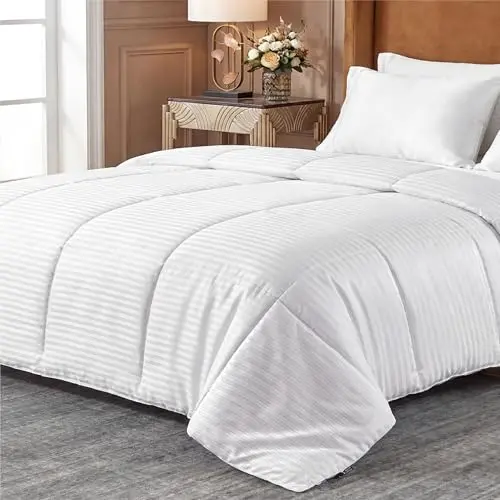
Duvet Insert – Lightweight 150 GSM for Hot Sleepers
This Bedsure insert runs a 150 GSM down alternative fill, which is genuinely light for the category – it drapes over you rather than pressing down. One face carries wide Bengal stripes, the reverse is brushed microfiber, so it holds up uncovered. Box stitching and eight duvet tabs come as standard.
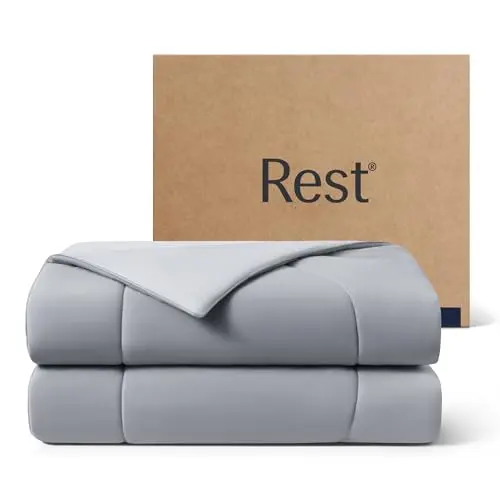
Evercool Cooling Comforter – Cool-to-Touch for Night Sweats
The Evercool treats temperature as the design problem rather than a side effect of being thin. A knit nylon-spandex shell feels cool the moment you touch it, over a fill blended from Sorona and Tencel. It’s built to be used without a flat sheet, and the smooth shell resists pilling, snags, and pet hair.
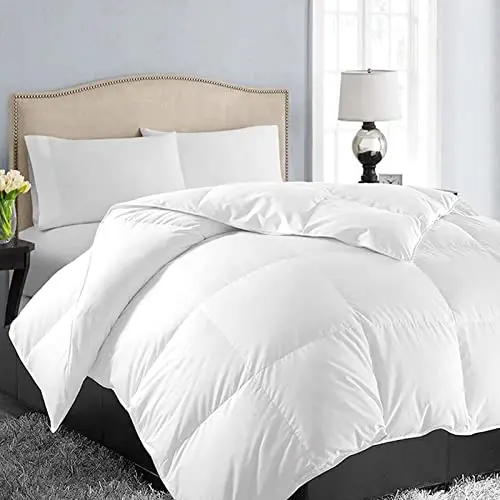
Down Alternative Comforter – Breathable All-Season Value
A 300 GSM whole-piece polyester fill wrapped in a brushed cover and quilted in a box grid. Mid-weight rather than summer-weight, but the brushed shell and even fill distribution keep it from sleeping like a winter comforter. Machine wash cold, tumble low.
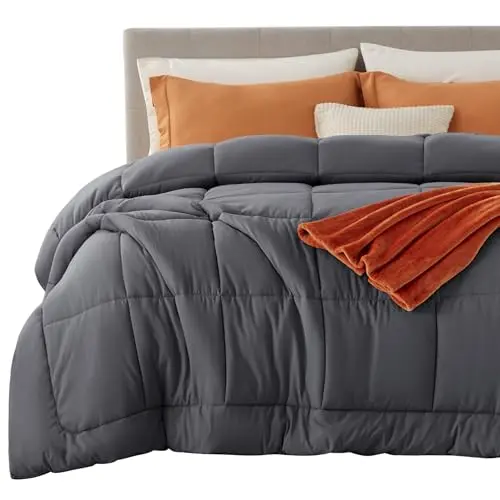
Comforter Duvet Insert – Box-Stitched All-Season Warmth
A 300 GSM box-stitched insert with eight attachment tabs and a size run that stretches from twin all the way to Alaskan king. The dark grey colorway is one of the few here that doesn’t look like a bare insert when left uncovered.

All-Season Duvet Insert – Whole-Piece Fill That Stays Even
A whole-piece polyfill insert in a soft polyester shell, box-stitched with corner tabs on each side. Standard 88×88 queen sizing. It ships vacuum-packed, so give it a day or two – or a low tumble – before you judge the loft.
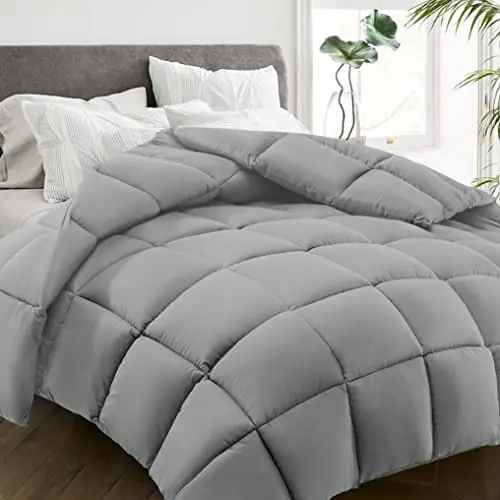
Cooling Down Alternative Comforter – Quiet Everyday Breathability
A brushed-fiber shell over a 3D and 7D down alternative fiber blend, quilted in a box grid with corner tabs. The light grey finish hides the usual white-insert grubbiness, and there’s a 90-day satisfaction guarantee behind it.
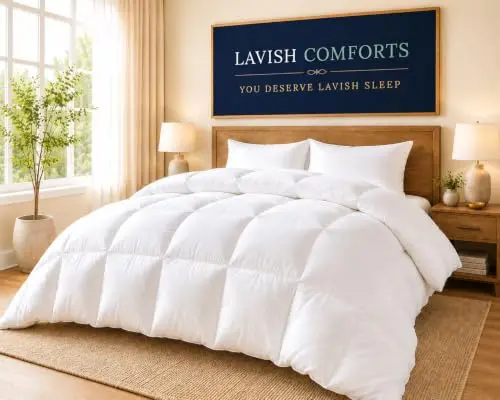
Simply Luxurious Comforter – Plush Hotel-Style Loft
A plush, medium-weight microfiber comforter cut generously at 104×86 for a king bed. Hypoallergenic, feather-free, and odor resistant – the closest thing here to a classic hotel comforter. It arrives compressed and needs a day plus a low tumble to loft fully.
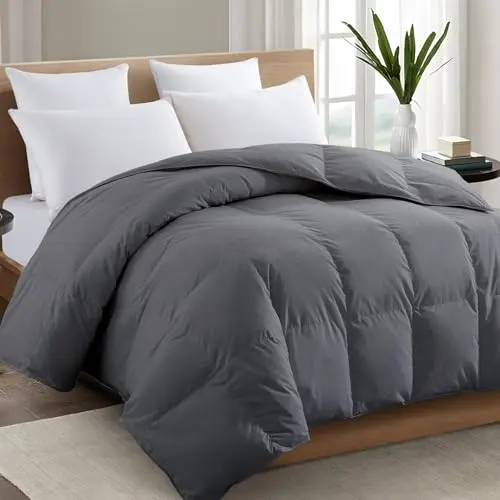
2100 Series Comforter – 4D Spiral Fiber That Won't Clump
4D spiral fiber fill held in baffle-box channels, with eight corner loops for duvet cover security. Machine washable in cold water with a low tumble dry, and available across a wide size run in grey rather than the usual white.
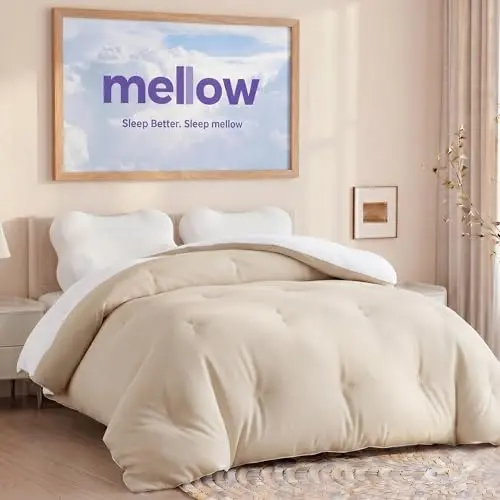
Marshmallow Comforter – Double-Stuffed Cloud Loft
A double-stuffed comforter built for loft first, with heat-adaptive fibers meant to keep all that fill from sleeping hot. The shell is OEKO-TEX Class I certified – the baby-textile tier – and it’s machine washable in a sand colorway.
How We Evaluated These Down Alternative Comforters for Hot Sleepers
This review didn’t involve sleep-lab thermal testing or a summer spent under each comforter. It’s built on published fill weights and specs, shell and construction details, and owner feedback where available, all cross-referenced against what warm sleepers actually need from bedding. We audited 9 down alternative comforters from 8 distinct brands across six decision axes: fill weight and GSM, shell fabric and breathability, stitching and attachment hardware, temperature-regulation claims, care requirements, and available sizes.
We mapped every option against a hot-sleeper profile rather than a general all-season buyer, because those two sets of priorities pull in different directions. A comforter that keeps a cold sleeper comfortable in January is often the wrong answer for someone waking at 3 a.m. We also weighed how each one behaves under a duvet cover versus left uncovered, since that changes how much the shell contributes to temperature. Where a listing published conflicting dimensions or sizing, we flagged it rather than choosing the more flattering number.
The scoring framework weighted real-world fit for warm sleepers (70%) – how light it actually sleeps, how breathable the shell is, how it handles a warm room – against feature differentiation (30%), which is where construction details and cooling-specific fabrics earn their keep. We have no commercial relationship with any brand here; the ranking tracks fit and differentiation, not brand preference. If you want the lightest thing on the bed, the Lightweight Duvet Insert is the pick. If you’d rather attack temperature directly, the Evercool is built for exactly that.
How to Choose the Right Down Alternative Comforter for Hot Sleepers
1. What Makes a Down Alternative Comforter Cool Enough for Hot Sleepers
Down alternative is a broad label. It covers everything from a summer-weight insert to a double-stuffed comforter that sleeps warmer than real down. For a hot sleeper the label tells you almost nothing – fill weight, shell fabric, and construction tell you everything.
The core tension is loft versus airflow. Loft is what makes a comforter feel like a comforter, and it’s also what traps warm air against your body. The comforters that work for warm sleepers tend to sit at the lighter end of the fill spectrum and compensate with a breathable shell rather than piling on more fill.
2. Fill Weight and GSM: The Down Alternative Spec to Read First
Fill weight is usually expressed in grams per square meter (GSM), and it’s the single most useful number on a comforter listing. As a rough guide, the lightest inserts in this category cluster around 150 GSM, mid-weight all-season options sit near 300 GSM, and anything double-stuffed pushes beyond that.
Hot sleepers generally want the lighter end unless their bedroom runs cold. A 150 GSM fill behaves more like a heavy sheet or light quilt; a 300 GSM fill is a real comforter a warm sleeper can still use in a cool room. Neither is wrong – but the number should match the room, not the marketing copy.
Watch for a related spec too: whole-piece fill versus loose cluster fill. A single continuous layer of fiber stays even and predictable night after night. Loose clusters migrate, which creates hot spots at your feet and cold spots at your shoulders.
3. Shell Fabric and Breathability: Why Cooling-to-Touch Matters for Hot Sleepers
The shell is where most of the cooling story actually lives. Brushed microfiber feels lovely and soft, but it’s a woven polyester layer that holds warmth against you. Knit nylon-spandex shells feel cool the instant you touch them and move heat away faster.
That cool-to-touch sensation isn’t the same as active cooling, and it’s worth being honest about the difference. A cool fabric feels better as you fall asleep and helps with the temperature transition that wakes so many warm sleepers. It won’t refrigerate you at 4 a.m. If you want the most pronounced version of that effect, the Evercool is the one we’d point you toward.
Factor in noise and drape too. Crisp, cheap shells rustle every time you shift and hang stiffly off the bed; softer shells settle around you and stay quiet, which matters more than most people expect at 3 a.m.
4. Box Stitching, Baffle Boxes, and Corner Tabs: Construction That Matters
Box stitching sews the top and bottom layers together in a grid, which stops fill sliding into one corner overnight. Baffle-box construction adds a fabric wall between those channels so the fill can loft fully without being pinched at the seams – pricier, and it holds shape better over years of use.
Then there’s duvet cover compatibility. Four corner tabs are the minimum; eight tabs or loops are noticeably better and stop the insert balling up inside a cover. If you plan to use the comforter uncovered, prioritize the shell and colorway instead – a plain white insert on an uncovered bed looks exactly like what it is.
5. Down Alternative vs Cooling Comforter: Which Do Hot Sleepers Actually Need?
These are two different products solving adjacent problems. A down alternative comforter gives you the drapey, plush feel of down with synthetic fill: hypoallergenic, machine washable, and considerably cheaper. A cooling comforter usually trades that plush loft for a smooth technical shell and a breathable fill, optimizing for temperature rather than for the hotel-bed hug.
If you run hot but still want a comforter-shaped comforter, stay with a lightweight down alternative – the Lightweight Duvet Insert is the cleanest example in this lineup. If night sweats are the actual problem and you’d happily trade some plushness for a cooler surface, the technical route makes more sense.
6. What Down Alternative Comforters Cost at Each Tier
This category splits cleanly into three tiers, and price mostly buys you fill consistency and better fabric rather than dramatic leaps in comfort.
Entry tier comforters use basic whole-piece polyester fill and a plain shell. They’re machine washable, they work, and they’re the right starting point if you aren’t sure what fill weight you want. The mid tier adds better shells, tighter stitching, more corner tabs, and more reliable loft retention after washing. The premium tier buys technical fabrics, certified shells, and fills like Tencel or Sorona that breathe noticeably better.
For a hot sleeper, mid tier is usually the sweet spot – a breathable shell and construction that survives washing, without paying extra for cooling marketing. If you want the best value in that band, the EASELAND Down Alternative Comforter is where we’d start.
Frequently Asked Questions
1. Are down alternative comforters good for hot sleepers?
They can be, but the label alone doesn’t guarantee it. Down alternative simply means the fill is synthetic rather than feather – it says nothing about how warm the comforter sleeps. What matters is fill weight, shell fabric, and whether the stitching keeps fill evenly distributed.
A lightweight down alternative in a breathable shell is one of the better bedding choices for someone who runs warm. A double-stuffed down alternative in brushed microfiber will sleep hotter than plenty of real down comforters. Match the fill to your bedroom and you’re fine either way.
2. What's the difference between the Bedsure Lightweight Duvet Insert and the REST Evercool Comforter?
They solve the same problem from opposite directions. The Bedsure goes light: a 150 GSM down alternative fill in a brushed, box-stitched shell, so you stay comfortable because there’s less insulation, not because the fabric does anything clever. It’s the more affordable route and it behaves like a traditional comforter.
The Evercool goes technical: a knit nylon-spandex shell with a cool-to-touch feel, plus a Tencel and Sorona fill that breathes better than straight polyester because Tencel is a genuinely breathable fiber. It’s aimed squarely at night sweats and temperature transitions. Pick the Bedsure if you want light and familiar; pick the REST if waking at 3 a.m. is the whole reason you’re shopping.
3. How does the EASELAND down alternative comforter compare to the COHOME insert?
Both are mid-weight whole-piece inserts, and the difference is mostly in the details. The EASELAND pairs a 300 GSM fill with a 105 GSM brushed cover, a combination that lands it in genuinely usable all-season territory – warm in a cool room, not stifling in a mild one.
The COHOME is a simpler build: whole-piece polyfill, box stitching, corner tabs, and a soft shell, with no GSM figure published. It’s the lighter-feeling of the two. If you want a published number to anchor your decision, the EASELAND gives you one.
4. What fill weight should a hot sleeper look for in a down alternative comforter?
Start around 150 GSM if you sleep warm and your bedroom stays above the mid-60s. That’s light enough to keep on the bed through summer without kicking it off. If your room runs cold or you share a bed with someone who freezes, 300 GSM is the more practical figure – a real comforter that still breathes in a cool room.
Above that you’re into double-stuffed territory, which is built for loft and warmth first. Those can work for a hot sleeper in a genuinely cold bedroom, but they’re solving a different problem. When a listing doesn’t publish fill weight at all, treat loft description and shell fabric as your next best signals.
5. Do down alternative comforters sleep hotter than real down?
Often, yes – but not because of the fiber itself. Down clusters trap air efficiently and pack down small, so a down comforter can deliver warmth with less bulk and better airflow. Polyester down alternative tends to be denser for the same warmth, and denser fill means less breathability.
The gap closes fast, though. A lightweight whole-piece polyester fill in a breathable shell will sleep cooler than a heavyweight down comforter in a tight cotton casing. For allergy sufferers and anyone who wants to machine wash bedding regularly, down alternative remains the more practical choice – and the good ones close most of the temperature gap.
Final Verdict
For most hot sleepers, the Lightweight Duvet Insert is the answer. It takes the down alternative brief and builds it light, with a 150 GSM fill that lets you keep a comforter on the bed in July – you give up plushness, not comfort. If temperature is the actual enemy and you’d rather solve it directly, the Evercool earns its premium with a cool-to-touch shell and a Tencel blend that breathes better than straight polyester. And if you want a proper all-season comforter that won’t punish you on a mild night, the EASELAND Down Alternative Comforter is the value play: mid-weight, evenly filled, easy to wash. Start with what your bedroom actually does at night, then pick the fill weight to match. That single decision matters more than anything printed on the box.
