
Best Down Alternative Duvet Inserts – 2026 Reviews

There’s a particular kind of disappointment that comes with peeling back a duvet cover to find a limp, lopsided insert that’s migrated to one corner overnight. A good duvet insert should sit quietly inside that cover, holding its loft and warmth night after night. That’s the bar, and it’s lower than most shoppers expect.
The “down alternative” part of the label is where things get interesting. Modern polyester and microfiber fills have gotten good enough that many sleepers can’t tell them apart from real down, and they sidestep allergies and the animal-welfare question entirely. But the category is uneven: some inserts puff up beautifully and stay that way, while others flatten within a month.
Two things separate the keepers from the disappointments. First, the fill and how it’s locked in place, since box stitching and thoughtful construction are what stop clumping. Second, honest warmth, because “all-season” means very different things depending on how much fill you’re actually getting. Here’s how the leading inserts across brands stack up.
Best Down Alternative Duvet Inserts – 2026 Reviews
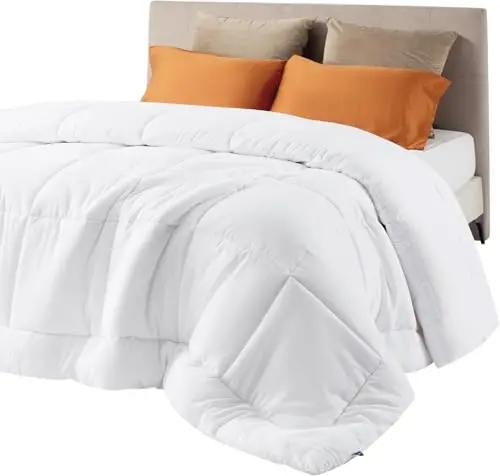
Comforter Duvet Insert – All-Season Comfort with 8 Tabs
A quilted down-alternative duvet insert that works equally well standalone or tucked into a cover. Bedsure builds it around a box-stitch grid so the fill stays put, and adds eight tabs for a secure cover fit. It comes in a wide spread of sizes, from twin up through oversized king, which is more range than most rivals offer.

Queen Comforter Duvet Insert – Soft All-Season Fill with Corner Tabs
A widely owned queen insert that balances softness, warmth, and price. The piped edges and box quilting keep the siliconized fiberfill from clumping, and built-in corner tabs hold it inside a cover. It’s a straightforward, machine-washable workhorse.

Marshmellow Double-Stuffed Duvet Insert – Cloud-Like Loft for Cold Sleepers
A deliberately overstuffed down-alternative insert built for people who want visible loft and hotel-style volume. Mellow doubles the fill for a cloud-like profile, uses a baby-grade OEKO-TEX Class I shell, and adds heat-adaptive fibers intended to keep hot sleepers comfortable.
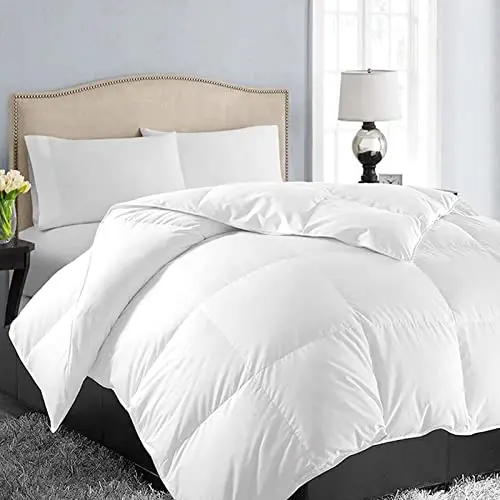
Queen Down Alternative Comforter – Soft Brushed Fabric for Year-Round Use
A mid-weight queen insert that leans on a soft brushed cover and evenly distributed fill. The 300gsm polyester fill targets transitional weather, warm enough for cool nights without turning stifling in summer. Reinforced box stitching holds the fill in place.
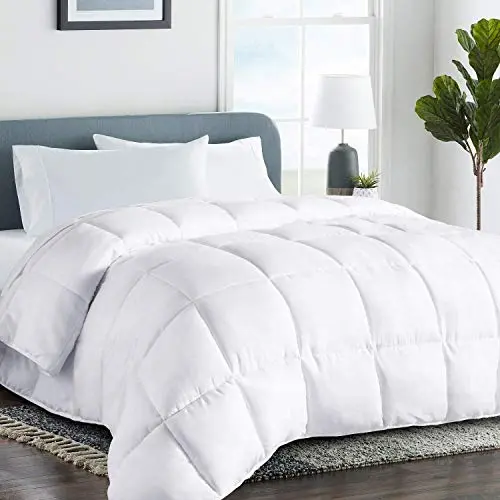
All-Season Cooling Comforter Duvet Insert – Breathable Hotel-Style Fill with 8 Tabs
A king-size insert that combines a noiseless brushed shell with anti-clump fill technology. COHOME adds eight tabs to keep it anchored in a cover, and positions it as breathable enough for warmer sleepers while staying warm in cool rooms.
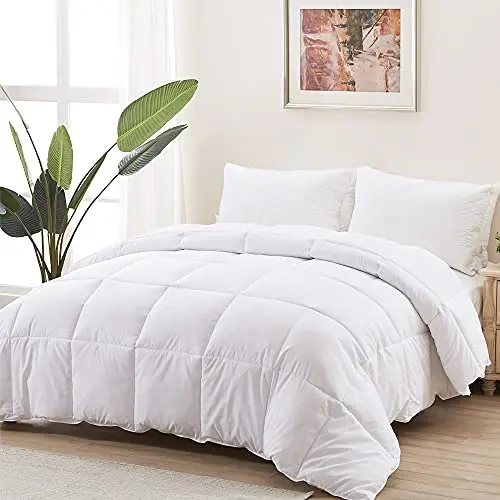
Queen Duvet Insert – 400GSM Heavyweight Warmth with Hypoallergenic Fill
A heavyweight queen insert built for cold rooms and winter sleeping. The 400gsm microfiber fill mimics goose down’s softness, wrapped in a durable peach-skin shell. Box stitching and piped edges keep the fill contained, and the whole thing is hypoallergenic.

Queen Duvet Insert – Lightweight Marshmallow-Soft Fill with Corner Loops
A lightweight queen insert for sleepers who don’t want a heavy comforter. DOWNCOOL uses a 3D and 7D down-alternative fill inside a soft, quiet microfiber shell. Box stitching prevents shifting, and corner loops grab a duvet cover.
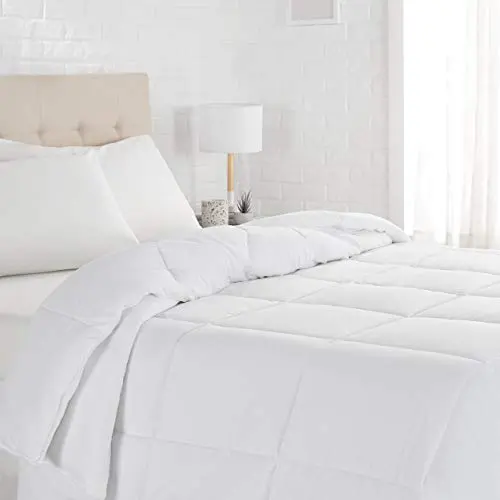
Down Alternative Comforter Duvet Insert – Lightweight All-Season Fill
A no-frills full/queen insert with a soft polyester shell and light down-alternative fill. Amazon Basics keeps it simple: corner tabs, machine-washable care, and a lightweight profile aimed at all-season use. It arrives vacuum-sealed and needs time to decompress.
How We Evaluated These Down Alternative Duvet Inserts
We didn’t run these inserts through a full season of nightly sleep or a controlled loft-retention lab test. What we did: cross-referenced 8 duvet inserts from 8 distinct brands across six decision axes – fill type and weight, box-stitch and tab construction, warmth versus breathability, shell fabric, size range, and care requirements. We audited published specifications, weighed feature sets against typical buyer needs, aggregated owner feedback where available, and mapped each option against real-world sleeping profiles, from hot sleepers and warm-climate bedrooms to cold-room households chasing heavier warmth.
The scoring framework weighted real-world fit and performance (70%) – how well each insert actually delivers on warmth, loft, and staying put inside a cover – against feature differentiation (30%) – the construction details, shell quality, and size options that separate one insert from another. We also weighed how each insert behaves after a wash, since loft retention over time is where cheap fills fall apart. We have no commercial relationship with the brands featured, and recommendations track fit and differentiation rather than brand preference. If you want the safest all-around pick, the Bedsure Comforter Duvet Insert is where we’d start. If you sleep hot and want something breathable, the COHOME All-Season Cooling Comforter is the better fit.
How to Choose the Right Down Alternative Duvet Insert
1. What 'Down Alternative' Actually Means
Down alternative is an umbrella term for synthetic fills, usually polyester or microfiber, engineered to mimic the softness and loft of real down. The upside is real: these fills are hypoallergenic, easier to wash, and avoid the animal-welfare question entirely. The downside is that quality varies wildly, and the label alone tells you nothing about how a specific insert will perform.
Two fills dominate: siliconized fiberfill, which feels light and down-like, and whole-piece polyfill, which holds its shape but can feel denser. Neither is inherently better; what matters is how much fill you’re getting and how well it’s distributed.
2. Fill Weight and Warmth: Reading the Numbers
Fill weight, often given in grams per square meter (GSM), is the clearest warmth signal in the category. Lightweight inserts land around 200 to 300 GSM and suit warm rooms and summer; heavyweight options push past 400 GSM for cold bedrooms. An all-season insert usually splits the difference, though the term is loose and means different things brand to brand.
Don’t assume heavier is better. A too-warm insert sleeps stifling, and many hot sleepers do better with a lighter fill plus a breathable cover. If you run cold, a heavyweight insert like the ACCURATEX is the smarter call.
3. Construction Details That Keep an Insert From Clumping
The single biggest failure mode for a duvet insert is fill migration: the stuffing drifts into the corners, leaving flat spots in the middle. Box stitching divides the insert into quilted squares that lock fill in place, and it’s the detail worth prioritizing over almost any other. Corner tabs or loops matter too, since they anchor the insert inside a cover and stop it from bunching overnight; inserts with eight tabs hold noticeably better than four-tab designs.
Piped edges add durability and a cleaner look if you use the insert standalone. If you want the least fuss, the Bedsure insert pairs box stitching with eight tabs.
4. Shell Fabric and How It Feels
The shell decides whether an insert feels soft or plasticky. Brushed microfiber and peach-skin fabric feel smoother and quieter than plain polyester, and they tend to be the most comfortable against bare skin. A noiseless shell is worth seeking out if you use the insert without a cover; crinkly fabric is a common complaint. OEKO-TEX certification is a useful marker if sensitive skin or family bedding is a concern.
5. Sizing and Fit: Why Duvet Insert Dimensions Mislead
Listed dimensions don’t always match the insert in the bag. A queen insert sold as 88 by 88 inches can run narrower once filled, and a few in this lineup drew notes about fit. If you’re between sizes or want generous drape, sizing up is usually the safer move. Pay attention to the actual measurements rather than the nominal size label, and check that your duvet cover matches the insert’s true footprint rather than its marketing size.
6. Care and Long-Term Loft
All the inserts here are machine-washable, but how they hold loft after washing separates the durable from the disposable. Wash on a cold, gentle cycle and tumble dry low; high heat can clump synthetic fill. Most inserts ship vacuum-packed and need a day or two to fully decompress, so give them time before judging the loft. Regular airing out helps too. If longevity matters most, look for box stitching and a sturdy shell rather than the fluffiest first impression.
Frequently Asked Questions
1. What's the difference between the Bedsure and Utopia Bedding duvet inserts?
Both are solid mid-range all-season inserts, but they emphasize different things. The Bedsure insert leans on construction: eight corner tabs and a box-stitch grid that holds fill well, plus a wider size range that runs up to oversized king. The Utopia insert is the more budget-friendly baseline, with siliconized fiberfill that feels down-like and piped edges for a clean standalone look. Choose Bedsure if you want the broadest size options and a cover that won’t shift; choose Utopia if you want a straightforward value pick.
2. Are down alternative duvet inserts as warm as real down?
For most sleepers, yes. Modern synthetic fills trap warmth much like down, and a heavyweight down-alternative insert can rival a real down comforter in a cold room. The tradeoffs are weight and breathability: down is lighter for the same warmth, while synthetic fills can feel heavier or sleep slightly warmer. Look at fill weight (GSM) rather than the label if warmth is your priority, and remember that an all-season insert is a compromise, not a winter specialist.
3. How do I choose between the ACCURATEX and COHOME inserts?
It comes down to how you sleep. The ACCURATEX is a heavyweight insert built for cold bedrooms, with a 400gsm fill and a hypoallergenic build that suits winter sleeping. The COHOME insert is the opposite: a breathable, cooling design aimed at hot sleepers and warm climates, with anti-clump fill and eight tabs. If your room runs cold, go ACCURATEX; if you overheat at night, COHOME is the better match.
4. Do down alternative duvet inserts cause allergic reactions?
They’re generally a good choice for allergy sufferers because they skip feathers entirely. Most down-alternative inserts use polyester or microfiber fill, which doesn’t harbor the dust-mite-friendly environment real down can. Look for hypoallergenic labeling and washable shell fabrics; the ACCURATEX and Mellow options both highlight hypoallergenic or OEKO-TEX construction. If you’re highly sensitive, check the certification details rather than relying on the general claim.
5. How long does a down alternative duvet insert last?
With reasonable care, expect several years before the fill starts to flatten. Box stitching and a sturdy shell fabric extend life by keeping fill in place and surviving washes. Wash on a gentle cycle and tumble dry low to avoid clumping, and give the insert time to decompress after unboxing. Cheaper fills tend to lose loft faster, so a slightly better-constructed insert usually pays off over time.
Final Verdict
For most people, the Bedsure Comforter Duvet Insert is the answer. It nails the fundamentals – soft shell, box-stitch construction, and eight tabs that keep it where you put it – and its size range covers nearly any bed. If you’re shopping on a budget, the Utopia Bedding Queen Comforter gets you a soft, down-like insert for less. If you sleep hot, the COHOME cooling insert is the breathable pick. And if you want maximum loft and a skin-friendly shell, the Mellow Marshmellow is the premium splurge that earns it. Match the insert to how you sleep, and you’ll stop wrestling your duvet cover for good.
