
Best Dual Boiler Espresso Machines For Home – 2026 Reviews

A dual boiler espresso machine promises something simple: you can brew and steam at the same time, without the stop-start rhythm of a single-boiler machine. For a home setup, that promise matters most when you’re making two lattes or a cappuccino before work, not when you’re pulling one straight shot on a lazy Sunday. The category is also easy to misread, because ‘dual’ and ‘double’ get used loosely, and a powerful steam wand isn’t the same thing as separate brew and steam boilers.
The useful divide is between machines built for hands-on control and machines built for guided convenience. Some dual boiler espresso machines for home lean toward manual steaming, PID temperature tuning, and a commercial-style portafilter; others add automatic frothing or integrated grinding to shorten the morning routine. Neither approach is automatically better. The right pick depends on whether you want to learn the variables or just want a reliable milk drink with fewer steps.
We looked across the market with that split in mind, focusing on actual dual boiler functionality, home-friendly footprints, and the workflow each machine creates on a real counter. The goal isn’t to crown the most complicated option, but to match the boiler setup to how you’ll actually use it.
Best Dual Boiler Espresso Machines for Home – 2026 Reviews
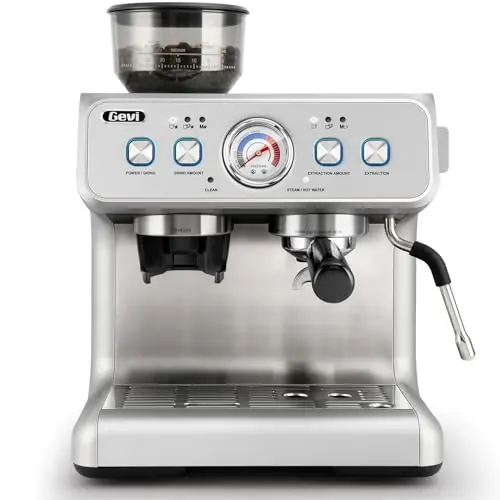
Dual Boiler Espresso Machine – Built-In Grinder and 58mm Portafilter
A dual boiler home espresso machine with a built-in burr grinder, 31 grind levels, a 58mm commercial-style portafilter, PID temperature control, and a stainless steel steam wand. It’s aimed at home baristas who want grinding and brewing in one footprint.
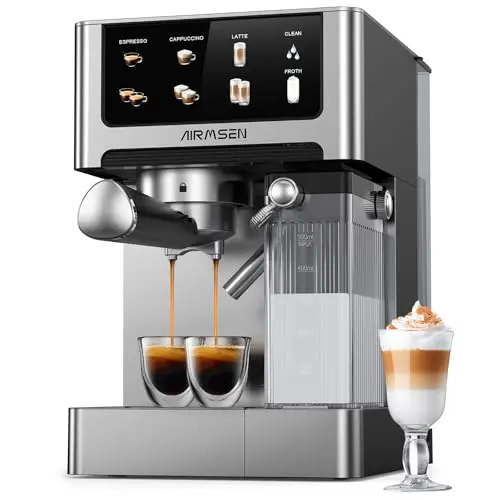
BCM2308 – Automatic Frothing with Dual Boilers
A compact dual boiler espresso machine with touchscreen controls, an automatic milk frother, a 20-bar pump, and a 60oz water tank. It focuses on one-touch cappuccino and latte convenience.
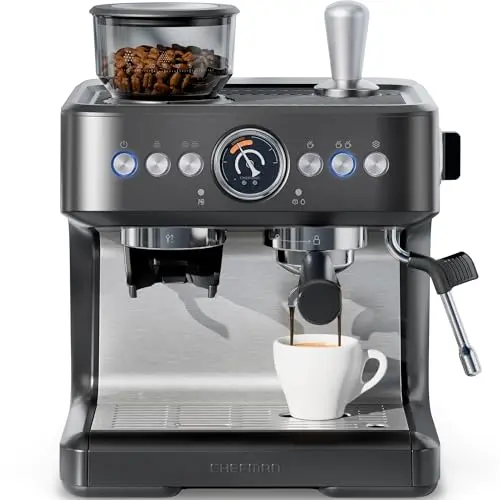
Crema Deluxe – Double Boiler with Built-In Grinder
A double boiler espresso machine with a 30-setting conical burr grinder, a 58mm portafilter, a steam wand, and a large 3-liter reservoir. It’s built for simultaneous brewing and frothing with a semi-automatic workflow.
How We Evaluated These Dual Boiler Espresso Machines for Home
We didn’t run controlled kitchen lab tests or long-term reliability trials. What we did: cross-referenced 3 dual boiler espresso machines from 3 distinct brands across 5 decision axes – simultaneous brew and steam capability, temperature control, grinder and portafilter workflow, steam performance, and home-footprint practicality. We treated ‘dual boiler’ as a functional claim, not a marketing label: the machine needed separate brew and steam circuits designed to reduce the wait between pulling a shot and texturing milk. We triangulated published specifications, feature sets, owner feedback where available, and use-case fit for home espresso setups. That mix matters because two machines can both claim dual boilers while differing sharply in workflow, warm-up behavior, and how much counter space they demand.
The scoring framework weighted real-world home performance (70%) – how well each option delivers on the dual boiler promise without creating a new bottleneck – against feature differentiation (30%), including integrated grinding, PID control, portafilter size, and automatic versus manual frothing. We mapped each machine to typical home scenarios: solo espresso drinkers, couples making milk drinks, and small kitchens where footprint is part of the buying decision.
We have no commercial relationship with any brands featured; recommendations track fit and differentiation, not brand preference. If you want the most complete grinding-and-brewing workflow, the Gevi Dual Boiler Espresso Machine is the clear starting point. If automatic frothing and a smaller footprint matter more, the AIRMSEN BCM2308 makes more sense.
How to Choose the Right Dual Boiler Espresso Machine for Home
1. What a Dual Boiler Actually Buys You in a Home Espresso Machine
A true dual boiler espresso machine separates the brew boiler from the steam boiler, so you can pull a shot and texture milk without waiting for one circuit to switch roles. That’s the core advantage over a single-boiler machine: the workflow feels less stop-start, especially when you’re making multiple milk drinks at home. The catch is that dual boiler construction usually adds size, weight, and cost, so it makes the most sense for households that regularly make lattes or cappuccinos rather than the occasional straight espresso.
Don’t confuse a dual boiler with a machine that simply has a powerful steam wand or a ‘dual’ frothing system. For home use, the practical question is whether the brew and steam sides can work together without temperature swings or long recovery pauses. That’s where boiler design matters more than a flashy pressure number.
2. Brew and Steam Simultaneously: When It Matters for Home Baristas
If your morning routine is one espresso, a dual boiler is a nice-to-have. If you’re steaming milk for two drinks while pulling shots, it becomes a real convenience feature. The best home setups let you keep the steam wand moving while the brew side finishes, which shortens the gap between espresso and cappuccino. This is also where steam power separates machines: a strong wand can make silky microfoam quickly, while a weaker one forces you to work in smaller batches.
For a household with mixed tastes, simultaneous brewing and steaming reduces the ‘wait your turn’ feeling. Just be realistic about warm-up and cleanup, because a dual boiler machine still needs time to reach temperature and a routine for flushing, refilling, and wiping the wand.
3. Temperature Control and Boiler Recovery in Dual Boiler Espresso Machines
PID temperature control is one of the most useful upgrades in this category because espresso is sensitive to small temperature shifts. A machine with stable brew temperature makes it easier to taste the difference between beans rather than the machine’s mood. Boiler recovery matters too: after a shot or a long steam session, the machine should return to brewing temperature without making you wait ages.
Look for clear temperature adjustment if you switch between dark roasts and lighter beans. Some machines also offer pre-infusion, which can help produce a more even extraction. None of these features guarantee great espresso on their own, but together they make a dual boiler machine more forgiving for home users who don’t want to chase every variable manually.
4. Grinder, Portafilter, and Workflow: Matching a Dual Boiler to Your Counter
A built-in grinder can make a dual boiler machine feel like a complete home station, but the grind quality and portafilter size matter more than the label. A 58mm portafilter gives you more room for a standard dose and tends to feel more substantial, while smaller baskets can be fussier to load evenly. If the machine includes a grinder, check whether the grind settings are broad enough for the beans you actually buy.
Workflow is the quiet differentiator. Some home users want to weigh, grind, tamp, and pull with manual control; others want guided steps and fewer decisions. If you want the most complete grinding-and-brewing setup in this lineup, the Gevi Dual Boiler Espresso Machine is the pick. If you’d rather keep the counter simpler and let the machine handle milk, the AIRMSEN BCM2308 is the more convenient route.
5. Steam Power, Milk Texturing, and Daily Comfort at Home
Steam wand control is personal: manual wands reward practice and give you latte-art control, while automatic frothers prioritize speed and consistency. Neither is inherently better, but they suit different home routines. A manual steam wand is the better choice if you want to learn microfoam; an automatic milk frother is easier for rushed mornings or guests who just want a cappuccino without a lesson.
Cleanup belongs in the same conversation. Detachable milk reservoirs and removable drip trays make daily use less annoying, while a fixed wand requires disciplined wiping. For a home machine, daily maintenance is often the difference between a beloved appliance and one that gets pushed to the back of the counter.
6. Common Pitfalls When Shopping Dual Boiler Espresso Machines for Home
The biggest mistake is buying for the label instead of the routine. A dual boiler espresso machine is only worth it if you’ll actually use the simultaneous brew-and-steam advantage, and if you have the counter space for a larger body. Watch for vague ‘dual’ language that describes a frothing system rather than separate boilers. Also weigh warranty support and replacement-part availability, especially on value-focused models, because a home espresso machine is a long-term counter commitment rather than a disposable gadget.
Finally, don’t overlook the small stuff: tank access, drip tray clearance, and whether the machine fits under your cabinets. Those details shape daily ownership more than a spec sheet headline.
Frequently Asked Questions
1. Are dual boiler espresso machines worth it for a home kitchen?
They’re worth it if your routine includes milk drinks and you want to brew and steam simultaneously without waiting for one boiler to switch roles. A dual boiler espresso machine adds convenience, but it also takes up more counter space and usually costs more than a single-boiler model. For most home users who make lattes or cappuccinos regularly, the workflow benefit is real; if you mostly drink straight espresso, a simpler machine may be enough. In this lineup, the Gevi Dual Boiler Espresso Machine is the strongest all-around choice for that daily milk-drink routine.
2. What's the difference between the Gevi Dual Boiler Espresso Machine and the AIRMSEN BCM2308?
The Gevi is the more traditional home-barista setup: dual boilers, a built-in burr grinder, a 58mm portafilter, and a manual steam wand. The AIRMSEN BCM2308 is more convenience-focused, with an automatic milk frother, touchscreen controls, and a compact body. Choose Gevi if you want to dial in grind and texture milk yourself; choose AIRMSEN if you want one-touch milk drinks and a smaller footprint. Neither choice is about brand prestige; it’s about how much of the workflow you want to control.
3. How does the Chefman Crema Deluxe compare with the Gevi Dual Boiler for home lattes?
The Chefman Crema Deluxe leans on a double boiler system, a 30-setting grinder, and a large 3-liter reservoir, which suits households making several milk drinks in a row. The Gevi Dual Boiler counters with a 58mm portafilter, PID temperature control, and a more compact home-barista workflow. For back-to-back lattes, the Chefman’s tank capacity is appealing; for more precise temperature and portafilter familiarity, the Gevi is the stronger fit. Reliability feedback makes the Chefman the more cautious pick of the two. If the Chefman’s large-tank setup matches your routine, the Chefman Crema Deluxe is the one to consider.
4. Can a dual boiler espresso machine fit in a small home kitchen?
Sometimes, but footprint becomes a real constraint because dual boiler machines often carry extra body depth and weight. Check the counter clearance under your cabinets, the water tank access, and whether you can comfortably remove the drip tray for cleaning. A compact model like the AIRMSEN BCM2308 is easier to place, while larger units may need a dedicated coffee corner. If space is tight, measure first and prioritize a removable water tank so refilling doesn’t become a daily wrestling match.
5. Do I need a separate grinder if I choose a dual boiler espresso machine?
Not always. A machine with a built-in burr grinder can simplify the workflow and save counter space, especially if it grinds directly into the portafilter. The tradeoff is that integrated grinders vary in grind consistency and adjustment range, and a dedicated grinder may offer more upgrade path later. If you want an all-in-one setup, the Gevi Dual Boiler Espresso Machine and Chefman Crema Deluxe both include grinding; if you already own a grinder you trust, prioritize the brew boiler and steam performance instead.
Final Verdict
For most home espresso setups, the Gevi Dual Boiler Espresso Machine is the pick because it combines the dual boiler advantage with a built-in grinder, 58mm portafilter, and PID control in one workflow. It’s the version we’d recommend to a friend who wants to learn dialing in without buying a separate grinder right away. If your priority is automatic milk frothing and a compact footprint, the AIRMSEN BCM2308 is the convenience-first alternative, though you’ll want to keep an eye on temperature consistency. And if you routinely make multiple milk drinks and want a large reservoir with simultaneous brewing and frothing, the Chefman Crema Deluxe is the large-tank option to consider, provided you’re comfortable with its mixed reliability feedback. Start with the machine that matches your daily routine, not the one with the longest feature list.
